Samsung Galaxy AI Strategy: Moving Beyond Apps to Autonomous Agentic Models


4 Sources
[1]
Exclusive: Samsung's Next Galaxy AI Challenge: Less Typing, More Agents
* Samsung launched new Galaxy Z series globally * The new foldables are Galaxy Z Fold 8, Fold 8 Ultra, and Flip 8 * In India, the phones are now available Samsung is already working on the next era of Galaxy AI where users won't need to type requests into a chat box to get things done. Speaking
[2]
Samsung says regional AI restrictions won't leave Galaxy users dependent on one model
Samsung is gearing up for potential shifts in AI model access across the globe. By employing a multi-model strategy and fostering regional partnerships for Galaxy AI, the company aims to maintain flexibility and reduce reliance on a single AI provider. Samsung says it is preparing for a scenario
[3]
Samsung's Galaxy AI Roadmap Signals the End of App-Swapping
Samsung is preparing a big change for Galaxy AI. The company says the future of smartphones is not about opening one app after another. Instead, it wants AI agents to handle tasks across different apps on their own. The a version of Galaxy AI where typing queries and requests in a chatbox will make
[4]
Will Galaxy AI become a paid subscription? Samsung explains its thinking
AI on our smartphones is no longer just about editing photos, translating languages or summarising text. To put it into perspective, AI on phones can understand context, automate tasks across apps and even make recommendations before you ask. But delivering these smarter experiences isn't as simple
Share
Copy Link
Samsung is transforming Galaxy AI from app-based interactions to agentic AI models that handle tasks autonomously. Jay Kim, Corporate EVP at Samsung's MX Division, revealed the company's multi-model strategy and hybrid AI approach during recent roundtables. The shift addresses scalability challenges while navigating regional AI restrictions and linguistic diversity across global markets.
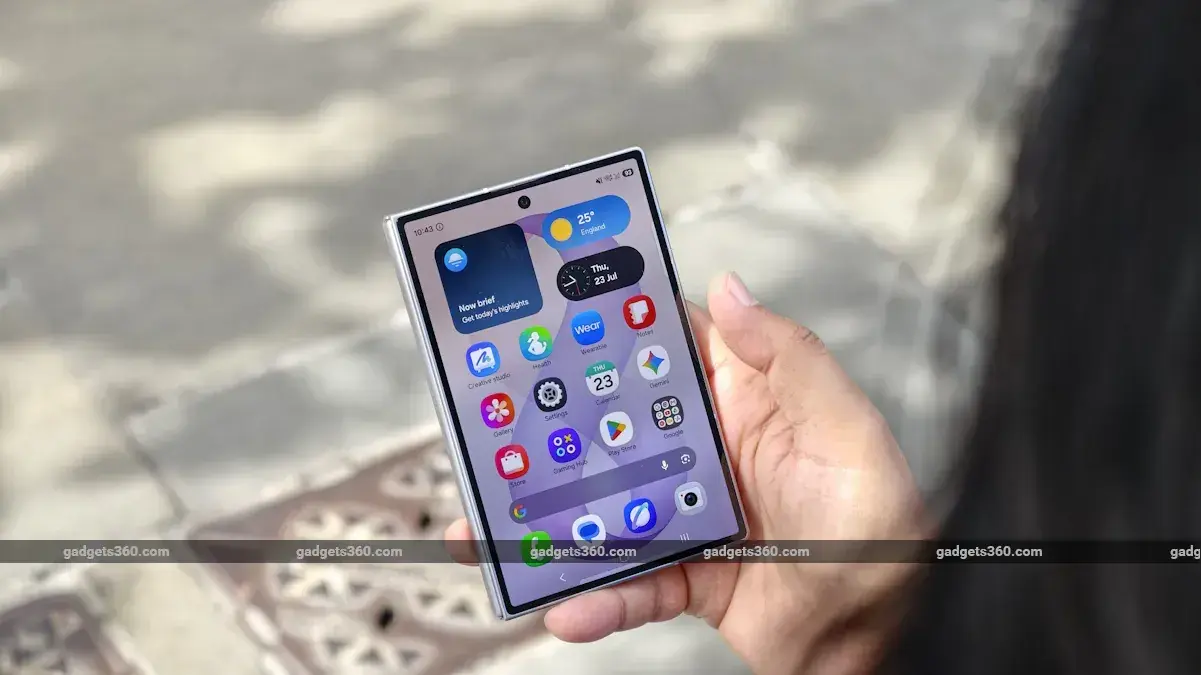
Samsung Reveals Shift to Agentic AI Models
Samsung is fundamentally reshaping its Galaxy AI strategy, moving away from traditional app-based interactions toward agentic AI models that complete tasks autonomously across multiple applications. Jay Kim, Corporate EVP and Head of the Customer Experience Office at Samsung's MX Division, outlined this vision during recent AI roundtables, explaining how the company plans to reduce manual user effort while navigating complex technical and regulatory challenges.
1
The transformation centers on eliminating the need for users to type requests into chat boxes. Instead, Samsung envisions autonomous task handling where AI agents work across apps without constant user input. Kim emphasized that apps won't disappear but how people use them is changing dramatically. "It's more about letting the consumer spend less time on getting things done. You have tasks to do...earlier, you had to go to different apps back and forth to get things done," he explained.
1
From App-Stitching to Mobile Context Protocol
Samsung's technical journey toward agentic AI models began with manually connecting AI to individual app functions, an approach that proved unscalable. The company then adopted Mobile Context Protocol, an industry standard enabling broader ecosystem collaboration. "We started with app function, what's called stitching everything to the AI to get things done. But it wasn't scalable. Now you have MCP (Mobile Context Protocol), where it's more of an industry standard," Kim revealed.
1
3
Beyond industry standards, Samsung developed its own automation feature that reads phone screens and completes tasks on users' behalf. Debuting on the Galaxy S26, this feature represents Samsung's first step toward full agentic functionality. However, Kim candidly admitted the technology remains imperfect. "The first step that we did was automation at the Galaxy S26 launch. It was a very hard process. It's still not perfect, but we're taking our first step to get there," he stated.
1
Multi-Model Strategy Addresses Regional AI Restrictions
Samsung is preparing for scenarios where access to major AI models like Google Gemini could change across markets by implementing a multi-model strategy. Rather than depending exclusively on one provider, Samsung already uses multiple AI models including its own internal models, open-weight models, and frontier models across different services.
2
"We're actually already using multiple models on our devices. It's not just Gemini," Kim explained, noting that Samsung selects models based on specific use cases and entry points. This approach varies depending on the market, with Samsung working with local partners in different regions to address regional AI restrictions and regulatory requirements. The company manages over a billion users daily, making responsible ecosystem-wide collaboration essential rather than unilateral moves.
1
2
Hybrid AI Approach Balances On-Device and Cloud Processing
Samsung's Galaxy AI strategy employs a hybrid AI approach combining on-device processing with cloud-powered AI services. Jay Kim explained there isn't a fixed ratio for local versus remote processing because user interactions vary significantly. Tasks requiring speed and privacy run on-device, while requests demanding deeper reasoning or global knowledge leverage cloud processing.
4
This hybrid AI approach relies heavily on partnerships with Google and Qualcomm, spanning chipsets, operating systems, and user experience layers. Samsung's goal is making transitions between on-device processing and cloud processing seamless, ensuring users don't think about where computation happens. "AI shouldn't be defined by where it runs, but by how naturally it helps people get things done," the company emphasized.
4
Addressing Linguistic Diversity and Scalability Challenges
India presents particular scalability challenges for Samsung's Galaxy AI strategy due to its linguistic diversity. Kim acknowledged the country's complexity, stating, "India is a very complex market because you have many different languages. We'll do our best to make sure that we work with local teams because all R&D centres get a lot of feedback."
1
Despite these challenges, India shows higher-than-global-average Galaxy AI adoption. JB Park, CEO and President of Samsung Southwest Asia, reported that features like Photo Assist, Creative Studio, and Audio Eraser are used nearly twice as often in India compared to globally. Samsung's R&D centres in Noida and Bengaluru have contributed features like Voice Focus, which detects background noise during calls and automatically activates relevant modes.
2
Related Stories

Potential Paid Subscription Model Under Evaluation
While Samsung currently provides core Galaxy AI services without charge, the company is evaluating future sustainability models. Kim acknowledged that cloud-powered AI services carry real operating costs and noted changing consumer attitudes toward paid subscription models. "People are now increasingly comfortable paying for AI services and that token-based computing has become part of the wider AI conversation," he observed.
4
However, Samsung hasn't announced plans to move existing features like Circle to Search or Live Translate behind paywalls. Instead, the company is considering how to make future advanced services sustainable while maintaining free access to core AI experiences. This suggests premium cloud-powered AI services could eventually emerge as optional offerings without affecting current functionality.
4
Industry-Wide Collaboration Shapes Future Direction
Samsung's approach emphasizes industry-wide collaboration rather than isolated development. Kim stressed that with over a billion daily users, Samsung must ensure the industry moves together. "We have to be very responsible. We have to make sure that industry moves all together in the right direction, not just us going in one direction," he stated.
1
Looking ahead, Kim expects the user experience to extend beyond smartphones to smartwatches and smart glasses, with voice and vision becoming central interaction methods. Samsung's focus remains on making AI invisible to consumers, who shouldn't need to understand whether benefits come from AI but simply experience tasks getting completed efficiently. This philosophy guides the company's multi-model strategy as it navigates evolving AI technology, regulatory landscapes, and consumer expectations across global markets.
2
4
References
Summarized by

Navi
[3]
Related Stories
Samsung Galaxy S26 adds Perplexity AI agent with 'Hey Plex' wake word in multi-agent push
22 Feb 2026•Technology

Samsung Unveils Plans for Advanced Galaxy AI Features with Hybrid Processing and Personalization
07 Nov 2024•Technology

Samsung plans to double AI-powered devices to 800 million by 2026 amid chip shortage
05 Jan 2026•Technology
Recent Highlights



Recent Highlights
Today's Top Stories




Don’t drown in AI news. We cut through the noise - filtering, ranking and summarizing the most important AI news, breakthroughs and research daily. Follow topics that matter to you and stay ahead.


