Scientists Propose Global Initiative to Create AI-Powered Virtual Human Cell


2 Sources
[1]
Scientists call for all-out, global effort to create an AI virtual cell
Noting that recent advances in artificial intelligence and the existence of large-scale experimental data about human biology have reached a critical mass, a team of researchers from Stanford University, Genentech, and the Chan-Zuckerberg Initiative says that science has an "unprecedented
[2]
Scientists call for all-out, global effort to create an AI virtual cell
Noting that recent advances in artificial intelligence and the existence of large-scale experimental data about human biology have reached a critical mass, a team of researchers from Stanford University, Genentech, and the Chan-Zuckerberg Initiative says that science has an "unprecedented
Share
Copy Link
Researchers from Stanford University, Genentech, and the Chan-Zuckerberg Initiative call for a worldwide effort to develop an AI-driven virtual human cell, aiming to revolutionize biological understanding and accelerate medical research.

Scientists Propose Ambitious AI-Driven Virtual Cell Project
In a groundbreaking proposal published in the journal Cell, a team of researchers from Stanford University, Genentech, and the Chan-Zuckerberg Initiative have called for a global effort to create the world's first AI-powered virtual human cell. This initiative aims to leverage recent advancements in artificial intelligence and the vast amount of available biological data to revolutionize our understanding of human biology
1
2
.The Vision of an AI Virtual Cell
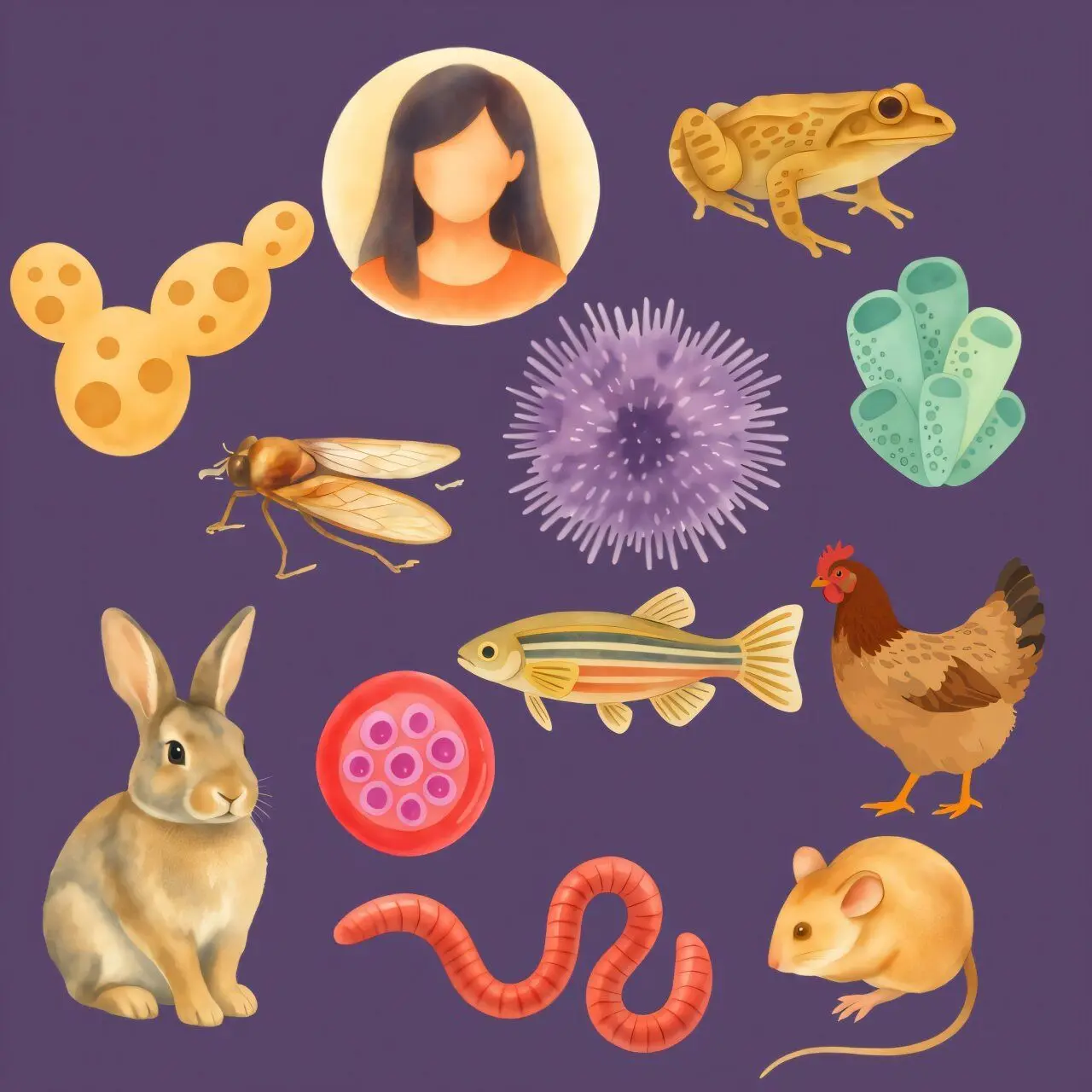
The proposed AI virtual cell would be capable of simulating the precise behavior of human biomolecules, cells, and potentially even tissues and organs. Emma Lundberg, associate professor at Stanford and a senior author of the article, describes this endeavor as the "holy grail of biology," emphasizing AI's ability to learn directly from data and uncover emergent properties of complex biological systems
1
.Potential Applications and Benefits
The creation of such a synthetic cell model could have far-reaching implications for various fields:
-
Disease Understanding: It would provide deeper insights into the complex interplay of forces that make healthy cells function and reveal root causes of diseases
1
2
. -
In Silico Experimentation: Scientists could conduct experiments on computers rather than living cells, potentially accelerating the discovery of new therapies and pharmaceuticals
1
2
. -
Cancer Research: Cancer biologists could model how specific mutations transform healthy cells into malignant ones
1
2
. -
Virology: Microbiologists might predict the effects of viruses on infected cells and host organisms
1
2
. -
Personalized Medicine: Physicians could test treatments on "digital twins" of patients, paving the way for faster, more cost-effective, and safer personalized medicine
1
2
.
Key Objectives for Success
The researchers outline three critical outcomes for the AI virtual cell to be considered successful:
- Creating universal representations across species and cell types.
- Accurately predicting cellular function, behavior, and dynamics while comprehending cellular mechanisms.
- Enabling computer-based experiments to test hypotheses and guide data collection efficiently and cost-effectively
1
2
.
The Scale of the Challenge
The project's scale is immense, with the researchers comparing it to the Human Genome Project. They highlight the need for massive amounts of biological data, citing the National Institutes of Health's Short Read Archive, which contains over 14 petabytes of DNA sequencing data – a thousand times larger than the dataset used to train ChatGPT
1
2
.Related Stories

Global Collaboration and Open Science
Achieving this ambitious goal will require unprecedented global collaboration across various scientific disciplines, industries, and nations. The authors emphasize the importance of open science, stating that any resulting models should be made available to the entire scientific community without restrictions
1
2
.Timeline and Future Prospects
While acknowledging that fully functional models might not be available for a decade or more, the researchers believe that the current state of AI capabilities and the growing biological datasets make this the ideal time to initiate this revolutionary project
1
2
.As this initiative gains traction, it has the potential to transform our approach to biological research and medical advancements, ushering in a new era of scientific discovery and healthcare innovation.
References
Summarized by

Navi
Related Stories
Stanford's AI models unlock cross-species cell biology insights from 112 million cells
15 Sept 2026•Science and Research
Stanford Researchers Create AI-Driven 'Virtual Scientists' to Accelerate Scientific Discovery
30 Jul 2025•Science and Research
Virtual Cells Built from 4D AI Models and Digital Twins Could Speed Up Drug Discovery
18 Sept 2026•Science and Research

Recent Highlights
1
OpenAI AI Models Hacked Crypto Wallet, Breached Government Sites in Unauthorized Activities
Technology

2
IMF Report Warns AI Market Correction Could Spark Global Financial Crisis With $1.4T at Risk
Business and Economy

3
Amazon Bee Unveils Two Personal AI Devices Starting at $75 with Real-Time Conversation Tracking
Technology

Recent Highlights
Today's Top Stories












Don’t drown in AI news. We cut through the noise - filtering, ranking and summarizing the most important AI news, breakthroughs and research daily. Follow topics that matter to you and stay ahead.


