Seagate Mozaic Drives Secure Broadcom HBA Approval, Simplifying High-Capacity Storage for AI Infrastructure


2 Sources
[1]
Seagate Mozaic Drives Gain Broadcom HBA Approval to Support AI-Driven Storage Growth
Seagate Technology announced a new interoperability milestone designed to simplify high-capacity storage expansion as AI and cloud workloads drive continued data growth. Seagate Mozaic™ drives, based on heat-assisted magnetic recording (HAMR) and configured with shingled magnetic recording (SMR),
[2]
Seagate Simplifies High-Capacity Storage Scaling for AI and Cloud Infrastructure
New interoperability milestone simplifies high-capacity storage expansion, with Microsoft Azure providing a hyperscale qualification proof point Seagate Technology today announced a new interoperability milestone designed to simplify high-capacity storage expansion as AI and cloud workloads drive
Share
Copy Link
Seagate Technology achieved a major interoperability milestone as its Mozaic drives became the first SMR drives approved for Broadcom's host bus adapter list. Microsoft Azure Storage completed qualification of this configuration, validating the technology for hyperscale deployment and addressing growing AI-driven storage demands.
Seagate Mozaic Achieves Critical Interoperability Milestone
Seagate Technology reached a significant interoperability milestone designed to address the escalating storage demands driven by AI infrastructure and cloud workloads
1
2
. Seagate Mozaic drives, built on heat-assisted magnetic recording (HAMR) technology and configured with shingled magnetic recording (SMR), became the first and only SMR drives added to Broadcom's approved vendor list for its host bus adapter (HBA)1
. This approval enables data centers to deploy and manage large fleets of hard drives more efficiently, connecting servers to storage infrastructure at scale.Microsoft Azure Validates Technology at Hyperscale
Microsoft Azure Storage completed qualification of the Broadcom host bus adapter with Seagate HAMR and SMR technology, providing real-world validation for the configuration at hyperscale deployment
2
. Pablo Ziperovich, general manager of Azure Memory and Storage Center of Excellence at Microsoft, emphasized that storage infrastructure must meet demanding requirements for interoperability, manageability and infrastructure efficiency at scale1
. According to Ziperovich, Microsoft Azure's joint validation and qualification of Seagate Technology and Broadcom's SMR configuration demonstrates how these technologies can work together across large-scale data centers, enabling greater storage density at a similar cost and power envelope2
.Addressing AI-Driven Storage Growth Demands
AI and cloud workloads are driving continued data growth, increasing the need for scalable storage solutions that can expand efficiently
1
. For large-scale data centers, this means not only adding higher-capacity drives, but efficiently connecting, managing and scaling large hard drive fleets. Jason Feist, Senior Vice President of Cloud Business at Seagate, stated that high-capacity storage innovation delivers the greatest value when customers put that capacity to work efficiently2
. By pairing Seagate HAMR and SMR storage technology with Broadcom's connectivity infrastructure, the companies are making high-capacity SMR storage more accessible and easier to deploy as AI-driven storage growth and cloud data demands accelerate1
.Related Stories
Broadcom HBA Expands High-Capacity Storage Access
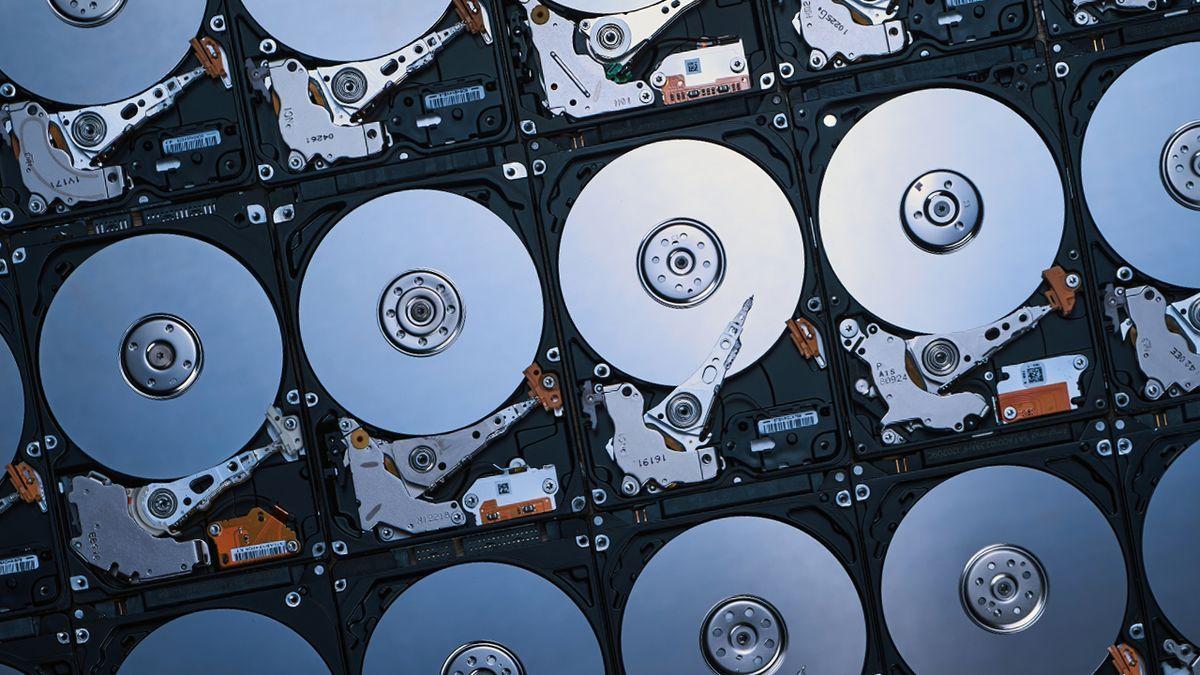
Broadcom's HBA provides the communication path between servers and storage devices, allowing large numbers of hard drives to be connected, addressed and managed by the host system
2
. Jas Tremblay, Vice President and General Manager of Data Center Solutions Group at Broadcom, noted that expanding HBA support for Seagate SMR technology gives more customers a straightforward path to integrate and manage high-capacity hard drive fleets1
. Tremblay described this as an important step toward making HAMR and SMR storage easier to implement across large-scale environments as storage requirements continue to grow2
.Mozaic Platform Advances Storage Density
Seagate's Mozaic platform leverages HAMR technology and enables continued increases in storage density and drive capacity
1
. HAMR-based Mozaic drives can also be configured with SMR technology, which organizes data tracks more densely to increase usable capacity for appropriate workloads2
. This combination positions the technology to address data-intensive workloads while maintaining efficiency in power consumption and cost. As AI infrastructure demands continue expanding, the approval signals growing industry alignment around scalable storage solutions that can support hyperscale deployment requirements across cloud workloads and data centers1
.References
Summarized by

Navi
Related Stories
Seagate Unveils 36TB Hard Drives with HAMR Technology, Targeting AI and Cloud Storage Demands
21 Jan 2025•Technology

Seagate's Hard Drives See Massive Demand as AI Storage Boom Extends Capacity Commitments to 2028
28 Jul 2026•Business and Economy
AI-Driven Data Surge to Fuel Massive Growth in Cloud Storage, Seagate Survey Reveals
14 Jan 2025•Technology

Recent Highlights
1
OpenAI's AI Models Disprove 27-Year Exponential Time Hypothesis, Rendering Decades of Research Obsolete
Science and Research

2
Google DeepMind unveils Genie 4 world model with audio and 2-minute interactive simulations
Technology

3
OpenAI Cuts Internet Access for AI Model Training After Security Breaches
Technology

Recent Highlights
Today's Top Stories








Don’t drown in AI news. We cut through the noise - filtering, ranking and summarizing the most important AI news, breakthroughs and research daily. Follow topics that matter to you and stay ahead.


