Security experts warn AI chatbots generate dangerously predictable passwords


2 Sources
[1]
Stop asking ChatGPT to create your passwords
Jon has been an author at Android Police since 2021. He primarily writes features and editorials covering the latest Android news, but occasionally reviews hardware and Android apps. His favorite Android device was the Pixel 2 XL, and he regards the three months when he owned an iPhone as a time of
[2]
Do NOT use AI-generated passwords, security experts warn
But security experts at Irregular warn against this approach. After some tests, they've discovered that passwords created using "AI" are very easy to crack, even if they appear secure at first glance. The fatal flaw of AI-generated passwords The reason for this is simple: all LLM-based AI models
Share
Copy Link
Research by cybersecurity firm Irregular reveals that AI chatbots including ChatGPT, Gemini, and Claude produce passwords that appear strong but are actually predictable and vulnerable to attacks. The study found that Claude generated only 23 unique passwords out of 50 attempts, with one password repeated 10 times, exposing a fundamental flaw in how large language models create supposedly random strings.
AI Passwords Fail the Randomness Test
Turning to AI chatbots for password security might seem like a smart solution, but cybersecurity firm Irregular has uncovered a critical weakness that puts accounts at risk. In a comprehensive study examining ChatGPT password generation alongside Gemini and Claude, researchers found that these large language models produce predictable passwords that only appear secure
1
2
. The findings reveal a fundamental problem: AI chatbots operate on probabilities rather than true randomness, making their output vulnerable to cracking despite passing standard password strength checks.The Pattern Problem Behind AI-Generated Credentials
When Irregular asked Claude to generate 50 passwords, only 23 were unique. The password K9#mPx$vL2nQ8wR appeared 10 times, while other passwords contained identical chunks and structures
1
. Independent testing of Gemini using the prompt "Generate me a strong password" revealed that words like "Solar," "Thunder," "Panda," and "Jacket" appeared repeatedly across multiple attempts. While the accompanying digit strings varied, the three-noun structure remained consistent, creating a predictable pattern that undermines password security1
.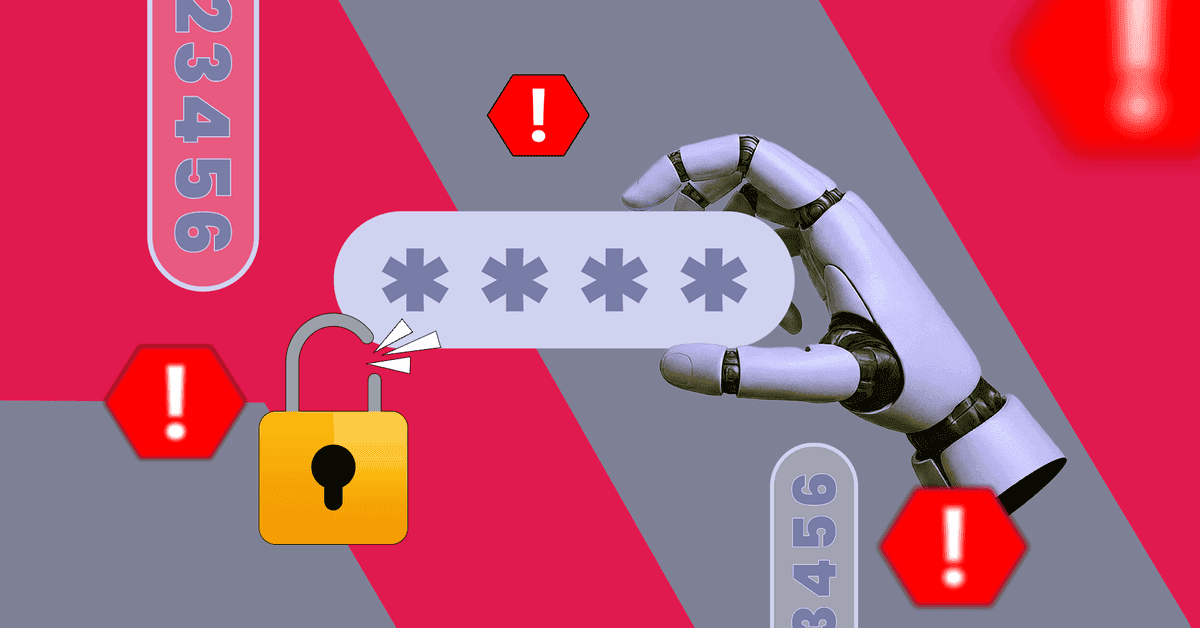
Source: Android Police
Security experts warning about these patterns point to specific vulnerabilities. All generated passwords began with a letter, usually uppercase, with the letter K appearing especially frequently
2
. Certain characters like @, #, $, %, &, and * appeared in all generated passwords, while some letters were never used. Perhaps most tellingly, none of the passwords contained duplicate characters—something that would naturally occur in truly random selection. LLMs apparently assume passwords without duplicates look more "random," revealing their lack of randomness2
.Why Probabilities Make AI Chatbots Unreliable for Authentication
The core issue stems from how large language models function. These systems operate on probability-based functions, creating outputs based on patterns learned from training data rather than generating truly random sequences
2
. This means AI-generated passwords are formulated using data based on already-known passwords, making them vulnerable to brute-force attacks. A human attacker who generates passwords through an AI chatbot multiple times can build a library of frequently used letters, digits, and structures, rapidly narrowing down options1
.Different prompts can generate different types of passwords, but they all suffer from the same fundamental flaw. Testing revealed that each chatbot generated more random lists when asked to create multiple passwords simultaneously, but requesting them one at a time produced the same pattern issues Irregular documented
1
. While ChatGPT appeared to generate stronger passwords than its competitors, it still couldn't escape falling into recognizable patterns.Related Stories


Better Alternatives for Securing Your Accounts
Password managers remain the gold standard for generating truly random credentials, though their complex strings can be difficult to remember without the manager accessible
1
. For those seeking memorable yet secure options, cybersecurity professionals recommend creating passwords using four random words rather than relying on AI chatbots. More importantly, modern authentication methods like passkeys and two-factor authentication provide stronger security layers that don't depend on password complexity alone1
.While AI can teach users how to generate strong passwords by explaining effective methods, it cannot reliably create them. The theory behind approaches like Gemini's three-noun-plus-digits method is sound—combining memorability with apparent randomness—but the execution fails due to character patterns inherent in how LLMs process requests
1
. As attackers become more sophisticated and aware of these AI-generated vulnerabilities, users should avoid this shortcut and opt for proven security methods instead.References
Summarized by

Navi
[1]
Related Stories
Recent Highlights



Recent Highlights
Today's Top Stories





Don’t drown in AI news. We cut through the noise - filtering, ranking and summarizing the most important AI news, breakthroughs and research daily. Follow topics that matter to you and stay ahead.


