3 Sources
[1]
Skan AI raises $63m to watch staff so agents can copy them
Skan AI records what staff do on screen, then builds agents that do the same work. Seven of the ten biggest US banks are already customers. Skan AI announced $63m in funding on Wednesday, co-led by Cathay Innovation and Dell Technologies Capital. What the money is buying is not a model. It is a record of how people at large companies actually do their jobs. Skan builds that record by watching them work. Avinash Misra, the co-founder and chief executive, reached for a metaphor. Everyone is chasing the model, he argued, when the harder problem sits elsewhere. "Everyone is obsessed with building a better car," he said. "We think the bigger opportunity is building a better navigation system." What the software actually watches The mechanics matter more than the metaphor. Skan puts software on employee desktops and takes screenshots. Those images are read on the machine and stay there. "Only anonymized, abstracted metadata is transmitted to the analytics platform," the company says in its privacy guide. What leaves is a list rather than a recording. Application usage and switching patterns. Time allocation by process, plus workflow sequences and decision paths. Skan swaps employee identifiers for tokens before any of it goes anywhere. Skan's security page says personal messages and passwords are never captured. The numbers are large and they are all Skan's own The company says revenue grew more than 300% year on year. Net dollar retention averages 150%. It has processed more than 25 billion work signals. A quarter of the Fortune 50 are customers. So are seven of the ten biggest US banks, and three of the five biggest insurers. Then there is a bank example, given in detail. Skan observed 11.2 million context switches across 1,500 finance professionals. It says that surfaced $37m of operational friction. Agents built on those observations cut cost per transaction by 32% and lifted throughput by 41%. The stated result is $18m in annualised savings. The observation layer is the training layer One line in the release explains the entire business, and no executive says it. "What began as 11.2 million observations of human work became the context for AI to perform that work." That is the loop. Watch people do the job. Turn the watching into a model of the job. Point an agent at the model. The staff supply the specification. The agent supplies the implementation. None of this is a new category, only a new claim about one. Process and task mining have sold enterprise visibility for a decade. UiPath built a public company on automating whatever that visibility found. The difference is what now sits at the end of the pipe. It is an agent rather than a script. Why the timing works Skan cites Gartner for the gap it is selling into. Only eight percent of enterprises have agents in production, the research says. It also finds that 95% of early implementations will need a complete redesign. That document sits behind a subscription, so nobody outside Gartner can check it. Misra frames the whole thing as a data problem rather than a model problem. "You cannot fix a source data problem downstream," he wrote in a blog post. "Better models will not solve it. Better prompts will not solve it." What the announcement leaves out Every figure above comes from the company. Skan calls the $500m in cumulative customer value measured. It names no auditor. Claimed AI productivity gains have a poor record under inspection. One widely cited study found 95% of organisations got no measurable return at all. The bigger absence is a plain word for what this is. Banks and insurers now buy screen observation of their own employees, at scale. TD Bank in Canada scaled back a monitoring rollout after workplace surveillance objections from staff. Meta paused a programme collecting keystrokes for AI training in June. Europe is where this gets tested Two names attached to the round are European. Cathay Innovation, one of the co-leads, is French. Mitie, the British facilities group with 75,000 staff, supplies the customer quote. Its chief technology officer Cijo Joseph credits Skan with "unprecedented operational visibility". Europe is also where the consent question has teeth. Skan's privacy guide names Allianz in Munich as a deployment that won full works council approval. That is a real answer to a real objection. It is also Skan's account rather than Allianz's, and Allianz has separately announced 1,800 job cuts. The checkable test is a year away. Skan says agents built on observed work are running in production at large banks right now. By this time next year either those agents are still running, or they joined the 95% that needed rebuilding. The other question carries no deadline at all. What does an employer do with a complete record of how its staff work, once the agents have learned it?
[2]
Skan AI raises $63 million betting that watching how employees actually work is the missing layer of enterprise AI
Skan AI, a startup that builds what it calls a "context graph of work" by observing how employees actually perform their jobs across enterprise software, has raised $63 million in Series C funding co-led by Cathay Innovation and Dell Technologies Capital, the company announced Wednesday. Citi Ventures, Bloomberg Beta, State Farm Ventures, and Wipro Ventures also participated in the round, which brings the seven-year-old company's total funding to roughly $120 million. Alongside the raise, Skan is announcing the general availability of two new products -- Skan AI Blueprint and Skan AI Agents -- that, together with its existing Skan AI Intelligence offering, form a complete platform for discovering, modeling, and ultimately automating enterprise workflows. The announcement lands at a moment of deep frustration in enterprise AI. Companies have poured billions into generative AI pilots, but the results have been dismal: Gartner research cited by the company finds that only 8% of enterprises have AI agents in production, and 95% of early implementations will require a complete redesign. Those figures echo an MIT report last year, covered by Fortune, which found that roughly 95% of enterprise generative AI pilots were failing to deliver measurable returns. Avinash Misra, Skan's co-founder and CEO, believes the industry has misdiagnosed the problem. The models are fine, he argues. What they lack is an accurate picture of the businesses they are being dropped into. "Everyone is obsessed with building a better driver," Misra told VentureBeat in an exclusive interview ahead of the announcement. "We think the bigger opportunity is building a better navigation system." Why enterprise AI agents keep failing when they rely on official process documentation The standard playbook for grounding AI agents -- feeding them process documentation, standard operating procedures, and system logs -- is built on a fiction, Misra argues. The way work is documented and the way work actually happens inside a large enterprise are two different things, and the gap between them is precisely where agents fail. That gap is what sent Misra and co-founder Manish Garg down this path seven years ago, long before agents were a boardroom obsession. "Why is it so difficult for an organization, and a large enterprise especially, to understand how its own work actually gets done?" Misra said. "Why does it need to fly in McKinsey consultants for that?" The question has only grown more consequential as enterprises race to operationalize AI. Frontier models arrive at the company door brilliant but blind, with no knowledge of the exceptions, decisions, handoffs, and institutional habits that define how a claims department or a compliance team actually operates. Every company now stuffing agents with documentation and logs, Skan contends, is discovering the same uncomfortable truth: the source data was never the whole story. And a source data problem cannot be fixed downstream. Skan's answer is to go to the source itself. The company deploys observation technology on employee desktops that continuously watches how work moves across applications -- the spreadsheet, the CRM, the email client, the 40-year-old mainframe -- and abstracts those observations into a living model of the underlying business process. "Think of it this way: if I were to share my screen here, and you were to observe my screen going from Excel sheet, CRM system, email client, in about two iterations you'd build a model of what I do," Misra said. "Except you couldn't do that at scale. You couldn't do it 24/7, and for 1,500 people like me. Now replace yourself with our technology." How screen-level observation captures the work that never shows up in system logs That framing also explains how Skan positions itself against process mining vendors like Celonis, which reconstruct workflows from the data trails left in backend systems. System logs, Misra argues, only capture completed transactions -- not the messy human work that produced them. "All backend data, by definition, is a committed state of work. Work is really what happens between those committed states," he said. "Eighty percent of what you're interested in, from an AI point of view, in execution of work, actually lies between those systems." The screen, in Skan's view, is the one place where everything converges. "It brings together human agency, it brings together the entire application landscape, and it brings together the data that matters," Misra said. Two decades of user interface design have quietly buried enormous amounts of process knowledge in the space between a worker's eyes and their monitor; Skan's pitch is to bring that hidden layer back to the surface. But watching, he insists, was never the hard part -- a point aimed squarely at the incumbents who might be tempted to copy the approach. "The hard problem is not screen observation," Misra said. "The hard problem is abstraction of what you see on the screen -- the intent extraction." A human watching a colleague's screen can instantly tell whether a jump back to step one means a new case or rework on an old one, because humans understand the signature of the work. Teaching a model to make that same judgment, statefully and at enterprise scale, is where Skan believes its seven-year head start lives. The result is a context model that AI can reason over and act on -- the raw material for the agents that now sit at the top of the company's product stack, and the foundation for everything else the platform does. Walking the line between operational telemetry and workplace surveillance An approach built on continuously watching employee screens invites an obvious objection, and it is not a hypothetical one. In June, Reuters reported that Meta scaled back an internal tool that tracked employee mouse clicks after workers raised concerns -- a sign that even AI-forward companies are wary of the line between operational telemetry and surveillance. Misra says he heard the objection before he wrote a line of code. When he first pitched the concept to Delphine Icart, then chief transformation officer at AXA Mexico, her reaction was blunt. "Delphine's first words to me were, 'This sounds like a great idea, but you are dead on arrival,'" Misra recalled. "'You are observing things that you shouldn't be observing -- the privacy of my operators, and the sovereignty of my data on those screens.'" That conversation, he says, shaped the architecture. Skan aggregates rather than individuates: the system surfaces statistical patterns across hundreds of workers performing the same process, not the behavior of any one of them. "We're not interested in what John is doing at 10 hours and 43 seconds," Misra said. "We are interested in what hundreds of Johns put together -- what are the statistical and the semantic decisions that they are making in that business process?" Organizations control what the technology can see through an opt-in scoping model -- specific applications and URLs, nothing else -- and the data Skan produces never leaves the enterprise firewall. A three-tier architecture sends only anonymized metadata to the cloud. Misra points to deployments approved by European works councils, among the most privacy-protective labor bodies in the world, as evidence the model holds up under scrutiny -- and credits it for clearing security review at institutions where most AI tools cannot operate. Whether aggregation fully defuses the concern is likely to remain contested. The same telemetry that reveals a broken process can, in principle, reveal an underperforming team, and Misra acknowledged that the technology has led some customers to reduce headcount in certain processes. What $500 million in claimed customer value actually measures Skan claims more than $500 million in cumulative customer value to date, a figure worth unpacking. Pressed on whether that represents realized savings or projections, Misra was direct that it is an envelope, not a bank balance. "The number comes from the cumulative, across all our customers, of the quantified savings that we have brought to them -- the savings that they have expected they would save," he said. "Now they are on the roadmap of recouping those savings through a variety of interventions," including process redesign, technology changes, and, increasingly, AI agents. In other words, $500 million is identified opportunity, some portion of which has been captured. The more concrete evidence comes from individual deployments. At one top U.S. bank, according to the company, Skan observed 11.2 million context switches across 1,500 finance professionals and uncovered $37 million in operational friction. Turning those observations into agent-executable context cut cost per transaction by 32%, lifted throughput by 41%, and delivered $18 million in annualized savings. Misra pointed to an anti-money-laundering operation at one bank where "60% of the cases are now being run by AI agents," adding that the results surprised even him: "The accuracy of those agents surpasses many times over the accuracy of humans. It's not just an argument of efficiency; it has also become an argument of quality." Among insurers, he said, Skan typically delivers roughly 25% productivity uplift in core claims processes; one customer doubled its case volume over the past year without adding a single claims specialist. Skan's publicly referenceable customers include Unum, the $13.8 billion employee benefits provider, and Mitie, the U.K. facilities management company, whose chief technology and digital officer, Cijo Joseph, said Skan's technology "gives us unprecedented operational visibility that has dramatically accelerated our AI transformation." The company declined to share revenue but said it grew more than 300% year over year -- for the second consecutive year -- with net dollar retention around 150%, and now counts seven of the ten largest U.S. banks and a quarter of the Fortune 50 as customers. Can AI models learn good work from imperfect employees? Skan's thesis rests on observing how work actually gets done -- which raises an uncomfortable question. Real employees make mistakes, take shortcuts, and entrench inefficiencies. What happens when the context graph faithfully encodes bad process? Misra's answer reaches for the most famous precedent in modern AI. "Think for a moment what OpenAI did," he said. "OpenAI took the totality of the world's text and fed it into a transformer architecture, and semantic understanding emerged. OpenAI's model has seen bad language and has seen good language, and yet it is able to have semantic understanding." Skan, he argues, does the analogous thing with work: treat business process execution as a language, where process steps, screen features, and handoffs stand in for words and sentences. Fed enough end-to-end executions, the model learns the full distribution of paths -- efficient ones, slow ones, compliant ones -- without assuming any single path is best. "The longest path may be the best path, because it is more compliant," Misra said. An organization then constrains the model along the axes it cares about, and the model returns the path that satisfies them. "It is not record and play -- and that's the fundamental difference between us and a lot of our competition, UiPath and so on," he said. "It is fundamentally creating an AI model that understands work, and then constraining that model." He offered a concrete illustration of what that unlocks: at one large bank, Skan's telemetry continuously compares live case execution against a 600-page controls inventory, with agents that trigger alerts when cases miss required compliance steps -- turning a document no human could hold in their head into a real-time enforcement layer. It is the kind of application that only becomes possible, Misra argues, once a model genuinely understands the work rather than merely replaying it. The race to own the context layer of enterprise AI Skan sits at the intersection of several crowded categories, and its answer to each competitor is a variation on the same theme: scope. Process mining vendors see only what the logs record. RPA incumbents replay tasks without understanding them. And the platform giants -- ServiceNow, Salesforce, Microsoft -- are shipping capable agents whose vision ends at their own walls. "The context that these agents have access to is limited to ServiceNow, limited to Salesforce, whereas work spans processes across the board," Misra said. "Creating a customer entry is a task. To receive an email and decide whether a customer entry has to be created, or something else -- that is the process, and that's what we are after." The deeper strategic argument, and the one that seems to resonate with Skan's regulated customer base, is about differentiation in a world where every enterprise has access to the same frontier models. "If every insurance company, every bank had access to the same models, then the outcomes will asymptotically decay to the outcome of the model," Misra said. "Historically, you have competed and differentiated in the way you have organized work. That old word -- process -- now comes back as context for AI. But that context is protected by you. It's not part of the model." That logic explains both the company's posture toward the model makers -- "the more they are successful, the more power we have," Misra said, disclaiming any ambition to compete with them -- and the Nvidia partnership featured prominently in the announcement. Skan runs on Nvidia AI Enterprise and NIM microservices, and Misra described growing demand for private appliances that can observe work, hold the context model, and execute agents entirely inside a customer's own infrastructure. It also fits the market's direction: venture investors surveyed by TechCrunch at the end of last year predicted enterprises would spend more on AI in 2026 but through fewer vendors -- a consolidation that favors Skan's decision to ship discovery, intelligence, and agents as a single closed loop. Misra argues that loop matters more, not less, as automation scales, because agents demand oversight in a way humans never did. "It is an irony of sorts," he said, "that you'll probably need much more observation and much more understanding of work in an automated way than you would with humans." The bet embedded in this round is that work context becomes foundational infrastructure for enterprise AI the way CRM became the system of record for customers -- a comparison Cathay Innovation partner Simon Wu made explicitly, calling Skan "one of the defining platform companies of the next decade." Misra put the stakes more simply. "You cannot retrieve context that you do not capture," he said. "The battleground is shifting from the smartest model to knowing how your company actually works -- because everyone will have access to the smartest model." The frontier labs, in other words, can keep their arms race for the better driver. Skan just raised $63 million on the conviction that the money is in the map.
[3]
Skan AI raises $63M to give AI agents a map of enterprise work
Process intelligence company Skan AI said today it raised $63 million in a Series C round to help further develop a platform that records how enterprise work actually gets done and feeds that record to artificial intelligence agents. Founded in 2019, the company offers software that sits on employee desktops, grabs screenshots and then processes them on the machine itself. The images never leave. What goes back to Skan AI's analytics platform is anonymized metadata: which applications were used, in what order and where decisions got made. The company says that lets it map operations without ever collecting the work product. Skan AI splits the platform into three products. Blueprint maps how a process moves across systems and teams and Intelligence pinpoints where time and money leak out of it. The third, Agents, deploys automation modeled on what a company's top performers actually do. In one deployment at a large U.S. bank, Skan AI tracked 11.2 million context switches across 1,500 finance staff and surfaced $37 million in operational friction. Agents built on those observations cut cost per transaction 32% and lifted throughput 41%, worth $18 million in annualized savings, according to the company. "Everyone is obsessed with building a better car," co-founder and Chief Executive Avinash Misra said. "We think the bigger opportunity is building a better navigation system." The company has seen revenue growth of more than 300% year-over-year, with net dollar retention averaging 150%. The platform has logged upward of 25 billion work signals. Customers include a quarter of the Fortune 50, seven of the 10 largest U.S. banks and three of the five largest U.S. insurers. U.K. facilities management group Mitie Group plc is among them. Chief Technology and Digital Officer Cijo Joseph credited Skan AI with giving Mitie "unprecedented operational visibility" that accelerated its AI rollout. Across its customer base, Skan AI puts average operational savings at 30% to 40% and cumulative measured customer value at more than $500 million. The round was co-led by Cathay Innovation and Dell Technologies Capital, with participation from Citi Ventures, Bloomberg Beta, State Farm Ventures and Wipro Ventures. Dell Technologies Capital also led Skan's $40 million Series B in March 2022, a round Citi backed as well. Cathay Innovation partner Simon Wu argued that enterprise work context is becoming an infrastructure layer for corporate AI in the way customer relationship management software became the system of record for customer data, and said Skan AI is the only company he has seen building that context from direct observation rather than from documentation or system logs. Raman Khanna, managing director at Dell Technologies Capital, said enterprise leaders now face a mandate "to identify where AI can create measurable operational advantage." Skan AI plans to spend the money on product work and on selling harder into financial services, insurance, healthcare and technology. The new funding takes the total raised by the company to roughly $120 million since 2019.
Share
Copy Link
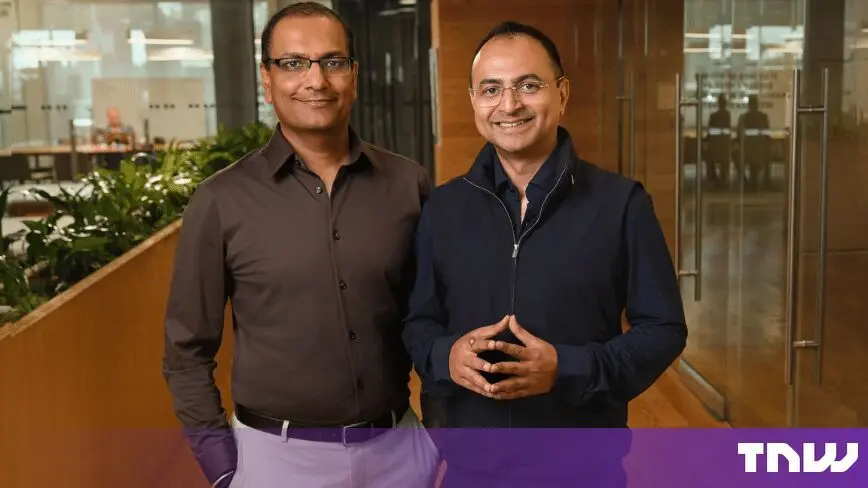
Process intelligence company Skan AI secured $63 million in Series C funding co-led by Cathay Innovation and Dell Technologies Capital. The platform records and analyzes employee workflows through desktop observation, then builds AI agents that replicate the work. Seven of the ten largest US banks already use the system.
Skan AI announced $63 million in Series C funding on Wednesday, co-led by Cathay Innovation and Dell Technologies Capital
1
2
3
. The process intelligence company builds AI agents by observing how employees actually perform enterprise work across applications. Citi Ventures, Bloomberg Beta, State Farm Ventures, and Wipro Ventures also participated in the round, bringing total funding to approximately $120 million since the company's 2019 founding2
3
.
Source: The Next Web
The platform deploys software on employee desktops that captures screenshots and processes them locally on the machine
1
3
. The actual images never leave the device. Instead, only anonymized metadata transmits to Skan's analytics platform, including application usage patterns, time allocation by process, workflow sequences, and decision paths1
. Employee identifiers are swapped for tokens before any data moves anywhere, and the company states that personal messages and passwords are never captured1
.Co-founder and CEO Avinash Misra explained the core insight: "Everyone is obsessed with building a better car. We think the bigger opportunity is building a better navigation system"
1
3
. The platform has logged upward of 25 billion work signals across its customer base3
.Skan offers three products that form an AI-driven platform for discovering, modeling, and automating enterprise workflows
2
. Blueprint maps how processes move across systems and teams, Intelligence identifies where time and money leak from operations, and Agents deploys automation modeled on what top performers actually do3
.

Source: VentureBeat
Misra argues that standard approaches to operationalizing AI in enterprises fail because they rely on documentation rather than reality. "The way work is documented and the way work actually happens inside a large enterprise are two different things, and the gap between them is precisely where agents fail"
2
. The screen becomes the convergence point where human agency, the entire application landscape, and relevant data come together2
.A quarter of the Fortune 50 are customers, along with seven of the ten largest US banks and three of the five largest US insurers
1
3
. At one large US bank, Skan observed 11.2 million context switches across 1,500 finance professionals, surfacing $37 million in operational inefficiencies1
3
. AI agents built on those observations cut cost per transaction by 32% and lifted throughput by 41%, delivering $18 million in annualized savings1
3
.The company reports revenue growth exceeding 300% year-over-year, with net dollar retention averaging 150%
1
3
. Skan claims cumulative measured customer value exceeds $500 million, with average operational savings between 30% and 40%3
.Related Stories

The funding arrives amid widespread frustration with generative AI implementations. Gartner research cited by the company finds that only 8% of enterprises have AI agents in production, and 95% of early implementations will require complete redesign
1
2
. These figures echo an MIT report covered by Fortune that found roughly 95% of enterprise generative AI pilots failed to deliver measurable returns2
.Misra frames this as a data problem rather than a model problem. "You cannot fix a source data problem downstream. Better models will not solve it. Better prompts will not solve it"
1
. He argues that process mining vendors like Celonis only capture completed transactions from backend systems, missing the messy human work between those committed states. "Eighty percent of what you're interested in, from an AI point of view, in execution of work, actually lies between those systems"2
.Two investors attached to the round are European. Cathay Innovation, one of the co-leads, is French, and UK facilities group Mitie with 75,000 staff provided a customer testimonial
1
. Mitie's Chief Technology Officer Cijo Joseph credited Skan with "unprecedented operational visibility"1
3
.Europe presents both opportunity and scrutiny for AI-driven workflow automation involving workplace monitoring. Skan's privacy guide cites a deployment at Allianz in Munich that won full works council approval
1
. However, TD Bank in Canada scaled back a monitoring rollout after workplace surveillance objections from staff, and Meta paused a program collecting keystrokes for AI training in June1
.Cathay Innovation partner Simon Wu argued that enterprise work context is becoming infrastructure for corporate AI similar to how CRM software became the system of record for customer data, calling Skan the only company building that context graph of work from direct observation rather than documentation or system logs
3
. Skan plans to deploy the new capital toward product development and expansion in financial services, insurance, healthcare, and technology sectors3
.Summarized by
Navi
[1]
[2]
[3]
25 Jun 2026•Startups

07 Apr 2026•Technology

17 Sept 2025•Business and Economy

1
Science and Research

2
Technology

3
Technology