SkyPilot raises $20M to unify fragmented AI compute across clouds and optimize GPU usage


2 Sources
[1]
SkyPilot raises $20M to be the Switzerland of AI compute
"If you spend $100 million a year on GPUs, we help squeeze out more than 10% more utilisation," SkyPilot says. That is a $10 million saving from efficiency alone. The startup just raised $20 million to become the Switzerland of AI compute. Its backers include the chief executives of Databricks,
[2]
SkyPilot nabs $20M to ease AI infrastructure management
Infrastructure automation startup SkyPilot Inc. launched today with $20 million in seed funding. Lux Capital led the raise with participation from several other institutional backers. The funds were joined by Databricks Inc. Chief Executive Officer Ali Ghodsi, Google LLC chief scientist Jeff Dean
Share
Copy Link
SkyPilot emerged from stealth with $20 million in seed funding to solve AI compute fragmentation. The UC Berkeley spinout, co-founded by Databricks' Ion Stoica, promises to help companies squeeze 10% more utilization from GPU spending—translating to $10 million in savings for firms spending $100 million annually. Backed by CEOs from Databricks, Vercel, Replit, and Hugging Face, the startup targets a market expected to grow from $14 billion to over $60 billion by 2034.
SkyPilot Secures $20M Seed Funding to Address AI Compute Challenges
SkyPilot emerged from stealth mode on Tuesday with $20 million in seed funding to tackle one of AI's most pressing infrastructure problems: the fragmentation of AI compute resources
1
. The infrastructure automation startup, which spun out of UC Berkeley, promises companies spending $100 million annually on GPUs that it can help squeeze out more than 10% additional utilization—a $10 million saving from efficiency alone1
. Lux Capital led the round, with participation from Coatue, Amplify, Foundation, Race, and The House Fund1
. The angel investor roster reads like a who's who of AI leadership, including Databricks CEO Ali Ghodsi, Google chief scientist Jeff Dean, and the CEOs of Vercel, Replit, and Hugging Face2
.UC Berkeley Pedigree and the Stoica Factor
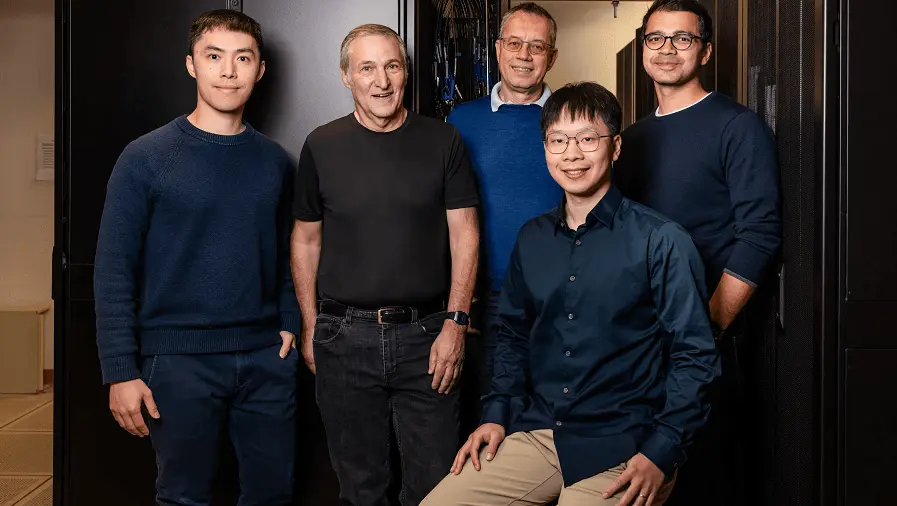
Source: SiliconANGLE
The company was built at UC Berkeley in the same lab that produced Spark, Databricks, and Anyscale
1
. The founding team includes CEO Zongheng Yang alongside Databricks co-founders Ion Stoica and Scott Shenker1
. This pedigree matters: Stoica's Berkeley lab has already produced two multibillion-dollar companies, making it a magnet for students who build the next generation of infrastructure1
. The startup commercializes an open-source tool of the same name that has already passed 14 million downloads, with top deployments running over 10,000 GPUs1
.Solving AI Infrastructure Management Through Unified Control
The core problem SkyPilot addresses stems from GPU demand far outstripping supply
1
. Every AI team now contacts five or ten providers on day one just to scrape together chips, then struggles to use them together1
. Companies often mix and match different types of AI infrastructure—running inference workloads in the cloud while keeping training environments and datasets on-premises2
. Each infrastructure environment typically contains different chips and management tools, and moving AI workloads between different types usually requires extensive code changes2
.SkyPilot functions as a control plane that pools scattered resources into one interface across 20-plus clouds, neoclouds, Kubernetes, and Slurm
1
. The open-source tool enables developers to manage infrastructure environments with diverging configurations through a single interface while automating several common maintenance tasks2
.How SkyPilot Optimizes GPU Usage and Automates Operations
The platform picks the most available hardware, packs workloads onto idle chips, and moves jobs without requiring rewrites
1
. SkyPilot performs bin packing automatically—a technique where developers optimize GPU clusters by changing which server runs what workload2
. When an AI workload's hardware requirements increase, the software automatically provisions additional infrastructure and can fix certain technical issues without human input2
.The paid SkyPilot Platform includes tools for creating inference sandboxes—virtual machines where AI agents can run code without creating cybersecurity risks
2
. By loading virtual machines before they're needed, the platform can activate a new sandbox in under a second2
. The platform can also launch graphics card clusters with 5,000 chips in under a minute, while the SkyPilot GPU Manager regularly checks accelerator health and fixes technical issues2
.Related Stories

Market Opportunity and AI Compute Orchestration Growth
Analysts expect the AI compute orchestration market to grow from approximately $14 billion this year to more than $60 billion by 2034
1
. The validation came early: Nvidia acquired Run:ai for about $700 million in 2024 to solve a version of this problem1
. SkyPilot's neutrality serves as its competitive moat—the company answers to no single cloud or chipmaker, counting Nebius and CoreWeave as partners rather than rivals1
. Its edge is straightforward: it sends workloads wherever they run cheapest1
."Every organization is building custom intelligence around its own data and domains," said Yang. "The challenge is that the AI compute needed to build it is fragmented across clouds. SkyPilot gives frontier AI teams a single platform to manage that infrastructure so they can build custom intelligence faster"
2
. Yang points to Cursor as an example—a company whose margins were negative until it stopped renting a rival's models and trained its own, a shift he calls "custom intelligence" that's now cheaper thanks to open-weight models ranking near GPT and Claude1
.The Open Source Question and What's Next
One challenge looms: the code has sat free on GitHub for years, raising questions about what prevents customers from using it without paying
1
. Lux's Brandon Reeves addresses this directly, stating the free version is "probably like 1% of the way done"1
. SkyPilot plans to use the funding to enhance both paid and open-source versions of its platform while growing headcount2
. The deeper bet investors are making centers on Stoica himself and the Berkeley ecosystem that continues producing infrastructure companies. Whoever controls the compute layer, not any one chip, may win the next phase of AI1
.References
Summarized by

Navi
[1]
[2]
Related Stories
Sail Research raises $80M to slash costs for running AI agents by up to 10 times
25 Jun 2026•Startups

Parasail Raises $32M Series A to Scale Pay-Per-Token AI Inference Cloud Processing 500B Tokens Daily
16 Apr 2026•Technology

Featherless.ai secures $20M Series A to scale serverless hosting for open-source AI models
01 May 2026•Startups

Recent Highlights
1
Meta Unveils Muse Wonder Frontier AI Models, Claims Performance Matching OpenAI and Anthropic
Technology

2
IMF Report Warns AI Market Correction Could Spark Global Financial Crisis With $1.4T at Risk
Business and Economy

3
Eight States Sue OpenAI Over ChatGPT Safety Concerns and Unlawful Collection of Children's Data
Policy and Regulation
Recent Highlights
Today's Top Stories











Don’t drown in AI news. We cut through the noise - filtering, ranking and summarizing the most important AI news, breakthroughs and research daily. Follow topics that matter to you and stay ahead.


