Smack Technologies Raises $61M as Pentagon Urgency Fuels AI Battlefield Tools Boom


2 Sources
[1]
Smack Technologies raises $61m as the Pentagon's hurry becomes a battlefield-AI business model
The battlefield-software start-up's second raise of the year is less a story about one company than a reading of the moment, in which a government's hurry has become a business model. A defence software start-up that most of Silicon Valley had never heard of a year ago is suddenly flush with cash,
[2]
Pentagon pressure to move AI faster drives Smack's new funding round, CEO says
WASHINGTON, Aug 17 (Reuters) - Smack Technologies, a defense-technology startup building artificial intelligence decision-making tools for the military, is raising funding to speed production of its flagship product and make wearable AI hardware designed for the battlefield. The $61 million Series
Share
Copy Link
Smack Technologies secured $61M in Series B funding as Pentagon demand for AI battlefield tools accelerates. The defense software startup is scaling production of Omega, its fires-planning software, and developing Alpha, a forearm-mounted display for troops. The raise reflects a broader shift as military branches seek faster AI vendors after the Anthropic supply-chain rupture.
Pentagon Pressure Drives Rapid Funding for Defense Software Startup
Smack Technologies, an Austin-based defense software startup, announced a $61M Series B funding round
1
2
, marking its second raise of 2026 as Pentagon demand for AI battlefield tools intensifies. The round drew backing from Costanoa Ventures, First In, Point72 Ventures, and Geodesic Capital2
. This capital injection arrives amid a defense-tech boom that has pulled in tens of billions of dollars this year, with investors chasing signals from a government that now wants military software delivered at startup speed rather than through traditional procurement cycles1
.Anthropic Fallout Creates Opening for Smaller Vendors
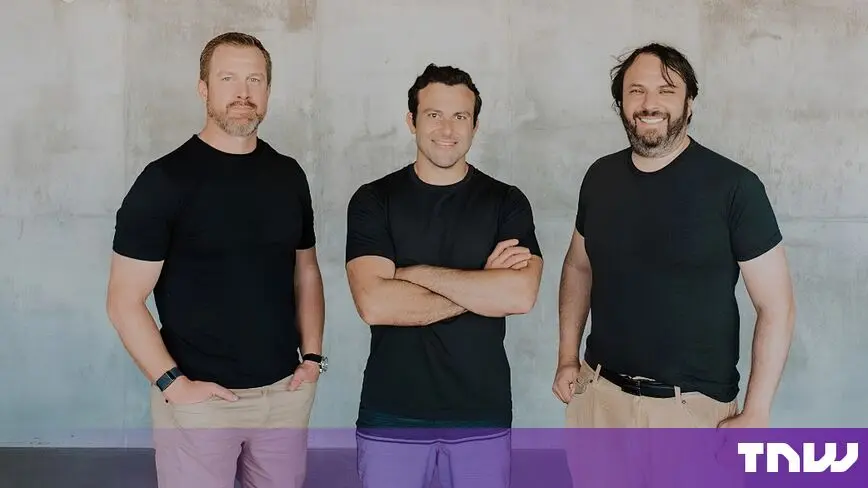
Source: The Next Web
The urgency behind Smack Technologies' rapid growth stems directly from the Defense Department's March decision to brand Anthropic a supply-chain risk and eject it from classified work
1
2
. That rupture sent the Marine Corps and Navy scrambling to diversify their AI vendors, transforming startups like Smack from afterthoughts into hot commodities. Co-founder and CEO Andy Markoff said both branches pressed the company to accelerate production during spring conversations2
. The appetite for alternative vendors recently helped Scale AI win a $500M Pentagon contract, five times its previous deal1
.Omega and Alpha: AI Decision-Making Tools for Decentralized Warfare
Smack's core product, Omega, tackles fires-planning software, the unglamorous but consequential work of deciding what to strike, with what, and in what order
1
. The system uses reinforcement-learning models and real-time computer vision to generate targeting options within minutes and repair disrupted battle plans in seconds, addressing tasks that currently consume hours of staff work1
2
. In July, Smack won two prototyping contracts from the Joint Fires Network and Marine Corps Warfighting Lab, together worth more than seven figures1
2
.The new funding will accelerate Omega production and support development of Alpha, a forearm-mounted display designed to replace the whiteboards and grease pencils troops still strap to their arms in the field
1
2
. Smack hopes to field between 10 and 20 Alpha prototypes within six months1
, with an Austin office dedicated to the effort2
.Related Stories

Decentralized Warfare Drives Tactical AI Development

Source: Market Screener
Defense planners increasingly fear a conflict with a peer adversary where communications are jammed and units are cut off, forcing decisions at the edge rather than routed back to command centers
1
. Markoff argues this shift toward decentralized warfare is being manufactured inside the Pentagon itself. Most tactical decisions will need to be made on the battlefield before data reaches centralized command-and-control systems, unlike operations in Iraq and Afghanistan where troops relied on constant connectivity2
. The company has grown from 19 employees in April to 51 today, with plans to reach roughly 85 by year's end1
2
, reflecting the metabolism of a firm being pulled forward by its customer rather than clawing its way in1
.Speed Versus Oversight in AI-Driven Targeting Systems
Software that recommends targets at machine speed raises questions ethicists and lawmakers have long warned about, because faster targeting loops leave less room for meaningful human intervention before a decision becomes an act
1
. While Smack and most of the sector insist a person stays in the loop, skeptics worry that oversight quietly shrinks to rubber-stamping outputs arriving too quickly to interrogate. The very speed the Pentagon is paying for makes accountability difficult, and the question of who bears responsibility when AI decision-making tools produce errors is being deferred to later conversations1
. European militaries are pouring money into comparable efforts, and the commercial logic remains identical: whoever helps armies decide faster will be paid handsomely to do it1
.References
Summarized by

Navi
[1]
Related Stories
Pentagon's ouster of Anthropic accelerates contracts for small AI rivals across defense industry
09 Apr 2026•Business and Economy
Pentagon strikes AI deals with Nvidia, Microsoft, and AWS to build AI-first fighting force
01 May 2026•Technology

Silicon Valley's Pivot to Defense: Tech Giants Join Forces with the Pentagon
20 Jun 2025•Technology

Recent Highlights



Recent Highlights
Today's Top Stories









Don’t drown in AI news. We cut through the noise - filtering, ranking and summarizing the most important AI news, breakthroughs and research daily. Follow topics that matter to you and stay ahead.


