Small Businesses Using AI Report Double the Growth Optimism and 68% Revenue Gains


2 Sources
[1]
Small businesses that adopt AI are more optimistic about growth, revenue, and employment
* SMBs using AI are more likely to expect a positive impact on employment * AI could be helping them to overcome constraints and unlock more revenue * Expectations vs. reality gap shows only 31% have increased sales so far A new study by the NY Federal Reserve Bank has revealed SMBs who actually
[2]
New Data Shows Small Businesses Use AI to Grow Without Hiring
Human is now a small business product. Nearly one-quarter (23%) of SMBs say they gained customers who specifically want a person doing the work, 14% now get paid to fix AI-generated output, and 21% have emphasized the human touch as a selling point or have plans to do so. Frequent AI Use Is Linked
Share
Copy Link
Nearly half of US small businesses have adopted AI, and the results are striking. Companies using AI frequently show 33 percentage points higher employment expectations than non-adopters and 68% report revenue growth in 2025. But while three-quarters cite faster task completion, only 31% have seen actual sales increases, revealing a gap between AI's promise and current reality.
Small Businesses That Adopt AI Show Unprecedented Optimism
Small businesses embracing AI are displaying dramatically higher confidence in their growth prospects compared to companies that haven't adopted the technology. According to a NY Federal Reserve Bank study, AI adopters recorded a 33 percentage point net expectation of higher employment in the next year, more than double the 15 percentage points reported by non-adopters
1
. This optimism comes as nearly half of US small and medium-sized businesses, at 46%, already use AI in some capacity1
.The data reveals that AI adoption has reached a critical mass, with 88% of small businesses having tried the technology and 74% using it at least occasionally
2
. Yet adoption patterns vary significantly. Frequent or very frequent users represent 44% of all small businesses, followed by occasional users at 30%, while the remaining 26% rarely or never use it2
. What matters most is that about half of businesses that have tried AI end up using it regularly, indicating that once companies experience the technology's benefits, they tend to integrate it into their operations.Revenue Growth Correlates Strongly With Frequent AI Use
The connection between AI adoption and business growth becomes clearer when examining revenue performance. Among small businesses whose annual revenue grew in 2025, 57% use AI frequently or very frequently, nearly double the 29% among those whose revenue stayed flat
2
. More tellingly, 68% of frequent AI users reported revenue growth in 2025, compared with just 43% of occasional users and 37% of those using AI rarely or never2
.However, expectations and reality show a significant gap. While adopters are most likely to expect healthy revenue growth, fewer than one in three, or 31%, have actually reported increased sales due to using AI
1
. The NY Federal Reserve Bank researchers suggest that AI may be helping some small businesses overcome specific operational constraints that limit revenue generation1
. This indicates that while AI's impact on the bottom line is still developing, the technology is addressing real business challenges.AI Augmenting Workers Rather Than Replacing Them
Contrary to widespread concerns about job displacement, AI adoption appears to be augmenting workers rather than eliminating positions. Three in four small businesses, or 77%, reported no change in their current labor costs due to AI, indicating the technology is largely assisting existing workers rather than outright replacing them
1
. Six in 10 AI users say they produce more work without adding staff, and 45% report they can take on work they could not previously handle2
.
Source: TechRadar
The impact on hiring decisions reveals a nuanced picture. Among businesses that have used AI, 26% took at least one action affecting full-time staff because of the technology
2
. The most common action was skipping a hire they otherwise would have made, reported by 13% of AI users. Only 3.3% laid someone off because of AI, making skipped hires about four times as common as layoffs2
. This pattern suggests AI is filling roles businesses would have left unfilled rather than displacing existing employees.Related Stories


Practical Applications Drive AI to Drive Growth
Small businesses are deploying AI across core business functions with measurable results. AI for customer service and calls leads adoption at 58% of users, followed by AI for marketing and advertising at 55%, AI for bookkeeping and tax at 54%, and sales and business development at 53%
2
. These applications cover work typically done by humans, whether permanent staff or outside contractors.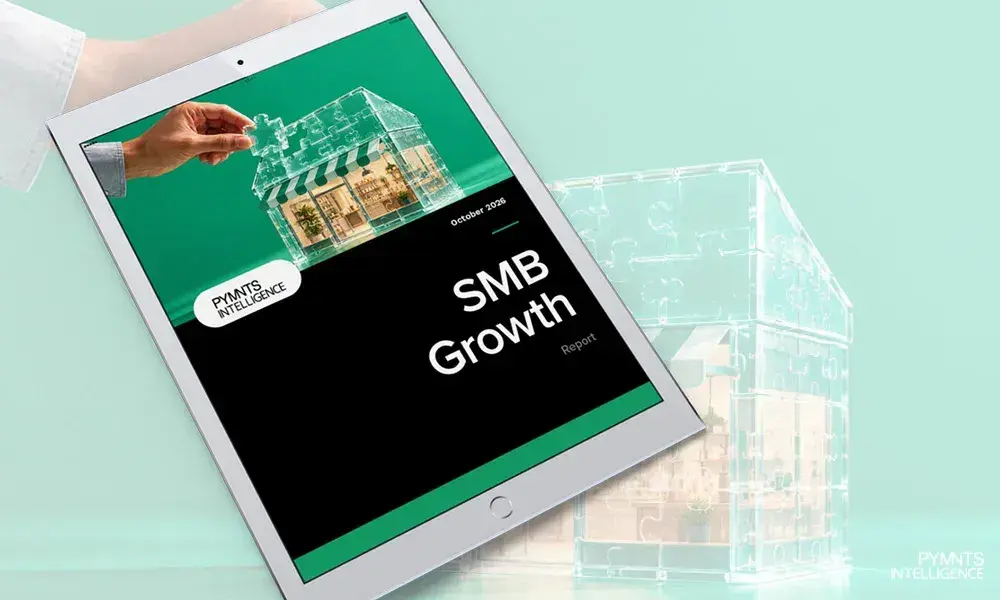
Source: PYMNTS
The benefits are tangible. Speed ranks as the most widely cited advantage, with 72% of AI users reporting they complete tasks faster. Nearly two-thirds say the technology helps them compete more effectively at 64%, or has helped increase revenue at 63%
2
. Overall, 44% describe AI's financial impact as completely or mostly positive, while another 22% report equally positive and negative effects2
.Challenges and Costs Accompany AI Benefits
AI adoption isn't without complications. More than one-quarter of users, at 28%, say their AI spending exceeded expectations. About 22% report extra work caused by AI errors, and a similar share have paid someone to fix or redo AI work
2
. These drawbacks are less common than the benefits, though experiences can overlap—a business may finish tasks faster overall while still needing human intervention to correct errors.Interestingly, 27% of AI users report no financial impact so far, indicating that widespread use hasn't translated into clear gains for every business
2
. Only 51% of adopters have actually integrated AI into their business processes either partially or fully, suggesting many are still experimenting rather than embedding the technology into actual use cases1
. Watch for how integration depth affects outcomes as businesses move from experimentation to full deployment, and whether the expectations gap narrows as companies refine their AI strategies.References
Summarized by

Navi
[1]
Related Stories
Recent Highlights
1
Microsoft and Nvidia Launch Surface Laptop Ultra: A $2,599 AI-Ready PC With RTX Spark Chip
Technology

2
Trump Consulted Grok AI Before Ordering Venezuela Invasion and Capture of Nicolás Maduro
Policy and Regulation

3
Scientists Build AI Model That Reconstructs Images From Brain Scans in Record Time
Science and Research

Recent Highlights
Today's Top Stories






Don’t drown in AI news. We cut through the noise - filtering, ranking and summarizing the most important AI news, breakthroughs and research daily. Follow topics that matter to you and stay ahead.


