Companies Spending Big on AI See Headcount Surge, Challenging Job Loss Narrative


6 Sources
[1]
The AI jobs debate just got messier
AI-related job loss fears grow each time another company announces a round of layoffs. Through May of 2026, companies announced that close to 90,000 job cuts were tied to AI, and, by some accounts, up to 15% of U.S. jobs are projected to be eliminated by AI over the next five years. Promises from
[2]
Companies that add more AI also add more people
AI leads to job losses, or so the conventional wisdom goes. But a new survey of over 21,000 US firms implies the exact opposite: When companies invest in AI, they add positions, but not immediately. According to Ramp, an AI finance biz, and Revelio Labs, an HR biz, companies making a significant
[3]
Heavy corporate AI spenders add staff faster than peers
Companies investing most heavily in AI are adding workers faster than their peers, according to new research that challenges predictions of broad AI-driven job losses. White-collar worker numbers increased 10.2 per cent overall at companies that used generative AI most intensely in the first two
[4]
Tech CEOs Walk Back Dire AI Job Loss Predictions | PYMNTS.com
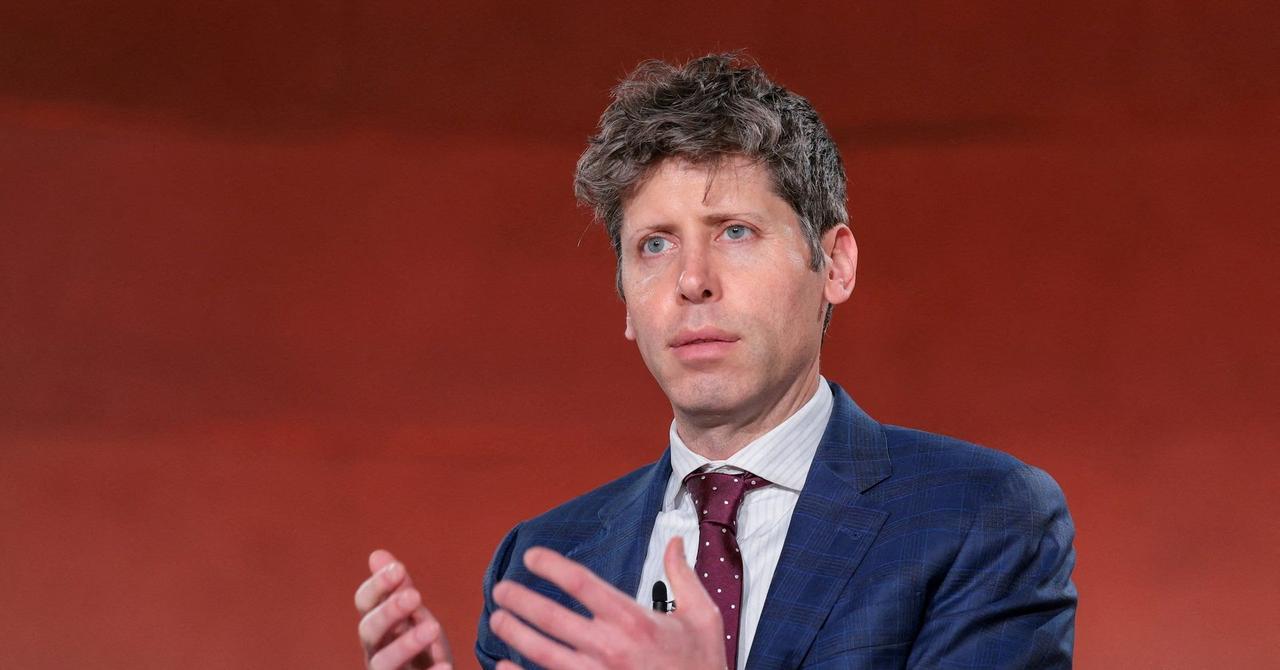
Attitudes among tech CEOs about AI's impact on the labor force are changing, the report said. "We've been roughly right on technological predictions and pretty wrong on the social and economic implications," OpenAI CEO Sam Altman said at a conference in May, per the report. There is also a change
[5]
AI Effect Showing Up in US Employment Numbers | PYMNTS.com
A drop in financial services and IT payrolls -- two sectors where artificial intelligence (AI) adoption has been quickest -- accelerated this year to an average of 28,000 per month, Bloomberg News reported Wednesday (July 1), citing government data. The report contends that this weakness is
[6]
Heavy AI Spenders Are Adding Workers, Not Cutting Them | PYMNTS.com
"A New Look at AI's Impact on Jobs," a study by corporate card firm Ramp and workforce analytics firm Revelio Labs, tracked AI vendor spending against workforce records for 21,559 companies in the United States from January 2021 through February 2026. AI adopters saw headcount rise 10.2% over the
Share
Copy Link
A new study tracking nearly 22,000 companies reveals that businesses investing heavily in AI—spending around $30 per employee monthly—grew headcount by 10.2% over two years, with entry-level roles up 12%. But companies making minimal AI investments saw no job gains, suggesting a widening gap between firms with resources to turn AI adoption into business expansion and those stuck experimenting with subscriptions.
High-Intensity AI Adopters Drive Headcount Growth
The debate around AI and jobs has taken an unexpected turn. A comprehensive study from Ramp and Revelio Labs tracking enterprise AI spending and workforce records from nearly 22,000 companies reveals that businesses heavily investing in AI are expanding their workforces faster than peers
1
. Companies classified as "high-intensity adopters"—those spending an average of $30 per employee per month on AI in the first three months—saw headcount increase by 10.2% over two years following adoption2
. This AI impact on employment contrasts sharply with predictions of widespread AI-driven job losses, as companies announced close to 90,000 job cuts tied to AI through May 20261
.
Source: The Register
Entry-Level Roles See Unexpected Gains
The findings directly challenge fears that generative AI and employment prospects for younger workers are incompatible. Entry-level roles among high-intensity AI adopters grew by 12% over the same two-year period
3
. This counters recent research from Goldman Sachs suggesting AI has already erased about 16,000 net jobs per month over the past year, with Gen Z workers bearing the brunt1
. Ara Kharazian, lead economist at Ramp and co-author of the study, explained that companies heavily investing in AI appear to be selecting for new skills—specifically people who know how to use AI effectively. "Entry-level workers, especially recent graduates and college students, are a natural place to look," he noted2
.The Spending Divide That Determines Outcomes
AI spending and workforce trends reveal a critical threshold effect. High-intensity adopters in the study spent approximately $33.67 per employee monthly in their first three months, compared to just $2.78 for low-intensity adopters
2
. Companies that bought subscriptions and ran pilots but didn't make sustained investments saw no statistically significant gains in headcount1
. The gains also don't appear immediately—there's a six to 12-month lag before headcount increases materialize, reflecting the time required for best practices to filter through organizations2
. This delay suggests AI adoption and job growth depend on companies developing the organizational capacity to translate AI investments into actual business expansion.Tech Sector Dominance and White-Collar Focus
The strongest job growth among companies heavily investing in AI occurred in the information sector, encompassing software, internet, media, and tech-adjacent firms
1
. White-collar employment increased across multiple functions including engineering, sales, administration, customer service, finance, marketing, and scientist roles3
. However, the data skews heavily toward tech-forward, knowledge-work firms that might have venture capital backing and are growing rapidly anyway, making it difficult to determine whether AI directly contributes to hiring or simply appears at companies already expanding1
. Kharazian cautioned that almost all headcount increases were among companies in the tech sector and the study covered only white-collar workers3
.
Source: PYMNTS
Shifting Perspectives Among Tech CEOs
Attitudes among tech CEOs about AI's impact on the labor force are evolving. OpenAI CEO Sam Altman admitted in May, "We've been roughly right on technological predictions and pretty wrong on the social and economic implications"
4
. Anthropic CEO Dario Amodei, who warned last May that AI could erase half of all entry-level roles, now presents a more nuanced view, suggesting companies can either do the same work with fewer resources or do more with the same resources through creativity4
. A survey by EY-Parthenon showed the percentage of CEOs expecting major job losses dropped from 46% in January 2025 to 20% in May4
.
Source: TechCrunch
Related Stories
The Widening Resource Gap
The Ramp and Revelio Labs study suggests a concerning divide is emerging. Firms with resources like capital, technical staff, founder networks, and management bandwidth can turn AI adoption into actual business gains, while those stuck experimenting with subscriptions may fall behind
1
. For software and technology firms, AI can make core output cheaper or faster to produce—writing code, debugging, building internal tools, producing technical documentation, and supporting product development. Lower production costs in these workflows can increase the return to expanding the whole firm, not just the engineering team1
. This pattern suggests AI isn't universally a tool for labor substitution but can function as a catalyst for firm expansion among well-resourced organizations.Mixed Signals From Broader Labor Market Data
While the study offers optimism, broader employment data tells a more complex story. A drop in financial services and IT payrolls—two sectors where AI adoption has been quickest—accelerated in 2026 to an average of 28,000 job cuts per month
5
. Challenger, Gray & Christmas found nearly 102,000 announced job cuts attributed to AI through 2026, with the tech sector accounting for a third of announced layoffs5
. Research from Stanford Digital Economy Lab suggests employment outcomes depend on implementation—weakening in roles where technology automates tasks while remaining strong where AI helps workers perform their jobs5
. Workforce reductions continue at major companies, with Oracle cutting 21,000 jobs over the past year—incurring roughly $86,000 in severance and restructuring charges per employee—while warning its AI use could lead to further reductions2
.References
Summarized by

Navi
[1]
[2]
Related Stories
AI Jobs Paradox: Same Roles See Both Cuts and Hiring Gains as Automation Reshapes Work
04 Mar 2026•Business and Economy
AI's Impact on the Job Market: More Retraining Than Layoffs, For Now
05 Sept 2025•Business and Economy

Sam Altman says AI jobs apocalypse unlikely, admits he was wrong about employment impact
26 May 2026•Business and Economy
Recent Highlights



Recent Highlights
Today's Top Stories










Don’t drown in AI news. We cut through the noise - filtering, ranking and summarizing the most important AI news, breakthroughs and research daily. Follow topics that matter to you and stay ahead.


