Snap CEO Evan Spiegel: AI Glasses Mass Adoption Years Away Despite Strong Q2 Revenue Growth


2 Sources
[1]
Snap Stock Soars 7.76% After Hours: CEO Says Glasses Mass Adoption Is Years Away - Snap (NYSE:SNAP)
Snap's $2,195 Glasses Will See 'Mass Market Adoption' By End of Decade, Says CEO Evan Spiegel: 'Designed For a Future in Which AI Does More Work' Mass Market Adoption May Take Years Speaking on the company's second-quarter earnings call, Spiegel said Snap plans to unveil its augmented reality
[2]
Snap CEO Sees New Wearable Glasses as "Largest Long-Term Opportunity
Shares of Snap were up 12 percent after hours Monday as the social media platform beat second-quarter revenue expectations. Revenue increased 19 percent year-over-year to $1.60 billion, as monthly active users grew to 971 million, up from 956 million in the prior quarter, and daily active users
Share
Copy Link
Snap beat Q2 revenue expectations with $1.6 billion, up 19% year-over-year, as CEO Evan Spiegel positioned the company's $2,195 augmented reality glasses as its biggest bet on the future. Despite unveiling SPECS in September, mass market adoption won't arrive until the end of the decade as Snap pursues an AI-powered computing platform designed to reduce screen time.
Snap Positions AI Glasses as Decade-Long Bet Despite Q2 Revenue Beat
Snap delivered strong second-quarter results with revenue climbing 19% year-over-year to $1.6 billion
1
2
, surpassing Wall Street estimates of $1.54 billion. The social media platform saw monthly active users grow to 971 million from 956 million in the prior quarter, while daily active users reached 493 million, up from 483 million2
. Snap reported a net loss of $164 million, an improvement from the $263 million loss in the prior year, reflecting the company's renewed focus on profitable growth2
. The stock surge followed the earnings announcement, with shares closing 7.46% higher at $5.04 and rising another 7.17% in extended trading1
.
Source: Benzinga
Evan Spiegel Calls SPECS the Company's Largest Long-Term Opportunity
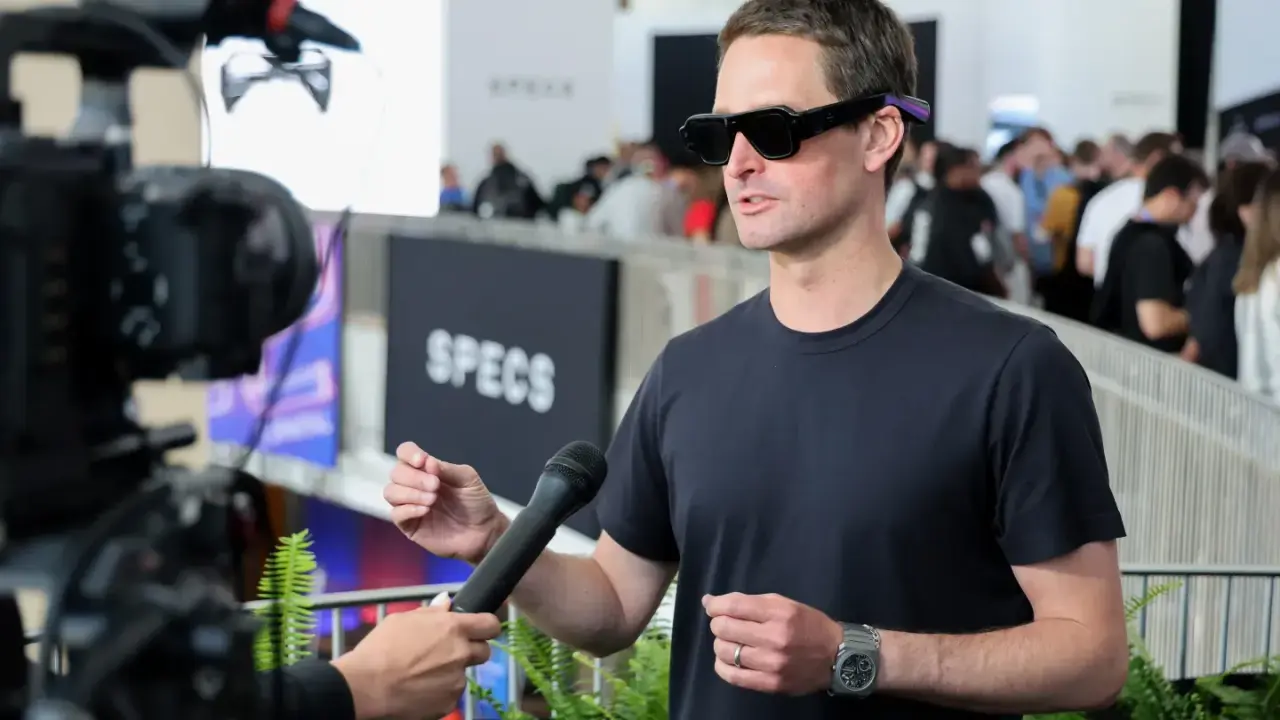
CEO Evan Spiegel positioned Snap's new wearable glasses, called SPECS, as the company's most significant future investment during the Q2 earnings call. "Our largest long-term opportunity is SPECS, a new kind of computer built into see-through glasses," Spiegel stated
2
. The $2,195 augmented reality glasses are scheduled for unveiling at Snap's September 16 event before a commercial launch later this year in the United States, United Kingdom, and France1
2
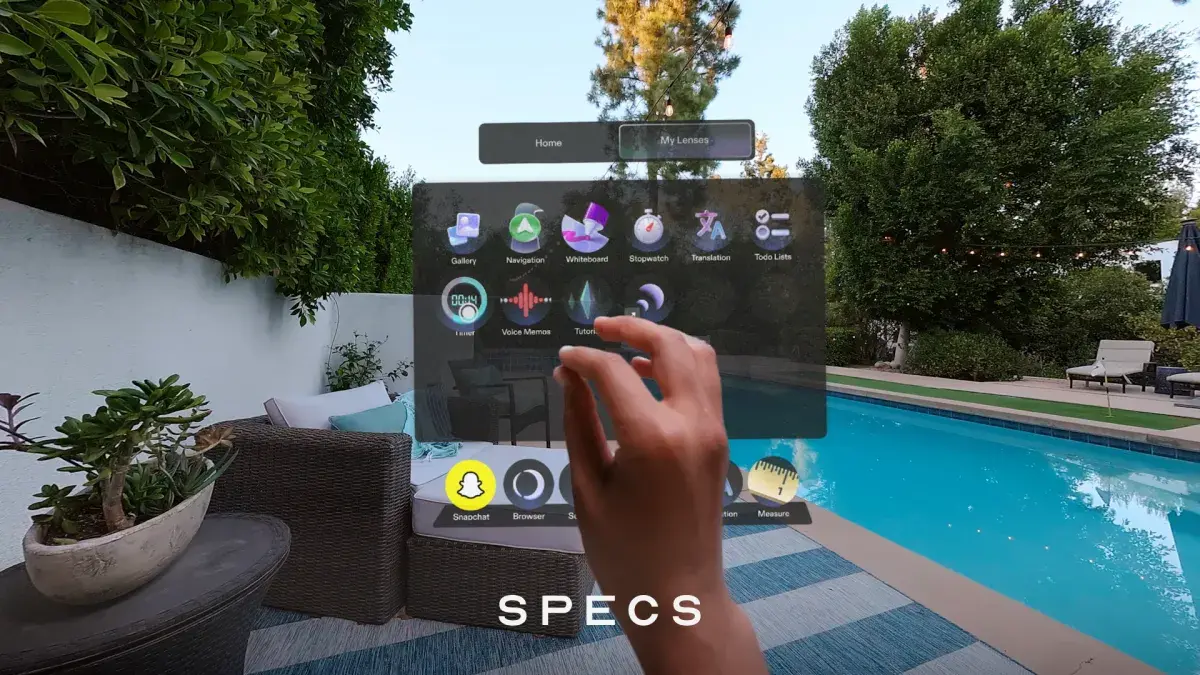
. The AI-enabled wearable glasses blend features from other AI glasses and VR headsets, offering directions, AI assistance, content streaming capabilities, and the ability to overlay interactive lessons onto surfaces2
.
Source: THR
Mass Market Adoption Won't Arrive Until End of Decade
Despite the upcoming launch, Spiegel tempered expectations about immediate widespread adoption. "I think it will be towards the end of the decade before we see mass market consumer adoption," the CEO told analysts during the earnings call
1
. This timeline represents a realistic assessment given Snap's previous struggles with wearable technology. The company launched Spectacles, camera-equipped sunglasses that recorded short videos, in 2016, which failed to generate significant sales and led to reported losses in 2017 due to excess inventory2
. Snap later released updated versions and new AR glasses in 2021, none of which achieved mainstream success2
.Related Stories
AI-Powered Computing Platform Designed to Reduce Screen Time
Spiegel described SPECS as representing a first-mover opportunity in a new computing category. "SPECS are designed for a future in which AI does more work on our behalf and people spend less time operating screens," he explained
1
2
. This vision positions the AI glasses as part of a broader shift toward software that increasingly works on users' behalf rather than requiring constant interaction with apps and screens1
. Snap remains focused on demonstrating the long-term value of its investment in SPECS as it works to build this AI-enabled operating model1
.Balancing Innovation Investment with Path to Profitability
The investment in SPECS is included in Snap's full-year adjusted operating expense outlook, which remains at $2.75 billion
2
. For Q3 revenue, Snap provided guidance of $1.70 billion to $1.74 billion, compared to Wall Street's forecast of $1.69 billion, with adjusted EBITDA expected between $300 million and $350 million1
. Infrastructure costs are projected to grow modestly, with full-year costs of $1.65 billion to $1.70 billion due to continued investments in the company's AI-enabled operating model2
. This comes after Snap laid off 1,000 employees in April, including 16% of full-time staff, a move expected to reduce the company's annualized cost base by more than $500 million by the second half of 20262
. Spiegel acknowledged the company faced "a crucible moment" last fall, requiring faster, more efficient operations while pivoting toward profitable growth2
.References
Summarized by

Navi
[1]
Related Stories
Snap Unveils Next-Gen AR Glasses: AI-Powered Specs Set for 2026 Consumer Launch
11 Jun 2025•Technology

Snap spins out AR glasses business into Specs Inc. to challenge Meta's smart glasses dominance
28 Jan 2026•Business and Economy

Snap Unveils Fifth-Generation AR Glasses: A Leap into the Future of Augmented Reality
18 Sept 2024

Recent Highlights
1
Microsoft and Nvidia Launch Surface Laptop Ultra: A $2,599 AI-Ready PC With RTX Spark Chip
Technology

2
OpenAI Releases 722 AI-Generated Math Papers on GitHub, Igniting Fury Among Mathematicians
Science and Research

3
Trump Consulted Grok AI Before Ordering Venezuela Invasion and Capture of Nicolás Maduro
Policy and Regulation

Recent Highlights
Today's Top Stories









Don’t drown in AI news. We cut through the noise - filtering, ranking and summarizing the most important AI news, breakthroughs and research daily. Follow topics that matter to you and stay ahead.


