Snapchat's New AI Feature Raises Privacy Concerns: Your Face Could Appear in Ads


4 Sources
[1]
Snapchat Can Use Images of Your Face in Ads
Snapchat has reserved the right to put its users' faces on ads and personalized sponsored content with its "My Selfie" feature. According to a report by 404 Media, if an individual uses Snapchat's "My Selfie," it means they also agree to let the app use their face in ads. With the "My Selfie"
[2]
Snapchat's My Selfie Feature May Use Your Face in Ads: Here's How to Stop It
The feature lets you take a selfie to enhance Snapchat's ability to make AI images of you. It can also be used in marketing materials. Snapchat has always embraced AI, whether by releasing its own AI chatbot or its real-time AR effects that use generative AI. Most of the features are fun and
[3]
Snapchat reserves right to put AI-generated images of users' faces in...
Snapchat reserves the right to put photos of its users' faces in ads as part of the terms of service of its "My Selfie" tool, which lets people and their friends create artificial intelligence-generated images that are trained on their selfies. "My Selfie is used to power Generative AI, Cameos and
[4]
Snapchat's AI selfie feature puts your face in personalized ads -- here's how to turn it off
You might want to turn off the "See My Selfie in Ads" setting. Screenshot: The Verge Even though Snap may use your face in personalized ads only shown to you, the company says it doesn't share your data with third-party advertisers. "Advertisers do not have access to Snapchatters' Gen AI data in
Share
Copy Link
Snapchat's "My AI Selfie" feature allows the platform to use AI-generated images of users' faces in advertisements, sparking debates about privacy and consent in the digital age.
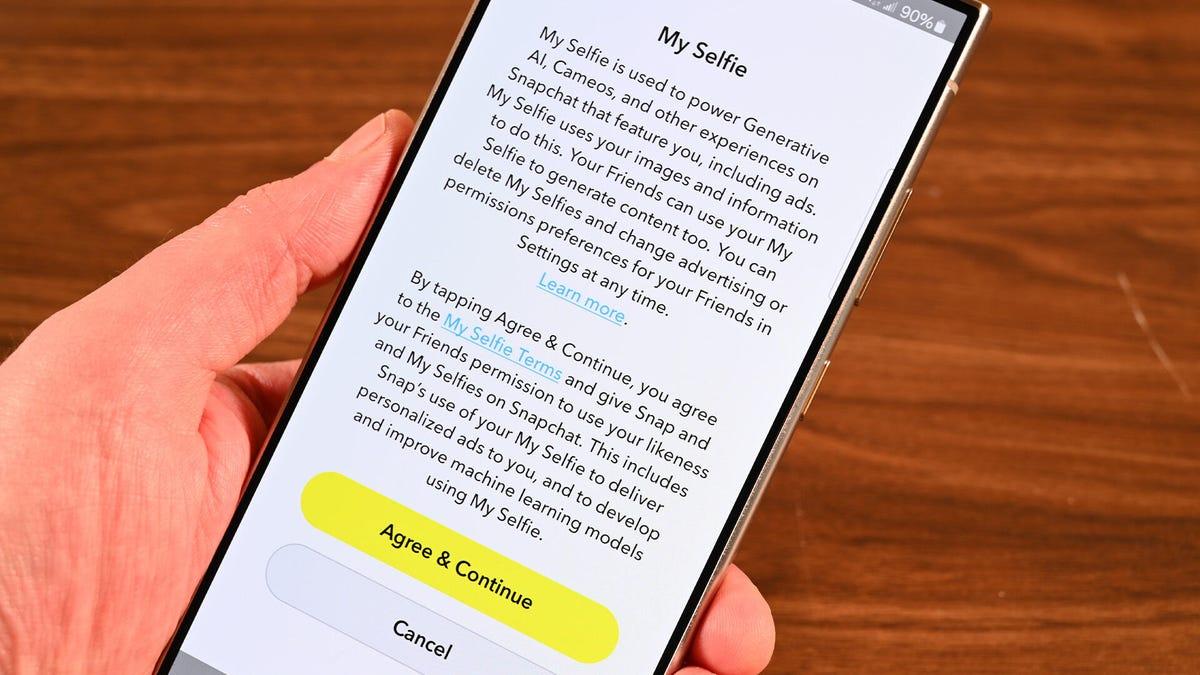
Snapchat Introduces Controversial AI Selfie Feature
Snapchat, the popular multimedia messaging app, has recently unveiled a new feature called "My AI Selfie" that has raised eyebrows and concerns among privacy advocates and users alike. This innovative yet contentious feature allows the platform to utilize AI-generated images of users' faces in advertisements, potentially without their explicit consent
1
.How the Feature Works
The "My AI Selfie" feature employs advanced artificial intelligence technology to create personalized avatars based on users' selfies. These AI-generated images can then be incorporated into various advertisements across the Snapchat platform. While the feature aims to enhance user engagement and personalization, it has sparked a heated debate about the boundaries of privacy in the digital age
2
.Privacy Concerns and User Reactions
Many users and privacy experts have expressed alarm over the potential misuse of personal images. The primary concern is that Snapchat may be overstepping boundaries by using individuals' likenesses for commercial purposes without obtaining explicit permission. This has led to discussions about the ethical implications of AI-generated content and the need for clearer regulations in the rapidly evolving digital landscape
3
.Opt-Out Options and User Control
In response to the growing concerns, Snapchat has emphasized that users have the option to opt out of the feature. The company has provided instructions on how to disable the "My AI Selfie" function, allowing users to maintain control over their digital presence. However, critics argue that such features should be opt-in rather than opt-out, placing the onus on users to protect their privacy
4
.Related Stories

Broader Implications for Social Media and AI
The introduction of this feature by Snapchat highlights the ongoing tension between technological innovation and personal privacy. As artificial intelligence continues to advance, social media platforms are exploring new ways to leverage user data and content. This trend raises important questions about data ownership, consent, and the responsibilities of tech companies in safeguarding user privacy
1
.Legal and Ethical Considerations
The "My AI Selfie" feature also brings to the forefront legal considerations regarding image rights and personal likeness. While Snapchat maintains that its actions are within the bounds of its terms of service, legal experts are debating whether current laws adequately address the complexities of AI-generated content and its commercial use
3
.As the debate continues, the Snapchat controversy serves as a catalyst for broader discussions about the future of privacy, consent, and the ethical use of AI in social media and advertising. It remains to be seen how regulators, tech companies, and users will navigate these challenging waters in the coming years.
References
Summarized by

Navi
[1]
Related Stories
Snapchat's AI Revolution: New Features and Redesign Unveiled
18 Sept 2024

Facebook's New AI Feature Seeks Access to Users' Unpublished Photos, Raising Privacy Concerns
28 Jun 2025•Technology

Snapchat launches AI Sponsored Snaps, turning brand chatbots into conversational sales agents
28 Apr 2026•Technology

Recent Highlights


Recent Highlights
Today's Top Stories










Don’t drown in AI news. We cut through the noise - filtering, ranking and summarizing the most important AI news, breakthroughs and research daily. Follow topics that matter to you and stay ahead.


