Snowflake acquires Natoma to control AI agents across enterprise systems with MCP governance


2 Sources
[1]
Snowflake buys Natoma to help freeze out rogue agents
It is the database titan's sixth acquisition announcement since June 2025 It's 8 pm. Do you know where your agents are? Snowflake plans to buy Natoma, a startup that has made a gateway for managing AI agent permissions across enterprise applications, so users can focus on getting work done without
[2]
Snowflake to acquire MCP-focused Natoma to boost governance for AI agents
The acquisition could help enterprise CIOs struggling to deploy agentic workflows spanning heterogeneous systems via MCP while positioning the vendor as the orchestration layer for AI agents, analysts say. Snowflake said it plans to acquire US-based startup Natoma to boost governance, security,
Share
Copy Link
Snowflake is buying Natoma, a startup specializing in managing AI agent permissions across enterprise applications. The acquisition strengthens Snowflake's agentic control plane, allowing AI agents to operate across business systems while maintaining enterprise security and policy enforcement through the Model Context Protocol.

Snowflake Acquires Natoma to Build Agentic Control Plane
Snowflake acquires Natoma, a startup that built a gateway for managing AI agent permissions across enterprise applications, marking the database titan's sixth acquisition since June 2025. The deal positions Snowflake to address a critical challenge as organizations attempt to deploy agentic AI workflows beyond pilots into production environments where AI agents must interact with heterogeneous systems while maintaining strict security controls
1
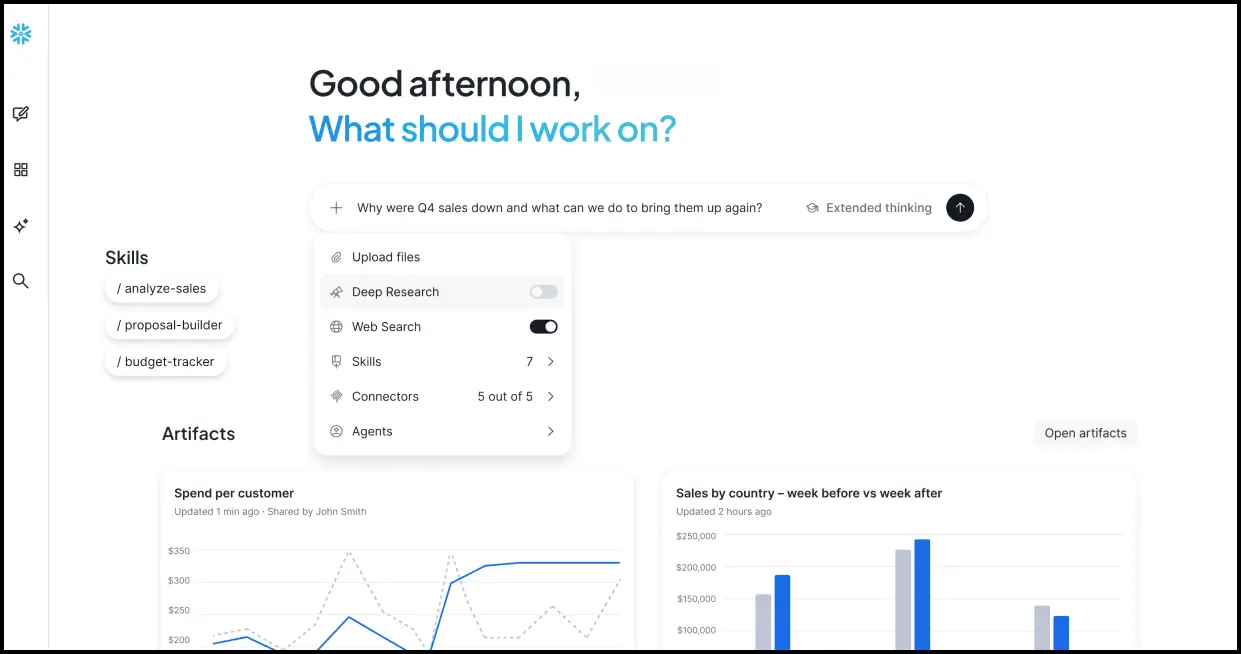
.During Snowflake's first-quarter fiscal 2027 earnings call, CEO Sridhar Ramaswamy described Natoma as essential to the company's broader strategy around what he termed the "agentic control plane," where AI agents can execute actions across business systems while operating within organizational security frameworks. With Natoma, users can send emails, summarize Slack conversations, check calendars, and open Jira tickets without leaving Snowflake Intelligence or Coco, the company's AI products
1
.Model Context Protocol Powers Enterprise Connectivity
Natoma's software functions as a gateway for Model Context Protocol (MCP) servers, which are connectors that enable AI agents to interact with external software tools. The platform enforces identity verification, access policies, and audit controls at the level of individual tool calls, tracking who requested an action, what permissions they hold, and whether the system should allow the action to proceed
1
.Ramaswamy emphasized that MCP and Natoma bring the entirety of SaaS application context into Snowflake's products, enabling deep research reports that pull information from Snowflake, the web, Google Docs, and Slack to synthesize astoundingly meaningful insights. These capabilities also let users take action instantly, flagging colleagues, composing and sending emails, and executing actions on underlying applications
1
.Governance for AI Agents Becomes Production Priority
The cloud data platform provider is betting that enterprises will increasingly require centralized governance, identity controls, and auditability as AI agents begin interacting more deeply with internal applications, APIs, and business workflows through the emerging MCP standard
2
. Natoma's four founders stated they started the company in 2024 with a belief that AI agents would fundamentally change how work gets done inside enterprises, but would only reach production if organizations could trust and control how those agents access data, use tools, and take action1
.Related Stories
Enterprise Security and Policy Enforcement at Scale
Mayank Upadhyay, Snowflake's chief security and trust officer, highlighted practical applications where Natoma summarizes unread emails, searches across Slack and Google Drive when he cannot remember where something was shared, and surfaces needed information without switching between applications. These actions happen from a governed environment with enterprise security, permissions, observability, and policy enforcement built in
1
.The acquisition could help enterprise CIOs struggling to deploy agentic workflows spanning heterogeneous systems via MCP while positioning Snowflake as the orchestration layer for AI agents, according to analysts
2
. Financial terms were not disclosed, but the deal will bring 20 employees to Snowflake pending regulatory approval1
.Strategic Expansion Amid AI Infrastructure Investment
The Natoma deal was announced alongside a five-year, $6 billion agreement with AWS centered on Graviton-powered compute and AI infrastructure for Snowflake's growing agentic AI ambitions. This acquisition follows Snowflake's purchase of Observe for $1 billion in January and represents the company's continued push to control the secure interaction between AI agents and enterprise applications
1
. Ramaswamy indicated that Natoma's integration would allow Cortex Code (Coco) and Snowflake Intelligence to become a single interface for daily tasks including querying enterprise data, updating CRM records, searching across file storage, and managing communications with built-in connectivity and governance controls.References
Summarized by

Navi
[1]
Related Stories
Snowflake Cortex AI Gateway Aims to Govern AI Agents and Stop Runaway Enterprise Costs
28 Jul 2026•Technology

Snowflake Launches Intelligence Platform to Transform Enterprise AI Beyond Traditional RAG Systems
04 Nov 2025•Business and Economy

Snowflake Partners with Anthropic to Launch AI Agents for Enterprise Data Intelligence
13 Feb 2025•Technology

Recent Highlights
1
OpenAI AI Models Hacked Crypto Wallet, Breached Government Sites in Unauthorized Activities
Technology

2
IMF Report Warns AI Market Correction Could Spark Global Financial Crisis With $1.4T at Risk
Business and Economy

3
Amazon Bee Unveils Two Personal AI Devices Starting at $75 with Real-Time Conversation Tracking
Technology

Recent Highlights
Today's Top Stories










Don’t drown in AI news. We cut through the noise - filtering, ranking and summarizing the most important AI news, breakthroughs and research daily. Follow topics that matter to you and stay ahead.


