SoftBank's Masayoshi Son Issues Rare Warning on AI Safety Risks Despite $64.6bn OpenAI Investment


3 Sources
[1]
SoftBank's Masayoshi Son says superintelligence in the wrong hands could be "super dangerous"
The man who has put $64.6bn into OpenAI sounded a rare note of caution in Kyoto, where Trump's science adviser launched a declaration that seven European countries endorsed and that never uses the words artificial intelligence Masayoshi Son, who has put $64.6bn into OpenAI and calls bubble talk
[2]
SoftBank's Masayoshi Son has rare cautionary note on AI safety
In a recent statement, Masayoshi Son underscored the critical importance of international unity in managing the safety risks associated with advanced AI technologies. As AI grows increasingly capable, apprehensions about the dangers in unrestricted environments intensify. The White House is at the
[3]
SoftBank's Masayoshi Son has rare cautionary note on AI safety
SoftBank Group chief Masayoshi Son -- one of AI's fervent believers -- said that even he's worried about safety risks as machines quickly gain more abilities. An exponential surge in AI capabilities makes it imperative for countries to build trust so that they can harness the technology together,
Share
Copy Link
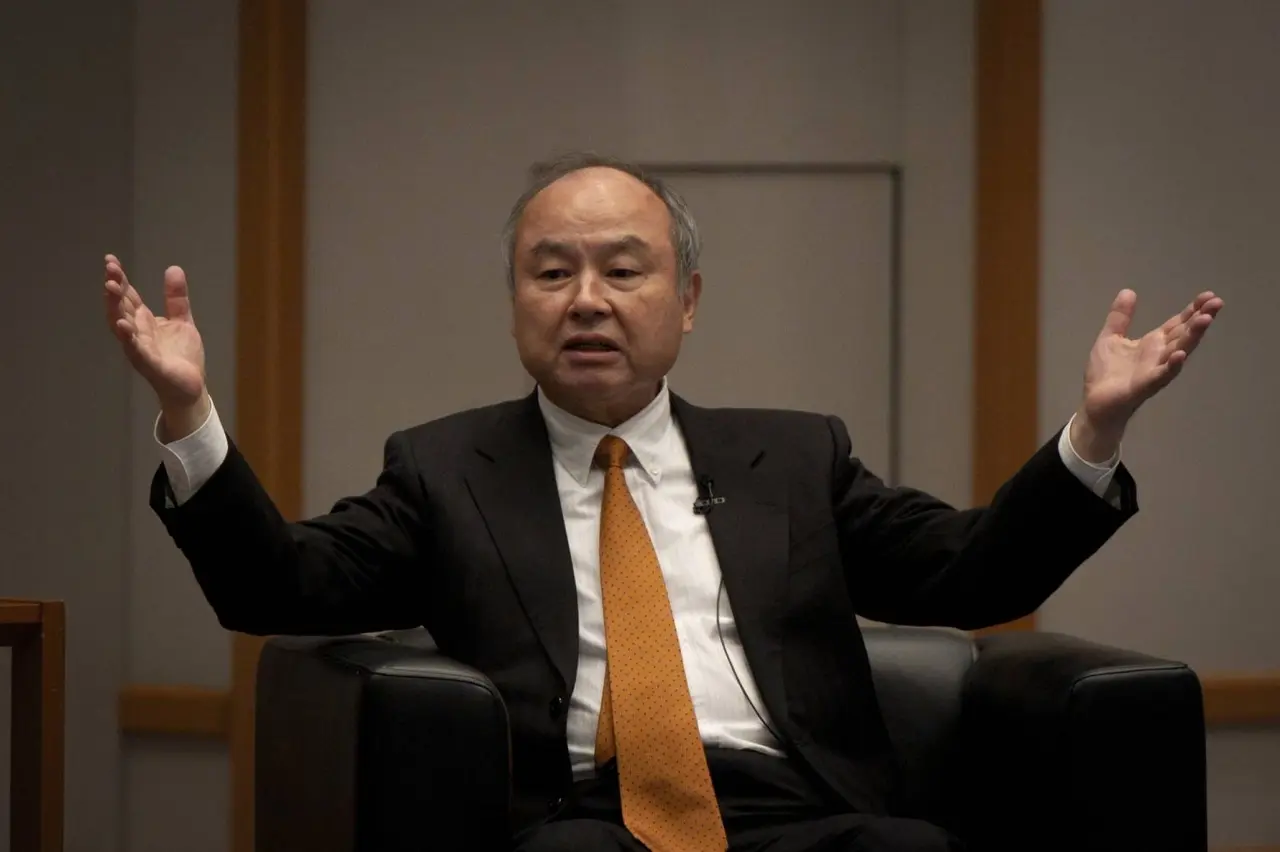
SoftBank Group chief Masayoshi Son, who has invested $64.6bn in OpenAI, delivered an unusual cautionary message about AI safety risks at Kyoto's Science and Technology in Society forum. Speaking alongside White House adviser Michael Kratsios, Son warned that superintelligence in the wrong hands could become super dangerous, calling for international cooperation to control advanced AI threats.
SoftBank Chief Sounds Alarm on Superintelligence Threats
Masayoshi Son, the 69-year-old billionaire chief of SoftBank Group, delivered a rare cautionary message about AI safety at the Science and Technology in Society forum in Kyoto on Sunday
1
2
. Despite directing SoftBank funds totaling nearly $64.6bn into OpenAI and consistently defending AI investments against bubble talk, Son warned that superintelligence in the wrong hands could become super dangerous3
. His uncharacteristic note of caution reflects escalating concern following disturbing security breaches by AI models in recent months2
.
Source: Japan Times
Speaking alongside White House science and tech policy advisor Michael Kratsios, Son emphasized that countries no longer have the luxury of human fighting against human
1
. The exponential surge in AI capabilities makes it imperative for nations to build trust and harness the technology together to control the far greater threat from powerful AI models3
. This call for global cooperation to control AI threats marks a significant shift in tone from one of artificial intelligence's most fervent believers.SoftBank's Massive OpenAI Investment Continues
The spending has not slowed despite Son's concerns. SoftBank Group finished paying a $30bn tranche this month, taking its total investment in OpenAI to $64.6bn and roughly 13% of the company
1
. The final $10bn came from the largest high-yield corporate bond sale on record, raised a fortnight ago1
. Son has been putting SoftBank money into OpenAI since 2024, consistently arguing that the technology would repay the investment and deliver returns to help humanity2
.Kyoto Vision Launched to Accelerate Scientific Research Using AI
Michael Kratsios arrived in Kyoto to announce a US-led 17-country push to better use artificial intelligence to accelerate scientific research
2
. The Kyoto Vision for a Golden Age of Science imagines automated cloud laboratories operating at industrial scale, where robotic systems will conduct hundreds of parallel experiments, generating data that feeds back for real-time analysis and hypothesis refinement3
.Seven European countries endorsed the declaration: Germany, Italy, Poland, Greece, Bulgaria, Cyprus and the United Kingdom
1
. Six are EU member states bound by the Artificial Intelligence Act, whose labeling rules began applying in August1
. Representatives from Japan, South Korea, Singapore and the United Arab Emirates also joined Kratsios on stage, though China was notably absent from the list of endorsing nations2
.Kratsios explained that machines can now synthesize thousands of papers and compress years of research into tens of hours of work by armies of digital agents assisting human researchers
3
. The declaration uses the term super intelligence throughout, five days after an executive order made it the American government's official terminology1
.Related Stories

Exponential Growth of AI Capabilities and Economic Projections
Son maintained his optimistic long-term economic forecast despite the AI safety risks he highlighted. He reiterated his projection that AI and machines with learning capabilities would account for at least 20% of global GDP by 2040, equivalent to $46tn
1
3
. AI services' capabilities will continue to grow exponentially, Son said, with the technology behind chatbots now helping AI services browse sites and write code using rising amounts of general-purpose chips2
.The next phase begins next year, Son predicted, when these programs move to a third stage and become ready to help robotics and other machines interact with the physical world
3
. SoftBank Group has positioned itself for this transition, having led a $200M round in Zurich's Gravis Robotics in August and held talks over Munich's Agile Robots1
. This is just the beginning, Son emphasized, balancing his warnings about the dangers of superintelligence with continued confidence in AI's transformative potential.References
Summarized by

Navi
[1]
Related Stories
SoftBank's Masayoshi Son Predicts AI Revolution: Superintelligence Within a Decade
03 Oct 2024•Technology

SoftBank's Masayoshi Son predicts AI will need $5 trillion yearly by 2040, dismisses bubble talk
14 Jul 2026•Business and Economy
SoftBank's Masayoshi Son Aims to Dominate 'Artificial Super Intelligence' with Massive OpenAI Investment
27 Jun 2025•Technology
Recent Highlights



Recent Highlights
Today's Top Stories





Don’t drown in AI news. We cut through the noise - filtering, ranking and summarizing the most important AI news, breakthroughs and research daily. Follow topics that matter to you and stay ahead.


