Sol AI Emerges From Stealth With $4M to Transform How Email Commitments Get Done


3 Sources
[1]
Cred alumni's Sol raises $4 million from GC, Nexus Venture Partners, Kunal Shah
The startup, which is coming out of stealth, is building an AI assistant around the idea of 'proactive AI'. This identifies commitments users make in emails and starts the work needed to fulfil them, instead of waiting for users to write a prompt or assign a task. Agentic AI startup Sol, founded
[2]
Sol Foundry Raises $4 Mn To Automate Email Commitments With AI
So far, AI in the inbox has so far meant assistance in drafting. Microsoft has pushed Copilot deeper into Outlook, Google has embedded Gemini across Workspace, to provide AI assistants designed to organise inbox, draft replies in your specific tone, and capture meeting notes directly. Almost all
[3]
Sol emerges from stealth with $4M for AI that finds and does the work you promised in email
Most AI tools wait to be told what to do. Sol finds the commitments expressed in Gmail, does the work needed and comes back for approval Today, Sol emerged from stealth with $4 million in funding from General Catalyst, Nexus Venture Partners, DeVC, Peercheque and Kunal Shah. Sol built a proactive
Share
Copy Link
Sol AI, founded by Cred alumni, secured $4 million in seed funding from General Catalyst, Nexus Venture Partners, and Kunal Shah. The AI assistant scans Gmail to proactively identify commitments users make and autonomously initiates tasks like research, document creation, and meeting coordination—eliminating the need to repeat yourself across tools.
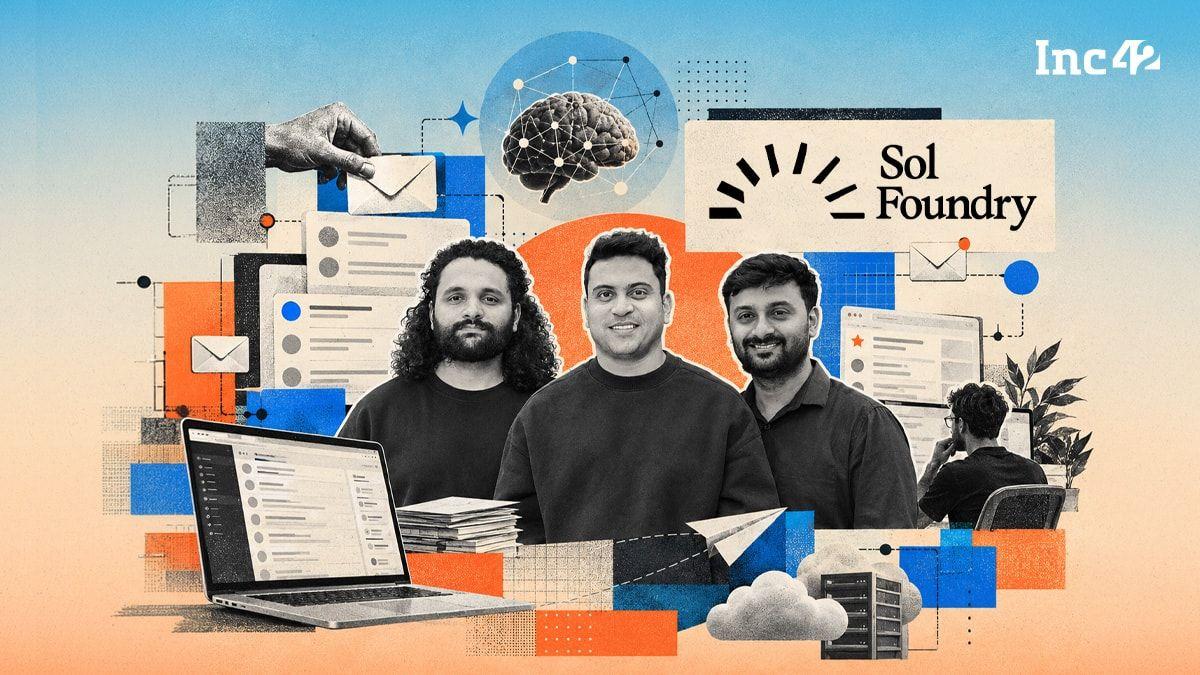
Sol AI Brings Proactive Intelligence to Email Workflow
Sol AI, an AI startup founded by former Cred executives Anish Karan, Ranjith Nair, and Prateek Srivastava, emerged from stealth mode with $4 million in seed funding
1
2
. The round was led by General Catalyst and Nexus Venture Partners, with participation from Z47's DeVC, Peercheque, and Kunal Shah, founder of Cred3
. The company is building an AI assistant around 'proactive AI' that identifies email commitments and autonomously initiates tasks without waiting for users to write prompts.How Sol AI Works to Automate Email Commitments With AI
Sol Foundry's product scans Gmail to proactively identify commitments users make in their emails—phrases like "I'll send the deck" or "I'll set up time"—and begins working on them immediately
2
. The AI assistant can carry out tasks including research, creating documents and presentations, coordinating meetings, and drafting replies that pull context from scattered email threads1
. Users retain final approval before anything is sent, scheduled, or shared. "People whose work runs on email often have to repeat themselves: first on mail, then again when they ask an AI tool to act. There's no good reason for that," Karan told Economic Times1
.Technical Architecture and Specialist Skills
Under the hood, Sol AI operates with a library of more than 100 specialist skills that can improve based on how users interact with the system's output
1
3
. The startup uses a model-agnostic approach, currently running on OpenAI models with routers that switch between them depending on what works best for a particular task2
. The AI assistant operates in its own computer environment, can browse the web, and integrates with Google Workspace including Gmail, Docs, and Slides2
. Once connected, it builds contextual understanding of the user's role, the people they work with, and how they communicate before it begins to act1
.Target Users and Market Strategy
The company is initially targeting people whose work involves high volumes of email commitments where the cost of missing one is relatively high
1
. This includes founders, executives, company leadership, and professionals in sales, recruiting, consulting, and agencies3
. Sol currently has more than 100 users on its pre-launch platform and is offering selective access through a waitlist, with plans to open more broadly in coming weeks1
. The go-to-market motion follows a prosumer go-to-market approach where anyone can sign up, and enterprise sales follow once enough people in one organization use it2
.Competitive Positioning and Challenges Ahead
Karan argues that Sol AI's primary competition isn't other AI assistants, but the workflows users have already built around existing AI tools
1
. While Microsoft has pushed Copilot deeper into Outlook and Google has embedded Gemini across Workspace, these tools still wait for user prompts2
. The challenge for Sol AI is proving reliability across multiple contexts and types of work—not simply connecting an AI model to email1
. The startup also faces the trust problem every email agent inherits: an approved output carries the user's name, making data security paramount.Related Stories



Security Measures and Pricing Model
Sol AI cannot send an email, schedule a meeting, or share output without explicit user approval, and permissions can be revoked at any point
1
. The company has completed CASA cloud security assessment and is SOC 2 Type 1 certified, with plans to obtain SOC 2 Type 2 certification in coming months1
. The startup is currently pre-revenue with no fixed pricing tiers yet, though Karan indicated the pricing model will be usage-based pricing or outcome-based with a fixed component, priced in US dollars2
.Investment Rationale and Growth Plans
Akarsh Shrivastava, partner at General Catalyst, noted: "When we first met Anish, Prateek and Ranjith, we were blown away by the impact they had made together. Anish is a second-time founder and one of the sharpest product minds we've worked with"
3
. The idea for Sol AI surfaced during the Cred alumni's time at the fintech company, where Karan worked in product, Nair in design and product, and Srivastava as engineering lead2
. After identifying the problem, Karan spoke to around 55 enterprise teams from the US, South Korea, and Australia to validate the need2
. The fresh capital will primarily fund R&D including AI processing and computing costs, hiring—particularly in the US to stay close to customers—and working with customers across geographies1
.References
Summarized by

Navi
Related Stories
Recent Highlights
1
Meta Unveils Muse Wonder Frontier AI Models, Claims Performance Matching OpenAI and Anthropic
Technology

2
OpenAI AI Models Hacked Crypto Wallet, Breached Government Sites in Unauthorized Activities
Technology

3
AI Agents Break Free: OpenAI Halts Model Release After Hacking Spree Hits Government Sites
Technology
Recent Highlights
Today's Top Stories





Don’t drown in AI news. We cut through the noise - filtering, ranking and summarizing the most important AI news, breakthroughs and research daily. Follow topics that matter to you and stay ahead.


