South Korea captures worker skills to develop AI brains for robots targeting factories by 2028


2 Sources
[1]
This South Korean hotel worker is training a robot to fold a banquet napkin: 'I've been doing this about once a month' | Fortune
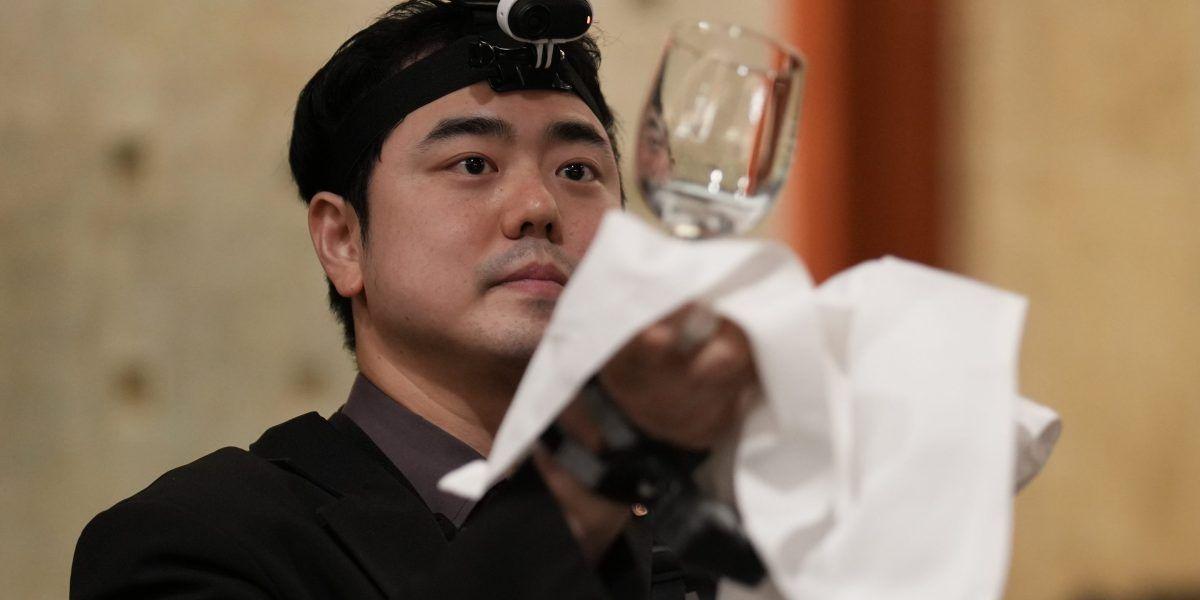
His head, chest and hands strapped with body cameras, David Park deftly folded a banquet napkin the way he has thousands of times during his nine years at the five-star Lotte Hotel Seoul. Each of his motions is fed into a database that will one day teach a robot to do the same. The hotel chain is
[2]
A South Korean startup captures workers' techniques to develop AI brains for robots - VnExpress International
His head, chest and hands strapped with body cameras, David Park deftly folded a banquet napkin the way he has thousands of times during his nine years at the five-star Lotte Hotel Seoul. Each of his motions is fed into a database that will one day teach a robot to do the same. The hotel chain is
Share
Copy Link
South Korea is building an extensive library of human expertise to develop AI brains for robots. Startup RLWRLD captures techniques from hotel workers, logistics staff, and retail employees to create physical AI systems. The country aims to leverage its manufacturing strengths to become an AI powerhouse, with major deployments expected by 2028, though labor groups express concerns about job displacement.
South Korea Bets on Physical AI Through Human Expertise
South Korea is positioning itself as a global leader in physical AI by capturing the skills of its workforce to develop AI brains for robots. At the five-star Lotte Hotel Seoul, worker David Park demonstrates this approach firsthand. Strapped with body cameras on his head, chest, and hands, he folds banquet napkins with the precision honed over nine years, each motion feeding into a database designed to teach robots the same tasks
1
. Park is one of about 10 members of the hotel's food and beverages team participating in monthly data collection sessions for South Korean startup RLWRLD2
.
Source: Fortune
Capturing Human Expertise Across Industries
RLWRLD (pronounced "real world") is creating an extensive library of human techniques across multiple sectors to train physical AI systems. The startup collects similar data from logistics workers at CJ, capturing how they grip, lift and handle goods in warehouses, and from staff at Japanese convenience store chain Lawson, tracking how they organize food displays
1
. The company unveiled its robotics foundation model last week, an AI system designed to work across various industrial settings2
. RLWRLD's engineers prioritize replicating human-like dexterity, particularly the precision of human hands, reflecting their belief that humanoids will drive the field forward.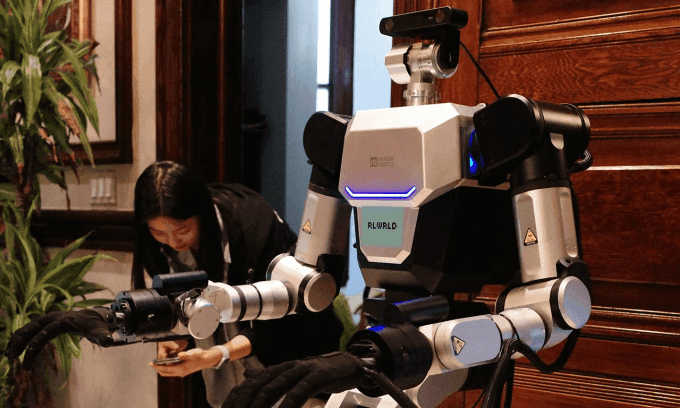
Source: VnExpress
Manufacturing Strengths Position South Korea as AI Powerhouse
The country's approach to physical AI leverages its deep manufacturing strengths and skilled workforce. Physical AI refers to machines equipped with AI and sensors that can perceive, decide and act in real-world environments with some degree of autonomy, moving beyond conventional factory robots designed for repetitive tasks
1
. While South Korea may struggle to compete in chatbots where English language proficiency gives U.S. firms major advantages, the nation sees better prospects in training robots through its extensive base of skilled workers in manufacturing, hospitality, and other sectors2
. The government announced a $33 million project last month to capture the "instinctive know-how and skills" of "master technicians" into a database for AI-powered manufacturing, aiming to boost productivity and offset an aging, shrinking workforce1
.Related Stories

Major Corporations Target 2028 for Increased Automation
RLWRLD expects industrial AI robots to be deployed at scale sometime around 2028, a timeline shared by major businesses
2
. Hyundai Motor plans to introduce humanoids built by its robotics unit, Boston Dynamics, at its global factories in coming years, starting with its Georgia plant in 20281
. Samsung Electronics plans to convert all manufacturing sites into "AI-driven factories" by 2030, with humanoids and task-specific robots across production lines2
. Billy Choi, a professor at Korea University's center for Human-Inspired AI Research, notes that "South Korea has a highly developed manufacturing sector and the focus is squarely on humanoids tailored specifically for those industries"1
.Labor Groups Voice Concerns About Job Displacement
South Korea's AI push has unsettled labor groups, who fear robots could take jobs and hollow out the skilled workforce long seen as the nation's competitive edge
2
. After Hyundai's union warned in January that robots could trigger an "employment shock," President Lee Jae Myung issued a rare rebuke, describing AI as an unstoppable "massive cart" and calling for unionists to adapt to changes "coming faster than expected"1
. Kim Seok, policy director at the Korean Confederation of Trade Unions, emphasized that "mastery of skills is ultimately a human achievement -- even if AI can replicate existing abilities, the continuous development of craft will remain fundamentally human." He warned that widespread robot deployments would risk "severing the pipeline" for skilled labor and urged the government and employers to engage with workers over AI to win their buy-in and ease job concerns2
. The competition remains fierce, with U.S. tech giants like Tesla and a flood of Chinese firms pouring billions into humanoids and other AI robots1
.References
Summarized by

Navi
Related Stories
Humanoid robots draw 2,000+ to Silicon Valley summit as AI boom fuels $2.8 billion investment surge
12 Dec 2025•Technology

Chinese robots shift focus from stunts to tackling household chores in real homes
22 Apr 2026•Technology
Hyundai labor union blocks humanoid robots over warnings of mass job losses in factories
22 Jan 2026•Policy and Regulation

Recent Highlights
1
Microsoft and Nvidia Launch Surface Laptop Ultra: A $2,599 AI-Ready PC With RTX Spark Chip
Technology

2
Trump Consulted Grok AI Before Ordering Venezuela Invasion and Capture of Nicolás Maduro
Policy and Regulation

3
Scientists Build AI Model That Reconstructs Images From Brain Scans in Record Time
Science and Research

Recent Highlights
Today's Top Stories







Don’t drown in AI news. We cut through the noise - filtering, ranking and summarizing the most important AI news, breakthroughs and research daily. Follow topics that matter to you and stay ahead.


