2 Sources
[1]
He Claimed a Major American City Was Broken. Now He's Doing His Best to Break It.
Spencer Pratt lost a race he had no chance of winning. So naturally he's careening headlong into conspiracy land, and taking his supporters there with him. Imagine that there was a social media site where liberals spun each other up all day. (Let's call this platform "Bluesky.") Now imagine that there was a charismatic candidate for governor of Alabama who said all the right things about subjects that fired up the most prolific Democratic influencers on the internet. (Have Alabamians said these issues are the most important to them? Doesn't matter.) Next, imagine that everyone on Bluesky became confident -- no, certain -- that this dream Democrat was about to turn Alabama blue. Now, imagine that this candidate lost. Finally, imagine that instead of saying to themselves, "Ah, shoot, we got ahead of ourselves," these bleeding-heart Democrats, most of whom did not live in Alabama, became convinced that the only way their favorite Democrat could have failed to take over Alabama was if the other side cheated. Now you understand Spencer Pratt's third-place finish in the Los Angeles mayoral primary. If you spent time on Elon Musk's algorithmic For You feed on X in recent weeks, you may have gotten the impression that Pratt was riding a tidal wave of support to the mayorship. Thousands of A.I.-generated videos and postings flooded the site. A consistent message emerged: Los Angeles was not a beautiful, vibrant metropolis with serious problems, but a hellhole verging on being lost for good. The cause of that problem? The city's homeless people, a population that is shrinking but that Pratt insists is exploding. Pratt and his supporters, whipping each other up for weeks, thought most Angelenos saw the city just the way they did. Pratt said before last Tuesday's election that he was confident he wouldn't just advance to the general election by finishing in the top two, but that he would win outright by taking a majority of votes. (No poll had suggested anything close to that.) Another accelerant was the prediction markets, conservative-tilted spaces that in some cases paid to promote far-right influencers' conspiracy posts. The election did not go Pratt's way. Though things looked good for him as the count got going on Tuesday night and on Wednesday, Pratt always had a long way to go. California gives its residents the widest possible time range to submit mail ballots, and as more of them were counted over the past week, Pratt's margins against progressive city councilmember Nithya Raman got worse and worse. Her count passed his on Sunday, and most every major outlet had called the race by Monday evening. Pratt has gotten around 26 percent of the vote, right in line with what Donald Trump got in 2024, before his popularity tanked. It wasn't even a bad showing for a MAGA-coded conservative in a deep-blue city in what looks like a blue wave year nationally. Pratt could've hung his hat on that. Pratt and his supporters have chosen a different path. Instead of resolving to build on a decent performance, they've ridden a collective delusion -- or, in some cases, profited off the delusions of their cohort -- to declare the election was stolen. Republicans all over the internet, the state, and the Oval Office are now moving to deny the legitimacy of the result. Pratt's commentary in the days since the election has left two possibilities: Either he does not understand the democratic process in the city he was so sure he would lead, or he understands it but wants to steal the city's right to pick its own leader. Pratt's most embarrassing postelection statement is his allusion to a conspiracy theory, if you could call it a theory, that someone rounded up fake votes from homeless people to beat him. He's also tapped into a conservative theory that because Raman was photographed in tears on election night, she must have been conceding. With her eyes. Or something. The Prattfall has been a spectacle. The ex-MTV reality cast member will not be mayor, but his candidacy will mark a turning point in Los Angeles and California politics. The legacies of the Pratt campaign will make things worse for his favorite group to throw under the bus (the city's homeless people, whom L.A.'s actual mayor is now targeting) and the people he was so certain would give him the keys to that bus (his supporters, whom he's helping push into madness by backing an insane conspiracy theory). It has already started. Within minutes of outlets calling the race for Raman, Mayor Karen Bass had shifted her attacks from Pratt toward the councilwoman, who her supporters believe is disloyal for challenging her. You may have noticed which policy issue Bass mentioned first as she pivoted to the general: "Next, we'll win in November! Because this is an election with a choice between whether we keep making change together or Nithya Raman who allows encampments near schools and fights against hiring more cops, yet is MIA on saving Hollywood jobs and fighting back when ICE invades LA," Bass posted on Monday. This was not the outcome Bass wanted. In a slimy tactic that recalls the state's 2024 race for a U.S. Senate seat, Bass tried to boost Pratt leading up to the primary with a purported "attack ad" that anyone paying attention could tell was designed to gin up turnout for Pratt by painting him as the mayor's foil. Bass almost certainly wanted Pratt, not Raman, to advance, because a Pratt campaign would have been simpler for her on a variety of levels. Pratt is good at getting retweets, but Raman is good at getting votes in Los Angeles. She ousted an incumbent for her council seat in 2020 and won reelection despite a mountain of opposition spending and a redistricting push that centrist Democrats designed to separate her from her supporters. Please forgive this exercise in premise-granting, but this is where the theorized plot against Pratt goes from incoherent to illogical. If the shadowy Democratic establishment forces in California were engaged in the kind of shit-for-brains rigging conspiracy that Donald Trump and the internet army behind him have alleged, they would have done a much better job than sticking Bass with the opponent she did not want. Pratt's presence in the general election would have given Bass a walk to reelection. This vote-rigging cabal ain't what it used to be. It will take a lot of digging out for people who were taken in by internet hype to understand Pratt's loss. They have fallen into a classic Los Angeles trap, one that existed even before the world's wealthiest person bought Twitter and turned it into a Republican echo chamber awash in slop. Los Angeles is mind-bendingly big. There is no such thing as a universal experience in this country-sized city. There isn't one Los Angeles, but hundreds of little Los Angeli. In some of those pockets, homelessness and street crime are the most salient issues facing the city, and Pratt's apocalyptic talk about them landed as a tonic. And when this is combined with Musk's ideological project on X, it can lead to some of the stupidest commentary in the world, like this guy's: "I try not to get political. But LA is where I live, and I am here to tell you: There is 0.0 percent chance these results are legit." Classic mistake, brother. Been there! Even knowing what was happening as the campaign went on, I found it difficult not to get sucked into the vortex. Only long walks outside could counter my phone telling me for hours each day that L.A. was cooked. Because it is hard to come to grips with getting duped by one's own ideological bubble, these election deniers have shifted to criticizing California's lengthy vote-counting process. The common claim is that voting by mail allows Democrats to "find the votes" until they've achieved their desired result. The vote-counting process that governs California elections is transparent to anyone who wants to understand it. It's also born from a desire on the state's part to collect as many people's lawful votes as possible. (It even fits with the Californian desire to take one's time with urgent tasks.) I don't enjoy waiting for important information, but I like that California wants people to vote. It's only a problem if you think the state should orient itself not around encouraging maximal voting but around announcing the count quickly. And to believe the latter is to do the bidding of people who will not be satisfied no matter how California conducts the vote. Do you really think this is about a slow count of mail votes? That would probably be interesting news to the former leadership of Dominion Voting Systems, the machine company that spawned a conspiratorial universe. Indeed, there is no system of voting in which the modern conservative movement both loses in California, or nationally, and accepts the election. Hell, in 2016, Trump won the election, but he couldn't resist claiming he'd have won the popular vote were it not for fraud in, you guessed it, California. Many Republicans argue it would be good for "public trust" if the state produced a result more quickly. Possibly so, but we will not find our way to public trust by taking orders from people who are in a cult of personality around the president's lie that he was cheated out of an election six years ago. California can change its vote-counting process as many times as it wants, but "public trust," for these people, will only come when the state votes red. Now it's everyone's problem. Because Pratt's campaign was great on the A.I.-generated streets but not the actual city of Los Angeles, the state has become the latest flashpoint for an election panic. This is going to mess with a lot of brains: Democrats lead party registration in the state, 45 percent to 25 percent, but California's size means that's still 6 million registered Republicans, with countless compatriots posting along from other states. California Republicans know they're outnumbered but live in peace with their neighbors, the "sheep" who "risk their lives" by living in L.A. and San Francisco. You do not have to pass a security check when you pass back and forth between L.A. and Orange County. This synthetic panic, driven in large part by people who don't live here, will hurt the state's social fabric. It's unclear if Pratt will stick around to deal with that, as he's now honor-bound to move out of L.A. Where would he go? I talked to a campaign staffer of his who was in from Nashville. That's a nice city too. Democrats don't even have a 55-to-15 registration edge there. If Pratt does relocate, he'll miss out on the chance to vote for his preferred candidate in the general. That would be a shame, given how inspired Bass was by his primary effort. That the mayor is already attacking Raman in language that might as well have been taken from a Pratt press release is, actually, a testament to the third-place finisher's sense of the political moment. Pratt had no political track record, no novel ideas outside of putting the city's homeless people into a camp, and a toxic party affiliation that dragged him down even as he traded the word "Republican" for the words "community advocate" on his ballot line. And he almost battled Raman to a draw despite her years of getting elected in this city. Many of the artifacts of Pratt's support were ChatGPT-generated and passed around in a game of conservative Telephone. That's not the same as saying none of his backing was real, though. Pratt tapped into real issues in L.A. and then blew them wildly out of proportion. Or he proposed combating them not so much for the benefit of the people most hurt by them as for people who didn't want to live near them any longer. His campaign didn't survive, but those problems -- tens of thousands of people without housing, costs crunching millions of people with housing, and lagging crisis response -- are real. Thanks to Pratt, we can add another serious one to the list. Pratt didn't create the issue of conservatives doubting free and fair elections, but brought it back to the fore and trained this terrifying delusion on his own city. Pratt might soon be gone, but the needless paranoia he injected into local politics will be here for a long time.
[2]
The Memo: Spencer Pratt comes up short in Los Angeles, drawing hollow claims of fraud
President Trump's favored candidate to become Los Angeles Mayor looks like he won't even make the run-off -- a reality that has provoked a barrage of unsubstantiated claims of fraud from the commander-in-chief. Votes are still being counted in the nation's second-largest city, where a high proportion of ballots are customarily cast by mail. As those votes are tabulated, progressive councilmember Nithya Raman has pulled ahead of MAGA-friendly Spencer Pratt, best-known as a reality TV star, for second place. Raman and Pratt are vying for the right to run against incumbent Mayor Karen Bass, who will top the primary poll -- but with a less-than-stellar vote share of about 35 percent as of Monday. Raman, who had been behind Pratt as in-person votes were tallied, is now ahead of him by roughly 3,000 votes, or four-tenths of a percentage point. Most experts expect the left-wing Raman's margin over the right-wing Pratt to increase as more votes are counted, given the propensity for Democratic and progressive voters to be more inclined to vote by mail than Republicans and conservatives. Los Angeles is also an overwhelmingly Democratic city. California abjures party primaries in favor of so-called "jungle" primaries, where all the candidates are in one contest and the top two vote-getters advance to the general election. "He would have to beat her from this point forward if he is to come back, and I don't see that happening," Zev Yaroslavsky, the director of the Los Angeles Initiative at the UCLA Luskin School of Public Affairs -- and himself a former member of the Los Angeles County Board of Supervisors -- told this column. None of this is likely to persuade Trump, however. "Not possible for Spencer Pratt to have lost the L.A. runoffs after the big lead he had, 3rd World Nation. Rigged Elections!," the president wrote on social media on Monday. The president provided no evidence to back up his claim. He had made similar allegations about California in general during a stormy interview with Kristen Welker of NBC's "Meet the Press" that was broadcast on Sunday. Trump furnished no evidence on that occasion either, under robust questioning from Welker. The charge of election fraud elicits a degree of weariness from experts in the matter, given the president's history of making false claims about election outcomes, most infamously in relation to his loss to former President Biden in the 2020 presidential contest. As regards the specifics in Los Angeles, the idea that Pratt would have actually won -- as in, emerged from the primary in first place -- was fanciful to begin with. Registered Democrats in Los Angeles County outnumber registered Republicans by almost two million. For any candidate of the right to win, "it would be an incredibly uphill battle," said Mindy Romero, the founder and director of the California-based Center for Inclusive Democracy. "Only about 15 percent of Los Angeles voters are registered Republicans. It's an overwhelmingly Democratic city. You would have to have a candidate who could pull an incredible number of Democrats, and do that in our current polarized environment." The question was always whether Pratt could edge out Raman for second place. In that quest, he got an enormous amount of friendly media attention, especially from conservative-leaning outlets, but also acquitted himself well in debate, and seized the initiative on social media. One especially viral moment centered on an AI ad that cast Pratt as a heroic Batman-type figure and cast Democrats including Bass, Gov. Gavin Newsom and former Vice President Harris as members of a sneering yet ineffectual elite. The ad did not come from the official Pratt campaign but the candidate did retweet it to his 1.2 million followers on X, helping it reach a wider audience. More generally, Pratt sought to take advantage of public dissatisfaction in the city. Nationally, the biggest story in that regard was Bass's much-criticized response to the wildfires that devastated large swathes of the Pacific Palisades and adjacent areas in January 2025. Bass contends she was unfairly blamed for a situation she could have done little to change. However, other grievances around the city's difficulties with homelessness -- and a broader sense that Los Angeles is on the wrong track -- also generated momentum for Pratt. The difficulty was, they appear to have helped boost Raman, who has been pressuring Bass from the left, even more. While Pratt's critique of Bass from the right got plenty of airtime, the leftist critique was less prominent. The argument from figures like Raman is that Bass "did not deliver on her promises for the city of Los Angeles," according to Kamy Akhavan, who leads the Center for the Political Future (CPF) at the University of Southern California. "She was put in office largely on the promise of more jobs for more people and on significantly reducing the homeless problem in Los Angeles," Akhavan added, "She made some dents on both of those but nothing significant." Experts in the city's politics note that there is nothing particularly surprising about the result. Everything that has happened so far -- including a close battle for second between Raman and Pratt, and the former gaining ground as mail-in ballots are counted -- is well within the bounds of expectations. Yaroslavsky noted that polling shows about two-thirds of Angelenos unhappy with the state of the city. "Pratt channeled that with that his base and Raman was chaneling that frustration with her base," he said. Others note that Pratt did perform fairly well, even if he does sink to third -- but they worry about the effects of the president's claims. "He's wrong for a number of reasons" said Romero. "What he's doing is dangerous for elections and for our democracy." When it comes to Pratt, Akhavan offered a pithy summation. "He's not a candidate without talent," he said. "But he is the candidate with only the third-most votes." The Memo is a reported column by Niall Stanage.
Share
Copy Link
Reality TV star Spencer Pratt is promoting conspiracy theories after losing the Los Angeles mayoral primary, despite finishing with 26 percent of votes in line with expectations. Trump and supporters amplify unsubstantiated claims of fraud as progressive councilmember Nithya Raman overtakes Pratt for the run-off spot against Mayor Karen Bass.
Spencer Pratt has landed in third place in the Los Angeles mayoral election primary, capturing roughly 26 percent of the vote—right in line with what Donald Trump received in the deep-blue city in 2024 . The reality TV star's campaign generated enormous attention on social media, particularly on Elon Musk's X platform, where thousands of AI-generated videos flooded feeds with a consistent message: Los Angeles had become a "hellhole" primarily due to the homelessness issue . Progressive councilmember Nithya Raman has pulled ahead of Pratt by roughly 3,000 votes, securing second place and the right to face incumbent Mayor Karen Bass in the run-off election
2
.
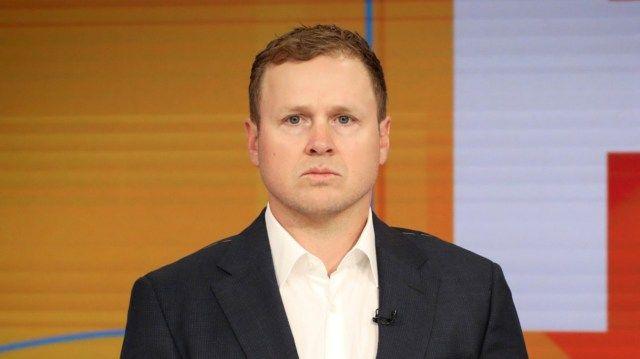
Source: The Hill
The Los Angeles mayoral election operates under California's "jungle" primary system, where all candidates compete in one contest and the top two advance to the general election. Bass is leading with about 35 percent of the vote share, while Raman's margin over Pratt continues to grow as mail ballots are counted
2
. California allows residents the widest possible time range to submit mail ballots, and as these votes have been tabulated over the past week, Pratt's position has steadily weakened .Rather than accepting the results, Spencer Pratt and his supporters have launched election fraud claims without evidence. President Trump posted on social media: "Not possible for Spencer Pratt to have lost the L.A. runoffs after the big lead he had, 3rd World Nation. Rigged Elections!"
2
. The president provided no evidence to back up his assertion, mirroring his history of making false claims about election outcomes. Pratt himself has alluded to conspiracy theories that someone rounded up fake votes from homeless people to defeat him .Zev Yaroslavsky, director of the Los Angeles Initiative at UCLA Luskin School of Public Affairs and former member of the Los Angeles County Board of Supervisors, told The Hill: "He would have to beat her from this point forward if he is to come back, and I don't see that happening"
2
. Most experts expect Raman's margin to increase as more votes are counted, given that Democratic and progressive voters are more inclined to vote by mail than Republicans and conservatives2
.The disconnect between expectations and reality stems partly from conservative prediction markets and the echo chamber effect on social media platforms. Pratt and his supporters spent weeks on X's algorithmic For You feed, convincing themselves that most Angelenos shared their view of Los Angeles politics . Conservative prediction markets, which in some cases paid to promote far-right influencers' posts, added fuel to unrealistic expectations .
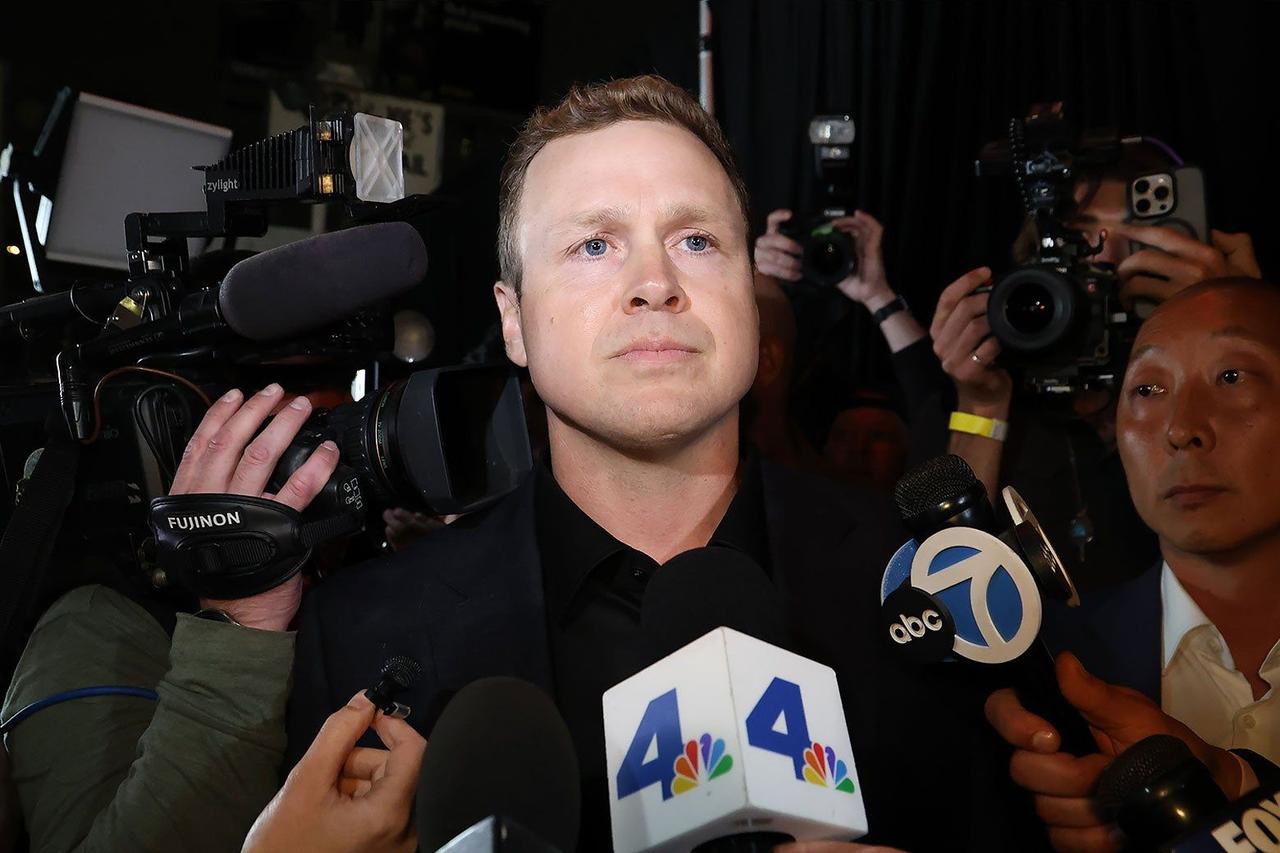
Source: Slate
Before the election, Pratt expressed confidence he would win outright by taking a majority of votes, despite no poll suggesting anything close to that outcome . One particularly viral moment centered on an AI ad that cast Pratt as a Batman-type figure while portraying Democrats including Bass, Gov. Gavin Newsom, and former Vice President Harris as a sneering yet ineffectual elite
2
. Though not from the official campaign, Pratt retweeted it to his 1.2 million followers on X2
.Related Stories
Pratt attempted to capitalize on public dissatisfaction in the city, particularly around Bass's response to the wildfires that devastated large swathes of the Pacific Palisades and adjacent areas in January 2025
2
. Bass contends she was unfairly blamed for a situation she could have done little to change. However, the criticism appears to have benefited Raman even more than Pratt, as she pressured Bass from the left on promises around jobs and significantly reducing the homeless problem2
.Mindy Romero, founder and director of the California-based Center for Inclusive Democracy, explained the structural challenge: "Only about 15 percent of Los Angeles voters are registered Republicans. It's an overwhelmingly Democratic city. You would have to have a candidate who could pull an incredible number of Democrats, and do that in our current polarized environment"
2
. Registered Democrats in Los Angeles County outnumber registered Republicans by almost two million2
.The Pratt campaign marks a turning point in Los Angeles politics, demonstrating how social media can create alternative realities disconnected from electoral math. Within minutes of outlets calling the race for Raman, Mayor Karen Bass shifted her attacks from Pratt toward the councilwoman, mentioning that Raman "allows encampments near schools and fights against hiring more cops" . The legacy of Pratt's candidacy may worsen conditions for the city's homeless people, whom Bass is now targeting, while pushing supporters deeper into conspiracy theories by backing claims that lack any factual basis .
Summarized by
Navi
08 May 2026•Entertainment and Society

13 Aug 2024

24 Oct 2024•Policy and Regulation

1
Technology

2
Business and Economy

3
Health