Spines Raises $64 Million for AI Publishing Platform That Automates Book Publishing in Weeks


2 Sources
[1]
Exclusive: Spines, a 'hybrid publisher,' raises $64 million in funding for book publishing platform powered by AI agents
Spines, a startup that uses AI to help authors publish their books, including using AI agents to edit manuscripts, design covers, translate text, market the published book, and manage their social media campaigns, has secured $64 million in new capital, the company said Monday. The company, which
[2]
AI startup Spines raises $64m., challenging traditional publishing industry
Spines, which develops AI agents that replace the traditional book publishing process and reduce the time it takes to publish a book from 18 months to just a few weeks, reports 400% annual growth. Israeli AI company Spines announced on Tuesday the completion of a $64 million funding round,
Share
Copy Link
Israeli-American AI startup Spines secured $64 million in new funding to expand its AI-powered book publishing platform that reduces publishing time from 18 months to weeks. The hybrid publisher reports 400% year-over-year growth and has published over 8,000 authors using AI agents for editing, design, translation, and marketing.
Spines Secures $64 Million to Scale AI-Powered Book Publishing Platform
Spines, an AI startup transforming the book publishing industry, announced it has raised $64 million in new capital to accelerate its AI-driven platform that automates the publishing process
1
2
. The funding package includes a $29 million Series A-1 equity round led by Zeev Ventures, with participation from Aleph, NordStar, M-Fund, LionTree, and angel investor Dan Senor, alongside $35 million in non-dilutive growth financing from credit-focused investment firm Twelve1
. This brings the company's total investment to $86 million since its founding in 20212
.
Source: Jerusalem Post
The hybrid publisher has achieved remarkable traction, hitting a $50 million annual revenue run rate with 400% year-over-year growth
1
. Spines has published more than 8,000 authors to date, accounting for approximately 12,000 titles, with roughly 400 new writers signing up each month1
. The company currently employs 350 workers across Israel, the United States, Eastern Europe, and South America2
.How AI Agents Are Disrupting Traditional Publishing
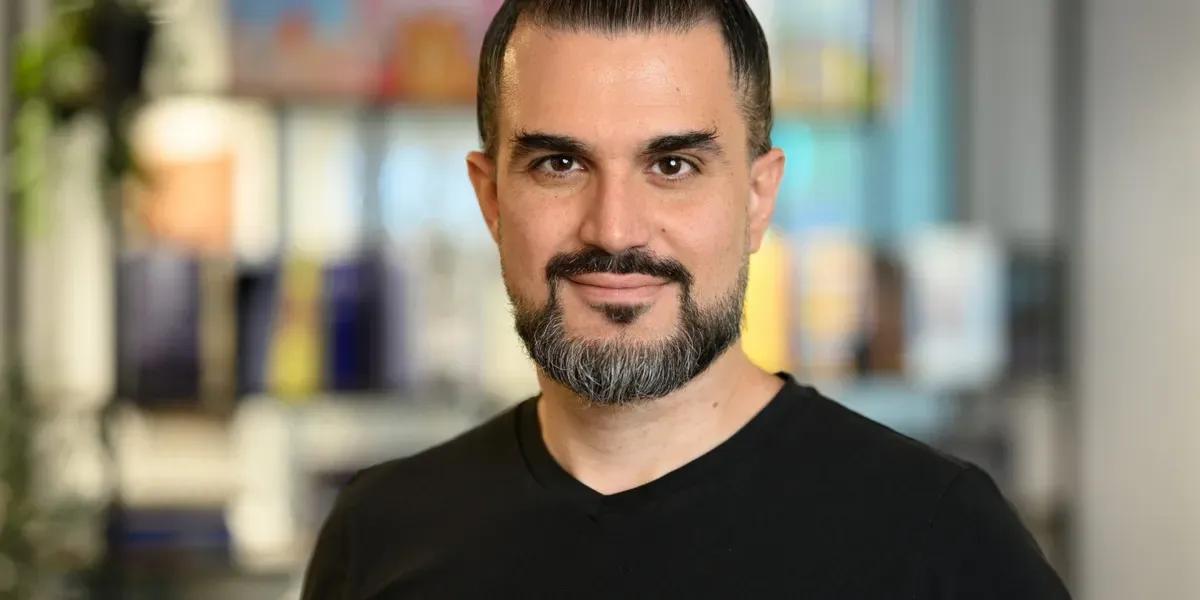
Spines describes itself as an "operating system for authors" that uses specialized AI agents to handle every aspect of the publishing workflow
1
. Authors simply upload a finished manuscript, and the platform's AI agents manage manuscript editing, proofreading, formatting, cover design, metadata analysis, ebook and print-on-demand file creation, and distribution to more than 100 channels including Amazon, Barnes & Noble, and Baker & Taylor1
2
.
Source: Fortune
The AI-powered book publishing process dramatically compresses timelines. Where traditional publishing houses typically take 12 to 18 months to bring a book to market, Spines completes the entire process in just three to four weeks
2
. Founder and CEO Yehuda Niv argues that AI agents can outperform traditional freelancers in certain tasks. He notes that among the roughly 10,000 authors he published in Israel through his previous venture, every author had the same complaint: "The cover designer didn't have time to read my book." Spines' cover design agent reads the entire manuscript, researches optimal retail categories, analyzes which designs perform best in those categories, and creates covers matched to those metrics1
.Translation and Audiobook Capabilities Expand Market Reach
The book publishing platform enables authors to produce audiobooks with synthetic narrators or clones of their own voice, and translate both the book and audiobook into multiple languages
1
. Spines currently offers translation into seven target languages—Spanish, Italian, French, German, Portuguese, Polish, and Hebrew—and plans to expand to 20 languages within six months1
2
. After publication, the platform tracks royalties across all distribution channels and runs marketing campaigns for authors1
.Challenging the Economics of Traditional Publishing Industry
Spines operates as a hybrid publisher, working primarily with authors unable to secure traditional publishing deals or those seeking greater control and larger royalty splits
1
. Publishing packages start at approximately $3,000 and run to $20,000 for a premium tier that publishes a book in three languages with audiobooks, though most authors select mid-tier bundles costing $5,000 to $7,0001
. This represents estimated savings of up to 90% compared to traditional publishing costs before royalties2
.The royalties structure also favors authors significantly. Spines recently adjusted its split so authors retain 80% of net royalties, up from 70%
1
. This contrasts sharply with traditional publishers and distribution networks, which according to the Authors Guild typically claim 75% to 90% of a book's retail price2
. Spines reports royalties monthly rather than the twice-yearly or annual statements common in traditional publishing, and is working toward weekly and eventually real-time reporting1
.Related Stories

Market Opportunity and Founder Background
Yehuda Niv founded Spines after recognizing that AI would eventually "make every [traditional] publishing company on the planet irrelevant"
1
. His experience stems from founding Niv Publishing in 2013, which became Israel's largest publishing house, releasing about 1,200 titles annually and holding approximately 17% market share2
. Niv told Walla Money that the publishing industry in the United States alone generates about $40 billion annually, which authors are forced to pay out of pocket. Of the approximately 4 million new books published in the US each year, only about 50,000 authors secure funding from publishing houses, while the rest spend an average of $30,000 to $50,000 out of pocket on the publishing process2
.The global publishing market is valued at approximately $307 billion annually and is expected to grow at 3.5% year-over-year to about $391 billion by 2033, according to Grand View Research
2
. The international book market specifically is estimated at about $150 billion and projected to grow at 5.1% annually to approximately $224 billion by 2034, with North America leading at 35.4% market share, according to Mordor Intelligence2
.Copyright Concerns and Human-Centric Approach
Despite its heavy reliance on AI publishing technology, Niv emphasized that Spines only publishes books "100% written by humans" and uses software to filter out AI-generated manuscripts
1
. However, some aspects raise copyright concerns, particularly around AI-designed book covers. US courts and the Copyright Office have ruled that images created entirely by AI cannot be copyrighted1
. Niv stated that Spines licenses the image-generation tools it uses and passes those licenses to authors, arguing this often provides broader rights than what authors receive from human illustrators, who typically retain copyright and license images only for book covers1
.Of Spines' approximately 350 employees, only about 50 work in research and development, with most handling customer success and support to help authors with decisions that software cannot make
1
. Watch for how Spines navigates the tension between automation and the creative judgment that publishing traditionally requires, and whether copyright challenges around AI-generated covers emerge as the platform scales.References
Summarized by

Navi
Related Stories
AI-Generated Books Flood Amazon Marketplace, Crushing Revenue for Human Authors
14 Sept 2026•Business and Economy

Major Book Publishers Quietly Deploy AI Tools Despite Employee Revolt and Author Consent Issues
10 Oct 2026•Business and Economy

AI-Generated Books Flood Amazon and Bestseller Lists, Threatening Human Authors' Livelihoods
27 Jul 2026•Entertainment and Society

Recent Highlights



Recent Highlights
Today's Top Stories







Don’t drown in AI news. We cut through the noise - filtering, ranking and summarizing the most important AI news, breakthroughs and research daily. Follow topics that matter to you and stay ahead.


