Spotify lets artists manually approve releases to combat AI fakes flooding music platforms


2 Sources
[1]
Spotify is letting artists manually approve releases to combat AI fakes
Spotify is beta-testing a new feature called Artist Profile Protection that lets artists review releases before they go live. Sometimes songs end up on the wrong artist pages because of metadata mixups or shared names. But increasingly, artists have been targeted by impostors and AI-generated
[2]
Spotify is testing a tool to help real artists deal with AI slop on their profiles
Low-quality, mass-produced AI songs have been flooding music streaming platforms like Spotify for a couple of years now. This is annoying, but relatively easy for fans to avoid. However, it leads to real problems for artists. There's so much slop coming in that some gets falsely attributed to
Share
Copy Link
Spotify is beta-testing Artist Profile Protection, a new feature that lets musicians review and approve releases before they appear on their profiles. The tool addresses the surge of AI-generated songs and fake tracks that have been wrongly attributed to real artists, affecting everyone from Drake and Beyoncé to indie acts like King Gizzard & The Lizard Wizard.
Spotify Introduces Artist Profile Protection to Combat Rising AI Slop
Spotify is beta-testing a new feature called Artist Profile Protection that gives musicians the ability to manually approve releases before they appear on their profiles
1
. The streaming service aims to address a growing problem that has frustrated artists across genres: AI fakes and impostor tracks appearing under their names without authorization. From mainstream stars like Drake and Beyoncé to experimental composers like William Basinski and indie rock bands like King Gizzard & The Lizard Wizard, artists have found fake tracks infiltrating their profiles on music streaming platforms1
.
Source: Engadget
While metadata mixups and shared artist names have long caused songs to land on wrong profiles, the explosion of AI-generated songs has intensified the issue dramatically
2
. An estimated 50,000 AI-generated songs get uploaded to Spotify each day, creating a flood of content that threatens brand identity and audience retention for legitimate musicians2
. The platform deleted 75 million of these tracks last year alone, yet the problem persists.How the Review Process Works for Artists
Artists included in the limited beta must opt in to use Artist Profile Protection. Once activated, any music submitted under their name requires approval before displaying on their profile—either by the artists themselves or their management team
1
. When an artist denies a track through the review process, it won't be associated with their profile, won't contribute to stats, and won't appear in user recommendations2
. This gives artists with more control over their digital presence and helps them combat AI fakes that could damage their reputation.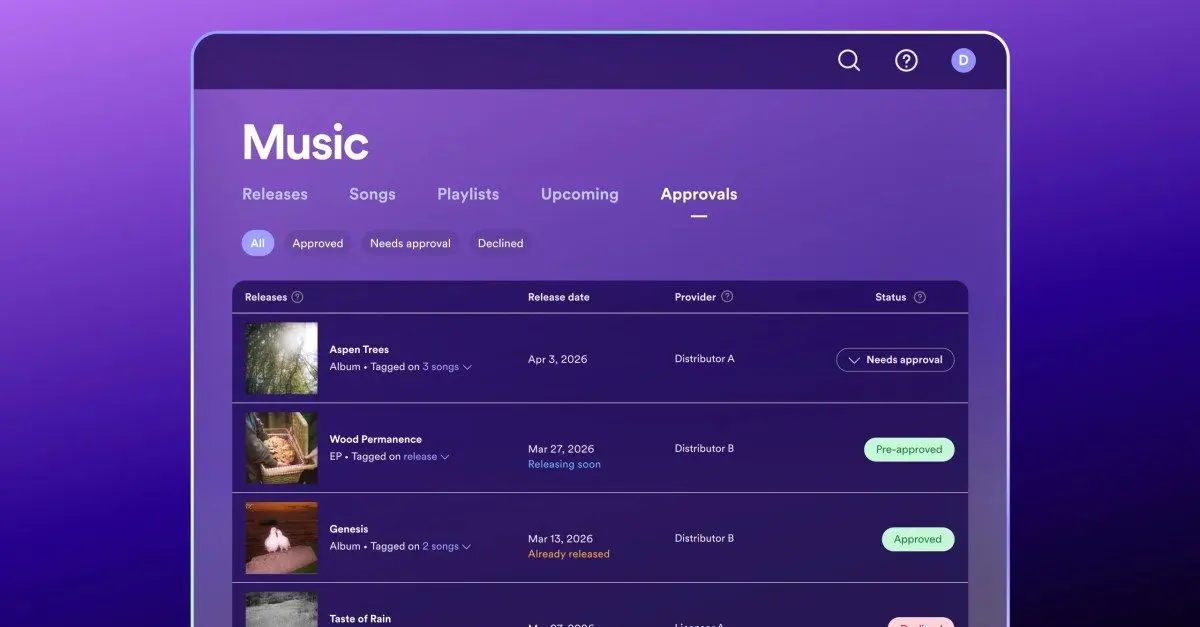
Source: The Verge
Artist Keys Streamline Legitimate Releases
Recognizing that manual approval for every release could burden independent artists and small labels with limited resources, Spotify developed artist keys as part of the solution
1
. These unique codes can be included with music submissions to trigger automatic approval, preventing legitimate releases from getting delayed while still preventing AI slop from infiltrating profiles. This dual approach balances protection against impostors with practical workflow needs for working musicians.Related Stories
The Scale of the AI Slop Problem
The issue extends beyond simple inconvenience. Just last week, Sony requested removal of more than 135,000 AI-generated songs from Spotify after discovering the tracks were impersonating real artists
2
. The problem even affects bands that have left the streaming service entirely—King Gizzard & The Lizard Wizard departed Spotify last year to protest CEO Daniel Ek's investment in a weapons manufacturing company, yet deepfake artists quickly filled the vacuum with fake content under their name2
. Frontman Stu Mackenzie expressed despair over the situation, saying "we are truly doomed," while Basinski called the fake track phenomenon "total bullshit"1
.What Artists Should Watch For
While Spotify describes Artist Profile Protection as a "limited beta," the company promises to roll it out "to all artists as soon as we possibly can"
1
. The timeline for wider availability remains unclear, though the urgency is apparent given the daily influx of AI content. Artists should monitor whether other streaming platforms follow Spotify's lead in helping artists deal with AI slop, as requiring manual approval across multiple services could create workflow challenges. The success of this tool may determine how the music industry adapts to protect musicians from the continuing wave of low-quality, mass-produced AI tracks that threaten to undermine authentic creative work on streaming platforms.References
Summarized by

Navi
Related Stories
Spotify Unveils New AI Policies to Combat Spam and Protect Artists
25 Sept 2025•Technology

Spotify to Label AI Persona Profiles and Block Their Music From Your Recommendations Starting September
11 Aug 2026•Technology

Spotify launches verification badges to distinguish human artists from AI music flood
30 Apr 2026•Technology
Recent Highlights
1
Meta Unveils Muse Wonder Frontier AI Models, Claims Performance Matching OpenAI and Anthropic
Technology

2
IMF Report Warns AI Market Correction Could Spark Global Financial Crisis With $1.4T at Risk
Business and Economy

3
Eight States Sue OpenAI Over ChatGPT Safety Concerns and Unlawful Collection of Children's Data
Policy and Regulation
Recent Highlights
Today's Top Stories







Don’t drown in AI news. We cut through the noise - filtering, ranking and summarizing the most important AI news, breakthroughs and research daily. Follow topics that matter to you and stay ahead.


