Spotify launches verification badges to distinguish human artists from AI music flood


18 Sources
[1]
Verified by Spotify badge lets you know this artist isn't AI
Spotify is launching a new verification program to combat spam, fakes, and AI. Some artists will now have a "Verified by Spotify" badge and a green checkmark on their profile, indicating that the company has confirmed a real person is behind the music and the profile. At least at launch, Spotify
[2]
Spotify Rolls Out Green 'Verified' Badges to Distinguish Real Artists From AI Slop
Major music-streaming platforms are being flooded with AI-generated tracks, so Spotify is rolling out a new verification badge to show you when an artist is human. To earn a badge, which will appear as a light green checkmark, an artist needs to have consistent listener activity and engagement.
[3]
Spotify's new verification badge shows that music is not AI-generated - Engadget
Spotify and other streaming music sites are now being inundated with AI-generated content to the tune of 44 percent of daily uploads, Deezer reported recently. Spotify is now trying to help listeners separate the wheat from the AI chaff with a new "Verified by Spotify" badge given only to human
[4]
Spotify adds 'Verified' badge to distinguish human acts from AI
Spotify is introducing a 'Verified' badge to help users identify when artists on its platform are human, not AI-generated. The world's most-used music streaming service said the 'Verified by Spotify' text and green checkmark icon would appear next to artist names when they meet "defined standards
[5]

Spotify Will Now Verify Non-AI Artists
In a new feature announced on Thursday, Spotify said that it will give a "Verified by Spotify" badge to artists who comply with Spotify's policies, have consistent listeners, and have an "identifiable artist presence both on and off-platform." With the new initiative, Spotify aims to combat
[6]

Spotify's new Verified badge is only for human artists -- at least for now
All artist profiles, Verified or not, will also feature new AI-generated summaries. Spotify is rolling out a new Verified status. Starting soon, profiles that the platform has confirmed to represent actual, human artists will get a Verified by Spotify badge with a green checkmark icon. You won't
[7]

Spotify fights back against AI slop with new Verified badge
I've been covering Android and other mobile technology for close to ten years now, with a specific interest in phone accessories, e-readers, and what makes each individual phone different from another. I delight in looking at the phone market from as many angles as possible, and while my opinions
[8]

Spotify can now prove music wasn't made by AI -- here's what to look for
If you're worried that the new single from a favorite musician might just be a dupe from an AI band, Spotify might have your back. The streaming music service is introducing a Verified by Spotify badge that proves an artist isn't AI-generated or an AI persona. Spotify will not only check that
[9]

'Verified By Spotify' is the music streamer's new way to help you avoid AI artists, but it doesn't go as far as I'd like -- especially with Deezer, Qobuz and Apple Music making major anti-AI steps
* 'Verified by Spotify' badge will roll out over the next few weeks * Certifies that artist is real, not an AI creation * No way to use the info to filter playlists, just yet Spotify listeners are growing increasingly frustrated about the proliferation of AI slop in the streamer's library. The
[10]

Spotify launches verification badges for human artists
"Verified by Spotify" will roll out in the coming weeks. Credit: Spotify Still struggling to spot when you're streaming AI-generated music instead of human-made tunes? Spotify is trying to help. On April 30, the streaming giant announced it would be launching an official "Verified by Spotify"
[11]

Spotify rolls out 'Verified' badge to distinguish human artists from AI
Green checkmark will appear on artist profiles to signal they meet the platform's standard for authenticity Spotify on Thursday unveiled a new verification system designed to help listeners distinguish human musicians from AI-generated content, as people flood streaming platforms with a growing
[12]

Spotify wants to help listeners better identify AI-generated music
Spotify is rolling out new badges to artists in a move to differentiate human-made music from AI-generated content on the popular music streaming platform. In the coming weeks, users will start to see new "Verified by Spotify" icons, which look like green checkmarks, on artist profiles that have
[13]

Spotify's new badge identifies human artists as AI music floods in
Megan Cerullo is a New York-based reporter for CBS MoneyWatch covering small business, workplace, health care, consumer spending and personal finance topics. She regularly appears on CBS News 24/7 to discuss her reporting. With AI ever more capable of producing photorealistic images, seemingly
[14]

Spotify unveils verified badge in latest attempt to thwart AI slop
Last year, Spotify removed more than 75m spam tracks from its platform. The world's biggest music streaming platform, Spotify, does not ban AI-generated music, but does admit that it finds it hard to detect it. In its latest attempt to tackle growing AI spam on the platform, Spotify is
[15]

Spotify Cracks Down on AI Content With New Feature. Here's What to Look for
Spotify is rolling out verification badges on its platform to separate its human artists from artificial intelligence. In recent months, AI has increasingly been used for low-cost media production, ranging from videos to podcasts to music. Now, Spotify is taking measures to clarify what content is
[16]

Spotify's new Verified badge is for humans only - Phandroid
AI-generated music has been flooding streaming platforms for a while now. Earlier this year, Sony Music said it had requested the removal of over 135,000 AI-generated tracks impersonating its artists from Spotify and other services. Deezer recently reported that AI tracks make up around 44% of all
[17]

Spotify Badge to Distinguish Human Artists from AI
Spotify announced on April 30, 2026, that it will introduce a "Verified by Spotify" badge and new artist activity insight on its platform to help users distinguish human artists from AI-generated or AI-based persona profiles. Verified artists will display a light green checkmark and the "Verified
[18]

Spotify rolls out badge to distinguish human artists from AI
WASHINGTON -- Spotify on Thursday unveiled a new verification system designed to help listeners distinguish human musicians from AI-generated content, as artificial intelligence floods streaming platforms with a growing volume of synthetic tracks. The Swedish streaming giant said its "Verified by
Share
Copy Link
Spotify introduced a 'Verified by Spotify' badge with a green checkmark to help listeners identify human artists amid rising AI-generated content. The company confirms over 99% of actively searched artists will receive verification at launch, while AI personas remain ineligible. This follows reports that 44% of daily uploads on rival platform Deezer are AI-generated tracks.
Spotify Introduces Green Checkmark to Combat AI Music Surge
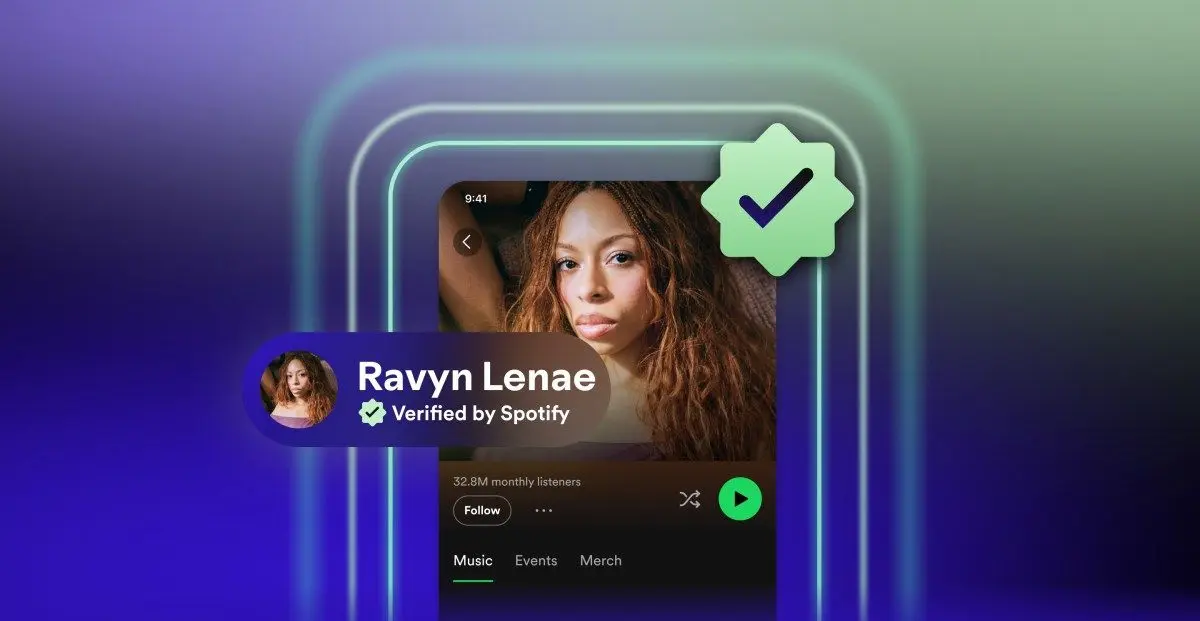
Spotify rolled out a new verification program designed to help listeners distinguish human creators from AI on its platform, addressing growing concerns about AI-generated music flooding music streaming platforms
1
. The Verified by Spotify badge appears as a light green checkmark next to artist names and profiles, confirming that a real person stands behind the music2
. At launch, AI personas or artist profiles that primarily upload AI-generated music are not eligible for the verification program, though the company acknowledged that "the concept of artist authenticity is complex and quickly evolving"1
.
Source: The Verge
The move comes as platforms face an unprecedented wave of AI content. Deezer recently reported that 44% of its daily uploads are AI-generated songs, equaling around 2 million tracks per month, though these account for less than 3% of total streams
2
. The issue gained mainstream attention in 2025 when The Velvet Sundown, a band with 850,000 monthly listeners and a verified page, turned out to be entirely AI-generated4
.Artist Verification Standards Focus on Listener Activity and Engagement
To qualify for artist verification, Spotify requires consistent listener activity and engagement over time, suggesting artists must cross the threshold for royalty payments
1
. The platform examines signals both on and off Spotify, including linked, active social media activity, concert dates, and available merchandise2
. Rather than requesting identification documents, Spotify pairs these standards with human review and judgment to identify real artists behaving in good faith2
.The company stated that more than 99% of artists Spotify listeners actively search for will be verified at launch, representing hundreds of thousands of artists including a significant number of independent acts, not just major-label bands
1
4
. Verification approvals will continue on a rolling basis, with badges appearing over the coming weeks3
.Concerns About Verification Criteria and Future AI Music Labeling
Critics have raised questions about Spotify's approach to combat AI slop. Ed Newton-Rex, a campaigner for creators' rights and former AI executive, suggested the verification system could "punish real human artists who don't have some of the markers the verification is based on," like touring or selling merchandise
4
. He proposed that Spotify could instead automatically label any AI-generated music, similar to what Deezer has implemented4
.
Source: Android Police
Professor Nick Collins from the University of Durham noted that AI usage exists on a spectrum between "entirely authentically handmade" and "fully AI generated," with many in-between cases, making labeling music itself a trickier task
4
. The verification system may favor more commercial and successful artists already active rather than new independent artists, he added4
.Related Stories
New Artist Details Feature and Industry Context
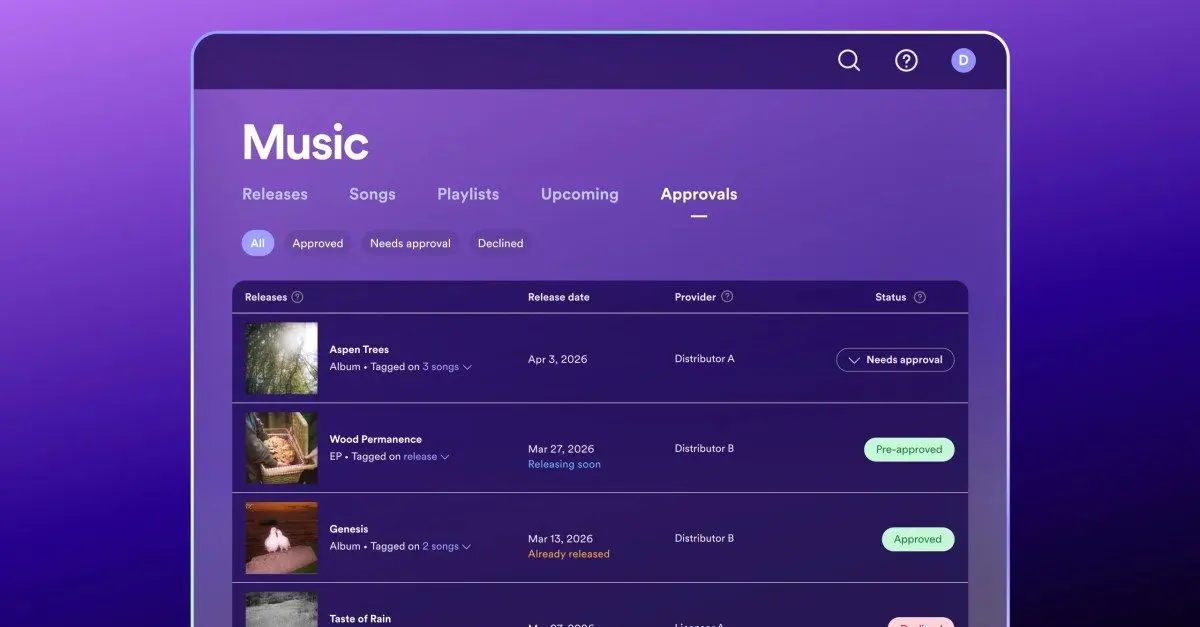
Spotify is also beta testing expanded artist profiles that function like nutrition facts for artists, displaying key details including career milestones, album releases, and touring activity in an easy-to-digest format
1
3
. These details appear in the About section on mobile across artist profiles, providing meaningful signals of an artist's authentic activity on Spotify even for those who haven't yet met verification criteria2
.
Source: Engadget
This initiative follows Spotify's retirement of blue verification checkmarks in late January, which were replaced with a "Registered Artist" tag to improve transparency, as the blue checkmarks merely indicated someone had claimed a profile rather than signaling success
2
. While Apple Music began optional labeling for AI-generated music in March, its efficacy remains uncertain because distributors decide whether to apply the label5
. Spotify's approach signals potential acceptance of more AI music on the platform while helping listeners identify human artists through verification badges5
.References
Summarized by

Navi
[5]
Related Stories
Spotify rolls out verified podcasts badges to combat AI slop and voice cloning imposters
19 May 2026•Technology

Spotify to Label AI Persona Profiles and Block Their Music From Your Recommendations Starting September
11 Aug 2026•Technology

Spotify Unveils New AI Policies to Combat Spam and Protect Artists
25 Sept 2025•Technology

Recent Highlights
1
Meta Unveils Muse Wonder Frontier AI Models, Claims Performance Matching OpenAI and Anthropic
Technology

2
IMF Report Warns AI Market Correction Could Spark Global Financial Crisis With $1.4T at Risk
Business and Economy

3
Eight States Sue OpenAI Over ChatGPT Safety Concerns and Unlawful Collection of Children's Data
Policy and Regulation
Recent Highlights
Today's Top Stories







Don’t drown in AI news. We cut through the noise - filtering, ranking and summarizing the most important AI news, breakthroughs and research daily. Follow topics that matter to you and stay ahead.


