Stanford's SleepFM AI predicts 130+ diseases from a single night's sleep data


4 Sources
[1]
Stanford's AI spots hidden disease warnings that show up while you sleep
A restless night often leads to fatigue the next day, but it may also signal health problems that emerge much later. Scientists at Stanford Medicine and their collaborators have developed an artificial intelligence system that can examine body signals from a single night of sleep and estimate a
[2]
AI trained on sleep data predicts future disease and mortality years in advance
By Tarun Sai LomteReviewed by Lauren HardakerJan 8 2026 By learning hidden physiological patterns from overnight sleep studies, a new AI foundation model reveals how sleep can serve as an early warning system for disease risk years before clinical diagnosis. Study: A multimodal sleep foundation
[3]
Sleep data can help predict disease risk years in advance
One bad night can leave you foggy the next morning. But new research suggests a single night's sleep may also carry clues about illnesses that won't appear for years. In one test, an AI system used overnight physiological signals to estimate a person's risk for more than 100 future health
[4]
Sleep Lab Data Can Predict Illnesses Years Earlier, Study Finds
By Dennis Thompson HealthDay ReporterWEDNESDAY, Jan. 7, 2026 (HealthDay News) -- Your body is talking while you sleep, and what it's saying could help doctors predict your future risk for major diseases, a new study says. An experimental artificial intelligence (AI) called SleepFM can use people's
Share
Copy Link
Researchers at Stanford Medicine developed SleepFM, an AI foundation model that analyzes overnight sleep study data to predict risk for more than 130 medical conditions years before diagnosis. Trained on 585,000 hours of polysomnography recordings from 65,000 individuals, the system excels at forecasting cancers, pregnancy complications, circulatory diseases, and mental health disorders by detecting hidden physiological patterns during sleep.
SleepFM Transforms Sleep Data Into Predictive Health Insights
A restless night might reveal more than just tomorrow's fatigue. Scientists at Stanford Medicine have developed SleepFM, an AI foundation model that examines sleep data to predict risk of medical conditions years before symptoms appear
1
. Published in Nature Medicine, this research demonstrates how AI trained on sleep data can identify hidden physiological patterns that signal future disease2
.The system was trained on nearly 585,000 hours of polysomnography recordings from approximately 65,000 individuals
3
. Polysomnography captures brain activity, heart function, breathing patterns, eye movement, leg motion, and other physiological signals during overnight sleep study sessions. While these comprehensive assessments are typically used only to diagnose sleep disorders, researchers recognized they contain vast amounts of underutilized health information.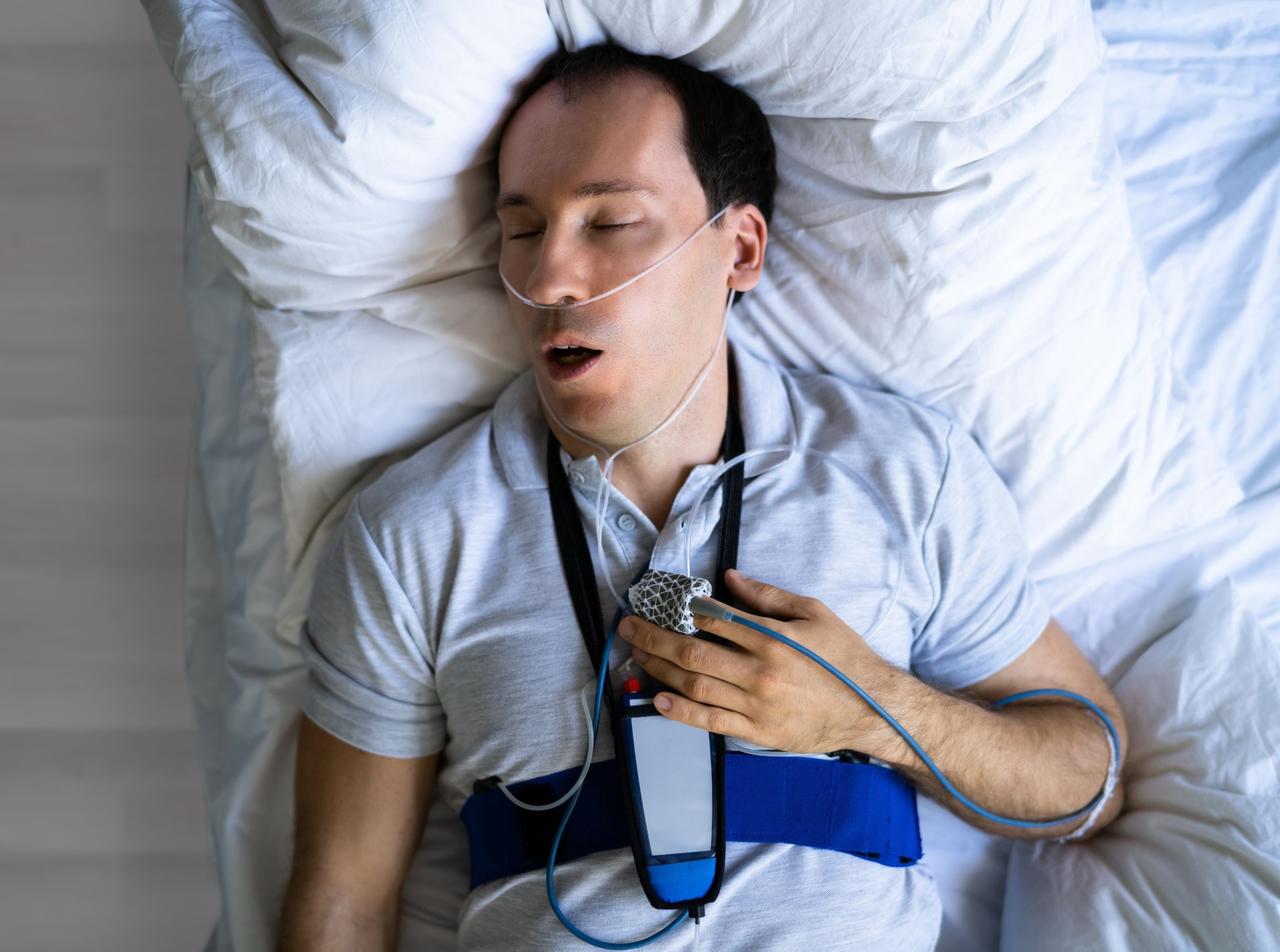
Source: Earth.com
"We record an amazing number of signals when we study sleep," said Emmanuel Mignot, the Craig Reynolds Professor in Sleep Medicine and co-senior author. "It's a kind of general physiology that we study for eight hours in a subject who's completely captive. It's very data rich"
1
.AI Foundation Model Learns the Language of Sleep
SleepFM operates as a foundation model, similar to large language models like ChatGPT but trained on biological signals rather than text. The researchers divided each sleep recording into five-second segments that function like words in a language-based system
3
. This approach allows the model to process long nights as sequences and learn normal patterns across multiple data streams.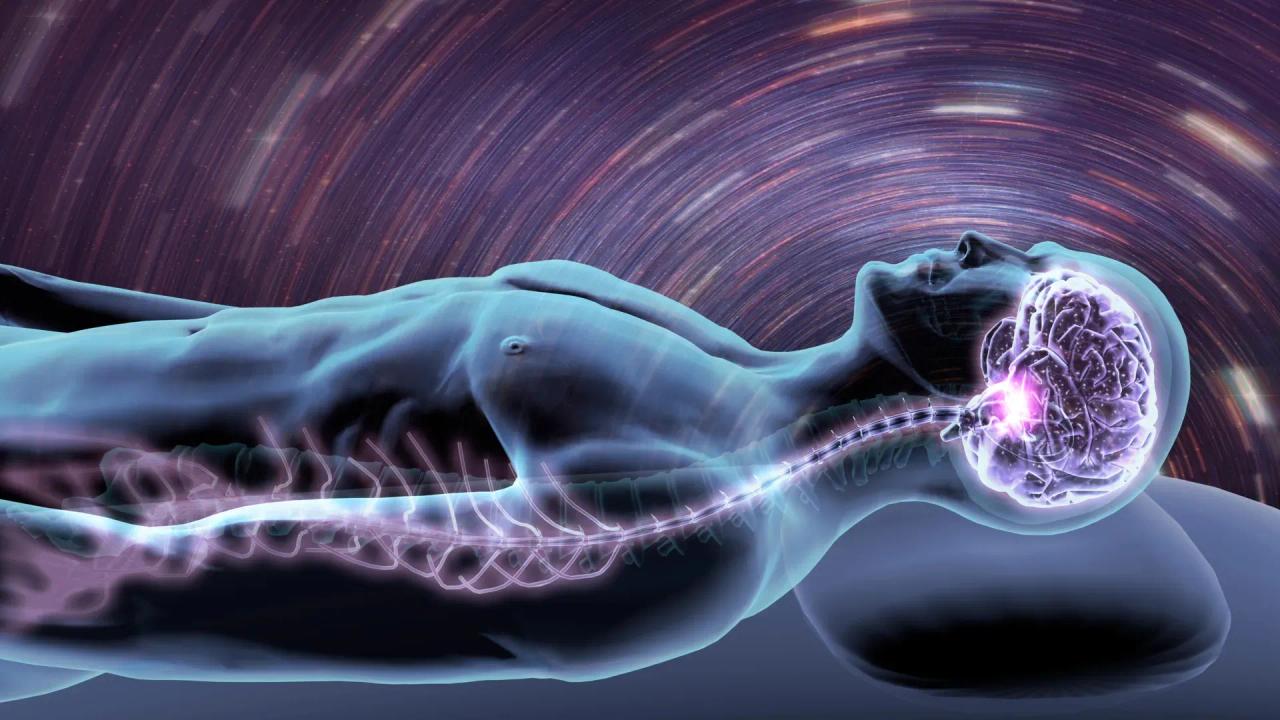
Source: ScienceDaily
"SleepFM is essentially learning the language of sleep," explained James Zou, associate professor of biomedical data science and co-senior author
4
. The team developed a training method called leave-one-out contrastive learning, which removes one type of signal at a time and asks the model to reconstruct it using remaining data. This technical advance helped harmonize different data modalities so they could work together effectively1
.Disease Prediction Across 130 Medical Conditions
After initial training, researchers linked polysomnography records with long-term health outcomes from the Stanford Sleep Medicine Center, founded in 1970 by the late William Dement. The largest dataset included approximately 35,000 patients aged 2 to 96, with sleep studies recorded between 1999 and 2024 paired with electronic health records tracking some individuals for up to 25 years
1
.SleepFM analyzed more than 1,000 disease categories and identified 130 conditions that could be predicted with reasonable accuracy using sleep data alone
3
. The system demonstrated particularly strong performance for cancers, pregnancy complications, circulatory diseases, and mental health disorders, achieving prediction scores above a C-index of 0.82
.The C-index, or concordance index, measures how well a model ranks risk across individuals. "A C-index of 0.8 means that 80% of the time, the model's prediction is concordant with what actually happened," Zou clarified
3
.Strongest Results for Specific Conditions and Mortality
SleepFM achieved notably high accuracy for several specific outcomes. For Parkinson's disease, the model reached a C-index of 0.93 over a six-year prediction window
2
. Other strong predictions included dementia (0.85), hypertensive heart disease (0.84), heart attack (0.81), prostate cancer (0.89), and breast cancer (0.87)4
.The system also demonstrated the ability to predict overall mortality risk with a C-index of 0.84
4
. Researchers emphasize these predictions reflect statistical risk stratification rather than causal relationships or imminent disease onset2
.Related Stories
Cross-Talk Between Body Systems Reveals Health Clues
The research revealed intriguing patterns in how different physiological signals contribute to disease prediction. Heart signals during sleep factored more prominently in predictions for circulatory diseases, while brain signals played larger roles in mental health disorder forecasts
4
. However, combining all available data streams produced the most accurate predictions for early disease detection."The most information we got for predicting disease was by contrasting the different channels," Mignot noted. Sleep data showing misalignment between body systems—such as a brain that appears asleep while the heart shows waking patterns—seemed particularly indicative of future health problems
4
.What This Means for Future Healthcare
From an AI perspective, sleep has been relatively understudied compared to fields like pathology or cardiology, despite being such a vital part of life
1
. This work represents the first application of AI to sleep data on such a massive scale, opening new possibilities for how overnight sleep study data could serve as an early warning system.The team is now working to improve SleepFM's predictions by potentially incorporating data from wearable devices and developing better interpretation techniques to understand what the model identifies when making specific disease predictions. "It doesn't explain that to us in English," Zou said, "But we have developed different interpretation techniques to figure out what the model is looking at"
4
.For clinicians and patients, this research suggests sleep studies could evolve beyond diagnosing sleep disorders to become comprehensive health screening tools. The ability to predict future health conditions from a single night's physiological data could enable earlier interventions and more personalized preventive care strategies, particularly for conditions like Parkinson's disease, various cancers, and cardiovascular diseases where early detection significantly impacts outcomes.
References
Summarized by

Navi
Related Stories
AI Model Unlocks Hidden Health Risks in Routine Sleep Studies, Doubles Mortality Prediction Accuracy
03 Aug 2026•Health

Revolutionary AI Model Analyzes Full Night of Sleep with High Accuracy in Largest Study to Date
18 Mar 2025•Science and Research

AI Model Predicts Disease Onset Up to 20 Years in Advance
02 Oct 2025•Science and Research
Recent Highlights



Recent Highlights
Today's Top Stories





Don’t drown in AI news. We cut through the noise - filtering, ranking and summarizing the most important AI news, breakthroughs and research daily. Follow topics that matter to you and stay ahead.


