Stellantis Wayve Partnership Targets 2028 Launch to Slash Self-Driving Costs and Development Time


2 Sources
[1]
Stellantis CEO says Wayve tie-up can cut self-driving costs, development time
TURIN, Oct 9 (Reuters) - Stellantis (STLAM.MI), opens new tab CEO Antonio Filosa said on Friday the automaker's partnership with British startup Wayve could help slash development times and costs for advanced driver-assistance systems as carmakers race to bring autonomous features to
[2]
Wayve's Alex Kendall: AI driving will be required 'like a seatbelt'
Stellantis and Wayve aim for hands-free driving from 2028, each brand tuned to drive its own way. Going driverless means beating a careful human driver, Wayve's CEO said. Every car will one day need an AI driving system, just as it needs seatbelts and emergency braking, Wayve chief executive Alex
Share
Copy Link
Stellantis CEO Antonio Filosa and Wayve CEO Alex Kendall unveiled how their AI driving partnership will cut development timelines from 24 months while reducing costs through automotive scale. The collaboration targets a 2028 North America launch with hands-free driving across brands including Jeep, Fiat, Peugeot and Maserati, with each vehicle tuned to drive differently using the same underlying AI system.
Stellantis Wayve Partnership Aims to Transform Self-Driving Costs
Stellantis CEO Antonio Filosa announced at the Wave technology event in Turin that the Stellantis Wayve partnership will significantly reduce self-driving costs and development timelines for advanced driver-assistance systems
1
. Speaking alongside Wayve CEO Alex Kendall, Filosa emphasized that automotive scale will be crucial to making hands-free driving affordable and accelerating mass adoption1
. The partnership, announced in May, integrates Wayve's AI-powered driving software into the STLA AutoDrive platform, with the first product launch targeted for 2028 in North America1
.Reduce Development Time and Costs Through AI Innovation
Filosa revealed that Stellantis currently operates on a 24-month development timeline, which the partnership aims to shorten through collaboration with technology specialists
1
. This shift reflects a broader industry trend where traditional automakers, facing soaring costs and longer-than-expected returns, increasingly rely on specialist technology firms rather than developing advanced self-driving systems in-house1
. Alex Kendall emphasized that Wayve designs systems to run on less than $1,000 of hardware to reach mass scale2
. The partnership combines Wayve's AI capabilities with Stellantis' brand knowledge, vehicle expertise, and manufacturing scale to drive costs down while accelerating deployment2
.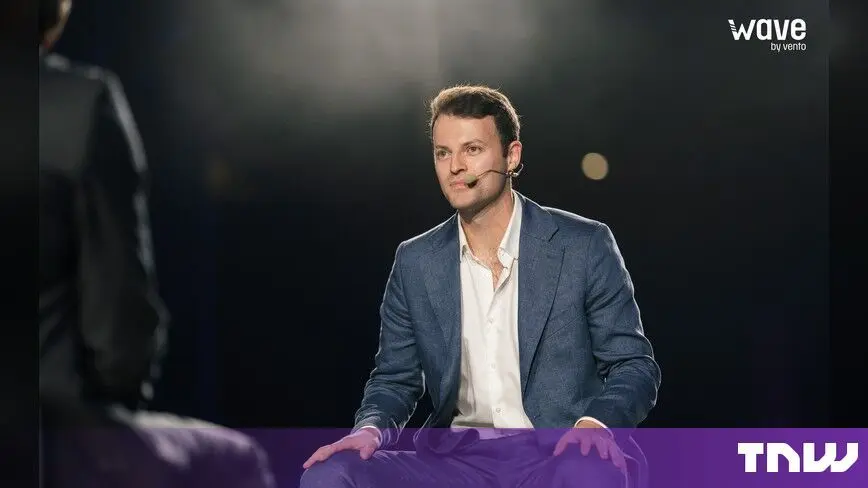
Source: The Next Web
AI Driving Systems as Essential Safety Technology
Kendall declared that AI driving systems will eventually be required in every vehicle, comparable to seatbelts and emergency braking systems
2
. "It's really morally wrong to not have some system, some intelligence in the vehicle to save those lives," he stated, referencing current road safety statistics2
. The technology focuses on level 2++ driving assistance, which enables hands-off driving while still requiring driver supervision1
. Wayve has accumulated training data from over 100 countries and tested in 600 to 700 cities, proving safety in simulation first using its generative world model, Gaia, before deployment2
.Brand-Specific AI Tuning Across Stellantis Portfolio
Antonio Filosa highlighted that Stellantis' portfolio of brands—including Jeep, Fiat, Peugeot and Maserati—offers a unique opportunity to tailor autonomous driving characteristics while using the same underlying AI system
1
. Each brand will drive differently, with AI making each vehicle a self-learning machine where a Jeep learns differently from a Peugeot or Maserati2
. At the Turin event, the companies demonstrated hands-free driving in a Fiat 500e and Maserati Grecale, extending technology first shown on a Jeep Grand Cherokee earlier this year1
. Kendall noted the Fiat 500 implementation came from a handshake about five months ago, with Wayve tuning the AI to drive "Italian style"2
.Related Stories
Path from Supervised to Unsupervised Driving
Kendall views supervised driving as a stepping stone to eyes-off and driverless cars rather than a separate business
2
. Starting with supervised systems introduces customers to the technology and builds the data needed for improvement while establishing supply chains and hardware infrastructure that take years in the automotive industry2
. To achieve unsupervised driving, a system must be safer than a safety-conscious human driver, setting a higher bar than average driver performance2
. Performance is growing by more than an order of magnitude annually, with scaling curves resembling those of language models2
.Competition Intensifies in Autonomous Driving Market
The partnership emerges amid intensifying competition in automated driving, with Tesla pushing European regulators to approve its Full Self-Driving technology, arguing that advanced driver-assistance systems improve road safety and accelerate autonomous feature adoption
1
. Wayve is simultaneously working with other automakers including Nissan and Mercedes-Benz, with technology designed for deployment across multiple vehicle brands and markets1
. Wayve also operates a supervised robotaxi service in London with Uber and plans to bring its AI to Mercedes-Benz production cars within two years2
. Kendall envisions Wayve becoming the intelligence layer for vehicles and eventually expanding into robotics2
. European regulators continue working to harmonize approval rules for increasingly sophisticated assisted-driving systems as automakers push for wider deployment1
.References
Summarized by

Navi
Related Stories
Wayve's self-driving tech is headed to Stellantis vehicles including Jeep and Ram by 2028
21 May 2026•Technology

Uber, Stellantis, and Wayve team up to deploy robotaxis across Europe, North America and beyond
17 Jun 2026•Technology

Stellantis and Mistral AI Expand Partnership to Develop AI-Powered In-Car Assistant
07 Feb 2025•Business and Economy

Recent Highlights
1
Microsoft and Nvidia Launch Surface Laptop Ultra: A $2,599 AI-Ready PC With RTX Spark Chip
Technology

2
Trump Consulted Grok AI Before Ordering Venezuela Invasion and Capture of Nicolás Maduro
Policy and Regulation

3
Scientists Build AI Model That Reconstructs Images From Brain Scans in Record Time
Science and Research

Recent Highlights
Today's Top Stories






Don’t drown in AI news. We cut through the noise - filtering, ranking and summarizing the most important AI news, breakthroughs and research daily. Follow topics that matter to you and stay ahead.


