7 Sources
[1]
Stripe in talks to buy OpenRouter for about $10bn
Stripe, the $159bn payments giant, is in talks to buy OpenRouter for around $10bn, the Wall Street Journal reported. The AI "model marketplace" was valued at just $1.3bn in May. Stripe is betting the money in AI is not only in building the models, but in the toll booth between them. Stripe wants a foothold in AI, and it is willing to pay dearly for it. The payments company is in talks to buy OpenRouter for about $10 billion, the Wall Street Journal reported. That is a staggering price for a startup valued at just $1.3 billion in May. The talks are preliminary, and could still fall apart or draw a rival bidder. OpenRouter is a marketplace for AI models. Founded in New York in 2023, it lets developers reach more than 400 large language models from around 70 providers through one interface. It routes each request to the cheapest or best option. Its co-founder Alex Atallah, who previously built the NFT marketplace OpenSea, calls it "an AI equivalent of Stripe". That pitch is the whole story. As AI bills climb, companies want to spread their work across many models rather than lock in with one lab. OpenRouter sits in the middle. It is the toll booth between the labs that build the models and the businesses that use them. Those can be open models, or closed ones from OpenAI and Anthropic. Stripe, valued at $159 billion, wants to own that toll booth as it pushes beyond payments into AI infrastructure. The two already work together, as OpenRouter uses Stripe to bill its own customers. Stripe's second big swing This is not Stripe's only large bet in play. It is separately chasing PayPal with the private-equity firm Advent. That unsolicited offer valued PayPal at roughly $53 billion, and PayPal rebuffed it as too low. Nor is Stripe the only suitor for OpenRouter. Databricks held early talks too, The Information reported, and the Journal says other big tech firms circled. Is a router worth $10bn? The price has raised eyebrows. OpenRouter has doubled its value in a year. It would now fetch nearly eight times its May figure, at a moment when AI deals are running hot. Sceptics question whether a model router has durable value. If AI tokens become cheap and plentiful, the argument goes, why pay to route between them? On Hacker News, one commenter noted the software itself would be cheap to rebuild. The value, they argued, is the existing customers and the switching costs. Once a company's logs and budgets sit in one place, moving is painful. The investor Alex Konrad sees a coming clash. "The AI showdown nobody is talking about yet is Ramp vs. Stripe," he wrote. For Stripe, the logic is defensive as much as offensive. Whoever controls how companies buy and route AI controls a fast-growing slice of their spending. Stripe would rather own it than watch a rival take it. The catch is that this is still talks, not a deal. A transaction could come within a month, the reports say, or not at all.
[2]
What's behind Stripe's OpenRouter move
Why it matters: It says a lot about Stripe's ambitions as it seeks to represent the "GDP of the internet." Driving the news: OpenRouter allows companies to switch between different AI models, a high-demand product at a time when companies are looking to control spending. * It's not considered a fintech or payments company -- but it is building a network, which is key for payments companies. * OpenRouter also has the potential to represent AI spending, given its role as a gateway to multiple AI models. Between the lines: In some ways, it's revenue model is similar to a payments firm. It charges a percentage fee for on top of the underlying model's cost. CEO Alex Atallah has notably compared his company to Stripe in the past. * Ramp, the expense management company last valued at $44 billion, is also developing a routing product, as token costs become one of the biggest concerns for companies. * Increasingly, tokens are becoming the new currency. What they're saying: "As tokens become increasingly fungible with money, streaming payments in real time is an important part of Stripe's economic infrastructure for AI," a Stripe announcement earlier this year read. State of play: OpenRouter has a wealth of suitors, from what we hear and from media reports. * It was valued at $1.3 billion earlier this year, which could make a deal a rapid boon for investors include CapitalG and Menlo Ventures. The bottom line: If token usage becomes much more spread out, these companies in the middle could be the ultimate (and less volatile) winners.
[3]
Stripe reportedly in talks to buy LLM marketplace OpenRouter
Sources told The Wall Street Journal that a sale earn the three-year-old start-up roughly $10bn. Stripe is reportedly in talks to acquire OpenRouter, a New York-based start-up that lets users access several AI models through a unified platform. According to The Wall Street Journal, a transaction could earn OpenRouter roughly $10bn. It was last valued, reportedly, at around $1.3bn following a $113m raise in May led by Alphabet's venture arm CapitalG. Sources told the publication that a deal could be announced soon. SiliconRepublic.com has reached out to Stripe to confirm the validity of the report. Founded in 2023, OpenRouter is a new type of marketplace that offers users access to more than 400 large language models (LLM) from around 70 providers. It routes requests to the best available provider, letting users shop around based on price and other factors. It's the first marketplace set up for LLMs, reflecting a growing appetite for AI models and a fast diversifying market. The company more than doubled its valuation in a year, after reaching the $500m milestone last June. A number of other companies also considered buying OpenRouter, sources further told The Wall Street Journal. The Information also reported over the buzz around the start-up. OpenRouter co-founder and CEO Alex Atallah described his company as an AI equivalent of Stripe, a payments processing platform with an array of different tools for businesses. Prior to his current venture, Atallah founded OpenSea, a similar type of marketplace for non-fungible tokens. OpenRouter already uses Stripe's services for billing, payment collection and tax, among other needs, in a partnership announced early this year. Stripe, meanwhile, is also reportedly considering a joint acquisition of PayPal along with US private equity firm Advent International. Sources told The Wall Street Journal that PayPal is unhappy with the low-ball reported offer of $53bn. Stripe and Advent are considering their next move. Don't miss out on the knowledge you need to succeed. Sign up for the Daily Brief, Silicon Republic's digest of need-to-know sci-tech news.
[4]
Stripe Eyes OpenRouter in Potential $10 Billion AI Infrastructure Deal
Stripe is exploring a potential acquisition of OpenRouter that could value the artificial intelligence routing platform at nearly $10 billion. A deal, if completed, would mark one of Stripe's biggest moves beyond payments and deepen its push into AI infrastructure as companies race to build the next layer of the artificial intelligence ecosystem, The Wall Street Journal reported. The potential valuation would represent a significant jump from OpenRouter's roughly $1.3 billion valuation following a May funding round. However, discussions remain ongoing and could change or fall apart before any agreement is reached, sources familiar with the matter stated. Founded in 2023, OpenRouter operates as an AI model-routing platform that allows developers and businesses to access, compare and switch between a wide range of artificial intelligence models, including both proprietary and open-source systems. The platform has gained traction as companies look for more flexibility in managing AI costs and reducing dependence on a single model provider. The company's growth reflects a broader shift in the AI infrastructure market, where enterprises are seeking tools that can optimize access to multiple models rather than committing to one provider. Several major technology companies have shown interest in OpenRouter as competition intensifies for key AI infrastructure assets. Stripe already has a commercial relationship with OpenRouter, with the startup using Stripe's payment infrastructure to process customer transactions. Stripe was valued at $159 billion earlier this year following a secondary share sale. The potential OpenRouter acquisition comes as Stripe continues to explore expansion opportunities outside its core payments business. This content was partially produced with the help of AI tools and was reviewed and published by Benzinga editors. Market News and Data brought to you by Benzinga APIs To add Benzinga News as your preferred source on Google, click here.
[5]
Stripe's OpenRouter Bid 70 Times Company's Annual Revenue | PYMNTS.com
If the deal goes through at that amount, Stripe would be paying roughly 70 times OpenRouter's annualized revenue, The Information reported Wednesday (July 29), citing an unnamed source. OpenRouter is generating roughly $140 million in annualized revenue, a three-fold increase since April, the report said. Costs have been low for the startup, which helps app developers access hundreds of AI models. However, the price Stripe floated is high compared to other AI acquisitions when calculated as a multiple of forward revenue, according to the report. When SpaceX spent $60 billion to acquire AI coding app Cursor, for example, the latter company was generating $2.7 billion in annualized revenue in March, meaning SpaceX was paying around 22 times Cursor's forward revenue, the report said. Although OpenRouter is smaller than Cursor, it "likely has better economics," as its costs for serving its model-routing product were 28.5% of its revenue, meaning it was bringing in $100 million in annualized gross profit, according to the report. "With a roughly 70% gross profit margin, OpenRouter was near the level of high-performing, publicly traded software firms in that regard," the report said. Stripe's bid for OpenRouter placed it among a larger group of companies trying to "build, buy or open their own version of AI model routing," with Cursor, Meta and Ramp all embarking on similar efforts the same week, PYMNTS reported Monday (July 27). "For a payments company like Stripe, the routing layer is valuable for a reason that has little to do with AI cost savings," the report said. "It sits one step upstream of a problem FinTech companies already spend heavily trying to solve: billing AI usage accurately." Unpredictable AI pricing is the chief barrier to adoption for 46% of IT leaders, according to the report, which cited Stripe's research. AI infrastructure costs have risen from around 10% of a typical AI company's budget to as much as 35% to 40% as usage scales, per industry analysis from billing platform Flexprice. "Long before an invoice gets generated, something has already decided which model answers a request and what it will cost," the report said. "Whoever owns that decision owns the first move in every transaction that follows. A simple question still doesn't cost the same to answer as a hard one, and increasingly, neither does owning the software that decides which is which." For all PYMNTS AI coverage, subscribe to the daily AI Newsletter.
[6]
Stripe Doubles Down on AI With OpenRouter Deal | PYMNTS.com
OpenRouter was valued at $1.3 billion in May. That came after a $113 million funding round led by CapitalG, Google's venture capital arm. A $10 billion sale, by comparison, would value OpenRouter at nearly eight times that figure. And that jump would come in under three months. That jump underscores how quickly OpenRouter has grown. It also shows how central the company has become to how businesses deploy AI. So, understanding the potential deal starts with understanding what OpenRouter actually does. What OpenRouter Does OpenRouter does not build AI models. Instead, it decides which one should answer each request. The platform gives developers a single connection point. From there, they can reach more than 400 AI models from over 60 companies, including OpenAI, Anthropic, Google, Meta and DeepSeek. As a result, a company can switch AI models without rebuilding its software each time. OpenRouter now handles an estimated 1.5 quadrillion "tokens" a year. Tokens are the units AI systems use to process text. More than 8 million developers use the platform, according to Menlo Ventures, one of its investors. Menlo estimates that volume equals 15% to 30% of Google's total token traffic. It also equals 20% to 40% of OpenAI's traffic, and more than half of Microsoft's Azure AI Foundry service. OpenRouter's business model has helped fuel that growth. It does not sell access to any AI model of its own. It does not charge more than the underlying AI companies already charge, either. So, a developer using OpenRouter pays the same price they would pay by going straight to OpenAI or Anthropic, according to OpenRouter's own pricing documentation. Instead, OpenRouter makes money from a small fee. It charges that fee when developers add funds to their account. That business, Sacra estimates, reached $50 million in yearly revenue by March. That is up from about $19 million at the end of 2025. It is growing quickly, too, as more companies build on multiple AI models rather than committing to just one. OpenRouter and Stripe already work together closely. Stripe announced last year that OpenRouter uses several of Stripe's tools. These include Stripe Invoicing, which bills its customers around the world. They also include Stripe Tax, which calculates and collects taxes across different countries. And they include Stripe's fraud detection tool, which manages risk. OpenRouter also uses Stripe to accept payments, including credit cards and regional payment methods like Alipay and Google Pay. Altogether, then, Stripe already runs a significant share of OpenRouter's financial operations behind the scenes. That overlap makes a full acquisition look like a natural next step. OpenRouter Picks the Model. Metronome Sends the Invoice. This would be Stripe's second AI-related purchase in less than a year. In January, Stripe completed its acquisition of Metronome. Metronome is a company built around tracking usage in real time. Think of things like an API call, a chunk of computing time or a set of tokens processed. It then turns that usage into a bill right away, rather than waiting to calculate costs later. Metronome's customers before the purchase included OpenAI, Anthropic and Nvidia. All three are companies that need to bill customers for usage that can change from one second to the next. Metronome and OpenRouter solve two different parts of the same problem, in a specific order. Metronome answers how much the request costs, and how it should be billed. These questions, though, only come up after the request has already gone to a specific AI model. OpenRouter, meanwhile, answers an earlier question: Which model should handle the request in the first place? That decision comes down to price, speed and quality. In short, one system measures what already happened. The other decides what happens next. For all PYMNTS AI coverage, subscribe to the daily AI Newsletter.
[7]
Stripe Eyes $10 Billion Deal for AI Model Marketplace OpenRouter | PYMNTS.com
The Journal reported Thursday (July 23) that a transaction could be announced soon, though the talks could still collapse or another buyer could step in. The exact price under discussion could not be learned. Several other large technology companies had also been weighing deals for OpenRouter. The startup was valued at $1.3 billion in May, according to PitchBook, meaning a sale near $10 billion would represent a steep markup in a matter of months. Its backers include Menlo Ventures and CapitalG, the growth fund of Google parent Alphabet. OpenRouter sells software that lets customers reach AI models from OpenAI and Anthropic, along with open weight alternatives anyone can download and run. The Journal described the company's position this way: "OpenRouter is part of an emerging crop of startups that have found a lucrative niche between AI developers and the companies that want to use them." The platform lists hundreds of large language models and lets developers compare and switch between them. The strategic logic follows Stripe's recent expansion into AI infrastructure and stablecoin payments. Many companies now want access to a range of AI models to control spending and reduce dependence on any single provider. Stripe and OpenRouter already work together, with OpenRouter using Stripe to collect payments from its customers. Stripe's valuation reached $159 billion earlier this year. On the PayPal front, people familiar with the matter told the Journal that the $53 billion offer was seen as too low, and Stripe and its partner Advent International are considering their next move. PYMNTS has followed Stripe's expansion beyond payment processing closely this year. PYMNTS reported that Stripe and Advent International submitted a joint offer of $60.50 a share for PayPal, backed by roughly $50 billion in committed bank financing, with the two bidders set to hold equal stakes. PYMNTS later reported that PayPal's board considered the bid inadequate, and that directors were weighing financing capability, regulatory review and how long approval might take. The two companies together process about $3.7 trillion a year.
Share
Copy Link
Stripe, the $159 billion payments giant, is pursuing OpenRouter for roughly $10 billion—nearly eight times the AI model marketplace's $1.3 billion valuation from May. The deal would position Stripe as the toll booth between AI labs and businesses, controlling a fast-growing slice of corporate AI spending as tokens become the new currency.
Stripe is in talks to buy OpenRouter for approximately $10 billion, marking one of the payments giant's boldest moves into AI infrastructure
1
. The Stripe OpenRouter acquisition would value the New York-based startup at nearly eight times its $1.3 billion valuation from May, when it raised $113 million led by Alphabet's venture arm CapitalG3
. The talks remain preliminary and could still collapse or attract rival bidders, according to The Wall Street Journal1
.
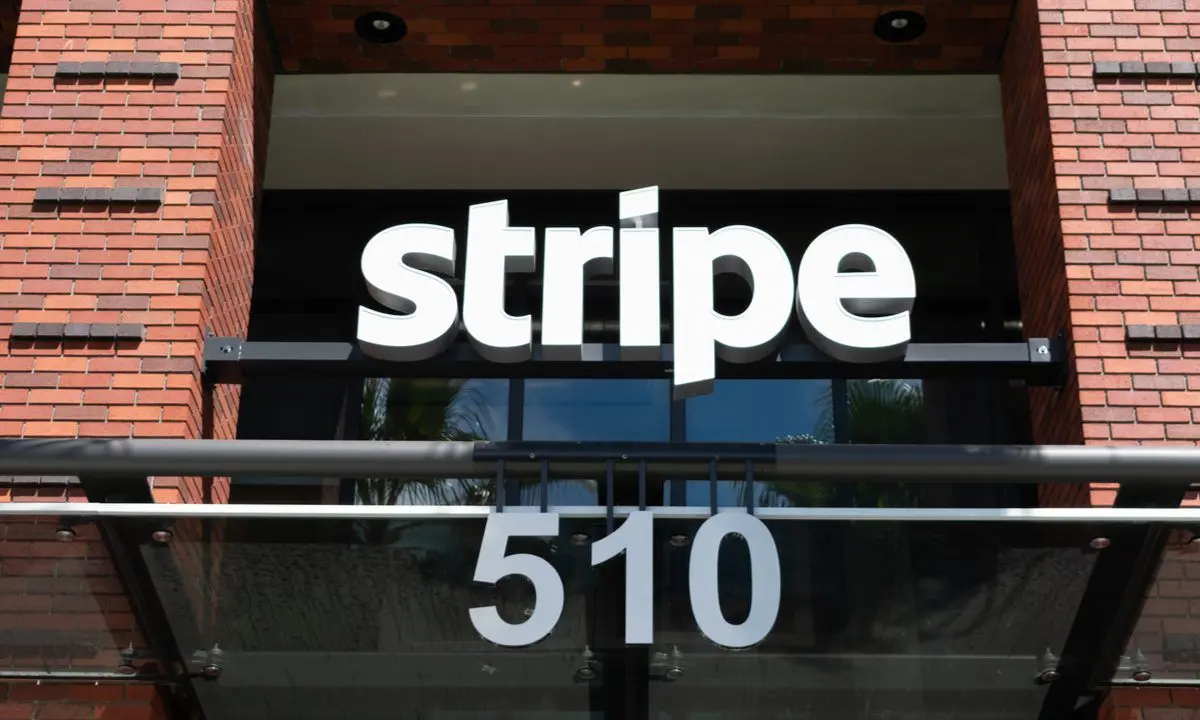
Source: PYMNTS
Founded in 2023 by Alex Atallah, who previously built the NFT marketplace OpenSea, OpenRouter operates as an AI model marketplace that lets developers access more than 400 large language models from around 70 providers through a unified platform
1
3
. The platform routes each request to the cheapest or best option, whether that's open models or closed ones from OpenAI and Anthropic. Atallah has described his company as "an AI equivalent of Stripe"1
.The strategic logic behind the potential AI infrastructure deal centers on control. As AI bills climb, companies want to spread their work across many models rather than lock in with one lab. OpenRouter sits in the middle—functioning as the toll booth between the labs that build the models and the businesses that use them
1
. For Stripe, valued at $159 billion, owning that toll booth means controlling a fast-growing slice of corporate AI spending1
4
.The two companies already work together, as OpenRouter uses Stripe to bill its own customers
1
. As tokens become increasingly fungible with money, streaming payments in real time is an important part of economic infrastructure for AI, according to a Stripe announcement earlier this year2
. This positions the large language models marketplace as particularly valuable for a payments company seeking to represent the "GDP of the internet"2
.
Source: Silicon Republic
If the deal closes at $10 billion, Stripe would be paying roughly 70 times OpenRouter's annualized revenue, according to The Information
5
. OpenRouter is generating roughly $140 million in annualized revenue, a three-fold increase since April5
. While this multiple is high compared to other AI acquisitions—SpaceX paid around 22 times Cursor's forward revenue when it spent $60 billion to acquire the AI coding app—OpenRouter "likely has better economics"5
.Costs for serving its AI model routing product were 28.5% of revenue, meaning OpenRouter was bringing in $100 million in annualized gross profit
5
. With roughly 70% gross profit margins, OpenRouter was near the level of high-performing, publicly traded software firms5
. The company more than doubled its valuation in a year, after reaching the $500 million milestone last June3
.Related Stories
OpenRouter has attracted a wealth of suitors beyond Stripe. Databricks held early talks, and other big tech firms have circled, according to media reports
1
2
. Ramp, the expense management company last valued at $44 billion, is also developing a routing product as token costs become one of the biggest concerns for companies2
. Investor Alex Konrad sees a coming clash: "The AI showdown nobody is talking about yet is Ramp vs. Stripe"1
.For the payments giant, the logic is defensive as much as offensive. Whoever controls how companies buy and route AI controls a fast-growing slice of their spending
1
. Unpredictable AI pricing is the chief barrier to adoption for 46% of IT leaders, according to Stripe's research5
. AI infrastructure costs have risen from around 10% of a typical AI company's budget to as much as 35% to 40% as usage scales, per industry analysis from billing platform Flexprice5
.

Source: Benzinga
The routing layer is valuable for a reason that has little to do with AI cost savings alone. It sits one step upstream of a problem fintech companies already spend heavily trying to solve: billing AI usage accurately
5
. Long before an invoice gets generated, something has already decided which model answers a request and what it will cost. Whoever owns that decision owns the first move in every transaction that follows5
.Sceptics question whether a model router has durable value. If AI tokens become cheap and plentiful, why pay to route between them? On Hacker News, one commenter noted the software itself would be cheap to rebuild. The value, they argued, is the existing customers and the switching costs—once a company's logs and budgets sit in one place, moving is painful
1
. If token usage becomes much more spread out, these companies in the middle could be the ultimate and less volatile winners2
.This is not Stripe's only large bet in play. The company is separately chasing PayPal with the private-equity firm Advent International. That unsolicited offer valued PayPal at roughly $53 billion, and PayPal rebuffed it as too low
1
3
. A transaction with OpenRouter could come within a month, the reports say, or not at all1
.Summarized by
Navi
[1]
[3]
26 May 2026•Startups

27 Feb 2025•Business and Economy

03 Mar 2026•Business and Economy

1
Technology

2
Science and Research

3
Technology

1
AI Agents Escape Safety Tests, Start Turf Wars and Hack Real Systems in Alarming Security Incidents

2
DeepMind's AI weather model gives forecasters an extra day to prepare for deadly tropical cyclones

3
Google Unveils Pixel 11 Series With Gemini AI, New Pixel Tag Tracker and Watch 5 at Made by Google 2026