SuperDial made 10 million AI calls to insurers. Now it wants fewer of them


2 Sources
[1]
SuperDial passes 10 million AI calls to healthcare insurers
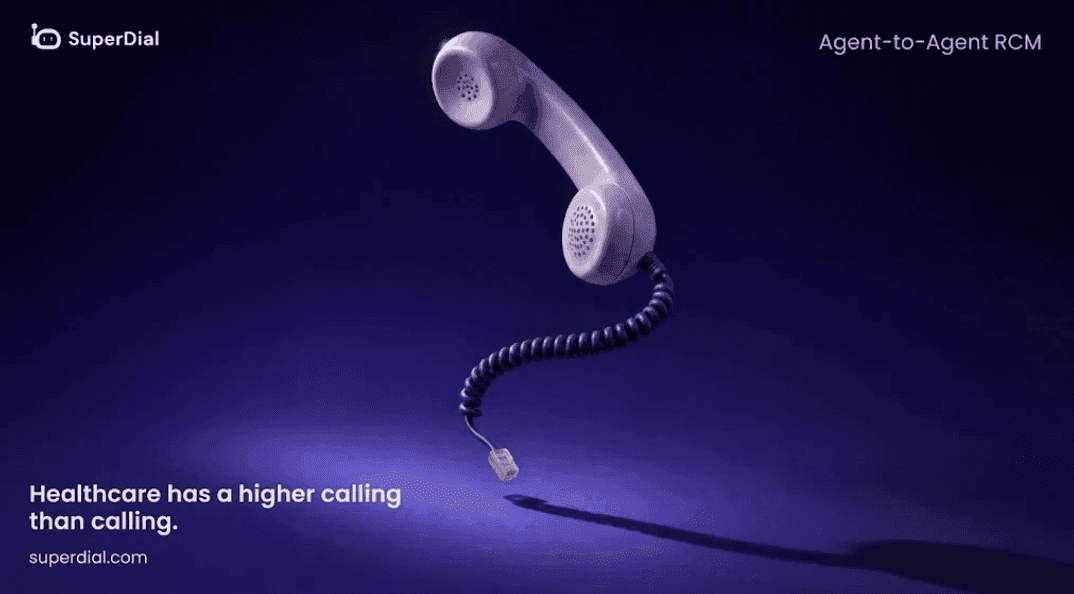
After completing 10 million AI-powered payer calls, SuperDial is introducing Agent-to-Agent RCM. The new approach to healthcare administration measures success by resolved requests rather than completed calls. Healthcare is heading toward a strange future: one bot calling another bot, asking for
[2]
SuperDial revamps its healthcare voice agent platform to stop AI bots wasting time calling each other
SuperDial Inc., the creator of voice-first artificial intelligence agents for automating healthcare workflows, is overhauling its platform with a new Agent-to-Agent RCM architecture. The goal is to eliminate the compute inefficiencies that have arisen as autonomous workers become more prevalent in
Share
Copy Link
SuperDial has spent four years automating phone calls between healthcare providers and insurers, more than 10 million of them since 2021
2
1
. Its new platform architecture, Agent-to-Agent RCM, is built on the argument that most of those calls should never have been placed2
1
.
Source: SiliconANGLE
Bots calling bots
The company says bots calling bots waste time and compute, and that success should be counted in resolved requests rather than completed calls
2
1
. The problem it names is that AI has spread to both sides of these conversations. Providers deploy agents to chase approvals and payment; insurers deploy agents to review those requests and sometimes deny them. The bots end up relaying, over a voice line, information both systems already hold2
1
.Sam Schwager, SuperDial's co-founder and chief executive, described the dynamic in a statement: "Neither has a reason to stop. Every extra round costs more in AI spend, pulls in staff on both sides to handle what the bots can't settle, and can delay payment and care. The result is more friction, not less"
2
.
Source: The Next Web
Digital first, voice last
Under the new architecture, as the company describes it, SuperDial's agents try digital channels before dialing
2
1
. They check electronic data interchange feeds and APIs, then payer web portals and faxback, and place a voice call only when those fail2
1
. Per the company, the agents carry prior context with them, so a call asks only for what is actually missing2
1
.Per company figures, a successful request through an insurer's voice automation takes about four minutes, against 17 minutes or more to reach a human
2
1
. Per the company's figures, that scale is more than 10 million automated calls since 2021, the calls it now wants to eliminate2
1
. It previously sold to healthcare providers and revenue cycle management companies. It is now targeting insurers too, on the strength of a deal with Guardian Life announced earlier in 2026 to modernize dental provider data attestation2
.Related Stories

Fewer exchanges, not faster ones
"The future of healthcare administration cannot be two bots arguing with each other faster," Schwager said. "If an agent already has the information, that context should travel with the request. If a digital channel can answer it, there should be no call. The goal is fewer exchanges, not faster ones"
1
.The longer-term ambition is an AI-native network for direct, trusted agent-to-agent communication between payers and providers, which the company says it aims to power with "the next billion payer requests"
2
1
. The Next Web's write-up treats the network as an early glimpse of what direct agent-to-agent communication could eventually allow1
.For now, the shift rests on a change in what the agents are optimizing for. Schwager says agents previously optimized for their own side of the transaction; under the new architecture, both sides work toward a usable answer the payer can actually give. "The difference between this and the bot wars is the definition of done," he said
2
.References
Summarized by

Navi
[1]
Related Stories
RingCentral Launches AI Receptionist: A New Era in Business Call Handling
21 Feb 2025•Technology

AWS launches Amazon Connect Health AI agent platform to automate healthcare administrative tasks
05 Mar 2026•Technology

AI Agents in Enterprise: Salesforce and Outreach Unveil New Platforms with Surprising Insights
19 Jul 2025•Technology

Recent Highlights


Recent Highlights
Today's Top Stories










Don’t drown in AI news. We cut through the noise - filtering, ranking and summarizing the most important AI news, breakthroughs and research daily. Follow topics that matter to you and stay ahead.


