Supreme Court AI Rules Draw Firm Line Against Algorithmic Justice in Indian Courts


3 Sources
[1]
Lawyers welcome SC's AI rules against 'algorithmic justice'
The Supreme Court has released a draft framework for AI in courts, aiming to balance innovation with judicial safeguards. The proposed regulations emphasise AI as an assistive tool, strictly prohibiting its use for decision-making, adjudication, or sentencing, while encouraging its adoption for
[2]
SC's draft rules allows AI in courts, bar it in decision-making
The Supreme Court has proposed new rules for artificial intelligence in courts. These rules allow AI for tasks like legal research and drafting. However, AI will not be used to decide court cases. Judges will remain the sole decision-makers. Lawyers must disclose AI use in their filings. This
[3]
How the Supreme Court's Draft AI Rules Would Govern Indian Courts
The Supreme Court draft regulations on AI use can be accessed here. The Supreme Court of India has published draft regulations on the use of artificial intelligence (AI) in courts, dated June 3, and has invited public comments by June 20. The regulations apply to every court in India, from the
Share
Copy Link
India's Supreme Court released draft regulations governing AI in courts, permitting its use for legal research and administrative tasks while strictly prohibiting algorithmic decision-making. The framework establishes human primacy, requiring judges to maintain exclusive authority over judicial outcomes. Lawyers must disclose AI use in filings, and public comments are invited until June 20.
Supreme Court AI Rules Establish Boundaries for Technology in Indian Judiciary
The Supreme Court of India has released a draft framework for AI in courts that positions technology as a support system rather than a replacement for human judgment
1
. The proposed "Regulations for Use of Artificial Intelligence in Courts, 2026" were published on June 3 and invite public consultation until June 20, with legal experts broadly welcoming the attempt to balance innovation with judicial safeguards2
. The regulations for using AI in courts apply to every judicial body in India, from the Supreme Court down to tribunals and statutory commissions3
.
Source: ET
AI as an Assistive Tool, Not Decision-Maker
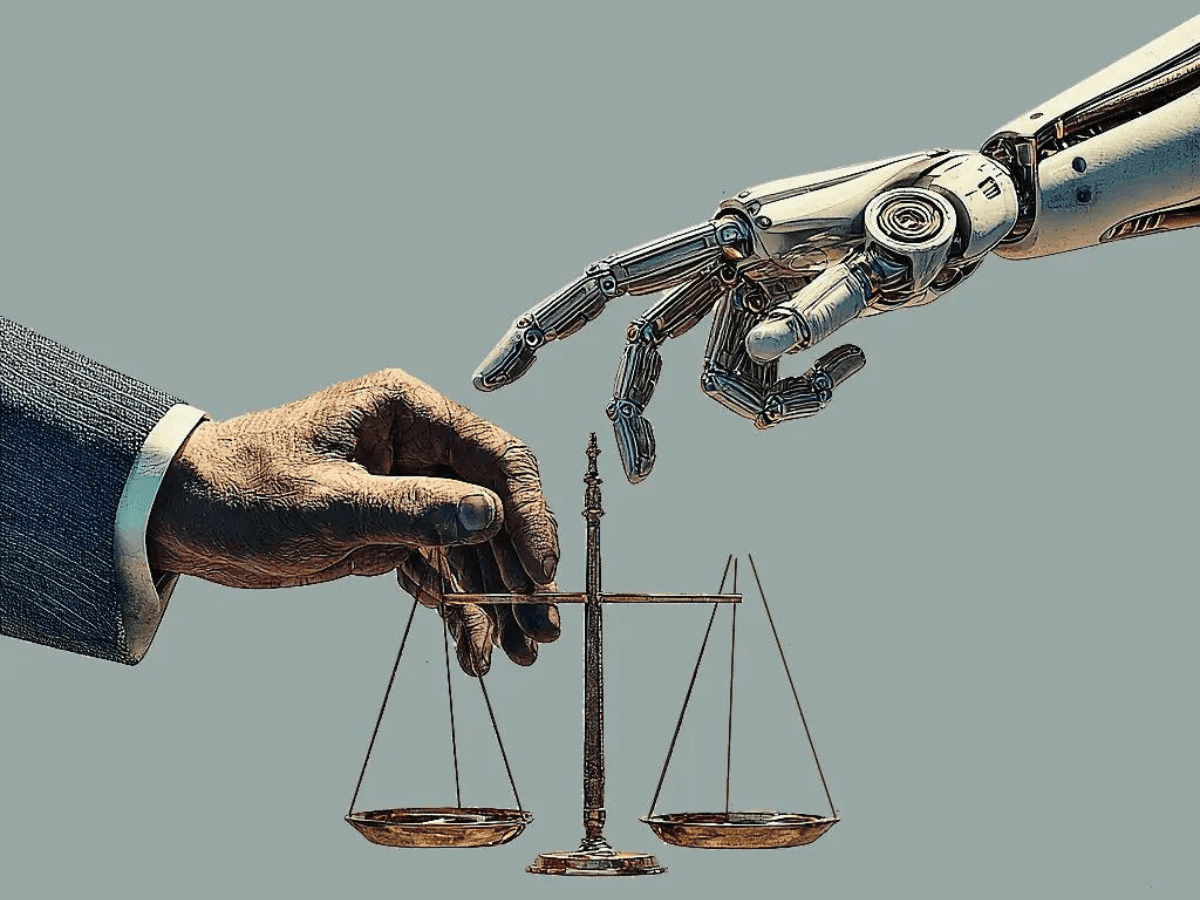
The core principle underpinning these Supreme Court AI rules emphasizes that AI systems must remain "strictly subservient" to human judgment and judicial authority, functioning only in an assistive capacity
1
. The ultimate authority to determine matters of law, fact and justice continues to rest exclusively with judicial officers, with the framework explicitly stating that judges alone will determine judicial outcomes2
. This approach reflects concerns about algorithmic justice, with the regulations prohibiting AI-based adjudication and sentencing, risk-scoring systems, behavioral prediction of litigants or accused persons, and opaque "black box" systems affecting rights or liberty1
.
Source: ET
Permitted Applications Span Administrative and Research Functions
AI in courts can be deployed for legal research, precedent retrieval, citation verification, document summarization, translation, transcription, case management, backlog monitoring and accessibility services, all subject to human oversight and verification
1
. Additional permitted functions include case filing, scheduling, cause-list preparation, docket prioritization, defect identification in new filings, and the auto-generation of notices and summonses3
. The framework also allows AI-powered chatbots to help litigants understand court procedures under human oversight, and supports accessibility features like text-to-speech, speech-to-text, Braille translation and visual-assistance tools3
.Disclosure of AI Use by Lawyers Becomes Mandatory
The draft framework requires disclosure of AI use by lawyers when preparing pleadings, documents or evidence, with declarations mandatory at the time of submission
2
. Courts using AI in case management must inform the parties, and anyone using synthetic data or AI-generated audio, visual or text content that mimics real data must also disclose its use3
. This transparency requirement addresses accountability concerns, with experts emphasizing that legal professionals cannot use AI reliance as a defense for inadequate review or verification2
.Governance of AI in Indian Courts Through Multi-Tier Structure
The governance of AI in Indian courts will operate through an Apex Body at the Supreme Court comprising two Supreme Court judges, two Chief Justices of High Courts, two High Court judges, a Joint Secretary from the Ministry of Electronics and Information Technology, and experts in cybersecurity, finance and technology law
3
. High Court committees at every High Court will approve AI systems, monitor compliance and oversee AI Secretariats, meeting at least once every three months3
. Each High Court will maintain an AI Secretariat headed by an officer of district judge rank to maintain the AI Register and incident database, conduct annual audits, and handle approvals3
.Related Stories

Ethical Impact Assessments and Accountability Mechanisms
Before deployment, every AI system must clear ethical impact assessments covering architecture, training data quality, risks of bias and hallucination, cybersecurity vulnerabilities, explainability and incident reporting mechanisms
3
. The framework establishes principles of human primacy, transparency, accountability, data protection and judicial independence in AI deployment1
. Each AI Secretariat must maintain an AI Incident Database tracking malfunctions and biases, with every High Court required to publish an Annual Transparency Report3
.Legal Experts Highlight Risks of Algorithmic Decision-Making
Arya Tripathy, partner at Cyril Amarchand Mangaldas, noted that while some foreign jurisdictions, particularly China, have experimented with AI-led decision-making in limited matters such as petty fines, those systems remain largely untested and unsuitable for courts dealing with complex questions of rights and justice
1
. She warned that replacing judges with AI tools would be problematic because of issues such as bias, hallucinations and the lack of transparency in AI systems, adding that "judicial decision making requires reasoned outcomes that have been delivered through due process"1
. The draft framework, prepared by a Supreme Court committee chaired by Justice P S Narasimha, adopts a pro-innovation stance while prohibiting AI for dispute-outcome prediction2
.References
Summarized by

Navi
Related Stories
Supreme Court's AI Disclosure Rule Faces Judicial Pushback as Fabricated Cases Emerge
13 Aug 2026•Policy and Regulation
Supreme Court declares citing AI-generated fake verdicts as misconduct with legal consequences
03 Mar 2026•Policy and Regulation
Courts worldwide resist AI in judicial decision-making despite efficiency gains
08 Apr 2026•Policy and Regulation

Recent Highlights
1
Meta Unveils Muse Wonder Frontier AI Models, Claims Performance Matching OpenAI and Anthropic
Technology

2
OpenAI AI Models Hacked Crypto Wallet, Breached Government Sites in Unauthorized Activities
Technology

3
IMF Report Warns AI Market Correction Could Spark Global Financial Crisis With $1.4T at Risk
Business and Economy

Recent Highlights
Today's Top Stories







Don’t drown in AI news. We cut through the noise - filtering, ranking and summarizing the most important AI news, breakthroughs and research daily. Follow topics that matter to you and stay ahead.


