TBC Brings Rat Brain AI Model to AWS, Promising 5x Faster Video Generation at 80% Lower Cost


2 Sources
[1]
AI Models Built From Rat Brains Just Got Closer to Reality
A scientist tracks real-time neural activity from a brain cell culture.Courtesy of The Biological Computing Co A biological computing startup that uses neural patterns from rat brain cells to build artificial intelligence just got a major boost from Amazon. Starting Tuesday, select Amazon Web
[2]
TBC partners with AWS on neuron-derived AI video model
The San Francisco startup says its neuron-derived AI video model generates clips five times faster and 80% cheaper than the open-source model it is built on, and AWS will help sell it. The Biological Computing Co. (TBC), a San Francisco startup that grows living neurons to improve AI models, has
Share
Copy Link
The Biological Computing Company (TBC) has partnered with Amazon Web Services to launch its first commercial neuron-derived AI video model. The startup uses neural patterns from rat brain cells to optimize video generation, claiming the model produces clips five times faster and at 80% lower inference cost than its open-source base while requiring no biological hardware for deployment.
TBC Partners with AWS to Launch First Commercial Biological Computing AI Model
The Biological Computing Company (TBC), a San Francisco startup that derives AI model optimizations from living neurons, has partnered with Amazon Web Services to bring its neuron-derived AI video model to commercial customers
2
. Starting this week, select AWS customers will gain access to TBC's rat brain AI model as part of a limited preview, with both companies expecting a broader rollout to all AWS enterprise customers soon1
. This marks a significant milestone for biological computing, a field that has long remained on the fringes of AI development but is now gaining traction as companies search for ways to improve AI efficiency.
Source: The Next Web
How TBC Translates Neural Patterns from Rat Brain Cells into AI Optimization
TBC's approach to biological computing centers on observing how living neurons process information and translating those neural patterns into software optimizations for existing AI models. "We figured out a way to code information, like images for example, to the biological material," explains TBC co-founder and CEO Alexander Ksendzovsky. "We then observe how the biology processes that information, and then we build a tool that mimics that process"
1
. At the company's San Francisco research and development lab, 35 employees work directly with rat brain cells and human stem cells, placing living cells on multi-electrode silicon arrays manufactured by Swiss biotech company 3Brain1
. Researchers send electrical stimulation patterns into the neurons through electrode arrays and record their responses, analyzing that neural activity for computational patterns that can enhance AI for video generation.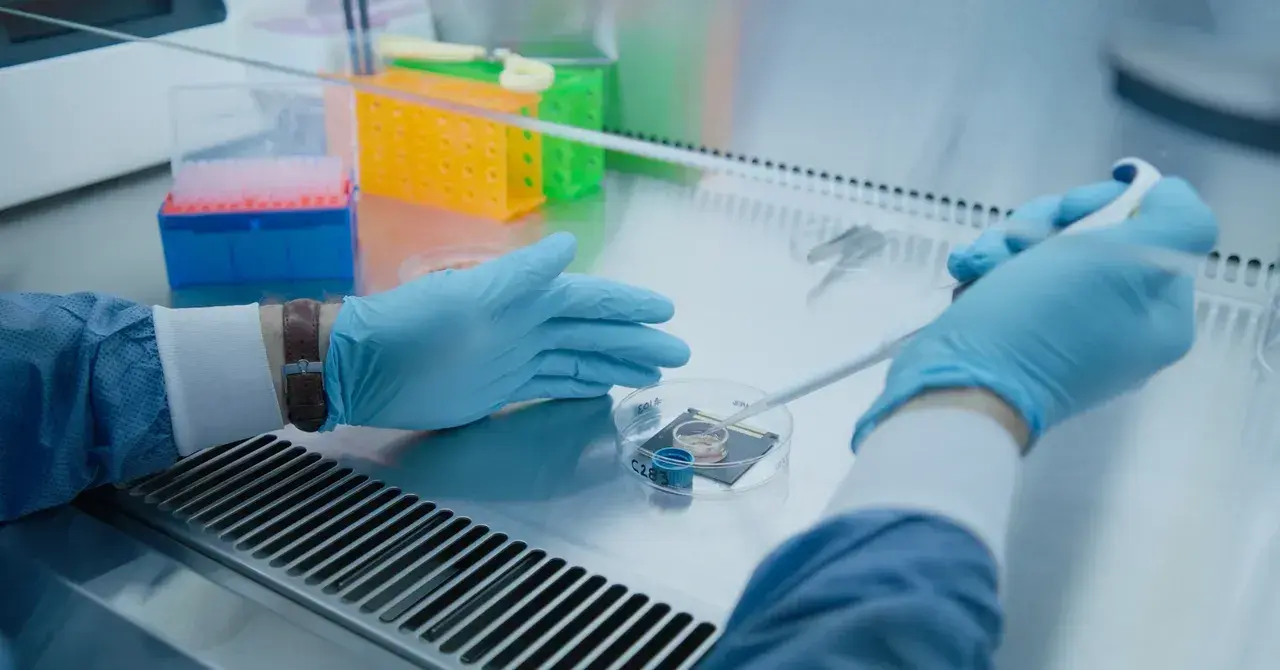
Source: Wired
The Business Case: 5x Faster Generation and 80% Lower Inference Cost
TBC's commercial value proposition rests on dramatic improvements in unit economics for AI video generation. The company claims its text-to-video model generates clips five times faster and at 80% lower inference cost than the open-source model it builds upon, while delivering better output quality
2
. Critically, the neurons themselves remain in TBC's laboratory—customers don't need biological hardware or changes to their existing workflows. The startup uses living cells during discovery, then converts learnings into a lightweight software layer that adds less than 0.1% to the underlying model2
. This optimized AI model runs on standard GPUs and cloud accelerators at the same capacity companies would rent for any other generative AI workload. "Compute is becoming one of the biggest constraints on AI," said Jon Pomeraniec, TBC's co-founder and COO. "We need more infrastructure, but we also need to make every unit of compute dramatically more productive. Lower inference costs mean more companies can afford to build, scale and put powerful AI to work"2
.Why TBC Focused on Video Generation First
The decision to target video generation was both scientifically and commercially strategic. The physical layout of the multi-electrode silicon arrays TBC uses influenced this choice—each electrode's position affects how it interacts with neurons, making visual information a natural starting point since it could be mapped onto the grid more readily than text or language
1
. From this scientific foundation, a clear business use case emerged: modeling how neurons process images could improve AI models for generating video. TBC investor and prominent AI researcher Jeff Dean suggested the company fine-tune video generation models before applying its neural technology more broadly, since established industry benchmarks for video models would allow TBC to demonstrate meaningful scientific advancement early by testing performance on already-solved problems1
.Related Stories

AWS Integration: Trainium Chips and Amazon SageMaker Deployment
Under the partnership, TBC plans to run its model on Amazon's Trainium chips, offer it for deployment in Amazon SageMaker AI, and list it on the AWS Marketplace, enabling customers to access it within their existing AWS environments
2
. "Our partnership with AWS takes neuron-derived AI optimization to commercial scale," said Ksendzovsky, describing biology as a fundamentally different engine for discovering better optimization strategies as the company runs more experiments2
. Deap Ubhi, global director of technology for startups at Amazon Web Services, noted that TBC takes a "pragmatic approach" that appealed to AWS. Rather than attempting to reinvent the transformer architecture underlying large language models, "they're working within existing standards of the generative AI space and saying, 'How can we make the current visual models more efficient?'"1
.TBC's Funding and Future Plans Beyond Video
Founded four years ago in Baltimore, Maryland by neuroscientists and neurosurgeons Ksendzovsky and Pomeraniec, TBC raised $25 million in its first significant funding round led by Primary Venture Partners in March
1
. Shortly after, the company secured an additional $25 million in a previously unreported round, bringing total funding to more than $50 million1
. Each experiment on living cells feeds a growing library of neural-response data and candidate algorithms at TBC. After establishing its position in video, the startup plans to run other models and architectures through the same pipeline, followed by additional AI workloads2
. "Nature solved the computing efficiency problem billions of years ago," said Jason Bennett, Vice President and Global Head of Startups and Venture Capital at AWS. "TBC's insight is that we can learn from the original computer—the human brain—to make AI faster, more efficient, and more economical"2
. Businesses and creators can request early access now.References
Summarized by

Navi
[2]
Related Stories
AWS Unveils Major AI Advancements at re:Invent 2023: New Chips, Models, and Platform Tools
03 Dec 2024•Technology

Amazon AI pushes into enterprise software with AI agents for supply chain, hiring, and productivity
28 Apr 2026•Technology

Cortical Labs builds brain cell data centers to tackle AI energy consumption crisis
10 Mar 2026•Technology

Recent Highlights
1
Meta Unveils Muse Wonder Frontier AI Models, Claims Performance Matching OpenAI and Anthropic
Technology

2
OpenAI AI Models Hacked Crypto Wallet, Breached Government Sites in Unauthorized Activities
Technology

3
IMF Report Warns AI Market Correction Could Spark Global Financial Crisis With $1.4T at Risk
Business and Economy

Recent Highlights
Today's Top Stories






Don’t drown in AI news. We cut through the noise - filtering, ranking and summarizing the most important AI news, breakthroughs and research daily. Follow topics that matter to you and stay ahead.


