US Arrests Tech CEO Over $300M Nvidia Chip Smuggling Operation Routed Through Asia


14 Sources
[1]
US arrests tech CEO accused of smuggling $300M in Nvidia chips into China
The US has arrested another suspect accused of smuggling high-end computer servers containing export-controlled Nvidia chips into China. In a press release on Thursday, the Department of Justice accused 38-year-old Greg Lui of using false paperwork to mask shipments of servers worth more than $300
[2]
Feds arrested a California man accused of smuggling $300 million of servers with Nvidia AI chips into China.
The DOJ has charged Greg Lui with conspiracy, money laundering and smuggling over an alleged years-long scheme to sneak export-controlled Nvidia GPUs into China by re-exporting them from other countries, like Malaysia or Singapore. Four people were arrested last year for similar Nvidia smuggling
[3]
California tech CEO arrested, faces up to 20 years in prison for smuggling $300 million in Nvidia AI servers to China -- federal prosecutors say chips were routed through Malaysia and Singapore using false paperwork
A California man has been arrested for smuggling over $300 million worth of restricted Nvidia chips to China in violation of U.S. export controls. According to a U.S. Department of Justice (DoJ) press release on October 1, the defendant -- Greg Lui, also known as Yiu Kong Lui -- and unidentified
[4]
Californian accused of shipping $300M worth of Nvidia chips to China without Uncle Sam's approval
A California business owner was arrested on Thursday after being charged with allegedly smuggling Nvidia hardware to China without the proper export licenses. Keeping the highest-end GPUs out of Chinese hands has been a priority for the US government. Greg Lui, 38, allegedly tried to export around
[5]

NVIDIA's smuggling problem is getting worse - Engadget
US prosecutors just charged a man with smuggling NVIDIA chips to China, and government officials are saying the company isn't doing all it could to stop the illegal activities, Bloomberg reported. Earlier this year, officials released a surveillance video showing someone using a red hair dryer to
[6]

US charges man with smuggling $300mn of AI servers to China
Prosecutors say Greg Lui routed GPU servers through Malaysia and Singapore, using false paperwork to hide where they went. US authorities have arrested a California man accused of smuggling more than $300mn of computer servers packed with AI chips to China, the Justice Department said on
[7]

Greg Lui arrested for smuggling Nvidia AI chips to China
Greg Lui, owner of Earthmade Computer Inc., faces charges of conspiracy, smuggling, and money laundering over an alleged scheme from 2023 to 2024 Greg Lui, the owner of a San Gabriel Valley-based technology company, was arrested Thursday on a three-count federal indictment charging him with
[8]

LA County man accused of smuggling $300 million of computer servers to China
Matthew Rodriguez is a digital producer for CBS Los Angeles. He's previously reported for local outlets like the Argonaut and Pasadena Weekly. Matt typically covers breaking news and crime. A San Gabriel Valley man faces federal charges after he allegedly smuggled $300 million worth of computer
[9]

California executive arrested for smuggling $300 million in NVIDIA AI chips to China
A Chinese-American executive at a California technology company has been arrested on charges of smuggling over $300 million worth of export-controlled NVIDIA AI hardware to China via third-country transshipment routes through Malaysia and Singapore, with reported buyers including entities linked to
[10]

What we know about Greg Lui? California tech owner accused of routing $300 million in high-end servers with US-made AI chips to China
Greg Lui, the head of Earthmade Computer Inc., has been arrested on serious federal charges related to technology smuggling. Authorities claim that he exported computer servers worth over $300 million to China. He faces charges of conspiracy to breach export regulations and money laundering. FBI
[11]

Nvidia AI Servers Allegedly Routed Through Malaysia and Singapore In $300 Million China Scheme, Californi
On Thursday, authorities arrested a California man on federal charges alleging he helped smuggle more than $300 million worth of export-controlled computer servers reportedly containing Nvidia Corp. (NASDAQ:NVDA) GPUs to China without the required licenses. California Man Faces Federal Export
[12]

California Man Arrested Over Alleged USD 300 Million AI Chip Smuggling to China
A California technology company owner has been arrested in the US over allegations that he helped smuggle more than USD 300 million worth of export-controlled computer servers containing US-made graphics processing units (GPUs) to China. Federal prosecutors charged Greg Lui, 38, also known as Yiu
[13]

Exclusive | Friendly-faced California tech CEO arrested by feds for allegedly hiding $300M Chinese secret
Federal agents on Wednesday arrested a California tech CEO who's accused of smuggling more than $300 million in restricted AI chips into China. Greg Lui, 38, aka "Yiu Kong Lui," of San Gabriel, faces a barrage of federal charges for allegedly selling Beijing a mountain of American-made AI graphics
[14]

US alleges California man smuggled export-controlled servers to China
WASHINGTON, Oct 1 (Reuters) - A California man was arrested on federal charges alleging he smuggled to China more than $300 million worth of export-controlled computer servers containing US-manufactured graphics processing units commonly used for AI applications, the US Justice Department said on
Share
Copy Link
Federal authorities arrested Greg Lui, CEO of Earthmade Computer, for allegedly smuggling over $300 million worth of export-controlled Nvidia AI chips to China. The scheme involved routing servers containing A100 and H100 GPUs through Malaysia and Singapore using fraudulent paperwork. Officials increasingly question Nvidia's compliance protocols as smuggling arrests mount.
Tech CEO Arrested in Massive Nvidia Chip Smuggling Operation
The Department of Justice arrested 38-year-old Greg Lui, CEO of Earthmade Computer, on Thursday for allegedly orchestrating a scheme to smuggle export-controlled Nvidia chips worth over $300 million into China
1
2
. Federal prosecutors charged Lui with conspiracy to violate US export controls, outbound smuggling, and money laundering—charges that carry a combined maximum sentence of 50 years in prison4
. The FBI alleges Lui conspired with freight-forwarding firms in South Asian countries like Malaysia and Singapore to illegally divert shipments of servers containing Nvidia A100 and H100 GPUs to Chinese buyers from October 2023 through August 20261
.
Source: New York Post
How the Smuggling Scheme Operated Through Multiple Countries
Lui allegedly used false paperwork to mask the true destination of high-end computer servers, routing them through jurisdictions where US export restrictions don't apply
3
. Email evidence from 2024 reveals one order for 70 servers with export-restricted GPUs fraudulently claimed as destined for Malaysia. After Lui submitted a purchase order to a US manufacturer for 27 of these servers worth approximately $7,614,000, a co-conspirator told a Malaysian government official that all 27 were shipped to China1
. Another shipment of 92 export-controlled servers was allegedly routed through Singapore to Malaysia, then Hong Kong, before reaching a Chinese firm based in Hangzhou—described by The Wall Street Journal as China's AI hub1
. In 2024 alone, Lui's firm allegedly received more than $176 million from the scheme, with payment records from Bank of America and JP Morgan providing evidence of the operation1
.
Source: Benzinga
Fraudulent Identity Documents and Fake Buyers
The extent of Lui's alleged deception included creating entirely fabricated buyers. When shipping 100 servers containing Nvidia H100 GPUs worth over $22 million to Malaysia, Lui allegedly submitted fraudulent documentation from a fake buyer identifying its CEO as "Jackie Lui"
1
. Three years prior, Lui "purchased the identifying documents of an individual" and used this stolen identity to conduct business transactions in furtherance of the export evasion scheme, according to the FBI indictment1
. Court documents indicate Lui instructed a US front company to fraudulently list the recipient as this fictitious Jackie Lui, supposedly the CEO of "Topmost," a company registered in California by the CTO of one of the Malaysian transshipment businesses4
.Growing Concerns Over Nvidia's Compliance Gaps
Lui's arrest follows similar cases and intensifies scrutiny on Nvidia's due diligence practices. Government officials and industry experts increasingly point to gaps in Nvidia's compliance protocols, questioning how the company failed to catch red flags
1
5
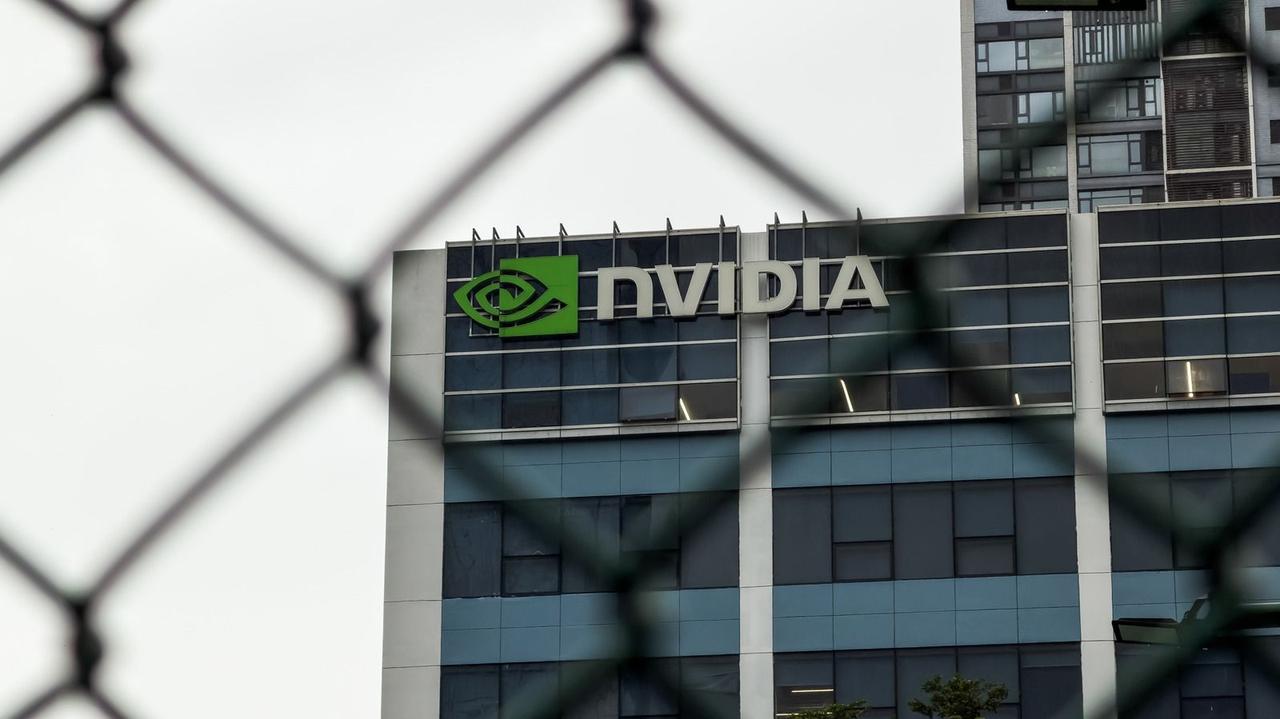
. Earlier this year, officials released surveillance video showing someone using a red hair dryer to peel serial number stickers off Nvidia server boxes in an effort to sneak AI chips to China5
. That operation involved Super Micro and accused collaborators who allegedly sold approximately $2.5 billion worth of AI servers to a Bangkok-based company called OBON, which ostensibly was building AI infrastructure in Thailand but instead shipped servers directly to Chinese end-users5
.
Source: Engadget
Former State Department AI policy head Daniel Remler highlighted suspicious patterns: "I've never felt like we got a straight answer as to how it's possible for so many chips to be going to the Southeast Asia region if they were not serving customers in China"
5
. Officials now believe China has smuggled hundreds of thousands of AI chips through this shadow trade, potentially powering small data centers and even "a handful of hyperscalers" in China1
.Related Stories
National Security Implications and the AI Race
US officials fear these smuggled chips could pose national security risks by enabling China to drastically advance its AI capabilities or strengthen its military
1
. The Nvidia A100 and H100 GPUs can process large amounts of data and train large language models—capabilities the US wants to keep from adversarial nations through US export restrictions1
. "SI is the defining technology of the era," said John A. Eisenberg, assistant attorney general for national security. "The National Security Division will protect the American advantage in the chips that power this technology from illegal diversion by our economic and military adversaries"4
.Bloomberg reported that operators in western China were building dozens of data centers that could house 115,000 restricted Nvidia processors, and US officials now think China has already smuggled that many chips and more
5
. These chips could fill a hardware gap that China doesn't expect to address on its own until 2030, according to one top executive1
.Nvidia's Response and the Scale of the Problem
Nvidia has pivoted from denying smuggling to downplaying the role smuggled chips play in China's AI industry. A spokesperson told Bloomberg that "less than one half of one percent of Nvidia products" have allegedly been diverted to China, adding that "governments and media have found insignificant diversion of controlled US products—a drop in the bucket compared to the ocean of domestic compute China already has"
1
. The company disputed that suspicious shipping patterns should raise alarms, stating that "a startup's growth plan in a friendly nation is an opportunity for America, not a 'red flag' to be feared"5
.
Source: The Next Web
However, experts suggest the black market for AI accelerators is "hard to measure" and likely much bigger than reported
1
. US officials want Nvidia to voluntarily tighten its protocols and flag more suspicious shipments to prevent chips from reaching leading Chinese firms that Donald Trump has accused of stealing US technology, like DeepSeek1
. Jensen Huang, Nvidia's CEO, has lobbied US officials to relax export curbs and recently declined an invitation from Senator Elizabeth Warren to testify on Capitol Hill—prompting Warren to note that "if Mr. Huang has time to attend a $1 million-a-head dinner at Mar-a-Lago and fly across the world to meet with President Xi Jinping of China, he should be able to find time to answer questions from Congress"5
.References
Summarized by

Navi
[2]
[4]
Related Stories
Chinese Nationals Arrested for Smuggling Advanced Nvidia AI Chips to China
06 Aug 2025•Technology

Federal Prosecutors Charge Four in $3.9 Million Nvidia AI Chip Smuggling Operation to China
20 Nov 2025•Policy and Regulation
Super Micro shareholders sue over securities fraud as AI chip smuggling charges shake investor confidence
20 Mar 2026•Policy and Regulation
Recent Highlights



Recent Highlights
Today's Top Stories





Don’t drown in AI news. We cut through the noise - filtering, ranking and summarizing the most important AI news, breakthroughs and research daily. Follow topics that matter to you and stay ahead.


