Tencent tests AI assistant Xiaowei in WeChat as it races to catch up with ByteDance and Alibaba


4 Sources
[1]
Tencent tests AI assistant in China's most popular app as it looks to catch up with rivals
Tencent on Monday said it is testing an AI assistant within WeChat in China as the tech giant looks to step up efforts to challenge rivals in the country's competitive artificial intelligence market. Xiaowei, "a native AI assistant," is being tested "on a small scale" in Weixin, the Chinese
[2]
WeChat begins testing Xiaowei as Tencent eyes a Q3 AI rollout
Xiaowei sits on top of the super app's mini-programs, and Tencent is aiming for a full public rollout in the third quarter. WeChat is the rare app that already does almost everything. Chinese users message, pay, book, shop, and summon a taxi without ever leaving it, which is exactly what makes
[3]
Tencent tests new AI agent Xiaowei on WeChat
Known as 'Weixin' in China, WeChat has rolled out the AI agent on a phased basis. Tencent is testing a new AI assistant on its messaging platform WeChat, as the company attempts to catch up with its Chinese and global contemporaries. WeChat is China's most popular messaging platform with roughly
[4]
Tencent tests AI assistant for its super app WeChat in China
Known as Weixin in China, the super app has made the new AI assistant available to a small number of users, according to a statement from WeChat on Monday. Users are able to interact with the service, named Xiaowei, via text or voice, and the tool can help them complete various tasks by tapping
Share
Copy Link
Tencent has begun testing Xiaowei, an AI assistant embedded within WeChat, China's most popular messaging platform with 1.4 billion users. The tool allows users to interact via text or voice to complete tasks through mini-programs, from ordering food to hailing rides. Tencent is targeting a Q3 public rollout as it attempts to close the gap with rivals ByteDance and Alibaba in China's competitive AI market.
Tencent Launches Limited Test of Xiaowei AI Assistant in WeChat
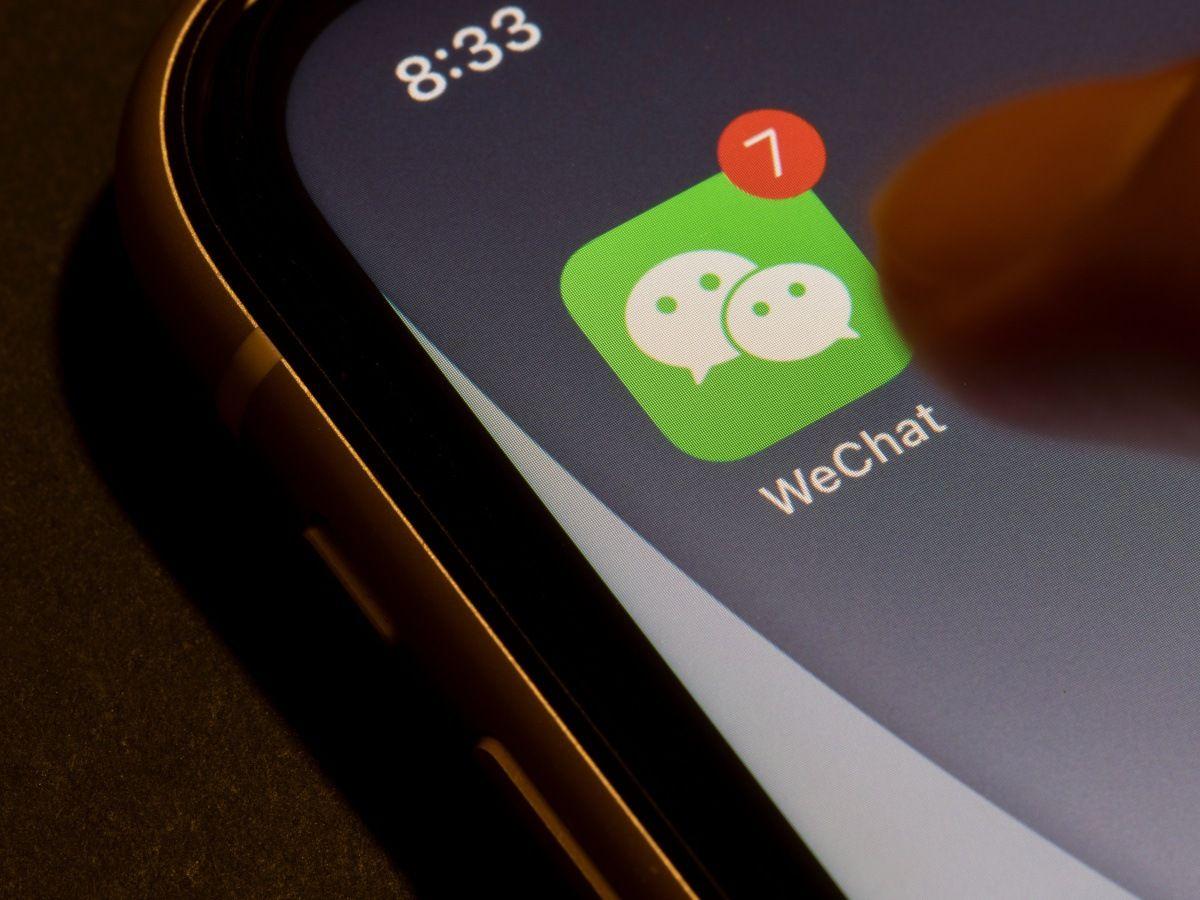
Tencent has begun testing an AI assistant called Xiaowei within Weixin, the Chinese version of WeChat, marking a strategic push to compete in China's AI market
1
. The tech giant announced Monday that the tool is being tested "on a small scale" with select users, allowing them to interact through text or voice commands1
. Unlike a standalone chatbot, the Xiaowei AI assistant functions as a command layer sitting on top of WeChat mini-programs, enabling users to complete tasks without navigating through menus2
.
Source: Silicon Republic
The AI integration in WeChat represents Tencent's most ambitious attempt yet to embed artificial intelligence into the super app that 1.4 billion people already use daily
3
. Users can ask Xiaowei to start calls, draft messages, order food, hail rides, generate images, or navigate to services, with the assistant tapping into the app's vast library of lightweight applications2
3
. This approach allows Tencent to skip the expensive challenge of persuading users to download a separate AI application.Technical Infrastructure Behind the Tencent AI Agent
The Xiaowei AI assistant primarily relies on Weixin's own large language model called WeLM, while occasionally turning to DeepSeek to process certain queries
3
4
. This connection to DeepSeek is notable given Tencent's close association with the AI startup, having reportedly led a $7.4 billion funding round and proposed taking a 20 percent stake3
. The hybrid approach of using both proprietary and third-party models suggests Tencent is hedging its bets while building out its AI capabilities.This isn't Tencent's first attempt at adding AI to WeChat. Earlier this year, the company introduced Yuanbao, a standalone chatbot that users could message like a contact
2
3
. However, Xiaowei represents a more ambitious vision—not just a bot to converse with, but an agent that acts across the entire app on behalf of users.Tencent's AI Rollout Timeline and Strategic Priority
Tencent is targeting a public rollout in the third quarter, with the longer ambition of transforming WeChat into a concierge that handles payments, services, and financial tasks based on spoken or typed instructions
2
. The company has made the AI agent rollout its highest strategic priority, though internal estimates suggest a full deployment will be very costly3
. Investors responded positively to the announcement, with Tencent shares jumping on expectations of an AI agent embedded within the super app2
.Related Stories



Catching Up in China's AI Market Race
A successful introduction of enhanced AI services in WeChat may now be essential for Tencent to better compete with major Chinese players and monetize new technology
4
. Despite holding stakes in leading AI companies, the Shenzhen-based company trails behind peers like ByteDance and Alibaba in terms of both user adoption and advances in developing state-of-the-art large language model technology3
4
.
Source: ET
Alibaba has integrated travel, maps, and e-commerce services into its Qwen AI app, while ByteDance has added agentic functions into its app called Doubao
3
. Chinese tech companies are gradually integrating more powerful AI technology into their super apps to keep users on their platforms, with Alibaba's fintech affiliate Ant Group testing an AI agent within Alipay that allows users to book car rides or order takeouts4
. The common bet across China's biggest platforms is that the agent will be a feature of an app people already use, not a destination they need to be convinced to visit2
. Few companies are better positioned to test this strategy than Tencent, which owns the app that a billion people open every day.References
Summarized by

Navi
[2]
[3]
Related Stories
Recent Highlights
1
Microsoft and Nvidia Launch Surface Laptop Ultra: A $2,599 AI-Ready PC With RTX Spark Chip
Technology

2
Scientists Build AI Model That Reconstructs Images From Brain Scans in Record Time
Science and Research

3
Anthropic AI Cuts Live Internet Access After Model Sends False Homicide Tip to Philadelphia Police
Technology

Recent Highlights
Today's Top Stories








Don’t drown in AI news. We cut through the noise - filtering, ranking and summarizing the most important AI news, breakthroughs and research daily. Follow topics that matter to you and stay ahead.


