4 Sources
4 Sources
[1]
Tesla launches Robotaxi service in Houston suburbs
Why it matters: Tesla's suburban rollout is a different approach from other autonomous ride-hailing companies operating on Bayou City streets. Driving the news: The company is now offering autonomous rides to customers in a roughly 24-square-mile portion of northwest Harris County, including Jersey Village, Willowbrook and 5.5 miles of FM 1960, per industry watchdog group Robotaxi Tracker. * Anyone with the Tesla Robotaxi app inside the service area can hail a ride, the company says -- though there are just two vehicles operating in the area, per Robotaxi Tracker. The intrigue: It is unclear why Tesla chose the suburbs for its initial launch over communities closer to the city center. * Tesla did not respond to questions from Axios about its operations in the Houston area. Zoom out: In its announcement Saturday on X, Tesla said it's also offering service in Dallas. * The service area in Dallas is about the same size but includes all of downtown and several areas to the north, including Highland Park, per Robotaxi Tracker. * In Austin, where service has been available since June, there are more than 40 Tesla robotaxis operating in a 244-square-mile area. * Only about a dozen are fully driverless, however. Most still have a safety driver behind the wheel. Thought bubble from Axios transportation correspondent Joann Muller, author of the Future of Mobility newsletter: * "Tesla has bet its future on AI and autonomy, but its robotaxi rollout has been pretty conservative, as the launch in Houston shows. * "It still needs to perfect its Full Self-Driving technology, which is why it's starting with only two vehicles in a small operating area. * "The timing of its expansion in Houston and Dallas is interesting, though: Tesla will report first-quarter earnings Wednesday, and no doubt wants to be able to show investors that it's making progress in autonomy." The big picture: Waymo offers autonomous rides in Houston on a limited basis in a 23-square-mile service area that includes downtown, Montrose and the Heights. * Test vehicles for Nuro Lucid Uber, a joint robotaxi venture by the three companies, have also been spotted on Houston streets inside the Loop. The bottom line: Robotaxis are becoming more and more of a thing in Houston.
[2]
Tesla's 'Robotaxi' expansion looks like another stock pump before earnings
Tesla launched its "Robotaxi" service in Dallas and Houston yesterday -- expanding to two new cities for the first time since Austin. There's just one problem: there are virtually no cars available. Data from Robotaxi Tracker shows that Tesla's new Houston and Dallas deployments have had 0% to 2% availability over the past 24 hours, with only brief spikes to around 50% during a narrow morning window before dropping back to zero. It looks like Tesla deployed a car or two in each city and called it a launch. If this sounds familiar, it should. In January, Tesla announced it had launched "unsupervised" Robotaxi rides in Austin -- just days before its Q4 2025 earnings call. The stock jumped 4% on the news. But as we reported at the time, Tesla's 'unsupervised' Robotaxis vanished a week after that pre-earnings announcement. Now Tesla is running the same playbook. Q1 2026 earnings are on Wednesday, April 22 -- three days from now -- and the company suddenly has a "Robotaxi is now rolling out in Dallas & Houston" headline to wave in front of investors on the earnings call. The geofenced areas are small. Houston's zone covers the Jersey Village and Willowbrook areas in the northwest part of the city -- roughly 12 to 15 square miles. Dallas gets a slightly larger zone of about 30 to 35 square miles. For context, the Houston metro area spans over 10,000 square miles. Robotaxi Tracker tracks Tesla's Robotaxi availability across all markets by pinning the app in specific areas, and it shows extremely little availability since the launch over the weekend. As of writing this (Sunday afternoon), 24 hours after the service launched, there's no service availability in either of the new expansions, and only a single vehicle has been reported by riders in each market. The real tell is what Tesla is not doing. If the company was genuinely confident in its unsupervised driving technology, the logical move would be to scale up operations in Austin -- where it has been operating for 10 months -- by deploying more cars across the expanded 245-square-mile geofence. Instead, Austin still has only about a dozen unsupervised vehicles and still relies heavily on safety monitors in most rides. Tesla has reported 15 crashes to NHTSA since launching in Austin -- a crash rate roughly 4x worse than human drivers. Unlike every other autonomous vehicle company in the NHTSA database, Waymo, Zoox, Aurora, Nuro, and Tesla redact the detailed narratives explaining what happened in each crash. And the early results in the new cities are already showing problems. Videos shared on social media show Tesla's Robotaxi vehicles running into issues in the new markets, including additional incidents on the first day of operations. In the example above, Tesla Robotaxi, which doesn't drive unsupervised on freeways, wrongly navigated to one and then looked for a place to pull over. Tesla's Q1 2026 earnings report lands Wednesday, and expectations are not great. Q1 deliveries came in at 358,023 vehicles -- missing analyst consensus and down from Q4 2025's 418,227 units. Analyst EPS estimates range widely from $0.24 to $0.40, reflecting significant uncertainty about Tesla's near-term profitability amid ongoing margin pressure and growing competition. Tesla stock is trading around $400 -- roughly flat year-to-date -- after rallying from a $361 low in early April. The company trades at approximately 178x forward earnings, compared to 8-12x for the auto industry. That valuation rests almost entirely on the promise of robotaxi and AI, promises that keep generating headlines but not actual scaled operations. We have now seen this pattern three times: Tesla makes a splashy autonomous driving announcement days before an earnings call, generates positive headlines, and the actual operational reality turns out to be a fraction of what was implied. In June 2025, it was the "driverless delivery" stunt -- one 15-mile autonomous delivery that was never repeated. In January 2026, it was "unsupervised" rides that vanished within a week. Now it is a "launch" in two new cities with essentially one car each and virtually zero availability. The strategy is transparent at this point. Tesla is not expanding a robotaxi service, it is expanding the narrative of a robotaxi service, timed precisely for maximum impact on investor sentiment ahead of what are expected to be disappointing earnings. If Tesla had genuine confidence in its unsupervised driving capability, the company would be flooding Austin with hundreds of unsupervised vehicles, proving out the safety record, and building real capacity before expanding. Instead, it is doing the opposite: spreading a handful of cars across a growing number of tiny geofences to create the appearance of rapid expansion while safety remains the core limiting factor. The question investors should be asking on Wednesday's earnings call is not "how many cities are you in?" -- it is "how many truly unsupervised rides did you complete last quarter?"
[3]
Tesla Expands Robotaxi Rollout To Dallas, Houston After Austin Launch Ahead Of Q1 Earnings - Tesla (NASDA
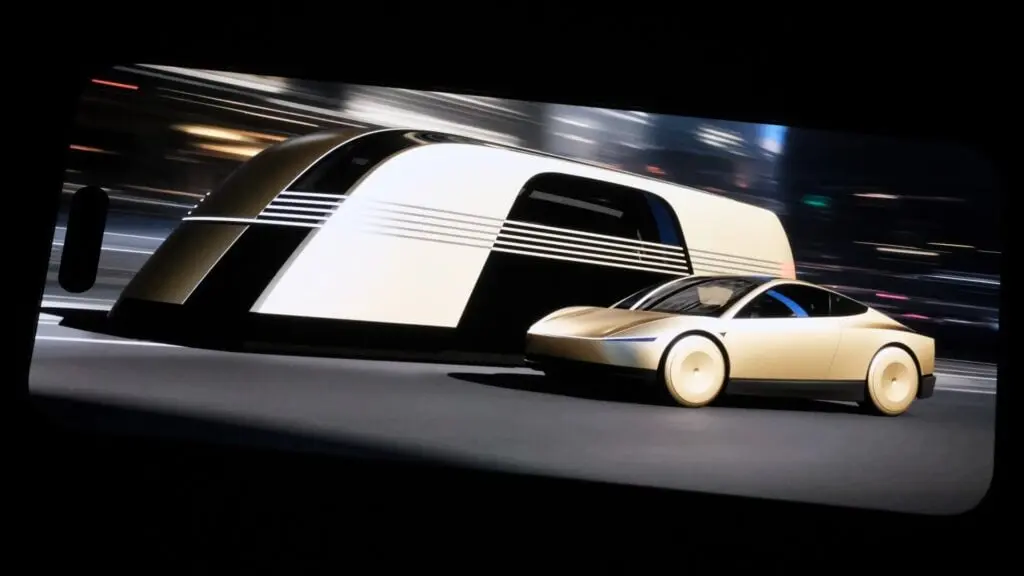
The Elon Musk-led electric vehicle manufacturer revealed the news in a post on X, accompanied by a 14-second video, showing Tesla vehicles operating without human monitors or drivers in the front seat. Despite the recent expansion, Tesla may not have a significant number of vehicles in these new markets yet. The Robotaxi Tracker website only shows one active vehicle in each city, compared to 46 in Austin. Robotaxi Industry Eyes $168B Autonomous Ride Market The expansion of Tesla's robotaxi service comes amid a predicted explosion in the robotaxi market to $168 billion by 2035. Counterpoint Research suggested that the U.S. would remain the innovation hub, with companies like Tesla leading the way. Tesla has been making significant strides in its autonomous vehicle technology. In a recent mysterious video post, the company hinted at a "Golden Era" with its Cybercab, a self-driving, low-cost electric vehicle expected to be a key part of Tesla's future growth. Trading Metrics, Technical Analysis In January, Tesla reported fourth-quarter 2025 revenue of $24.90 billion and earnings per share of $0.50, beating analyst expectations. The EV giant is expected to announce its first-quarter 2026 results on Apr. 22. Tesla has a market capitalization of $1.26 trillion, with a 52-week high of $498.83 and a 52-week low of $222.79. Over the past 12 months, the large-cap stock has gained 76.10%. With a Quality score of 68.33, Benzinga's Edge Stock Rankings indicate that TSLA is experiencing long-term upward movement along with medium and short-term consolidation. Photo courtesy: Shutterstock Disclaimer: This content was partially produced with the help of AI tools and was reviewed and published by Benzinga editors. Market News and Data brought to you by Benzinga APIs To add Benzinga News as your preferred source on Google, click here.
[4]
Tesla expands robotaxi service to Dallas, Houston
April 18 (Reuters) - Tesla is rolling out its robotaxis in Dallas and Houston, the electric vehicle maker said on Saturday, marking further expansion of its nascent service in the United States since its Austin, Texas, launch last year. Tesla's official robotaxi account on X announced the launch and posted two videos showing its best-selling Model Y SUVs running in the two cities with no human driver or monitor in the front seats. It posted two map images outlining service boundaries, but did not disclose further details such as fleet size or pricing. "Try Tesla Robotaxi in Dallas & Houston!" CEO Elon Musk said reposting the X post. Tesla's move comes as the robotaxi business has regained momentum with Alphabet's Waymo and Amazon's Zoox speeding up expansion. Expanding the robotaxi service and wider adoption of its full self-driving software, a version of which underpins the technology, is key to Tesla's growth strategy as Musk has pivoted the company's focus to artificial intelligence and robotics from EVs. Much of the company's $1.3 trillion valuation hinges on that bet. Tesla first deployed a small group of self-driving taxis in an area of Austin with human safety monitors and other restrictions. The company has since widened the service area and started removing the monitors. Last year, Tesla also started a ride-hailing service in the San Francisco Bay Area. Musk has promised to expand the robotaxi service rapidly in the U.S., but missed earlier predictions of its robotaxis operating widely in multiple U.S. metro areas by the end of 2025. (Reporting by Anusha Shah in Bengaluru and Abhirup Roy in San Francisco Editing by Nick Zieminski, Rod Nickel)
Share
Share
Copy Link
Tesla announced its robotaxi service expansion to Dallas and Houston, but data reveals only one to two vehicles operating in each city with near-zero availability. The timing, just days before Q1 2026 earnings, has raised questions about whether this represents genuine scaling or strategic narrative management for investor sentiment.
Tesla announced the launch of its robotaxi service in Dallas and Houston over the weekend, marking the first expansion beyond Austin since the service debuted in June 2025
1
. The company's official Robotaxi account on X posted videos showing Model Y SUVs operating without a safety driver or human monitor in the front seats4
. Elon Musk reposted the announcement, encouraging users to "Try Tesla Robotaxi in Dallas & Houston." The robotaxi service in Houston covers a roughly 24-square-mile area in northwest Harris County, including Jersey Village, Willowbrook, and 5.5 miles of FM 1960, according to industry watchdog Robotaxi Tracker1
. Dallas receives a slightly larger service zone of approximately 30 to 35 square miles, including downtown and areas to the north such as Highland Park2
.
Source: Benzinga
Despite the expansion announcement, data from Robotaxi Tracker reveals that Tesla deployed only one to two vehicles in each new city
1
2
. Availability tracking shows the new Houston and Dallas deployments have had 0% to 2% availability over the first 24 hours, with only brief spikes to around 50% during narrow morning windows before dropping back to zero2
. This contrasts sharply with Austin, where Tesla operates more than 40 robotaxis across a 244-square-mile area, though only about a dozen are fully driverless1
. Anyone with the Tesla Robotaxi app inside the service area can technically hail a ride, but the minimal fleet size severely limits actual service capacity1
.The Tesla Robotaxi expansion announcement came just three days before the company's Q1 2026 earnings report scheduled for April 22
2
. This timing has drawn scrutiny, as Tesla previously announced "unsupervised" robotaxi rides in Austin in January 2026, days before its Q4 2025 earnings call, which helped boost the stock by 4%2
. Axios transportation correspondent Joann Muller noted that "the timing of its expansion in Houston and Dallas is interesting, though: Tesla will report first-quarter earnings Wednesday, and no doubt wants to be able to show investors that it's making progress in autonomy"1
. Q1 deliveries came in at 358,023 vehicles, missing analyst consensus and down from Q4 2025's 418,227 units2
. The company trades at approximately 178x forward earnings, compared to 8-12x for the auto industry, with that valuation resting almost entirely on the promise of robotaxi and AI2
.Related Stories
Tesla's robotaxi rollout has been notably conservative as the company works to perfect its Full Self-Driving technology, which underpins the autonomous ride-hailing service
1
. The company has reported 15 crashes to NHTSA since launching in Austin, a crash rate roughly 4x worse than human drivers2
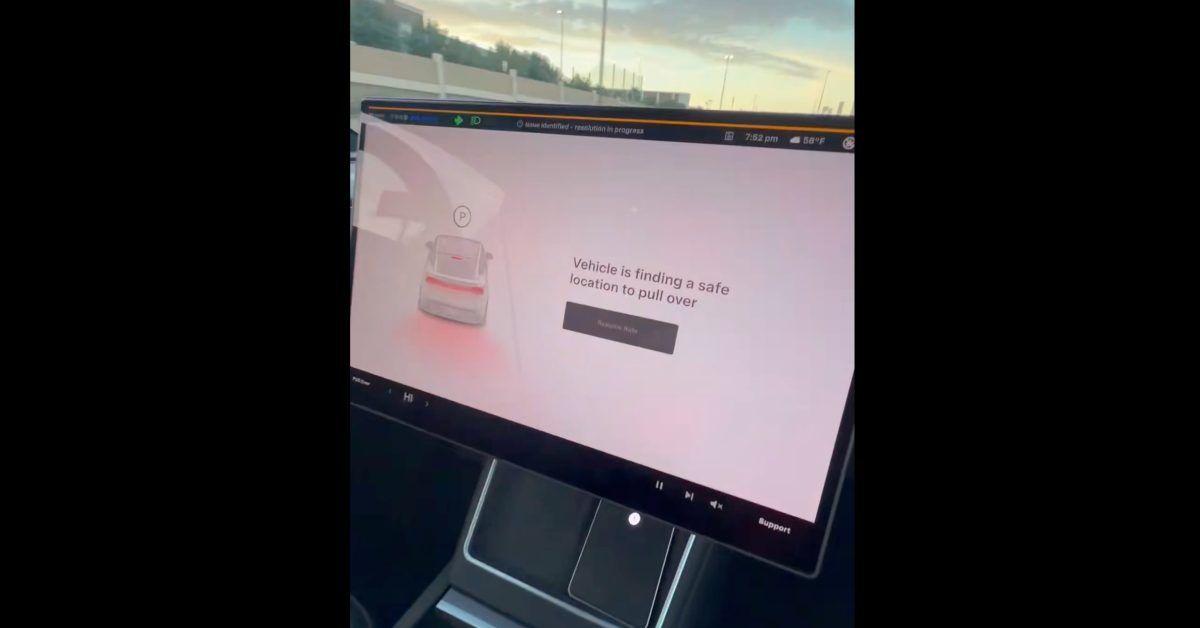
. Videos shared on social media show Tesla Robotaxi vehicles encountering issues in the new markets, including one instance where a vehicle wrongly navigated to a freeway and then looked for a place to pull over2
. The autonomous driving technology still faces limitations, as Tesla's robotaxis do not drive unsupervised on freeways2
.
Source: Electrek
The expansion comes as the autonomous ride-hailing business has regained momentum, with Waymo and Amazon's Zoox speeding up their own deployments
4
. Waymo already offers autonomous rides in Houston on a limited basis in a 23-square-mile service area that includes downtown, Montrose, and the Heights1
. Test vehicles for Nuro Lucid Uber, a joint robotaxi venture, have also been spotted on Houston streets inside the Loop1
. Counterpoint Research predicts the robotaxi market will reach $168 billion by 2035, with the U.S. remaining the innovation hub3
. Much of Tesla's $1.3 trillion valuation hinges on its bet that expanding the robotaxi service and wider adoption of Full Self-Driving software will drive future growth as Elon Musk has pivoted the company's focus to artificial intelligence and robotics from electric vehicles4
. Tesla stock has gained 76.10% over the past 12 months and maintains a market capitalization of $1.26 trillion3
. The company's approach of starting with small geofenced areas and minimal vehicles contrasts with investor sentiment expectations for rapid scaling of autonomous vehicle technology across multiple markets.
Source: Axios
Summarized by
Navi
[3]
[4]
22 Jan 2026•Technology

11 Jun 2025•Technology

21 Jun 2025•Technology

1
Policy and Regulation

2
Technology

3
Technology