iOS 27 brings AI to Shortcuts app, letting users create automated workflows with simple prompts


3 Sources
[1]
With iOS 27, Shortcuts could become what it was always meant to be - 9to5Mac
The Shortcuts app has always been an amazingly powerful automation tool for users who know what these very words mean. But now, it may finally become an approachable tool that delivers on its true potential for users of all kinds. Here's why. Even before Apple acquired Workflow in 2017 and turned
[2]
'Exactly what I've been waiting for': iOS 27 could let users build Shortcuts with AI -- and I'm glad Apple is finally paying attention to one of the iPhone's best features
* iOS 27 might bring artificial intelligence (AI) to Apple's Shortcuts app * It could let you build Shortcuts with natural language prompts * This would make Shortcuts far more accessible to users Ever since it debuted in iOS 12, Apple's Shortcuts app has had enormous potential. Yet it's never
[3]
iOS 27 could fix a huge frustration with the Shortcuts app and I can't wait for it
"Hey Siri, create a shortcut for me that snaps a picture of my food, logs the nutritional value, and then reminds me to burn calories after six hours. Please?" For years, the Shortcuts app on the iPhone has remained one of the most frustrating parts of the user experience. On one hand, it's an
Share
Copy Link
Apple is preparing a major upgrade to the Shortcuts app in iOS 27, powered by AI integration that lets users build shortcuts with natural language descriptions. Instead of manually constructing each step, users will simply describe what they want their shortcut to do, and the system will automatically generate and install it. This could finally make the powerful automation tool accessible to all iPhone users.
Apple Prepares to Transform Shortcuts App with AI Integration
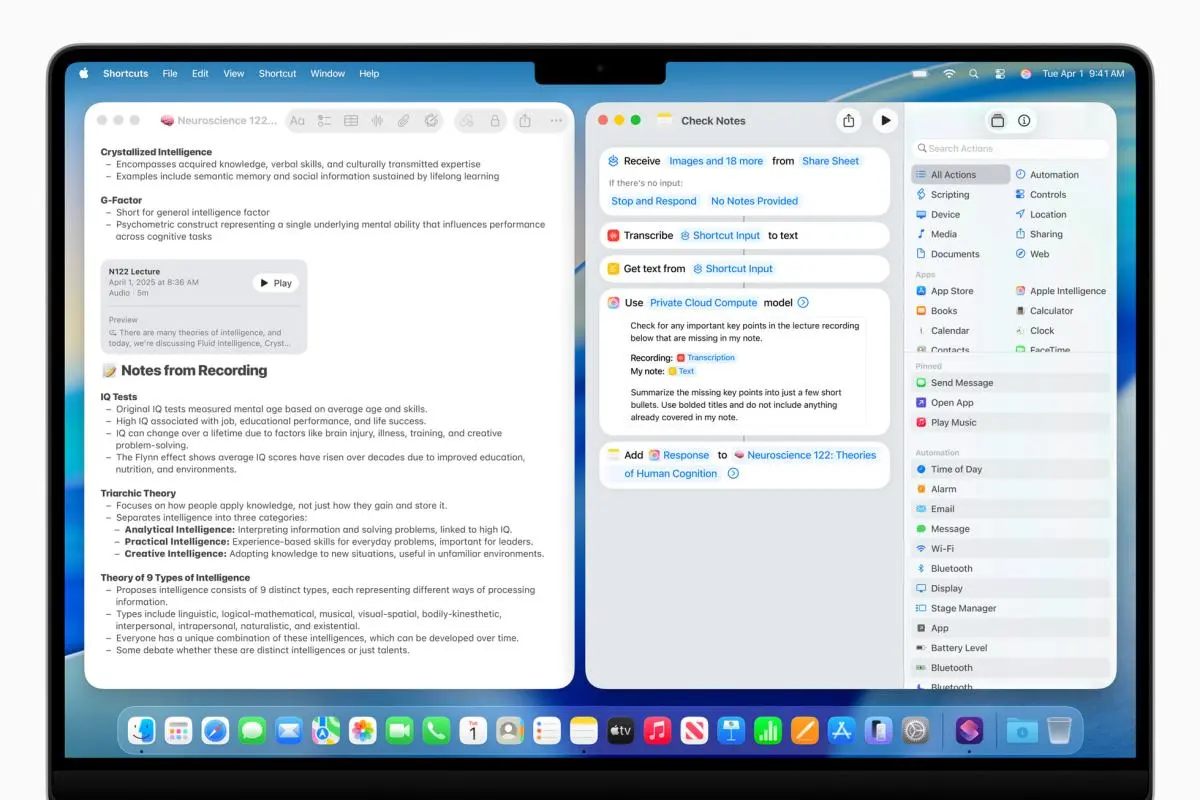
Apple is set to address one of the iPhone's most persistent usability challenges with iOS 27, bringing AI integration to the Shortcuts app that could fundamentally change how users create automated workflows. According to a Bloomberg report, the update will allow users to build Shortcuts with AI by simply describing what they want in natural language, eliminating the need to manually construct each step or download pre-made shortcuts from Apple's gallery
2
.The version currently in testing presents users with a straightforward prompt: "What do you want your shortcut to do?" Users can then enter their request using natural language prompts, and the system automatically builds and installs the shortcut on the device
1
. This approach marks a significant departure from the current workflow creation process, which has long been criticized for its complexity and steep learning curve.
Source: 9to5Mac
Addressing Years of User Accessibility Challenges
Since Apple acquired Workflow in 2017 and transformed it into the Shortcuts app in 2018, the tool has remained powerful yet frustratingly inaccessible to average users. While it abstracted away much of the complexity that made macOS's Automator intimidating, the process of creating shortcuts has still required technical knowledge that many iPhone users simply don't possess
1
.The current system forces users to either navigate a maze of functions, calls, and app integrations hidden behind obscure commands, or rely on downloading pre-built shortcuts from Apple or other users. This limitation has meant that only a subset of users—typically those with programming familiarity—have been able to tap into the app's true potential
3
.How AI Features Will Simplify User Experience
The AI-powered upgrade aims to simplify user experience by handling the technical complexity behind the scenes. Users will be able to describe their desired automation in plain language—even by voice through Siri—and let the system do the heavy lifting
1
. This approach embodies what Steve Jobs famously articulated during WWDC 1997: "You've got to start with the customer experience and work backwards to the technology."For example, users could request a shortcut that snaps a picture of their food, logs nutritional value, and sets a reminder to exercise after six hours—all without understanding the underlying technical steps required
3
. The system would translate this natural language description into a functional automation, dramatically lowering the barrier to entry.Learning from Competitors and Building on Apple Intelligence
This isn't Apple's first attempt at integrating AI with the Shortcuts app. Following the arrival of Apple Intelligence on iPhone, the company already integrated AI automations, allowing users to choose between an on-device local model or an AI model hosted on Apple's private cloud servers. However, those AI models remain limited, and integrating them into new shortcuts is still cumbersome
3
.The iOS 27 approach appears to draw inspiration from rival AI platforms. Anthropic's Claude AI can create artifacts and build entire apps through natural language descriptions, while users can create custom GPTs for ChatGPT or complex skills for Google's Gemini AI using conversational prompts
3
.Related Stories
What This Means for Different User Groups
For advanced users who already navigate the Shortcuts app with ease, the AI integration raises the ceiling even higher, potentially enabling more complex automations without the tedious manual construction process
1
. For the broader iPhone user base, it promises to unlock functionality that has remained frustratingly out of reach despite owning devices capable of sophisticated automation.This democratization of automation could enable users to create tailor-made bridges between apps, files, and information in ways that are different for every single iPhone user, regardless of their technical proficiency
1
.Challenges and Timeline Considerations
While the potential is substantial, questions remain about execution. Bloomberg recently reported that Siri's AI features—already delayed by two years—will be labeled as "betas" when iOS 27 is revealed at WWDC in June, suggesting Apple is still working to iron out issues
2
. This indicates the AI-powered Shortcuts functionality may need additional refinement before reaching its full potential.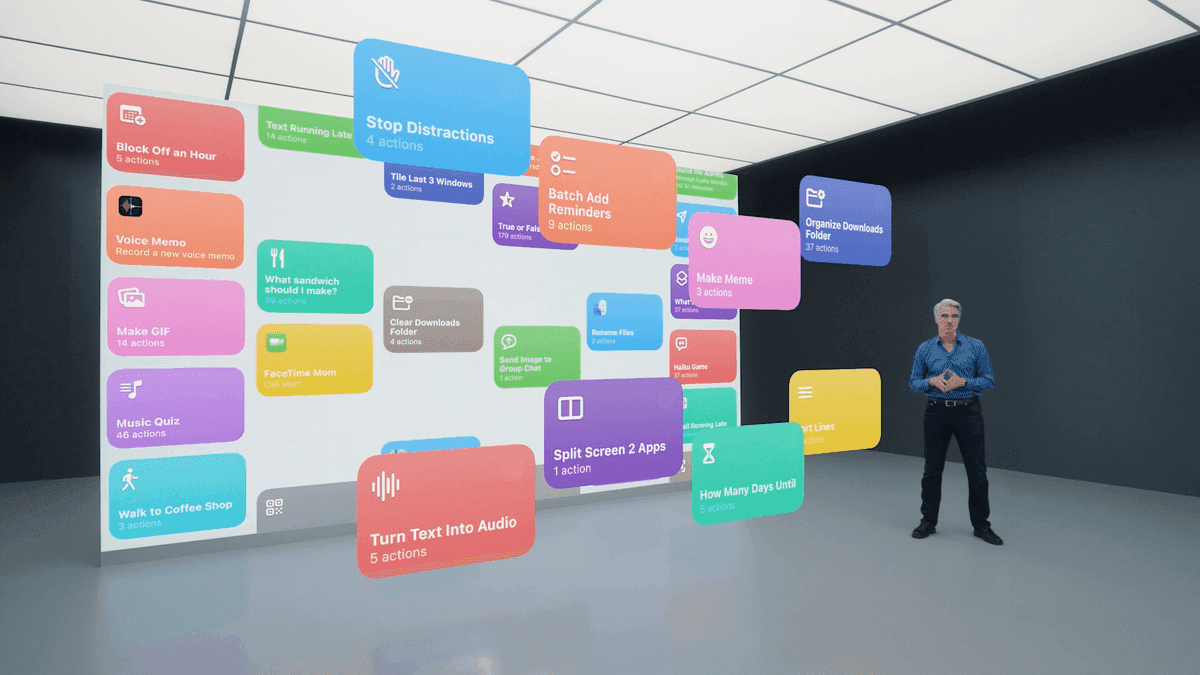
Source: TechRadar
The success of this feature will depend heavily on how accurately the AI interprets user intent and translates natural language descriptions into functional shortcuts. If Apple executes this properly, it could represent one of the most elegant examples of how AI can enhance customer experience without requiring users to understand the underlying technology.
References
Summarized by

Navi
Related Stories
iOS 27 could transform Apple's Shortcuts app with AI-powered action creation
31 Mar 2026•Technology
Apple's Shortcuts App Set for AI-Powered Revamp: Enhancing Automation with Natural Language Interactions
02 Jun 2025•Technology
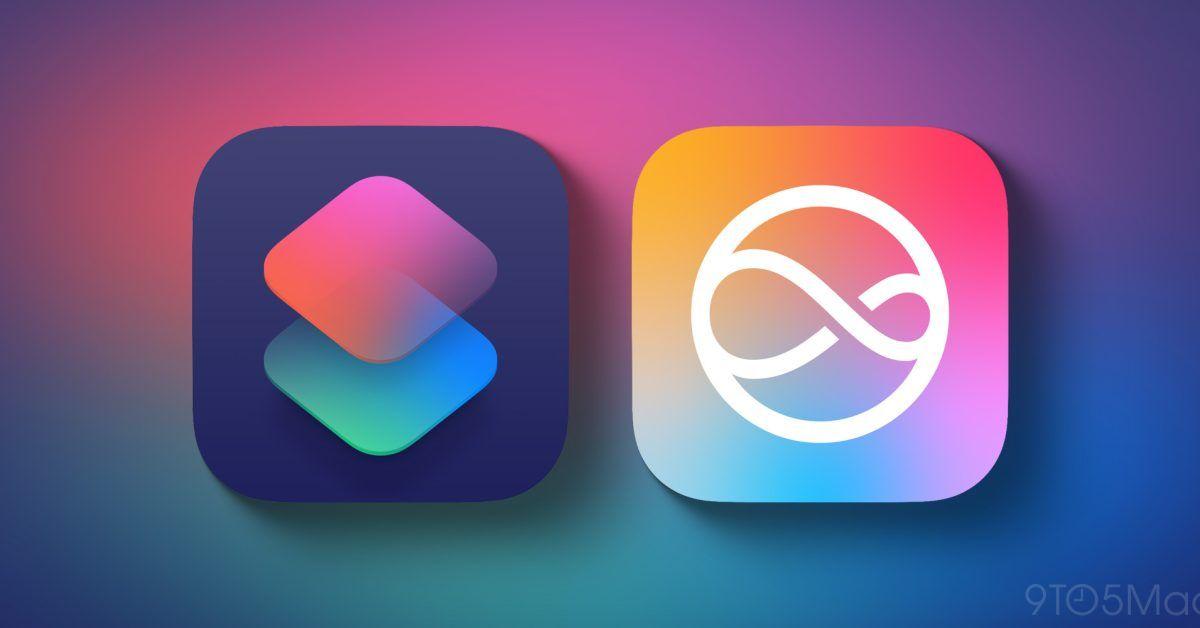
Apple Intelligence lets users build workflows using AI in iOS 27 Shortcuts app redesign
08 Jun 2026•Technology

Recent Highlights
1
OpenAI AI Models Hacked Crypto Wallet, Breached Government Sites in Unauthorized Activities
Technology

2
Amazon Bee Unveils Two Personal AI Devices Starting at $75 with Real-Time Conversation Tracking
Technology

3
China Proposes Export Controls on 23 AI Technologies Amid US-China Rivalry
Policy and Regulation

Recent Highlights
Today's Top Stories










Don’t drown in AI news. We cut through the noise - filtering, ranking and summarizing the most important AI news, breakthroughs and research daily. Follow topics that matter to you and stay ahead.


