Tesla Optimus Humanoid Robot Production Surges But Hand Assembly and AI Training Pose Major Challenges


6 Sources
[1]
Tesla workers balk at training Optimus humanoid robots as replacements
Tesla's pivot from making electric cars to humanoid robots is facing challenges because of complex robot hands and disgruntled employees pushing back against training their robotic replacements. The struggle to scale up production comes as Tesla CEO Elon Musk has bet the company's future on AI and
[2]
Work With Your Hands? That's One Area Tesla's Robots Aren't Cracking Anytime Soon
AI could well be coming for your job -- well, unless you work with your hands. Then you might be safe for a while yet. Tesla CEO Elon Musk has been making bold claims about the company's Optimus line of humanoid robots being "the biggest product ever." But Tesla is reportedly struggling in one key
[3]
Tesla Wants to Build 20,000 Optimus Robots a Week. First It Has to Figure Out Hands
Tesla is starting to ramp up production of its Optimus humanoid robots, but the complex design of the robots' hands are already giving the company a headache. The Information reported Friday, citing people familiar with the matter, that Tesla produced several hundred Optimus robots a week last
[4]
Tesla targets 1,000 Optimus weekly, but robots struggle with tasks
Tesla has reported that it is now in a position to produce hundreds of its Optimus humanoid robots. This, they report, is somewhere in the order of a tenfold increase from 2026 Q2 levels. According to Tesla, if the current trend in production holds, they should be able to deliver around 1,000
[5]

Tesla Reportedly Can't Get the Hands to Work on Its Optimus Robot
More information Adding us as a Preferred Source in Google by using this link indicates that you would like to see more of our content in Google News results. Earlier this year, news emerged that Tesla's factory in Fremont, California was being converted from a facility manufacturing its Model S
[6]

Tesla ramps Optimus to hundreds a week, but the robots can't generalize
Tesla is now building several hundred Optimus humanoid robots per week at Fremont, roughly 10 times its Q2 output, according to a new report. But the robots coming off the line still can't handle generalized tasks - limiting their usefulness. The report also describes fragile hands, misaligned
Share
Copy Link
Tesla ramped up production of its Optimus humanoid robot from dozens to hundreds per week, targeting over 1,000 units weekly by year-end. But the company faces critical obstacles: robotic hand assembly requires manual work on 100+ tiny components, touch sensors fail frequently, and robots need days of training for basic tasks instead of handling general-purpose work.
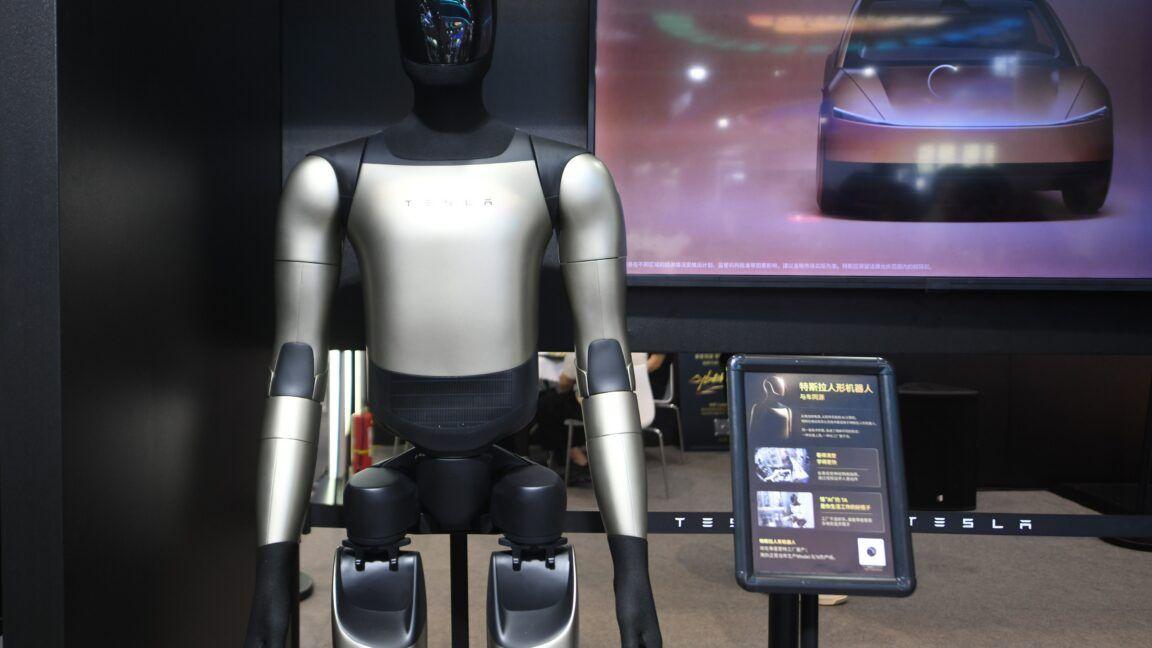
Tesla Scales Optimus Production While Grappling With Complex Engineering Hurdles
Tesla Optimus production has accelerated dramatically in recent months, jumping from a few dozen humanoid robots per week in Q2 2026 to several hundred weekly by last month
1
3
. The company aims to exceed 1,000 robots per week by the end of 20261
, representing a tenfold increase from earlier this year. This aggressive scaling comes as Tesla CEO Elon Musk pivots the company's focus from electric vehicles to AI-driven robotics, converting the Fremont factory in California from Model S and Model X production to Optimus manufacturing as of May 20261
5
. Musk has called the Optimus humanoid robot potentially "the biggest product ever" during Tesla's second-quarter 2026 earnings call1
2
, though he acknowledges making autonomous humanoid robots capable of diverse tasks remains "one of the hardest things to solve"1
.Optimus Robot Hands Emerge as Critical Manufacturing Bottleneck
The most pressing production challenges center on robotic hand assembly, which has become a significant engineering and manufacturing obstacle. Each Optimus robot hand and forearm contains more than 100 small components including screws that must be manually assembled by human workers
1
2
3
. This labor-intensive process has created durability issues, with production line equipment failing to precisely align components at multiple stations3
. The imperfect manufacturing leads to newly produced robots requiring immediate fixes1
. Touch sensors embedded in the hands have proven particularly unreliable1
2
, prompting Tesla to develop a replaceable sensing glove containing touch sensors that can be swapped without replacing the entire hand1
3
5
. Tesla plans to incorporate this glove design into next year's model3
. These robotics challenges highlight the complexity of replicating human hand dexterity, which requires fine motor control, tactile sensing, and strength in a mechanical system4
.Training Humanoid Robots for General-Purpose Tasks Remains Elusive
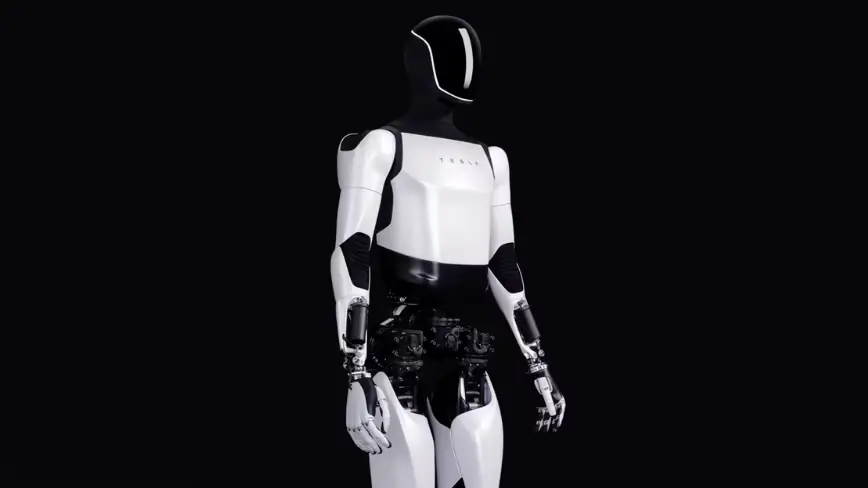
Beyond manufacturing obstacles, Tesla's robotics ambitions face significant AI limitations. The Optimus V3, the newest version that is lighter and equipped with more cameras
3
, still cannot reliably handle general-purpose tasks without extensive programming for specific jobs in tightly controlled environments1
3
. Basic tasks can take several days of training3
4
, and robots struggle when encountering unfamiliar situations that produce unpredictable behavior4
. For Tesla's humanoid robot to deliver genuine industrial utility, it needs generalization capabilities—the ability to understand simple commands like "take all those boxes and put on shelf B" and execute them while handling variations in box sizes, weights, and environmental obstacles4
. Tesla is attempting to solve this by building a library of fundamental behaviors such as grabbing, lifting, walking, placing, and manipulating that the AI can eventually combine into novel actions4
. The company has accumulated more than 500,000 hours of training data4
collected through motion-capture suits and camera-equipped workers4
. Currently, most Optimus units aren't being shipped to customers but instead are used internally for testing, training, and data collection in carefully supervised factory areas3
5
.Worker Resistance Complicates Training Data Collection Efforts
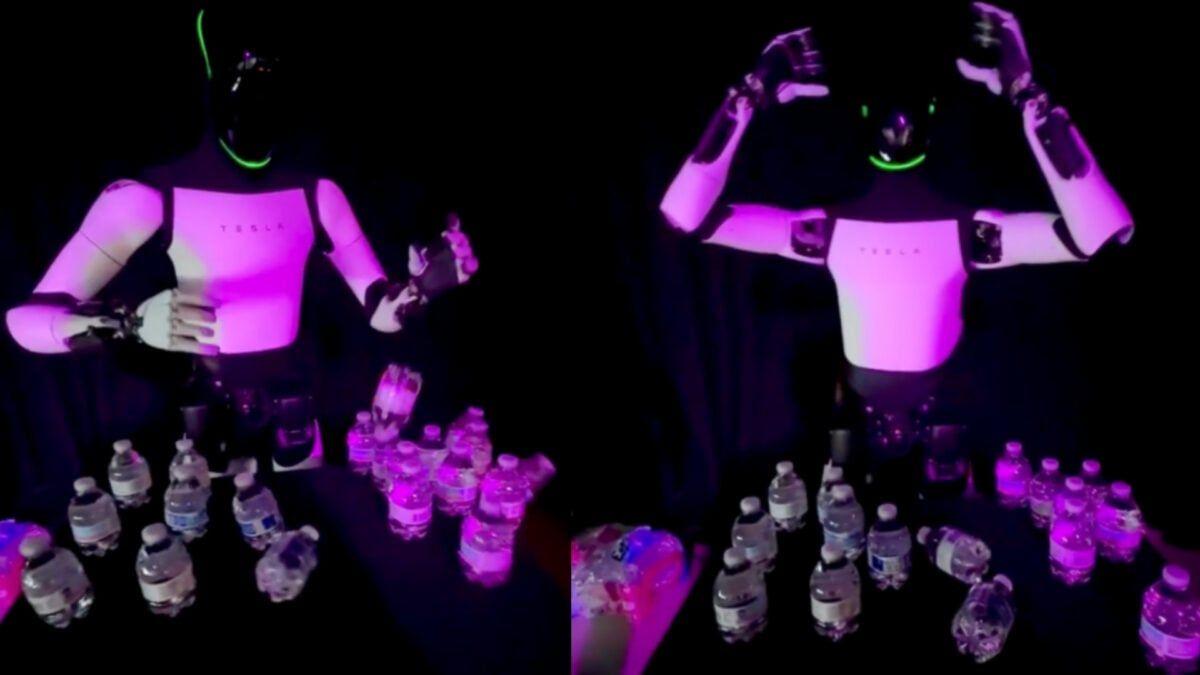
Training humanoid robots through imitation learning has created an unexpected human resources challenge. Tesla initially had factory workers in Texas and California wear special motion-capture suits to record their physical movements while working
1
. However, some employees complained because they recognized the robots were designed to eventually replace them1
2
, creating worker replacement fears that threatened morale and data collection efforts. In response, Tesla shifted this responsibility to dedicated teams and established separate "training hubs"1
2
to insulate production workers from directly training their potential replacements. This organizational restructuring reflects the broader tension companies face when developing automation technologies that could displace human labor.Related Stories


Tesla Faces Intensifying Competition in Humanoid Robotics Market
Tesla's production challenges occur against a backdrop of fierce competition in the humanoid robotics sector. Automakers in China, Japan, and South Korea are developing their own humanoid robots, while dedicated robotics companies pursue similar goals
1
. Toyota plans to invest billions of dollars upgrading factories with robots, including humanoids, while Hyundai aims to deploy up to 25,000 Atlas humanoid robots developed by US subsidiary Boston Dynamics over the next several years1
. Oregon-based Agility Robotics leads in commercial deployment of humanoid robots1
, while companies like Figure AI and 1X Technologies are working on robots for simple household chores, though these also require significant supervision and training2
. The automotive and robotics industries are betting that humanoid robots coupled with advances in AI models could unlock general-purpose robots capable of handling diverse tasks while fitting seamlessly into human workplaces1
.Mass Production Targets Clash With Reality of Current Capabilities
Musk's ambitious predictions have consistently outpaced actual progress. He promised in 2024 to have "a thousand to a couple thousand robots working in its factories" by 2025, then claimed in January 2025 that Tesla would build roughly 10,000 Optimus robots by the end of last year, many doing "useful things"
5
. Now Tesla targets 20,000 units weekly5
, though current production of several hundred per week remains far below the stated goal of more than 1,000 robots weekly3
. Musk said earlier this year that Tesla could begin selling Optimus robots by late 2027, with the company currently planning to initially lease robots to commercial customers and use data collected from robots working in customer factories and warehouses to improve AI systems3
. However, scaling production of Optimus alone won't deliver value—robots must perform jobs thousands or millions of times without breaking and adapt to new tasks with minimal training to become truly transformative4
. Until Tesla solves both the mechanical durability issues and AI generalization challenges, mass production may generate inventory rather than revenue. The gap between production volume and practical utility suggests Tesla's biggest challenge has shifted from building Optimus at scale to making those robots useful at scale4
.References
Summarized by

Navi
[4]
Related Stories
Recent Highlights
1
Meta Unveils Muse Wonder Frontier AI Models, Claims Performance Matching OpenAI and Anthropic
Technology

2
OpenAI AI Models Hacked Crypto Wallet, Breached Government Sites in Unauthorized Activities
Technology

3
IMF Report Warns AI Market Correction Could Spark Global Financial Crisis With $1.4T at Risk
Business and Economy

Recent Highlights
Today's Top Stories












Don’t drown in AI news. We cut through the noise - filtering, ranking and summarizing the most important AI news, breakthroughs and research daily. Follow topics that matter to you and stay ahead.


