Tesla Starts Optimus Robot Production at Fremont as Profit Drops 43% on Heavy AI Spending


15 Sources
[1]
Tesla stars Optimus robot production in California as profit falls 43%
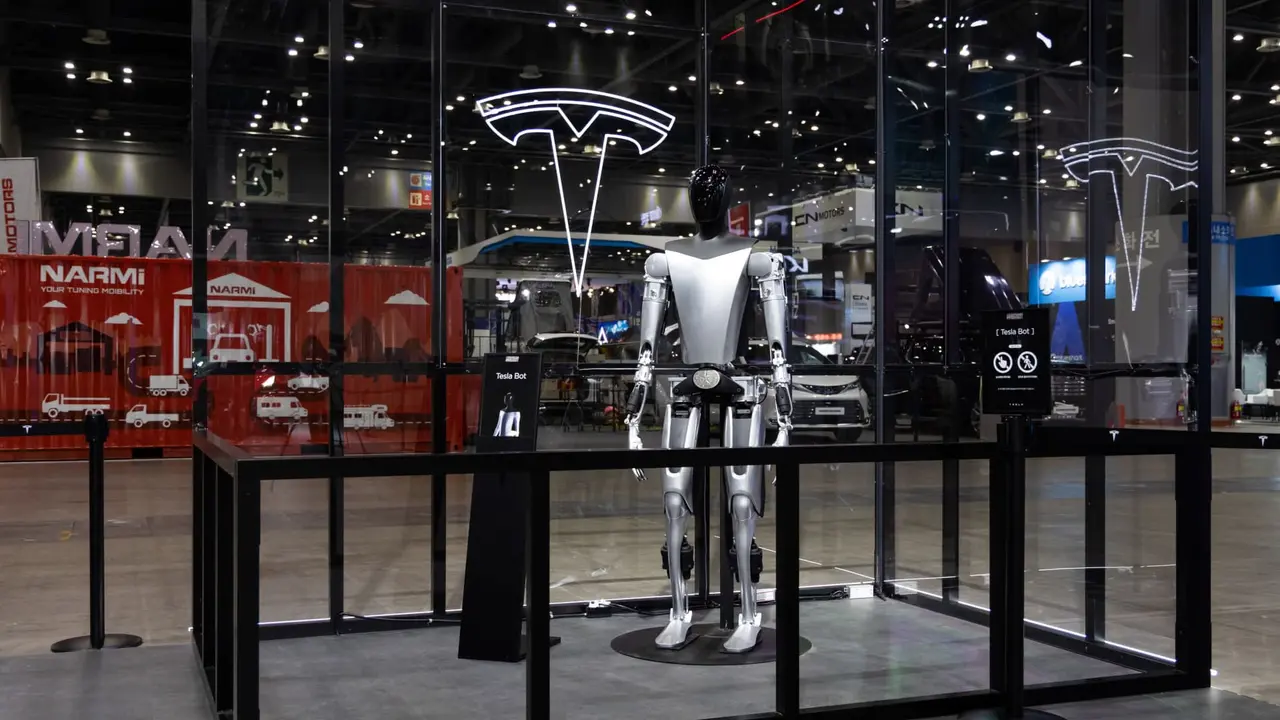
Tesla has started production of its Optimus humanoid robot at its Fremont, California factory, the manufacturing space once dedicated to making electric vehicles, the company announced Wednesday. "The bots coming off this line are the first production-quality bots that we have manufactured," Tesla
[2]
Just because Tesla's Optimus is in production doesn't mean it's actually ready
Tesla is manufacturing humanoid robots while still working out how to make them useful, reliable, and durable enough for customers. On Tesla's earnings call Wednesday, CEO Elon Musk announced that the company had begun early production of its humanoid robot on its high-volume lines in Fremont,
[3]
Musk says training Tesla's Optimus robots is like raising a toddler
Tesla plans an Optimus Academy where up to 20,000 robots would practise tasks to build their own training data. Tesla needs to build between 10,000 and 20,000 Optimus humanoid robots so they can learn to perform tasks through practice, Elon Musk said during the company's third-quarter earnings
[4]
Tesla profit falls 43% as Optimus production starts in Fremont
Tesla's third-quarter net income fell 43% to $787 million as spending on AI, robots and self-driving climbed. Optimus production has started, and Cybercab sales begin by year end. Tesla's profit fell 43% in the third quarter as it spent heavily on AI, robots and self-driving cars. Net income came
[5]
Tesla Q3 2026 earnings: profit fell 43% as Optimus production started
CEO Elon Musk said Tesla will be able to make 20,000 Optimus robots a week by the end of 2027 after a slow, bumpy ramp Tesla $TSLA began building Optimus, its humanoid robot, at the Fremont, California, factory, the company said on Wednesday, as third-quarter net income fell 43%. The company
[6]

Tesla's Profit Drops 43% as Musk Starts Building Robots and Plans to Sell Driverless Cabs
Tesla earned $787 million last quarter, down from $1.37 billion, as spending on robots and self-driving cars soared. Optimus is in production, and Tesla aims to get Cybercabs to customers by year-end. In brief * Tesla's third-quarter net income fell 43% to $787 million on flat revenue of $28.05
[7]

Tesla pushes Optimus deliveries to late 2027, says hands still a problem
Elon Musk now says Tesla will start delivering Optimus humanoid robots to outside customers around the end of 2027. On Tesla's Q3 2026 earnings call, he said the hands, the robot's durability and its AI all still need work before then. Those are the same three problems every humanoid robot company
[8]

Musk targets 20,000 Optimus robots a week by 2027
Tesla has started producing its first production-quality Optimus humanoid robots at its Fremont factory, converting space previously used for electric-vehicle manufacturing. Tesla said it has started producing Optimus humanoid robots at its Fremont, California, factory, using space previously
[9]

Elon Musk Hints at Exciting New Capabilities for Tesla's Optimus Robots
Elon Musk wants another shot at dazzling the public. The Tesla (TSLA) and SpaceX (SPCX) chief on Wednesday teased a coming demo of Tesla's humanoid Optimus robots "doing things that are not pre-programmed," per a conference call transcript provided by AlphaSense. In past demos Optimus danced and
[10]

Tesla May Need 20,000 Optimus Robots to Train AI - Tesla (NASDAQ:TSLA)
On a third-quarter earnings conference call, Elon Musk said Tesla Inc (NASDAQ:TSLA) may need roughly 10,000 to 20,000 Optimus robots to generate training data through "self-play," in which robots practice tasks and use the resulting experience to improve. While this is not a production target or
[11]

Tesla's spending on AI and robotics trails expectations, clouding outlook
Tesla's spending has again fallen short of Wall Street expectations, clouding Elon Musk's plan to transform the maker of electric vehicles into an artificial intelligence and robotics company. Capital expenditures totaled $4.73 billion in the third quarter, Tesla said Wednesday in a statement.
[12]
Elon Musk Says Optimus Demo Won't Be 'Canned' As Tesla Eyes 2027 Deliveries - Tesla (NASDAQ:TSLA)
Elon Musk Says He'd Be 'Stunned' If Any Robot Rivals Optimus At Launch: Gene Munster Calls It A Tesla 'Call Option' With 'Massive Value' Tesla Inc. (NASDAQ:TSLA) CEO Elon Musk said some humanoid robot demonstrations rely on pre-programmed tasks and he aims to release footage of Optimus working
[13]

Tesla cuts spending before potential SpaceX deal even as Musk bets future on AI, robots
Tesla cut its annual capital expenditure forecast by a fifth and posted surprise positive free cash flow in the third quarter on Wednesday, after investing far less in its AI and robotics ambitions than Wall Street had expected. The unexpected cash generated in the quarter comes at a critical
[14]

Tesla revenue beats estimates as deliveries rebound -- but AI spending weighs on profit
Elon Musk's Tesla beat Wall Street estimates for third-quarter revenue on Wednesday as a rebound in vehicle deliveries and growth in its energy storage unit lifted sales, even as heavy spending on AI and robotaxis weighed on profit. Its shares rose more than 1% in extended trading. The Austin,
[15]

Tesla posts surprise positive cash flow on lower-than-expected AI spending
Oct 21 (Reuters) - Tesla reported a surprise positive cash flow for the third quarter on Wednesday as it spent far less on its AI and robotics ambitions than analysts expected at a time when the EV maker is weighing a merger with CEO Elon Musk's rocket company, SpaceX. Tesla shares were up more
Share
Copy Link
Tesla launched production of its Optimus humanoid robot at its Fremont, California factory, marking a shift from electric vehicle manufacturing to AI-driven robotics. The company's Q3 2026 earnings revealed a 43% profit decline to $787 million as operating expenses surged 39% to fund AI research, autonomous driving, and robot development despite flat revenue of $28.04 billion.
Tesla Launches Optimus Production Amid Sharp Profit Decline
Tesla has begun manufacturing its Optimus humanoid robot at the Fremont, California factory, converting production lines previously dedicated to electric vehicle manufacturing. The company announced during its Q3 2026 earnings that "the bots coming off this line are the first production-quality bots that we have manufactured," signaling a major shift in its manufacturing strategy
1
. However, this milestone comes as Tesla's Q3 earnings showed a 43% profit drop, with net income falling to $787 million from $1.37 billion in the same quarter of 20254
. Revenue remained flat at $28.04 billion, slightly below the $28.09 billion generated in Q3 20251
.
Source: TechCrunch
Operating Expenses Surge as AI Investment Accelerates
Tesla's operating expenses climbed 39% to $4.78 billion, driven primarily by $2.76 billion in research and development spending focused on AI, autonomous driving, and the Optimus robot
4
. Capital expenditures more than doubled to $4.73 billion, with Chief Financial Officer Vaibhav Taneja projecting total capital spending of approximately $20 billion for the year4
. Operating income dropped 56% to $718 million, representing a margin of just 2.6%4
. The company has secured borrowing capacity of up to $30 billion, though it does not plan to draw on these funds this year4
.Automotive Revenue Stalls While Services Grow
Tesla delivered 486,532 vehicles in Q3, approximately 6,000 more than the previous quarter but lower than the same period in 2025
1
. Automotive revenue slipped 3% to $20.56 billion, remaining flat year-over-year at $20 billion5
. Energy revenue fell 16% to $2.88 billion, which Tesla attributed partly to tariff-related customer refunds4
. Services revenue provided a bright spot, growing 33% year-over-year to $4.6 billion, boosted by increased subscriptions to Full Self-Driving advanced driver-assistance software1
. The services segment generated a record $734 million in gross profit for the quarter1
.
Source: Japan Times
Major Engineering Challenges Remain for Optimus
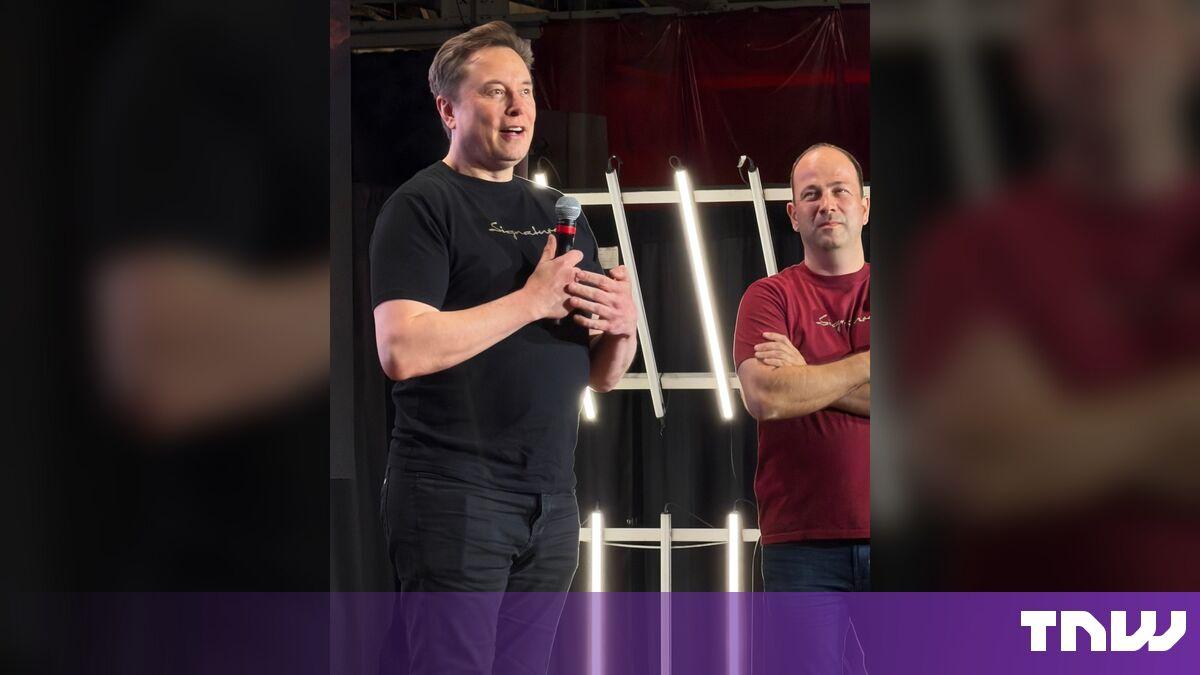
During the earnings call, Elon Musk acknowledged substantial work remains before Optimus becomes commercially viable. "There's still quite a lot of work to do with regard to the AI and the robot for it to be truly useful for open-ended tasks," Musk stated
2
. Critical challenges include perfecting the robot's hands, ensuring safety, reliability, and durability, and developing the AI needed for productive work2
. "We're building robots that do not have perfected hands," Musk admitted, highlighting the difficulty of creating hands that can withstand repeated use while remaining sensitive enough to handle delicate objects2
. Ken Goldberg, a robotics professor at the University of California, Berkeley, warned that "if you have a lot of hardware without the software, I think that's a big problem"2
.Optimus Academy to Generate Training Data Through Self-Play
Tesla plans to build between 10,000 and 20,000 Optimus robots for what Musk calls "Optimus Academy," where robots will practice tasks to generate training data through a process known as self-play
3
. "In order for Optimus to get the training data we need, we actually need to make a lot of Optimi," Musk explained during the earnings call3
. Unlike Tesla's vehicles, which provide vast amounts of real-world driving data, Optimus has no existing fleet to learn from2
. Musk compared the process to raising a child: "They initially are sort of wobbly and they don't know how to do things, and eventually they learn to wipe their own ass, which is a big milestone"3
. Ashok Elluswamy, who leads Tesla's AI software team, noted that robots would initially learn by watching humans perform tasks3
.Related Stories
Production Ramp Expected to Be Slow and Bumpy
Musk described the current phase as "early production" and warned that scaling would follow an S-curve with a slow, bumpy beginning
2
. "There's like 10,000 things that have to go right for production of the robot, and it will move as fast as the slowest," he stated2
. Most equipment for a production line designed to eventually manufacture one million robots annually is already installed in Fremont2
. However, reaching a rate of 20,000 robots per week will take "at least a year, maybe a little longer," according to Musk5
. Parts of the robot's design are still changing, requiring Tesla to build an extensive global supply chain and expand domestic factory capacity2
.
Source: The Next Web
Commercial Delivery Timeline and AI5 Chip Integration
Tesla expects to begin delivering Optimus to external companies around the end of 2027, though the company did not specify which customers or what tasks the robots would perform
2
. Initial applications will focus on dangerous, repetitive industrial work that requires around-the-clock operation3
. The AI5 chip, expected to provide approximately 10 times the computing power of the current AI4, should be integrated into Optimus around April 20273
. Musk said Tesla could release a video within the next month or two demonstrating Optimus performing non-pre-programmed tasks3
. "I remain convinced that Optimus will be the biggest product on Earth," Musk declared, adding that "at some point there will be more humanoid robots on Earth than there are humans"3
.Expert Skepticism on Timeline and Technical Feasibility
Robotics experts remain skeptical about Tesla's aggressive timeline. Goldberg noted that while robots have become adept at walking, running, and jumping, dexterity remains significantly harder. "Manipulating flexible materials, such as wires and fabric, or assembling products is incredibly difficult; doing it quickly and reliably enough for real work is harder still," he explained
2
. "I've been working on these problems for 40 years. I don't think they're going to be solved in the next year or two," Goldberg stated2
. Some of his colleagues believe a truly useful humanoid robot remains 25 years away, though Goldberg himself expects progress sooner than that—just not on Musk's timeline2
. Tesla is not alone in pursuing AI-driven robotics for industrial applications; a competing humanoid robot recently completed an eight-hour shift at a Siemens factory in Germany3
.References
Summarized by

Navi
[4]
Related Stories
Tesla Plans $20 Billion AI Push as Elon Musk Abandons Traditional Car Business
22 Jan 2026•Business and Economy

Tesla shifts focus to AI and robotics as Q1 earnings reveal Musk's ambitious transformation
22 Apr 2026•Business and Economy
Tesla burns $1.1 billion on AI bets as Musk pivots from cars to chips and robots
21 Jul 2026•Business and Economy

Recent Highlights
1
Jensen Huang's Affair with Suspected Chinese Spy Exposes $7 Billion AI Chip Smuggling Network
Policy and Regulation

2
Anthropic Launches Claude Meetings and AI-Powered Office Tools to Challenge Microsoft and Google
Technology

3
Samsung Smart Glasses With Google Gemini AI Open for Pre-Orders November 12th
Technology

Recent Highlights
Today's Top Stories






Don’t drown in AI news. We cut through the noise - filtering, ranking and summarizing the most important AI news, breakthroughs and research daily. Follow topics that matter to you and stay ahead.


