Tesla quietly discloses $2 billion AI hardware acquisition buried in SEC filing


4 Sources
[1]
Tesla Reveals Mysterious $2 Billion AI Hardware Deal in SEC Filing
In the latest example of Elon Musk betting his business empire's future on the AI race, Tesla has quietly struck a deal to acquire a mystery AI hardware company for up to $2 billion. Electrek first reported that Tesla disclosed the deal in a single sentence buried deep in a recent securities
[2]
Tesla Quietly Buys Mysterious $2 Billion Entity
Can't-miss innovations from the bleeding edge of science and tech Amid Tesla's disappointing first quarter earnings report, a one-sentence disclosure tucked into the financial statement is raising more questions than answers. First spotted by Business Insider, the brief passage pointed to Tesla's
[3]
Tesla (TSLA) quietly discloses $2 billion AI hardware company acquisition buried in filing
Tesla agreed to acquire an unnamed AI hardware company for up to $2 billion in stock and equity awards, according to a single sentence buried in its Q1 2026 10-Q filing. The company never mentioned the deal in its shareholders' letter or during last night's earnings call. The disclosure appeared
[4]
Tesla Just Placed a $2 Billion Bet on AI Hardware -- With Almost No Details
Tesla just quietly revealed a $2 billion acquisition, without ever actually announcing it. Instead of announcing the deal in an earnings call or in a shareholder letter, Tesla announced it in a single line buried in its Q1 2026 10-Q filing. In Note 14, under Subsequent Events, Tesla states: "In
Share
Copy Link
Tesla revealed a $2 billion acquisition of an unnamed AI hardware company in a single sentence buried in its Q1 2026 SEC filing. The deal, paid in Tesla stock and equity awards, ties $1.8 billion to performance milestones, signaling a strategic pivot towards artificial intelligence as Elon Musk aligns his ventures around AI hardware and autonomous technology.
Tesla Acquisition Buried in Regulatory Filing
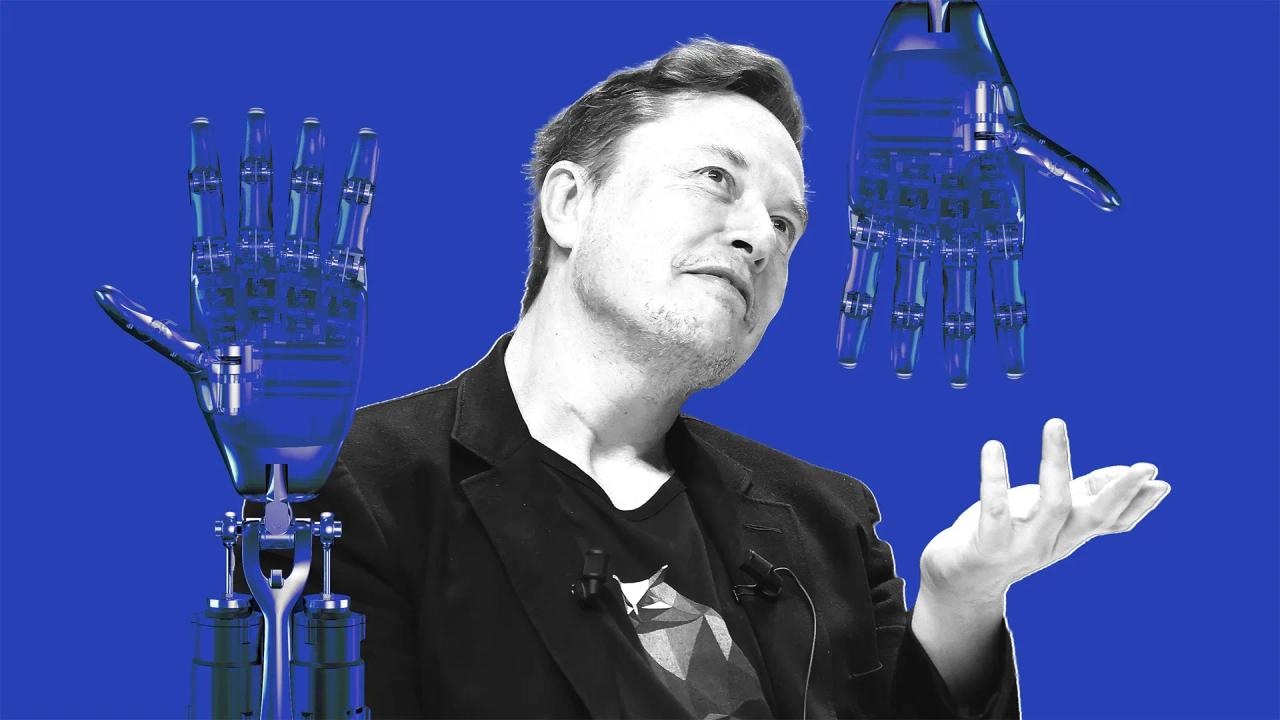
Tesla has quietly disclosed a $2 billion acquisition of an unnamed AI hardware company in a single sentence tucked into its Q1 2026 10-Q SEC filing
1
. The disclosure appeared in Note 14 under Subsequent Events, the final section of the financial statements, and was never mentioned in the company's shareholder letter or during the earnings call with investors3
. The brief passage states that Tesla entered into an agreement to acquire an AI hardware company for up to $2 billion in Tesla common stock and equity awards, with approximately $1.8 billion subject to certain service conditions and performance milestones dependent on the successful deployment of the company's technology2
. The filing provides no company name, no description of what the technology does, and no explanation of how many shares will be issued to complete the deal4
.
Source: Inc.
AI Hardware Deal Structure Signals Talent Retention Strategy
The structure of this AI hardware deal offers critical insights into Tesla's intentions. Only $200 million of the $2 billion total is guaranteed upfront, with the remaining $1.8 billion tied to service conditions and performance milestones
3
. This heavily milestone-based approach suggests Tesla is acquiring a company with promising but unproven technology, and that the deal functions partly as a retention mechanism for the target company's engineering team. The fact that Tesla is paying entirely in stock and equity awards rather than cash is notable, especially considering the company sits on $44.7 billion in cash and short-term investments3
. Paying in stock avoids reducing Tesla's cash reserves but introduces stock dilution for existing shareholders if the milestones are met.Strategic Pivot Towards Artificial Intelligence Accelerates
This Tesla acquisition arrives as Elon Musk increasingly aligns his ventures around AI initiatives. The timing of the April 2026 deal coincides with several major developments in Elon Musk's AI hardware ambitions. Earlier this month, Musk announced on X that Tesla had completed the tape-out of its next-generation AI5 chip, the final stage before sending the design to a foundry for semiconductor manufacturing
1
. Intel also announced it is joining Terafab, a planned semiconductor manufacturing venture backed by Tesla, SpaceX, and xAI1
. The target could be a chip design firm, a packaging company, an AI accelerator startup, or a company with intellectual property relevant to Tesla's self-driving chips and autonomous robots development3
.Related Stories

Increased Capital Expenditures in AI Reshape Company Priorities
Tesla announced plans to raise its capital expenditures to approximately $25 billion this year, with a significant portion directed toward AI initiatives
1
. This represents a dramatic increase from the $8.5 billion Tesla spent last year2
. During the earnings call, Musk told investors that "Tesla is working on a lot of large, ambitious projects" that he believes "are going to be revolutionary"2
. In Q1 2026 alone, Tesla committed potentially $4 billion in AI-related investments and acquisitions in a single quarter, all while the core automotive business delivered just $477 million in GAAP net income3
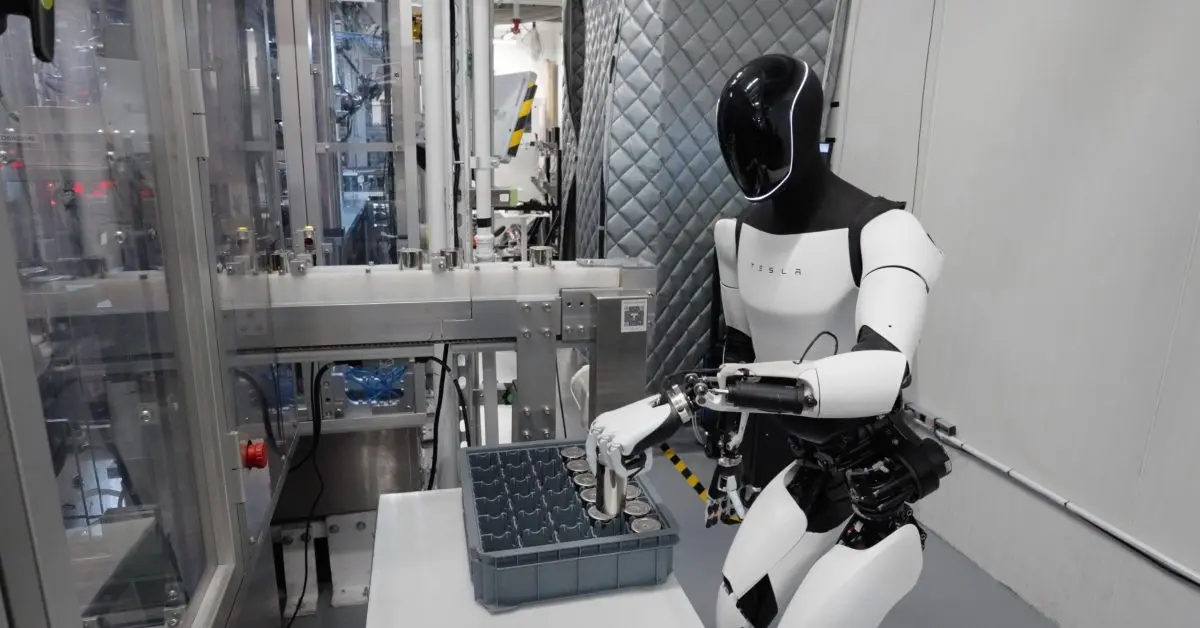
. The company is also winding down production of its Model S and Model X EVs next quarter as part of its shift to an AI-driven future focused on manufacturing autonomous robots1
.
Source: Electrek
Questions Mount Over Transparency and Shareholder Impact
The manner in which Tesla disclosed this $2 billion acquisition raises concerns about transparency. The company discussed a $2 billion SpaceX investment extensively in its shareholder letter but didn't mention an equally-sized acquisition, suggesting a deliberate choice to minimize attention
3
. Tesla is essentially asking shareholders to approve up to $2 billion in stock dilution for an unnamed AI hardware company doing unspecified work, with performance milestones Tesla hasn't described publicly. SpaceX, which recently acquired xAI, is already making massive bets on AI, with its IPO filing estimating a $28.5 trillion total addressable market, with roughly $26.5 trillion expected to come from AI alone1
. While the AI pivot may ultimately prove transformative for Tesla, the company is currently spending faster than it's earning, with deliveries missing expectations and GAAP net margin at just 2.1% in Q13
. Investors should watch for additional disclosures about the acquisition target and whether Tesla's aggressive AI spending translates into tangible revenue growth in autonomous technology and self-driving capabilities.References
Summarized by

Navi
[2]
[3]
Related Stories
Tesla invests $2 billion in Elon Musk's xAI despite ongoing shareholder lawsuit over AI conflicts
29 Jan 2026•Business and Economy
Tesla Plans $20 Billion AI Push as Elon Musk Abandons Traditional Car Business
22 Jan 2026•Business and Economy

Elon Musk's xAI Acquires X in $33 Billion All-Stock Deal, Merging Social Media and AI Ambitions
29 Mar 2025•Business and Economy

Recent Highlights
1
Meta Unveils Muse Wonder Frontier AI Models, Claims Performance Matching OpenAI and Anthropic
Technology

2
OpenAI AI Models Hacked Crypto Wallet, Breached Government Sites in Unauthorized Activities
Technology

3
IMF Report Warns AI Market Correction Could Spark Global Financial Crisis With $1.4T at Risk
Business and Economy

Recent Highlights
Today's Top Stories










Don’t drown in AI news. We cut through the noise - filtering, ranking and summarizing the most important AI news, breakthroughs and research daily. Follow topics that matter to you and stay ahead.


