The AI Chip Race: Nvidia's Dominance and the Challenges of Powering Artificial Intelligence

2 Sources
[1]
The geopolitics of chips: Nvidia and the AI boom
Your browser does not support playing this file but you can still download the MP3 file to play locally. Amid the artificial intelligence boom, demand for AI chips has exploded. But this push for chips also creates new challenges for countries and companies. How will countries cope with the huge
[2]
Transcript: The geopolitics of chips -- Nvidia and the AI boom
James Kynge So far in this series, we've spoken about the big, lofty geopolitics of semiconductors. But for some people, the rise of advanced chips has also translated into a good old-fashioned gold rush. James Kynge This is Mark Bauer and his massive, almost monster-truck-sized Ford
Share
Copy Link
As AI development surges, the demand for specialized chips is skyrocketing, with Nvidia leading the pack. However, the industry faces significant challenges in power consumption and competition.

The AI Chip Boom and Its Challenges
The artificial intelligence (AI) boom has triggered an unprecedented demand for specialized AI chips, reshaping the semiconductor industry and creating new challenges for countries and companies alike
1
. At the forefront of this revolution is Nvidia, whose dominance in the AI chip market has sparked a race among competitors to develop alternatives.The Power Conundrum
One of the most pressing issues in the AI chip industry is the enormous power consumption of data centers housing these advanced chips. In Phoenix, Arizona, the second-largest data center market in the US, the boom is palpable
2
. Mark Bauer, a local data center expert, describes the situation as "another evolution of an industry," comparing it to the industrial revolution2
.However, this growth comes at a cost. Frank Eickenhorst, vice-president of PhoenixNAP, explains that newer chips, especially GPUs (Graphics Processing Units), consume significantly more energy and generate more heat than their predecessors
2
. This has led to the need for advanced cooling solutions, including water cooling systems, as traditional air cooling becomes insufficient.The Scale of Power Demand
The power requirements for AI chips are staggering. US data centers are projected to need 35GW of power annually by the end of this decade, equivalent to the current power consumption of the entire United Kingdom
2
. This massive energy demand poses significant challenges for infrastructure and sustainability.Nvidia's Dominance and the Competition
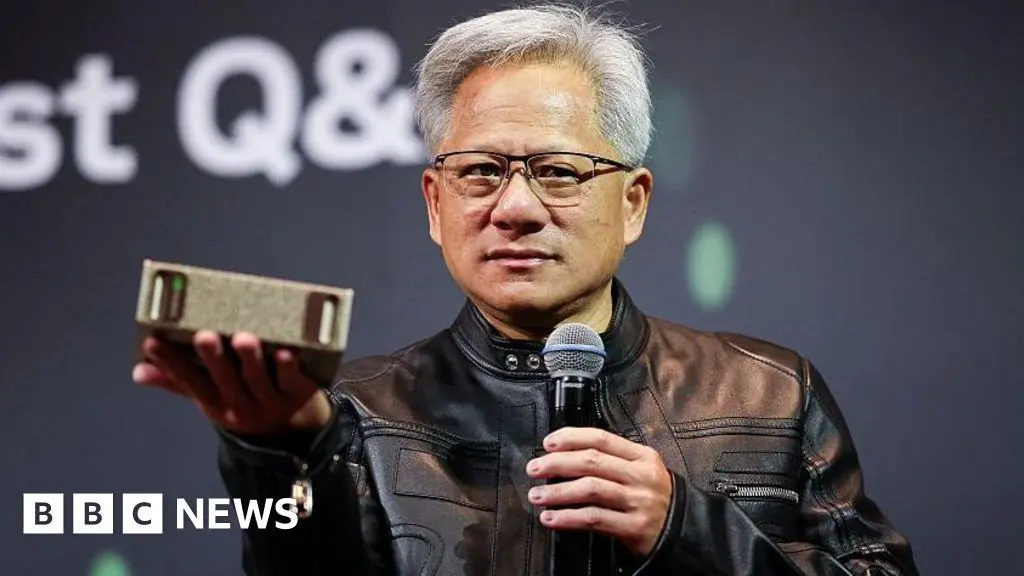
Nvidia currently holds a commanding position in the AI chip market, but competitors are emerging. Companies like Amazon are stepping up efforts to develop their own AI chips to rival Nvidia's offerings
1
. The competition extends to other tech giants and startups, all vying for a share of this lucrative market.Related Stories



Geopolitical Implications
The AI chip race has geopolitical dimensions as well. Countries are grappling with the energy demands of these chips and the need to secure their supply chains. China, in particular, is pushing to develop its own AI chips to fuel its AI ambitions, potentially circumventing US export controls
1
.The Future of AI Chips
As the AI industry continues to evolve, several questions loom large:
- How will countries manage the enormous energy consumption of AI chips?
- Can any company successfully challenge Nvidia's dominance in the AI chip market?
- Will China succeed in developing its own advanced AI chips?
The answers to these questions will shape the future of AI development and have far-reaching implications for global technology leadership and economic competitiveness.
1
2
References
Summarized by

Navi
Related Stories
Recent Highlights



Recent Highlights
Today's Top Stories



Don’t drown in AI news. We cut through the noise - filtering, ranking and summarizing the most important AI news, breakthroughs and research daily. Follow topics that matter to you and stay ahead.


