Tiiny AI unveils pocket-sized supercomputer that runs 120B models without cloud dependency


6 Sources
[1]
US: World's smallest AI supercomputer that fits in a pocket unveiled
US deep-tech startup Tiiny AI revealed the Tiiny AI Pocket Lab, which has been officially verified by Guinness World Records as the world's smallest personal AI supercomputer. Resembling a power bank with a pocket-sized design, the supercomputer can run 120 billion-parameter LLMs locally without
[2]
The world's smallest AI supercomputer is here, and it packs intelligence
Models from 10B to 120B parameters operate offline within 65W of power Tiiny, an American startup, has released the AI Pocket Lab, a pocket-sized AI supercomputer capable of running large language models locally. The device is a mini PC designed to execute advanced inference workloads without
[3]
The world's smallest AI supercomputer is the size of a power bank
CES 2026 Read and watch our complete CES coverage here Updated less than 4 minutes ago Tiiny AI has unveiled what Guinness World Records has verified as the world's smallest personal AI supercomputer. It is called the Tiiny AI Pocket Lab, and despite being about the size of a power bank, it
[4]
Meet the world's smallest AI supercomputer that fits in your pocket
Tiiny AI unveiled the Tiiny AI Pocket Lab, verified by Guinness World Records as the world's smallest personal AI supercomputer. This device, comparable in size to a power bank, enables local execution of large AI models to address cloud dependency issues, enhancing privacy and accessibility for
[5]

This tiny personal AI supercomputer can run 120B AI models while fitting in your hand
TL;DR: Tiiny AI's Pocket Lab, the world's smallest personal AI supercomputer verified by Guinness World Records, runs 120-billion-parameter LLMs fully on-device without cloud or internet. It offers energy-efficient, private AI computing with 80GB RAM, 1TB SSD, and advanced encryption, enabling
[6]

Meet the World's Smallest 'Supercomputer' from Tiiny AI; A Machine Bold Enough to Run 120B AI Models Right in the Palm of Your Hand
Compact AI devices have become increasingly mainstream, but a new startup has broken the barriers by introducing the world's smallest AI supercomputer, which appears highly capable on paper. Edge AI has become an emerging segment of the computing industry, primarily because deploying open-source
Share
Copy Link
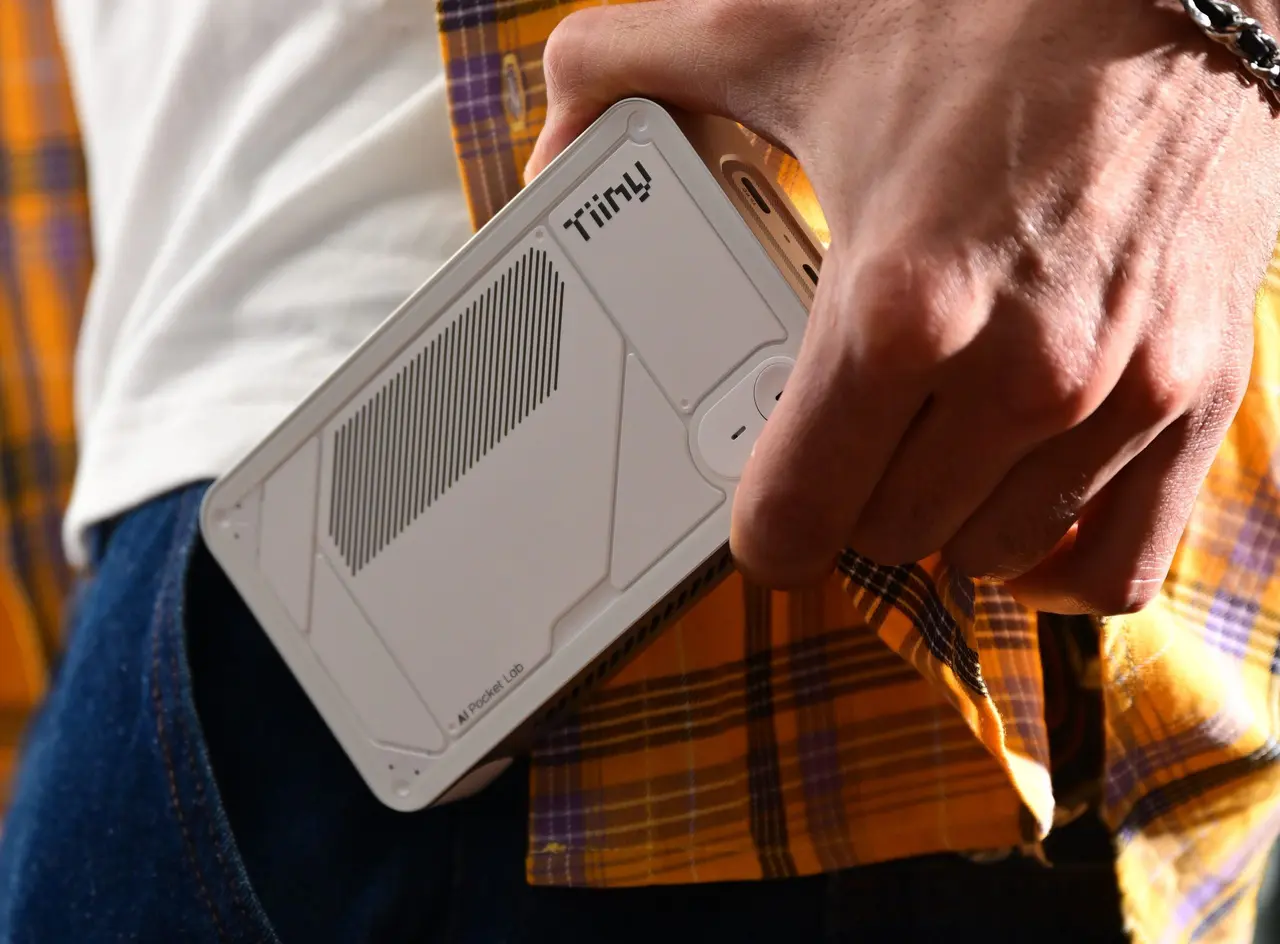
US startup Tiiny AI revealed the Pocket Lab, verified by Guinness World Records as the world's smallest personal AI supercomputer. Measuring just 14.2 × 8 × 2.53 cm and weighing 300 grams, the device runs 120-billion-parameter LLMs locally without cloud connectivity. The launch addresses sustainability concerns, rising energy costs, and privacy risks in cloud-based AI infrastructure.
Tiiny AI Pocket Lab achieves Guinness World Record certification
US deep-tech startup Tiiny AI has unveiled the Tiiny AI Pocket Lab, officially verified by Guinness World Records as the world's smallest personal AI supercomputer
1
. The pocket-sized device, measuring just 14.2 × 8 × 2.53 cm and weighing only 300 grams, resembles a power bank but delivers capabilities typically associated with server racks and high-end GPUs3
. The certification recognizes the device under the category "The Smallest MiniPC (100B LLM Locally)," marking a significant milestone in portable AI computing5
.
Source: Wccftech
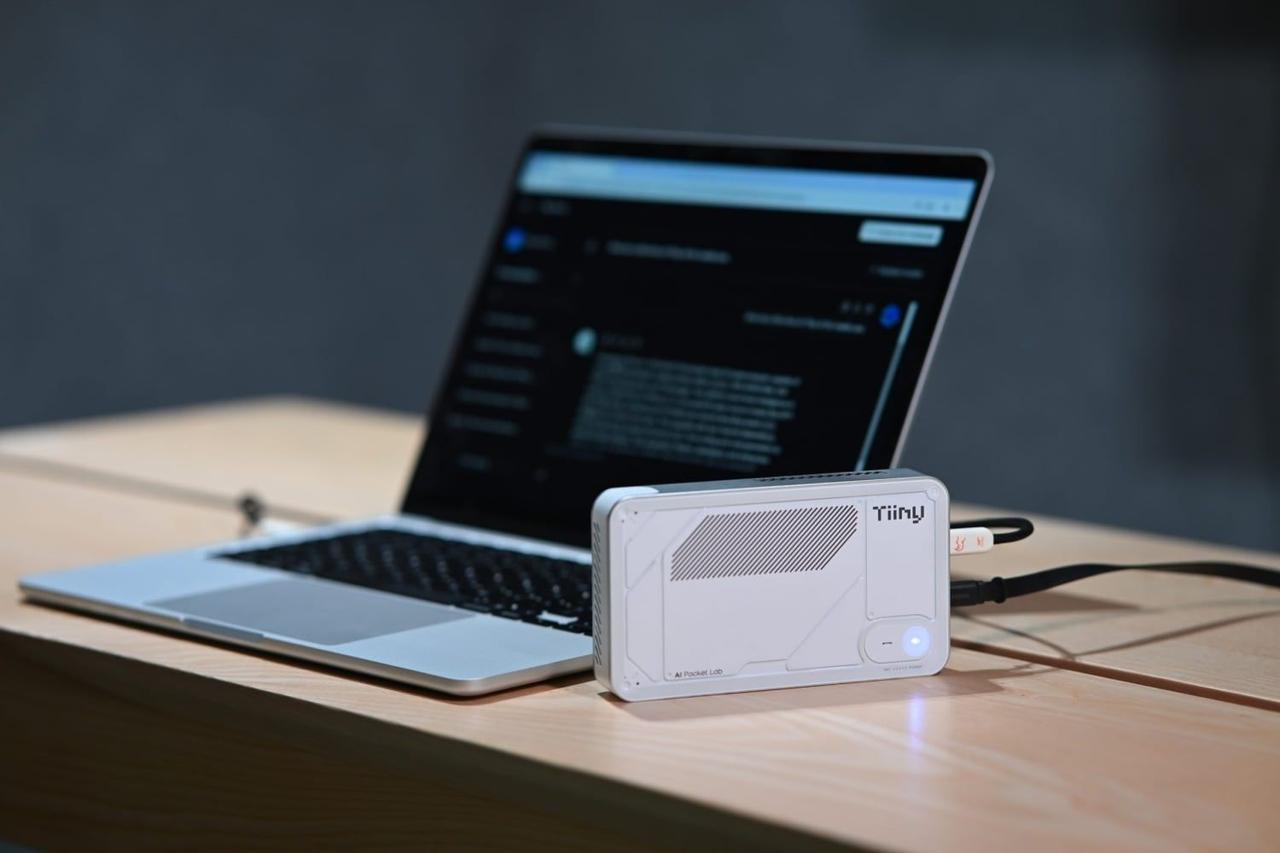
The AI supercomputer can run large language models locally with up to 120 billion parameters entirely on-device without relying on cloud connectivity, external servers, or discrete accelerators
1
. This capability addresses a fundamental shift in how AI processing occurs, moving computation from centralized data centers to individual devices. Tiiny AI launched the Pocket Lab on December 10 and plans to showcase it at CES 2026, though pricing and specific release details remain undisclosed3
.
Source: TweakTown
Addressing cloud dependency and privacy concerns through local execution
Tiiny AI positions the device as a direct response to growing concerns about cloud infrastructure dependency, sustainability challenges, and privacy risks in current AI systems
1
. Samar Bhoj, GTM Director of Tiiny AI, stated: "Cloud AI has brought remarkable progress, but it also created dependency, vulnerability, and sustainability challenges. With Tiiny AI Pocket Lab, we believe intelligence shouldn't belong to data centers, but to people"2
. This philosophy drives the company's mission to reduce cloud dependency while making data-center-level power accessible to common users1
.The emphasis on local data storage and on-device AI processing removes network latency and limits external data exposure
2
. The device provides true long-term personal memory by storing user data, preferences, and documents locally with bank-level encryption, offering privacy and persistence that cloud-based AI systems cannot match5
. This approach enables secure processing of sensitive information even without internet access, appealing to professionals, researchers, and developers who handle confidential data.Technical specifications enable server-grade performance in compact form
The Tiiny AI Pocket Lab operates within a 65W power envelope, delivering energy-efficient personal intelligence at a fraction of the energy and carbon footprint of traditional GPU-based systems
5
. At its core sits a 12-core ARM v9.2 CPU paired with a discrete Neural Processing Unit (NPU) capable of delivering approximately 190 TOPS of compute2
. The system includes 80GB of LPDDR5X memory alongside a 1TB SSD, with total power draw staying within the 65W system envelope2
.Tiiny AI claims consistent performance for Large Language Models (LLMs) in the 10B-100B parameter range, with support extending to 120B
2
. This upper limit approaches the capability of leading cloud systems, enabling advanced reasoning and extended context to run locally. The 80 gigabytes of LPDDR5X memory facilitates aggressive quantization techniques, compressing model data to lower precision levels while preserving essential computational accuracy4
.PowerInfer and TurboSparse drive efficiency gains
The device's performance relies on two proprietary software-driven optimizations rather than scaling raw silicon performance
2
. TurboSparse employs neuron-level sparse activation, selectively deactivating less critical neural pathways during inference to increase efficiency by reducing unnecessary computations4
. This method maintains full model intelligence without quality degradation, improving inference efficiency without reducing model capabilities3
.PowerInfer functions as a heterogeneous inference engine that distributes AI workloads dynamically between the CPU and NPU, coordinating components to approach server-grade throughput at lower power
2
. This division optimizes resource use, delivering performance comparable to server environments at reduced power consumption levels suitable for portable devices4
. The system includes no discrete GPU, with Tiiny AI arguing that careful scheduling removes the need for expensive accelerators.Related Stories


Market positioning and accessibility considerations
Tiiny AI positions the Pocket Lab as a more accessible alternative to existing compact AI devices. Other small supercomputers such as NVIDIA's Project Digits, priced around $3,000, and the DGX Spark at $4,000, sit at price points that put them out of reach for most everyday users
3
. While pricing for the Pocket Lab remains undisclosed, the company targets widespread adoption among developers, researchers, creators, professionals, and students5
.The device supports popular open-source models including GPT-OSS, Llama, Qwen, DeepSeek, Mistral, and Phi
3
. Tiiny AI emphasizes an open-source ecosystem that supports one-click installation of major models and agent frameworks, with continuous updates planned2
. The device enables multi-step reasoning, deep context understanding, agent workflows, content generation, and secure processing across diverse applications in research, robotics, and advanced reasoning tasks5
.Performance verification and future outlook
While Guinness World Records has certified the hardware for local 100B-class model execution, independent real-world performance data is not yet available
2
. Claims regarding capability, server-grade performance, and seamless scaling on such constrained hardware remain difficult to independently verify until the device reaches real users. The industry will be watching closely at CES 2026 to assess how this pocket-sized device performs against established benchmarks and whether it can deliver on its ambitious promises to enhance privacy while reducing energy costs and cloud infrastructure dependency.References
Summarized by

Navi
[1]
[3]
Related Stories
Recent Highlights
1
Meta Unveils Muse Wonder Frontier AI Models, Claims Performance Matching OpenAI and Anthropic
Technology

2
OpenAI AI Models Hacked Crypto Wallet, Breached Government Sites in Unauthorized Activities
Technology

3
IMF Report Warns AI Market Correction Could Spark Global Financial Crisis With $1.4T at Risk
Business and Economy

Recent Highlights
Today's Top Stories






Don’t drown in AI news. We cut through the noise - filtering, ranking and summarizing the most important AI news, breakthroughs and research daily. Follow topics that matter to you and stay ahead.


