AI Data Centers Face Growing Opposition as Trump and Silicon Valley Push Multi-Million Dollar Campaign


35 Sources
[1]
A group funded by Andreessen, Horowitz, and Brockman plan data center ads to sway midterms
A well-known, pro-AI super political action committee is behind a new group that plans to blast voters in key battleground states with ads advocating for data centers, several outlets are reporting. That new group, called Build American AI, wants to convince citizens of the virtues of having data
[2]
At G20, Big Tech and Global Leaders Can't Escape AI's Data Center Problem - CNET
Katelyn is a reporter with CNET covering artificial intelligence, including chatbots, image and video generators.... Read full bio At the G20 Innovation Ministerial summit on Wednesday, US Commerce Secretary Howard Lutnick, on stage with Anthropic co-founder and chief compute officer Tom Brown,
[3]
Your future is in Virginia
Massive AI infrastructure is being built out across the US. But if you want to know what the data center occupation looks like, visit Loudoun County, Virginia, where that future arrived 20 years ago. InIn 2007, the US was on the cusp of an economic recession, and Buddy Rizer was tasked with
[4]
Trump: Opposed to Data Centers? Hope You Like Being 'Backwards and Poor'
As resistance to AI data centers grows across the US, President Trump is hitting back, warning communities that they're regret protesting them. "The only reason that communities throughout the USA should not want Data Centers is if they want to end up being backwards and poor," Trump posted on
[5]

Trump says communities that reject data centers 'want to end up being backwards and poor' -- President claims China 'could not be happier' with AI data center backlash in the US
The President says to "let Data Reign" if communities "want to be successful and rich." Donald Trump doesn't appear to be a fan of the data center backlash that has swept the nation. Posting on his Truth Social platform, the President said that communities that reject data centers only do so
[6]

Trump says U.S. communities opposing AI data centers could end up 'backwards and poor'
* President Donald Trump criticized communities for opposing AI data centers. * Trump's fellow Republicans worry that a backlash against data centers could hurt them in November's elections, which will determine control of both chambers of Congress. * The National Republican Senatorial Committee
[7]

Trump Mocks Data-Center Opponents as Wanting to Stay 'Backwards and Poor'
The giant computing sites that power A.I. are increasingly opposed by communities across the country, a signal of voters' concern about a changing economy. President Trump on Monday lashed out at communities that are protesting data centers, suggesting that residents who do not go along with the
[8]
Tech backlash reaches fever pitch as AI angst collides with social media fears
* More than half of Americans say they're more concerned than excited about the growing use of AI in daily life, according to a recent report from the Pew Research Center. * That's one reason data center construction is becoming a major issue for the midterm elections in many states across the
[9]
Pennsylvania's A.I. Gold Rush Meets Second Thoughts
Gelles traveled to Pittsburgh and Harrisburg to report this story. President Trump arrived in Pittsburgh last summer on a mission to bring the country's artificial intelligence boom to the Rust Belt. Flanked by senators and cabinet members, the president celebrated pledges from Google, Amazon and
[10]

Voters are fed up with data centers. Both parties are trying to cash in for midterms
In campaign ads airing everywhere from Georgia to Iowa, Republicans and Democrats are confronting the same enemy: data centers powering the artificial intelligence boom. An NPR analysis of political advertising data from the firm AdImpact found that since January, campaigns and outside groups have
[11]

Texas Republicans are straying from the party line on data centers, and that's seriously worrying big tech and Trump
* Texas has gone from being pro-data center to anti-expansion * Communities have had enough of rising prices and strained supplies * AI data centers have been described as this election season's core fight Republican politicians Texas are starting to turn against the rapid expansion of AI data
[12]

"Let data reign": Trump and AI investors wage campaign to save data centers
Why it matters: Nine weeks out from the midterms, the president is charging into a fight Republicans have been scrambling to escape -- staking his political capital on one of the most toxic issues in the country. What they're saying: "The only reason that communities throughout the U.S.A. should
[13]

Trump: Data center critics are 'backwards and poor'
Many Americans don't like data centers. At the very least, a majority of U.S. citizens don't want one of the dozens of proliferating AI infrastructure projects to end up in their backyard, as complaints of environmental destruction, noise pollution, and water constraints reach a fever pitch. But
[14]

Data Center Backlash Has Officially Rattled Sam Altman
Can't-miss innovations from the bleeding edge of science and tech The AI industry has lost an astonishing amount of goodwill with the public. Once seen as exciting new tech that could make our lives easier and better, the construction of countless new data centers to support power-hungry AI
[15]

AI Billionaires Fund Ad Blitz as Data Center Opposition Hits 61%
Annenberg polling puts opposition to local data centers at 61%, up from 49% in the spring. An advocacy group funded by artificial intelligence billionaires is spending millions on ads in three battleground states to defend data centers, Bloomberg reported Monday. Build American AI, backed by the
[16]

What are data centers? How AI is driving massive growth, energy demand and community pushback
Brian New has been a member of the CBS 11 News team since 2013. In 2017, he was awarded the Lone Star Emmy for best investigative reporter. This is one of 10 Emmy awards Brian has been honored with during his career. Every time you ask your phone a question, upload a photo, or use an AI chatbot,
[17]

Trump blasts US backlash against data centers
Washington (United States) (AFP) - US President Donald Trump on Monday attacked opponents of the data centers powering the artificial intelligence boom, saying superpower rival China "could not be happier" about the growing backlash. Energy-guzzling data centers have become a surprise issue in
[18]
SuperPACs are funneling millions of dollars into pro-AI candidates, with Trump saying communities that reject data centers will end up 'backwards and poor'
* Political action committees are funneling millions of dollars into candidates and adverts in an attempt to change perspectives on AI and data centers * Numerous states have changed regulations on data centers, making them increasingly hard to gain approval for new projects * The US economy is
[19]
AI advocacy group launches data center push in battleground states
Driving the news: Build American AI, a 501(c)(4) nonprofit, has about $50 million cash on hand. The group's campaign will begin in Kansas, Ohio and Wisconsin. * The money will go toward paid advertising, grassroots engagement, research, earned media and public education. The message: The U.S.
[20]

Governors who courted AI data centers are now trying to rein them in
From Pennsylvania to Texas, elected leaders who offered tax breaks and fast-track permits to win AI investment are responding to a voter backlash by tightening rules and suspending incentives. AI may be booming, but the infrastructure powering it has become a political liability. For years,
[21]
Panicking Tech Execs Try to Pivot Message on AI Data Centers
Can't-miss innovations from the bleeding edge of science and tech Data centers are wildly unpopular amongst the US population -- so much so that grassroots opposition threatened some $130 billion in developments over the first three months of 2026 alone. Tech executives, as a result, are having
[22]

AI billionaire-backed group launches pro-data center ad blitz
An advocacy group backed by artificial intelligence industry billionaires is launching a multimillion-dollar ad campaign in election battleground states to try to counter a mounting public backlash against a data center construction wave crucial to the industry's growth plans. The ad campaign will
[23]
'Let data reign'; Trump warns that those who don't let AI data centers proliferate will end up 'backwards and poor'
AI has supercharged data center growth and sparked power, resource, and noise concerns, turning it into one massive hot-button topic for consumers * AI data center construction is now a hot-button topic in the US * President Trump wants constituents to embrace data centers or risk falling
[24]

It's time for you to start caring about data centers. Here's why
Data centers are not new. While sometimes vitriolic discussions about the gargantuan structures have accompanied increasingly unavoidable AI conversations, data centers themselves have been around since the 1940s. A data center, at its most basic, is a house that stores, accesses and analyzes
[25]

Trump, AI industry go on offensive to counter data center backlash
President Trump and the AI industry are going on the offensive, attempting to bolster support for data centers as they contend with a groundswell of public opposition that has swept across party lines. Trump has not shied away from embracing the controversial server warehouses behind the AI boom,
[26]

OpenAI and a16z Leaders Are Spending $50M to Convince These 3 States to Build Giant AI Data Centers
An advocacy group tied to powerful people from OpenAI, a16z, and Palantir is waging an all-out political campaign for more data centers. The group, called Build American AI, has about $50 million that it is planning to spend on advertising, grassroots engagement, public education, and research,
[27]

Trump Responds to Data-Center Backlash by Scolding Americans
If there is one very clear trend in contemporary public opinion, it's the emergence of a big and bipartisan backlash to the appearance of AI-industry data centers across the U.S. landscape. And opposition appears to be growing, as CNN observes: A Fox News poll in July found 70% of voters oppose
[28]

Let data reign: Trump's data center gospel meets a growing American backlash
Donald Trump supports data centers, linking them to jobs and prosperity. He warns communities rejecting them face economic decline and poverty. This stance emerges as US data center construction faces significant public resistance. Similar opposition is also growing in India over environmental and
[29]
Trump slams opposition to data centers: 'China could not be happier'
WASHINGTON -- President Donald Trump said communities in the United States should accept data centers unless they want to be "backwards and poor" and warned "China could not be happier" as the massive facilities that power artificial intelligence face a bipartisan backlash across the
[30]
Ocasio-Cortez: 'Put a data center up in Mar-a-Lago'
Progressive Rep. Alexandria Ocasio-Cortez (D-N.Y.) quipped Monday that a company should build an AI data center near President Trump's Mar-a-Lago resort after he said communities will be "backwards and poor" if they oppose the construction of such facilities. "How about we put one in Mar-a-Lago? I
[31]

Trump's embrace of AI data centers adds to GOP's midterm peril
U.S. President Donald Trump's fervent support for artificial intelligence data centers has put him at odds with voters who increasingly oppose them and comes despite direct warnings that his stance threatens to deepen Republicans' peril in the November midterm elections. Over the past few months,
[32]

Elizabeth Warren Slams Trump's AI Data Center Push, Says It Could Leave Americans With Higher Power Bills
Sen. Elizabeth Warren (D-Mass.) criticized President Donald Trump's support for AI data centers, arguing American families should not face higher electricity costs to fuel Big Tech's artificial intelligence expansion. Warren Slams Trump's AI Data Center Push On Tuesday, in a post on X, Warren
[33]
US election candidates turn on AI data centers as power bills, noise fuel anger
Data centers are now a key election issue across America. Rising electricity bills and noise pollution fuel voter anger against Big Tech companies. Candidates from both parties are campaigning on opposition to these facilities. Some states have imposed moratoriums and new regulations on data center
[34]
Trump says communities opposed to data centers want to be 'backwards and poor'
President Trump said Monday that communities that do not want AI data centers will suffer economically. "The only reason that communities throughout the U.S.A. should not want Data Centers is if they want to end up being backwards and poor," Trump wrote on Truth Social. "If they want to be
[35]

China is rooting for America's AI data center backlash
By Dace Potas, USA TODAY USA TODAY Network via Reuters Connect Americans across both political parties have grown increasingly wary of technological change. Data centers, the infrastructure that powers artificial intelligence, have become one of the hottest issues in American politics. Americans
Share
Copy Link
President Donald Trump warned communities opposing AI data centers will end up "backwards and poor" as a Marc Andreessen-backed group launches a multi-million dollar ad campaign targeting Kansas, Ohio, and Wisconsin voters. With 3,000 data centers operational and 1,500 more planned, local community backlash intensifies over environmental and economic impacts despite industry claims of job creation and tax revenue.
Trump Issues Stark Warning to Communities Rejecting Data Centers
President Donald Trump escalated tensions over AI infrastructure buildout by posting on Truth Social that communities opposing AI data centers "want to end up being backwards and poor."
4
The statement comes as opposition to data centers has grown across the United States, with over 500 local bans on data center construction now in place.5
Trump described AI as the "Golden Goose" driving US stock market growth and suggested the data center backlash could undermine national security as China develops its own AI models. "China could not be happier with this anti Data Center movement," Trump wrote, claiming communities should "let Data Reign" if they want to be "successful and rich, with far lower taxes and jobs all over the place."4

Source: TechRadar
Silicon Valley Launches Multi-Million Dollar Campaign to Sway Midterm Elections
A new group called Build American AI, affiliated with the super PAC Leading the Future (LTF), plans to spend millions of dollars on advertisements advocating for AI data centers in Kansas, Ohio, and Wisconsin ahead of the midterm elections.
1
Leading the Future launched with over $50 million in funding from venture capitalists Marc Andreessen and Ben Horowitz, along with OpenAI President Greg Brockman.1
The super PAC supports candidates who advocate for AI infrastructure while working to oppose those who lobby against the technology. Andreessen Horowitz has emerged as the biggest donor to the midterm elections, spreading over $115 million in disclosed federal contributions—more than high-profile donors like Elon Musk and George Soros.1
OpenAI publicly distanced itself from Leading the Future in June, condemning tactics "like astroturfing that obscure the real choices facing policymakers and the public."1
Public Opposition to AI Data Centers Reaches 75% Nationwide
A recent poll found that 75% of Americans oppose having an AI data center built near them, with opposition spanning political affiliations.
4
According to Heatmap News, "Data centers are 43 points underwater with Republicans, 65 points underwater with independents, and 75 points underwater with Democrats."4
The AI-driven data center boom has accelerated with approximately 3,000 data centers already operational across the US and another 1,500 in development, according to Pew Research Center.2
3
Local community backlash has intensified as residents cite noise pollution, air pollution, higher utility bills, and strain on electricity and water resources.2
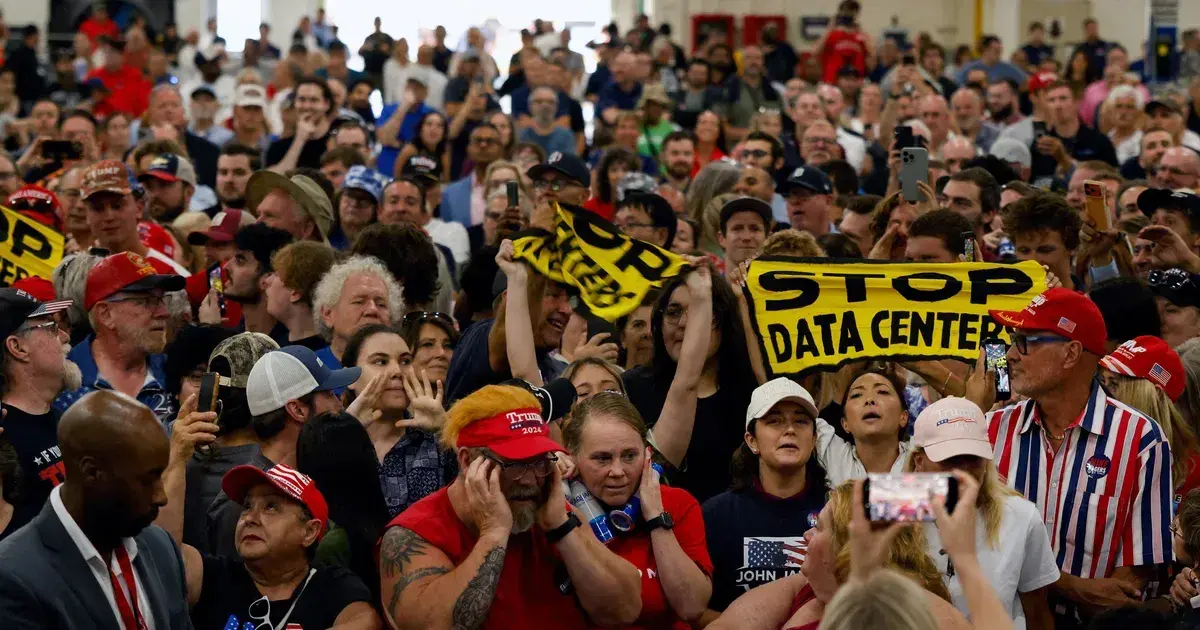
At the G20 Innovation Ministerial summit, about 100 students and local residents protested appearances by OpenAI CEO Sam Altman and US Commerce Secretary Howard Lutnick.2
Source: NYMag
Loudoun County Virginia Emerges as Data Center Alley Warning Sign
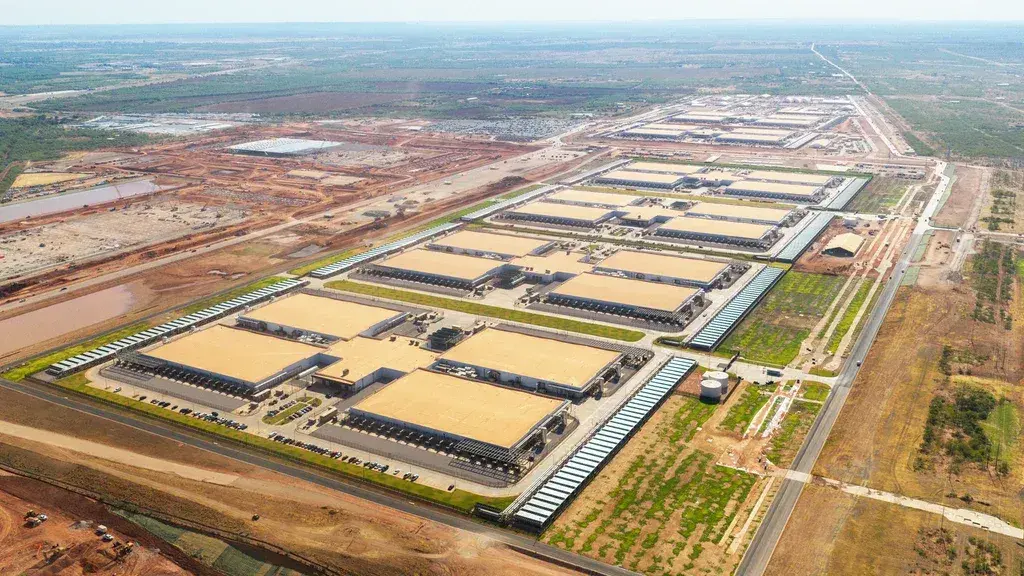
Loudoun County, Virginia, home to approximately 250 data centers in the world's densest concentration, offers a preview of what the AI data center boom means for communities.
3
Buddy Rizer, who helped transform the county into Data Center Alley starting in 2007, capitalized on infrastructure left behind from AOL's dot-com era collapse. Estimates suggest that as much as 70% of the planet's internet traffic passes through Loudoun County.3
While data centers generated $35 million more in tax revenue than the county's operational budget in 2024 and enabled construction of 22 new schools in 15 years, residents now report constant humming from facilities, transmission towers looming over green spaces, and surprise utility notifications about new infrastructure.3
The real property tax rate declined from $1.29 to 80 cents per $100 in assessed value since 2008.3
Source: Inc.
Related Stories

Economic Benefits of Data Center Construction Prove Limited and Localized
Research on the environmental and economic impacts of data center construction reveals a more complex picture than industry claims suggest. A July study from Georgia Tech found that data center developments increase local employment by 3.5%, total wages by 5%, business establishments by 4.7%, and median household income by 1.9%.
5
However, these benefits mainly appear in metropolitan areas, with rural areas seeing "negligible" gains.5
The study also found electricity prices rise an average of 5% after data center construction.5
Brookings research indicates that new data center construction creates only 100 to 200 permanent positions, while areas with data centers see home prices rising between 2% and 5% without wage increases.5
Job creation claims have been challenged by multiple studies showing employment opportunities remain minimal after construction completes.2
Governors and Lawmakers Implement Moratoriums on AI Infrastructure
State and federal officials have begun pausing data center construction to assess impacts. New York Governor Cathy Hochul signed a one-year moratorium on data center construction in July to study economic and environmental consequences.
5
Texas Governor Greg Abbott directed state agencies to cut data centers off from the Texas power grid until audits of power and water usage are completed, while Ohio's Republican Governor Mike DeWine made similar directives.5
Representative Alexandria Ocasio-Cortez introduced the Artificial Intelligence Data Center Moratorium Act, proposing a pause on data center construction and new AI products until the government reviews environmental impacts and effects on job creation.5
The Trump administration obtained voluntary ratepayer protection pledges from major tech companies, but enforcement mechanisms remain unclear.2
US Commerce Secretary Howard Lutnick argued at the G20 that existing laws are sufficient to address AI issues and additional regulation would be burdensome, emphasizing growth over new rules.2
Energy consumption constraints on the overtaxed electrical grid, combined with generative AI's massive compute requirements and communities opposing data centers, could incentivize tech companies to optimize systems for lower energy use.2
References
Summarized by

Navi
[1]
[3]
Related Stories
AI Data Centers Spark Bipartisan Political Backlash as Midterm Elections Loom
20 Aug 2026•Policy and Regulation

AI Data Centers Face Growing Backlash as Americans Worry About Energy Costs and Environment
14 Mar 2026•Policy and Regulation

Trump Defends Data Centers in Ohio as AI Industry Becomes Political Flashpoint
04 Oct 2026•Policy and Regulation
Recent Highlights



Recent Highlights
Today's Top Stories







Don’t drown in AI news. We cut through the noise - filtering, ranking and summarizing the most important AI news, breakthroughs and research daily. Follow topics that matter to you and stay ahead.


