Trump deploys Pentagon AI program to set critical minerals pricing across global trade bloc


4 Sources
[1]
Exclusive: Trump eyes Pentagon AI program for trade block's minerals pricing, sources say
Feb 24 (Reuters) - The Trump administration plans to use a Pentagon-created artificial intelligence program to help set reference prices for critical minerals as it works to build a global metals trading zone, three sources with direct knowledge of the effort told Reuters. Vice President JD Vance
[2]
Trump Intends To Use AI For Pricing Critical Minerals - VanEck Rare Earth and Strategic Metals ETF (ARCA:REMX), Sprott Critical Materials ETF (NASDAQ:SETM)
President Donald Trump's State of the Union address made no mention of critical minerals. However, in the background, his administration is reportedly advancing what could become one of the most consequential industrial policy experiments in decades. People familiar with the matter told Reuters
[3]
Trump eyes Pentagon AI program for trade block's minerals pricing
The Trump administration plans to use a Pentagon-created artificial intelligence program to help set reference prices for critical minerals as it works to build a global metals trading zone, three sources with direct knowledge of the effort told Reuters. Vice President JD Vance earlier this month
[4]
Trump eyes Pentagon AI program for trade block's minerals pricing, sources say
Feb 24 (Reuters) - The Trump administration plans to use a Pentagon-created artificial intelligence program to help set reference prices for critical minerals as it works to build a global metals trading zone, three sources with direct knowledge of the effort told Reuters. Vice President JD Vance
Share
Copy Link
The Trump administration is tapping a Pentagon-developed AI system to establish reference prices for critical minerals like germanium and antimony. The move aims to counter alleged Chinese market manipulation by creating pricing certainty for Western miners across a proposed trade bloc of more than 50 countries, backed by adjustable tariffs.
Trump Unveils AI-Driven Approach to Critical Minerals Pricing
The Trump administration is preparing to deploy a Pentagon-created AI program to establish reference prices for critical minerals as part of an ambitious plan to build a global metals trading zone. According to three sources with direct knowledge of the effort, the U.S. Department of Defense's Open Price Exploration for National Security (OPEN) AI metals program will be used to set these benchmark prices
1
. Vice President JD Vance proposed earlier this month that the U.S. and more than 50 other countries impose reference prices for critical minerals at each stage of production, backed by adjustable tariffs to uphold pricing integrity1
. This initiative sheds light on how the administration intends to reshape market dynamics, even as skepticism persists about whether AI technology can fundamentally alter how critical minerals are bought and sold.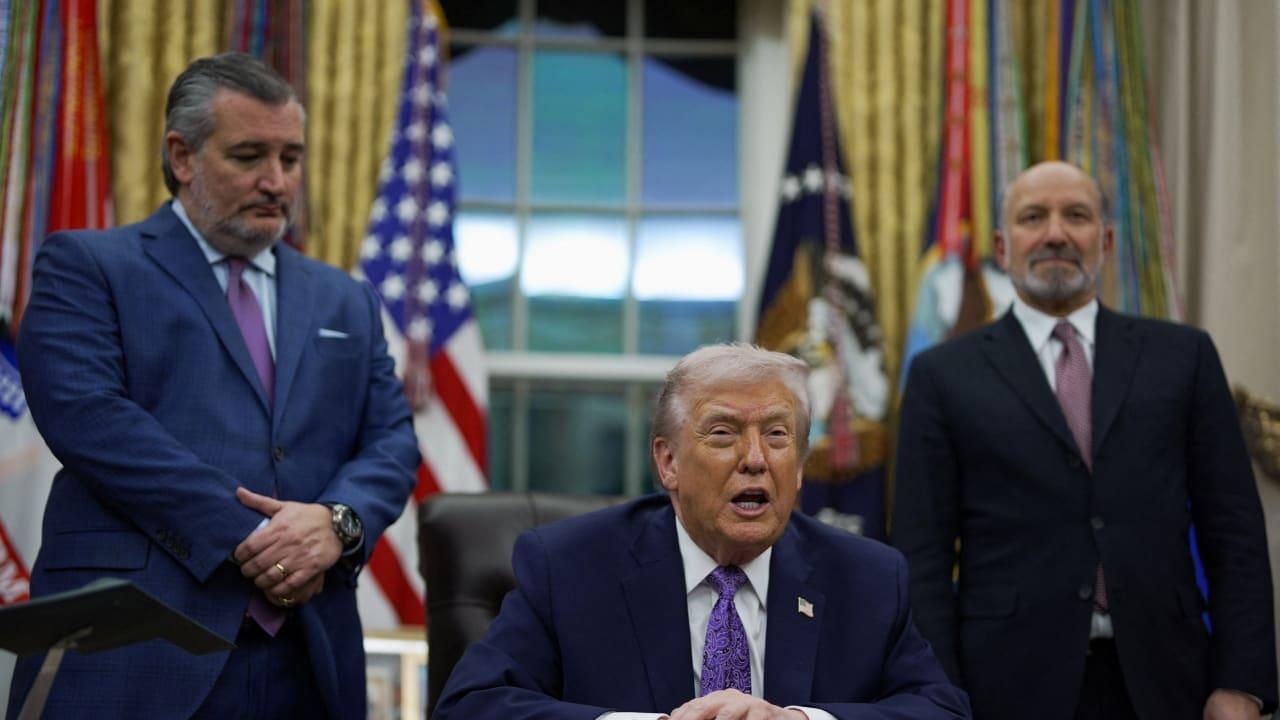
Source: Jerusalem Post
Pentagon's OPEN Program Targets Four Strategic Metals
Launched in 2023 by the Pentagon's Defense Advanced Research Projects Agency (DARPA), the OPEN program calculates what a metal should be priced at by factoring in labor, processing, and other production costs while attempting to strip out alleged market manipulation by China
1
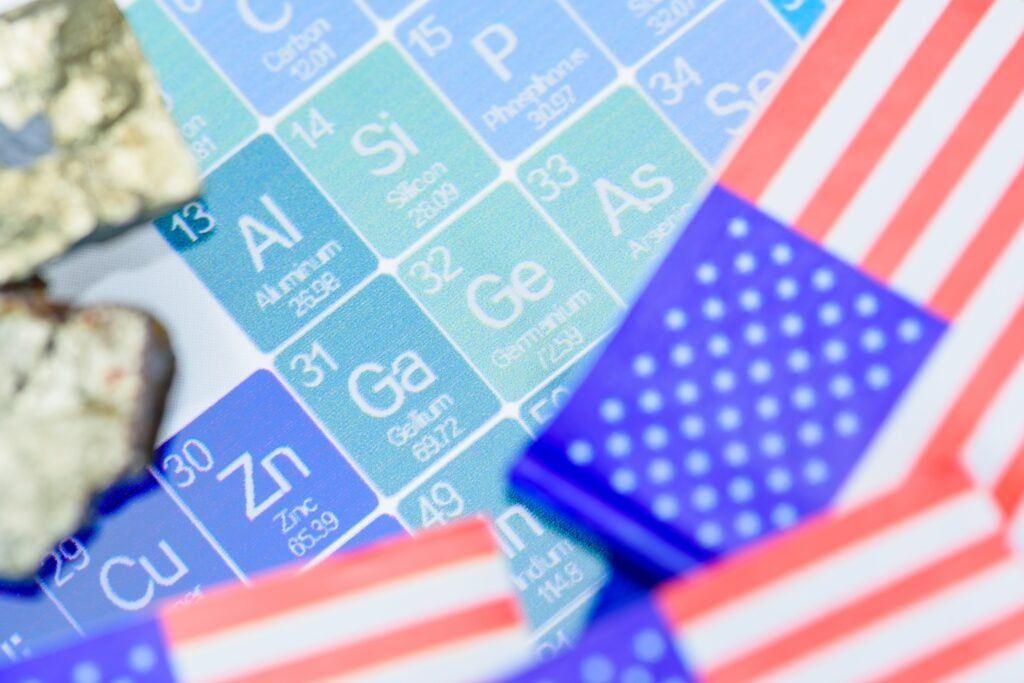
. Trump officials are initially focusing the AI pricing model on at least four critical minerals: germanium, gallium, antimony, and tungsten, before expanding to others1
. S&P Global and Finnish data firm Rovjok will supply data and technical assistance for the effort1
. The program, which is being transferred to the control of the non-profit Critical Minerals Forum (CMF) next year, has focused from its inception on metals that are thinly traded or not traded at all1
.
Source: Benzinga
Countering Chinese Dominance in Strategic Materials
China is the world's largest miner or processor of many minerals considered critical by the U.S. government. Beijing has used that advantage in recent years to produce minerals at a loss and dampen market prices, forcing Western rivals to close operations
1
. The AI model aims to promote metals supply deals between Western miners and manufacturers by providing both sides with greater pricing certainty1
. It can be difficult for manufacturers using these minerals to gauge whether Chinese prices reflect traditional supply-and-demand dynamics or represent strategic market distortions2
. Chinese officials have long maintained that Beijing manages its exports of minerals in accordance with World Trade Organization rules1
.
Source: Market Screener
Related Stories

Tariffs as Enforcement Mechanism for Price Stability
The plan represents a shift away from direct subsidies or price guarantees for individual companies. Instead, tariffs would serve as the enforcement mechanism to counter alleged market manipulation by China
2
. Imports priced below the reference level could face duties, effectively pushing them toward the AI-calculated benchmark. An antimony price set by the AI program and backed by the trade block could boost profits for companies developing U.S. antimony projects, though it could raise prices for automakers who use antimony in adhesives and other products1
. The move comes as the Trump administration steps away from guaranteeing price floors for individual companies due to lack of congressional funding1
.Building an Investment Architecture Amid Uncertainty
Eric Robinson, a special counsel with Baker Botts law firm and former managing director of the Pentagon's Office of Strategic Capital, explained that "the administration is still, in good faith, trying to respond to industry demand signals by creating an architecture of reliable investment, but it doesn't have the one tool that everybody kind of wanted them to use"
1
. Several critical questions remain unanswered. It's unclear whether the AI-derived prices would oscillate or be fixed, nor whether they would be set between the U.S. and individual allies or applied uniformly across the trading block3
. The timeline for implementation is also uncertain, as the Trump administration must first convince dozens of allies to join the bloc to guarantee effectiveness1
. Canada's Ministry of Energy and Natural Resources stated it was "working to comprehensively understand and analyze" the minerals trade block proposal1
. Former U.S. Department of Energy Critical Minerals Lead Nathaniel Horadam warned that there are no guarantees, as multiple producers would still compete on price2
. The minerals plan advances as the administration rapidly deploys AI tools elsewhere, including collaborations with OpenAI, Anthropic, and Alphabet's Google for generative AI in battlefield settings1
.References
Summarized by

Navi
[1]
[3]
Related Stories
Pentagon's AI Metals Program Goes Private to Boost Western Critical Mineral Supply
01 May 2025•Business and Economy
Trump Administration Prepares Executive Orders to Boost AI Infrastructure and Energy Supply
27 Jun 2025•Technology

Trump's $500B AI Investment Plan Faces Challenge from China's DeepSeek
28 Jan 2025•Technology

Recent Highlights
1
Microsoft and Nvidia Launch Surface Laptop Ultra: A $2,599 AI-Ready PC With RTX Spark Chip
Technology

2
Meta Muse AI Agent Surges to 6.6M Downloads Despite Privacy and Security Controversies
Technology

3
Scientists Build AI Model That Reconstructs Images From Brain Scans in Record Time
Science and Research

Recent Highlights
Today's Top Stories








Don’t drown in AI news. We cut through the noise - filtering, ranking and summarizing the most important AI news, breakthroughs and research daily. Follow topics that matter to you and stay ahead.


