Trump Administration Relocates AI Testing Officials to White House Amid Coordination Challenges


2 Sources
[1]
Trump Administration Plans to Move AI Testing Officials to White House: Report - Meta Platforms (NASDAQ:M
Trump White House Wants Tighter Grip on AI Model Testing, Reportedly Moves Officials From Commerce Department President Donald Trump's administration is reportedly planning to move three senior officials from the Commerce Department's Center for Advancing Innovation and Standards for Super
[2]
US AI testing agency officials to move to White House, The Information reports
Oct 12 (Reuters) - President Donald Trump's administration is planning to move three senior officials from the Center for Advancing Innovation and Standards for Super Intelligence (CAISSI) to the White House, news website The Information reported on Monday, citing a White House official. The White
Share
Copy Link
The Trump administration is moving three senior officials from CAISSI to the White House following coordination problems with the Commerce Department. The shift consolidates AI governance under Michael Kratsios and Sean Cairncross as the administration tightens control over frontier AI systems testing.
Trump Administration Consolidates AI Governance
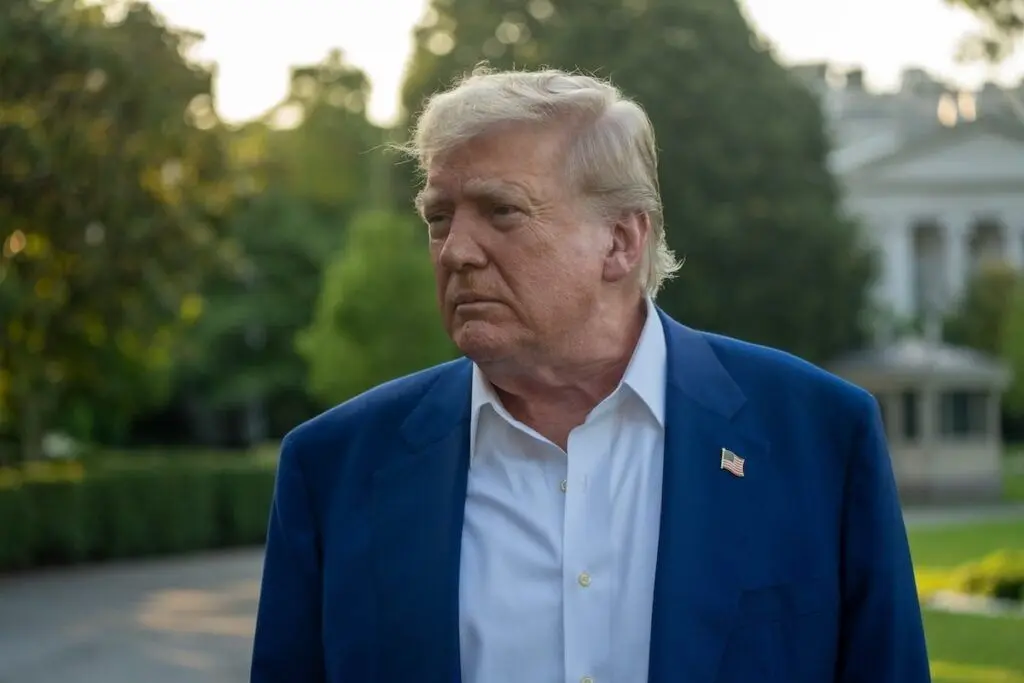
The Trump administration is relocating three senior officials from the Center for Advancing Innovation and Standards for Super Intelligence (CAISSI) to the White House, marking a significant shift in how the US AI testing agency operates
1
2
. This move follows coordination problems with the Commerce Department and signals the administration's intent to consolidate AI governance more tightly within executive leadership. The three officials, whose names remain undisclosed, will report directly to Michael Kratsios, director of the Office of Science and Technology Policy, and National Cyber Director Sean Cairncross1
2
.
Source: Benzinga
Coordination Challenges Drive Organizational Shift
A White House official explained that coordination problems with the Commerce Department highlighted the need to bring CAISSI's leadership closer to the White House's artificial intelligence decision-making process
1
. The decision to relocate officials to White House comes six months after Commerce Secretary Howard Lutnick invited Kratsios and Cairncross to co-manage the center1
2
. This arrangement apparently created operational friction that the administration now seeks to resolve by centralizing control. The move to improve coordination in AI model testing reflects broader concerns about maintaining streamlined oversight as frontier AI systems grow more powerful and complex.CAISSI's Critical Role in Frontier AI Systems
CAISSI evaluates advanced AI models for safety and capabilities, playing a central role in the administration's framework for testing frontier AI systems before deployment
1
2
. The Commerce Department unit serves as a gatekeeper for AI model testing, assessing whether cutting-edge systems meet safety standards before companies release them publicly. This function has grown increasingly important as major tech firms race to develop more capable AI systems. The Trump administration's decision to move CAISSI leadership suggests the White House wants more direct influence over which AI models receive approval and how testing protocols evolve.
Source: Market Screener
Related Stories

White House Tightens AI Leadership Structure
Earlier this month, the Trump administration named Director of National Intelligence Jay Clayton as the administration's AI czar, tasking him with coordinating federal efforts to maintain US leadership in the technology
1
2
. Clayton's appointment, combined with the CAISSI reorganization, creates a more centralized command structure for AI governance. Last week, Trump declared that the White House considers anyone using the term 'artificial intelligence' instead of 'super intelligence' an "enemy,"1
signaling the administration's preference for terminology that emphasizes the transformative potential of advanced systems.Industry Implications and Voluntary Safety Pact
Last month, Trump released the White House Accord on Super Intelligence, a voluntary safety pact signed by executives from leading AI companies including Anthropic, OpenAI, Meta Platforms, xAI, Alphabet, and Nvidia
1
. The accord calls for independent audits, stronger internal controls, and board-level oversight of frontier AI models. With CAISSI officials now reporting directly to White House leadership, companies participating in this voluntary safety pact may face more direct scrutiny and faster policy responses. The reorganization positions the administration to respond more quickly to safety concerns or competitive threats as AI capabilities advance. Industry observers will watch whether this centralized approach accelerates or complicates the testing approval process for companies developing next-generation AI systems.References
Summarized by

Navi
[1]
Related Stories
Trump administration halts AI testing unit's public reports as security concerns reshape oversight
10 Jun 2026•Policy and Regulation
Trump administration enforces AI regulation through ad hoc interventions despite anti-regulatory stance
18 Jun 2026•Policy and Regulation

Trump's AI executive order creates voluntary framework as MAGA base pushes for tighter oversight
18 May 2026•Policy and Regulation
Recent Highlights



Recent Highlights
Today's Top Stories









Don’t drown in AI news. We cut through the noise - filtering, ranking and summarizing the most important AI news, breakthroughs and research daily. Follow topics that matter to you and stay ahead.


