Google, Microsoft, and xAI Agree to Government Review of AI Models Before Public Release


39 Sources
[1]
Google, Microsoft, and xAI will allow the US government to review their new AI models
Google DeepMind, Microsoft, and Elon Musk's xAI have agreed to allow the US government to review new AI models before they're released to the public. In an announcement on Tuesday, the Commerce Department's Center for AI Standards and Innovation (CAISI) says it will work with the AI companies to
[2]
Google, Microsoft, and xAI agree to let US government test AI models before public release -- OpenAI and Anthropic also on board after renegotiating deals with Washington
All five major frontier labs now give the Commerce Department early access to unreleased AI systems. Google, Microsoft, and Elon Musk's xAI agreed today to give the U.S. Commerce Department's Center for AI Standards and Innovation (CAISI) access to their AI models before public release, Bloomberg
[3]
AI labs should pass safety review to get US government contracts, group says
May 11 (Reuters) - The Trump administration should screen cutting-edge artificial intelligence models for security threats before they are publicly released and withhold lucrative government contracts from those that fail review, an advocacy group told U.S. officials on Monday. The White House is
[4]
Google, xAI and Microsoft agree to US national security reviews of new AI models
The US will examine the national security implications of new AI models from Google's DeepMind, Microsoft and xAI before they are released to the public, as officials seek greater oversight of the powerful technology. The Center for AI Standards and Innovation, which sits under the commerce
[5]
Trump administration considers mandatory pre-release vetting of AI models -- Anthropic's Mythos cited as catalyst for policy reversal
The company that wanted AI regulation under Biden may have gotten its wish, just not on its own terms. The Trump administration is said to be discussing an executive order that would establish a government review process for new AI models before they're released to the public, The New York Times
[6]

Google, Microsoft and xAI agree to provide US government with early AI model access - Engadget
A day after reporting from The New York Times said the Trump administration was considering whether to tighten its oversight of the AI industry, Google, Microsoft and xAI have signed agreements to provide the federal government with early access to their AI systems. According to the The Wall Street
[7]

Trump admin. moves further into AI oversight, will test Google, Microsoft and xAI models
CAISI, which sits under the U.S. Department of Commerce, will "conduct pre-deployment evaluations and targeted research to better assess frontier AI capabilities and advance the state of AI security," according to a release. The announcement builds on CAISI's previous partnerships with OpenAI and
[8]

US to safety test new AI models from Google, Microsoft, xAI
New artificial intelligence (AI) tools and capabilities from Google, Microsoft and xAI will now be tested by the US Department of Commerce before they are released to the public. The tech firms have agreed to voluntarily submit their models for testing through Commerce's Center for AI Standards
[9]

White House Considers Vetting A.I. Models Before They Are Released
Tripp Mickle and Sheera Frenkel reported from San Francisco, and Julian Barnes and Dustin Volz from Washington. President Trump, who promoted a hands-off approach to artificial intelligence and gave Silicon Valley free rein to roll out the technology, is considering the introduction of government
[10]

Google, Microsoft, and xAI agree to pre-release government AI model evaluations as Mythos crisis forces oversight expansion
The Mythos crisis forced the United States government to confront a question it had been avoiding: what happens when an AI model is powerful enough to threaten national security and the government has no formal mechanism to evaluate it before the public gets access? On Tuesday, the Commerce
[11]

Trump Reportedly Considering Executive Order Aimed at Vetting New AI Models
According to an anonymously sourced story in the New York Times, the president is considering a new oversight scheme for the AI industry. Apparently this comes from people “briefed on the conversations†held at meetings last week between Anthropic, Google, and OpenAI executives, and members of
[12]
What we know about US stress tests of Google, xAI and Microsoft AI models
WASHINGTON, May 5 (Reuters) - The Trump administration on Tuesday announced it had expanded a program to give U.S. government scientists access to unreleased artificial intelligence models to conduct risk assessments to include Google's DeepMind, xAI and Microsoft. ChatGPT maker OpenAI and Claude
[13]

Pentagon secures early AI model access from Microsoft, Google and xAI
The U.S. government is tightening its grip on advanced artificial intelligence, moving earlier in the development cycle to assess risks before public release. In a new set of agreements, Microsoft, Google, and xAI will grant federal officials early access to their latest AI models. The decision
[14]
The White House is considering tighter regulation of new AI models - Engadget
The New York Times reports that the White House may create a new working group to oversee AI development. A federal review of new AI models ahead of their public release is being considered as a possible power for that committee, according to the publication's sources. No clear approach has been
[15]

Why some AI tools are being banned by the US government -- and what it means for you
Should AI models be vetted before release? The White House thinks it might be time The era of "move fast and break things" in AI may be coming to an abrupt halt. According to a recent New York Times report, the Trump administration is reportedly preparing a landmark Executive Order that would
[16]

Major AI players agree to give US government early AI model access
Some of the biggest AI companies have just agreed to provide the U.S. government with early access to their new AI models. And this went down just one day after a report from the New York Times detailed how the Trump administration was looking into government oversight of new AI models. According
[17]

US announces deals with tech firms for national security review of AI models before release
Agreements with Microsoft, Google DeepMind and xAI focus largely on recognizing cybersecurity, biosecurity and chemical weapons risks The US government has struck deals with Google DeepMind, Microsoft and xAI to review early versions of their new AI models before they are released to the
[18]

U.S. ramps up frontier AI testing as White House pivots toward safety
Why it matters: As AI systems grow more powerful and potentially risky, officials want to understand their security implications before they hit the market, even in a Trump administration focused on accelerating AI innovation. * It marks a sharp change from the White House's approach of
[19]
Microsoft, xAI and Google will share AI models with US gov't for security reviews
May 5 (Reuters) - Microsoft (MSFT.O), opens new tab, Alphabet-owned (GOOGL.O), opens new tab Google and Elon Musk's xAI will give the U.S. government early access to new artificial intelligence models before their public release to allow checks for national security risks under a new deal. The
[20]

US Government Will Vet Pre-Release AI Models From Google, xAI and Microsoft - Decrypt
Anthropic's new Claude Mythos model, which excels at finding cybersecurity vulnerabilities, sparked government concern. Some of the biggest players in the AI world have agreed to give the U.S. government early access to their frontier models to test them ahead of public release, with the
[21]

Tech giants agree to US government AI testing programme
The US Centre for AI Standards and Innovation will evaluate models for cybersecurity, biosecurity and chemical weapons-related risks before they are released to the public. The United States government will now be testing new artificial intelligence (AI) tools before they are released to the
[22]
Trump considering federal AI model oversight
White House officials are exploring official government oversight of new AI models, according to the New York Times. U.S. officials, speaking on the condition of anonymity, told the publication that the Trump administration is forming an AI working group composed of tech leaders and government
[23]
New frontier of AI forces Trump's heavy hand
Why it matters: AI has crossed a threshold that no administration -- not even one ideologically committed to staying out of its way -- can afford to ignore. * It's a sea change in both Silicon Valley and Washington, accelerated by a new class of models that can hunt down cybersecurity flaws with
[24]

Google, Microsoft and xAI agree to allow government safety checks of their AI models prior to release
Google, Microsoft and xAI agree to allow government safety checks of their AI models prior to release Google LLC, Microsoft Corp. and xAI have agreed to share unreleased versions of their artificial intelligence models with the U.S. Department of Commerce to ensure the technologies do not pose a
[25]
White house considers vetting AI Models before they are released, NYT reports
May 4 (Reuters) - U.S. President Donald Trump is considering the introduction of government oversight over new models of artificial intelligence, the New York Times reported on Monday, citing officials briefed on the deliberations. The U.S. government is discussing an executive order to create
[26]

White House explores oversight rules for new AI models
White House officials are exploring government oversight of new AI models, according to the New York Times. U.S. officials, speaking on the condition of anonymity, stated that the Trump administration is forming an AI working group composed of tech leaders and government representatives. This group
[27]

AI Labs Should Pass Safety Review to Get US Government Contracts, Group Says
May 11 (Reuters) - The Trump administration should screen cutting-edge artificial intelligence models for security threats before they are publicly released and withhold lucrative government contracts from those that fail review, an advocacy group told U.S. officials on Monday. The White
[28]
Trump administration considering safety review for new AI models
Why it matters: In a post-Mythos world, the Trump administration appears to be re-evaluating its hard line against the AI safety and security measures it once shrugged off. Driving the news: The White House's Office of the National Cyber Director (ONCD) hosted two meetings last week -- one with
[29]

Microsoft, Google, xAI giving government early access to AI models for review
Three major artificial intelligence firms have agreed to share their models with the federal government to be tested ahead of deployment, the National Institute of Standards and Technology (NIST) announced Tuesday. As part of the agreements, Google DeepMind, Microsoft and xAI will give their
[30]

Microsoft, xAI and Google will share AI models with US government for security reviews
Major tech firms Microsoft, Google, and xAI are partnering with the US government. They will grant early access to new artificial intelligence models. This allows for checks on national security risks before public release. The Center for AI Standards and Innovation will conduct evaluations. This
[31]
Factbox-What We Know About US Stress Tests of Google, XAI and Microsoft AI Models
By Courtney Rozen and Jody Godoy WASHINGTON, May 5 (Reuters) - The Trump administration on Tuesday announced it had expanded a program to give U.S. government scientists access to unreleased artificial intelligence models to conduct risk assessments to include Google's DeepMind, xAI and
[32]

Microsoft, Google And xAI Collaborate With US Government On Early AI Model Risk Evaluations - Amazon.com
The Center for AI Standards and Innovation (CAISI) under the Department of Commerce announced the agreement on Tuesday. The deal would allow the center to examine and research the AI models to determine their capabilities and potential security risks before their public deployment. The body has
[33]
White House mulls order directing government executives to review AI models before public review. What does it mean for Aritificial Intelligence?
Donald Trump had positioned himself as a champion of unfettered AI development, rolling back Biden-era safety evaluation requirements and casting regulation as a threat to US competitiveness with China. President Donald Trump's administration is considering requiring US government oversight of
[34]

Tech Giants Open Frontier AI Models to Federal National Security Tests | PYMNTS.com
They join Anthropic and OpenAI, which signed agreements with CAISI's predecessor, the U.S. Artificial Intelligence Safety Institute, in August 2024 and later renegotiated those agreements to match CAISI's directives, according to the release. CAISI is the government's primary point of contact for
[35]

Microsoft, Google, xAI agree to share AI models with White House for security reviews
Microsoft, Google's DeepMind and Elon Musk's xAI have agreed to share early versions of their powerful AI models with the US government for pre-clearances and security reviews, the Department of Commerce said Tuesday. The department's Center for AI Standards and Innovation said it will "conduct
[36]

AI labs should pass safety review to get US government contracts, group says
May 11 (Reuters) - The Trump administration should screen cutting-edge artificial intelligence models for security threats before they are publicly released and withhold lucrative government contracts from those that fail review, an advocacy group told U.S. officials on Monday. The White House is
[37]
What we know about US stress tests of Google, xAI and Microsoft AI models
WASHINGTON, May 5 (Reuters) - The Trump administration on Tuesday announced it had expanded a program to give U.S. government scientists access to unreleased artificial intelligence models to conduct risk assessments to include Google's DeepMind, xAI and Microsoft. ChatGPT maker OpenAI and Claude
[38]
Microsoft, Google and xAI to give US government early access to AI models for security checks
May 5 (Reuters) - Microsoft, Alphabet-owned Google and Elon Musk's xAI will give the U.S. government early access to new artificial intelligence models before their public release to allow checks for national security risks under a new deal. The Center for AI Standards and Innovation at the
[39]
White House considers government reviews for AI models, NYT reports
WASHINGTON, May 4 (Reuters) - U.S. President Donald Trump is considering the introduction of government oversight over new models of artificial intelligence, the New York Times reported on Monday, citing officials briefed on the deliberations. The U.S. government is discussing an executive order
Share
Copy Link
All five major US AI labs now submit their models to government security evaluations before launch. The Commerce Department's Center for AI Standards and Innovation will assess frontier AI capabilities for cybersecurity, biosecurity, and chemical weapons risks as the Trump administration considers making these reviews mandatory.
Major AI Labs Submit to Pre-Release Security Evaluations
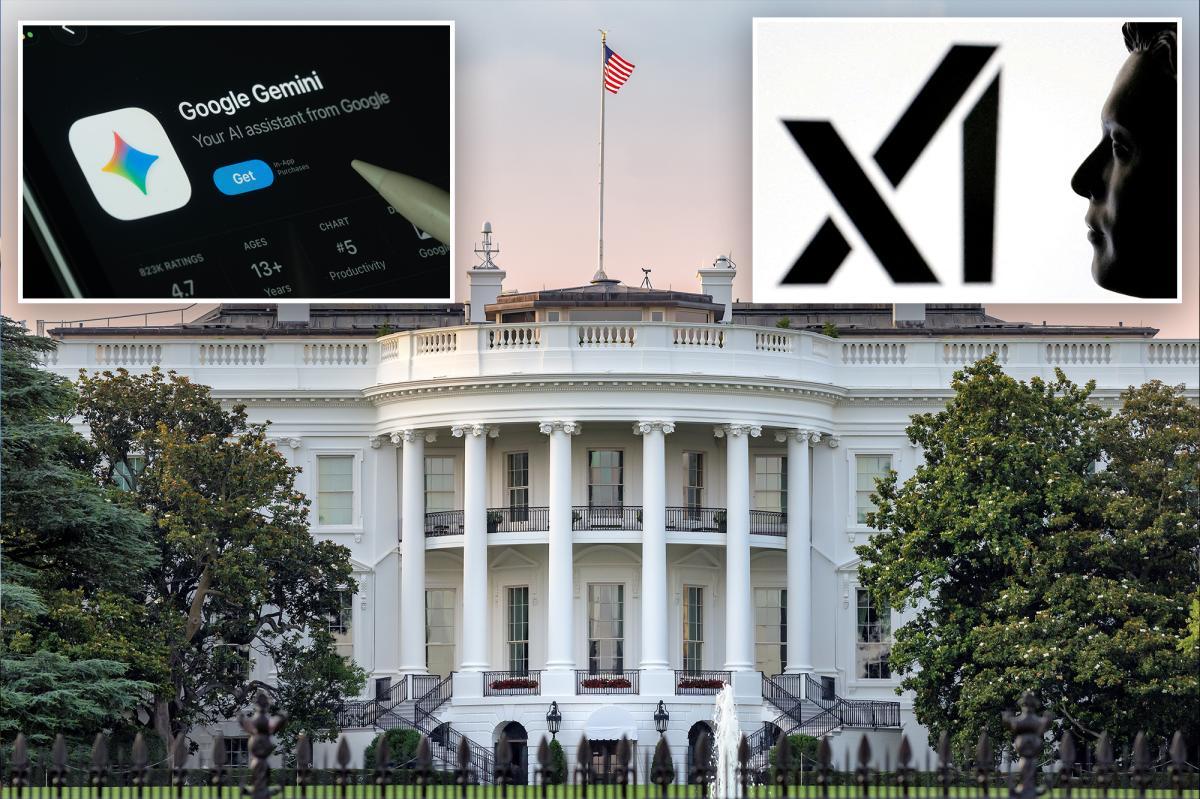
Google DeepMind, Microsoft, and Elon Musk's xAI have agreed to allow the US government to review new AI models before they're released to the public, marking a significant expansion of federal oversight of advanced AI models
1
. The Commerce Department's Center for AI Standards and Innovation (CAISI) announced Tuesday it will work with these companies to perform pre-deployment evaluations and targeted research to better assess frontier AI capabilities1
.
Source: New York Post
The agreements mean that every major US frontier AI lab now participates in voluntary pre-release government evaluations
2
. OpenAI and Anthropic, which had existing evaluation partnerships with CAISI dating to 2024, renegotiated their deals to align with priorities in Trump's AI Action Plan2
. CAISI has completed more than 40 model assessments to date, including evaluations of unreleased state-of-the-art systems2
.National Security Reviews Target Critical Vulnerabilities
The national security reviews focus on AI capabilities that may pose risks, with particular emphasis on cybersecurity, biosecurity, and chemical weapons
4
. Researchers at CAISI are routinely provided with access to new models with safeguards removed or reduced, enabling them to assess potential risks more thoroughly4
. The agency also leads assessments of AI systems developed in China and coordinates findings with the Pentagon, the White House, and intelligence agencies4
.
Source: PYMNTS
"Independent, rigorous measurement science is essential to understanding frontier AI and its national security implications," CAISI director Chris Fall said in the announcement. "These expanded industry collaborations help us scale our work in the public interest at a critical moment"
1
.Mandatory Safety Review Under Consideration
The voluntary agreements come as the Trump administration considers an executive order that would establish a mandatory government review process for AI models before public release
5
. The proposed order would create an "AI working group" of tech executives and government officials to develop oversight procedures, with White House staff reportedly briefing leaders from Anthropic, Google, and OpenAI on the plans last week5
.
Source: Euronews
The catalyst for this policy shift appears to be Anthropic's Mythos model, which the company described as capable of finding thousands of critical software vulnerabilities and too dangerous for public release
5
. Senior US officials have been concerned by early versions of Mythos, which has a much greater ability to identify and exploit cybersecurity vulnerabilities4
.Related Stories

Industry Faces Potential Contract Requirements
Americans for Responsible Innovation urged the Trump administration to develop methods to vet upcoming frontier models from larger developers and make passing the review a requirement for government contracts
3
. The advocacy group proposed that requirements should apply to companies spending $100 million or more annually on compute to train frontier models, or making at least $500 million in revenue annually from AI products and services3
.CAISI operates within NIST and was originally established in 2023 under Biden as the AI Safety Institute before being renamed by the Trump administration
2
. Despite the shift in rhetoric, the center's core function has remained largely the same2
. The center still lacks permanent legal standing, though some lawmakers have introduced draft legislation to codify it2
.References
Summarized by

Navi
Related Stories
Trump's AI executive order creates voluntary framework as MAGA base pushes for tighter oversight
18 May 2026•Policy and Regulation
Sam Altman urges US lawmakers to fund AI testing but reject mandatory model approvals
03 Jun 2026•Policy and Regulation
White House Completes Voluntary AI Safety Tests Framework Amid Rising Cybersecurity Concerns
29 Jul 2026•Policy and Regulation
Recent Highlights



Recent Highlights
Today's Top Stories






Don’t drown in AI news. We cut through the noise - filtering, ranking and summarizing the most important AI news, breakthroughs and research daily. Follow topics that matter to you and stay ahead.


