Trump Administration Renegotiates CHIPS Act Grants, Emphasizes AI Chip Production


2 Sources
[1]
Trump admin renegotiating Chips Act contracts, needles China over lowly advanced chip output
U.S. Commerce Secretary Howard Lutnick told the Senate Appropriations Committee that the White House is renegotiating with CHIPS Act recipients, hoping to push companies receiving the subsidies to pour more money into the American semiconductor projects. Taiwan Semiconductor Manufacturing Company
[2]
Trump renegotiating Biden-era Chips Act grants, Lutnick says
WASHINGTON (Reuters) -President Donald Trump's administration is renegotiating some of former President Joe Biden's grants to semiconductor firms, U.S. Commerce Secretary Howard Lutnick said at a hearing on Wednesday, suggesting some awards may be axed. Some of the Biden-era grants "just seemed
Share
Copy Link
The Trump administration is renegotiating CHIPS Act grants, pushing for increased investments from recipients. The move aims to benefit American taxpayers while maintaining a focus on domestic semiconductor and AI chip production.
Trump Administration Renegotiates CHIPS Act Grants
The Trump administration is actively renegotiating grants awarded under the CHIPS and Science Act, a $52.7 billion initiative signed by former President Biden in 2022 to boost semiconductor manufacturing and research in the United States. U.S. Commerce Secretary Howard Lutnick revealed this strategy during a Senate Appropriations Committee hearing, emphasizing the goal of securing better deals for American taxpayers
1
2
.Push for Increased Investments
The renegotiation efforts aim to encourage CHIPS Act recipients to invest more in American semiconductor projects. Taiwan Semiconductor Manufacturing Company (TSMC), which received $6.6 billion in grants, has set a precedent by announcing an additional $100 billion investment on top of its initial $65 billion commitment
1
. The administration appears to be using this as a benchmark for other companies.Lutnick stated, "Are we renegotiating? Absolutely, for the benefit of the American taxpayer, for sure. We're getting more value for the same dollars"
1
. He also hinted at potential consequences for companies unwilling to cooperate, suggesting that some might not receive their payouts.Reevaluation of Existing Deals
The Commerce Secretary indicated that some of the Biden-era grants seemed "overly generous" and are being reassessed. "All the deals are getting better, and the only deals that are not getting done are deals that should have never been done in the first place," Lutnick remarked
2
. This statement suggests that not all previously awarded grants may survive the renegotiation process.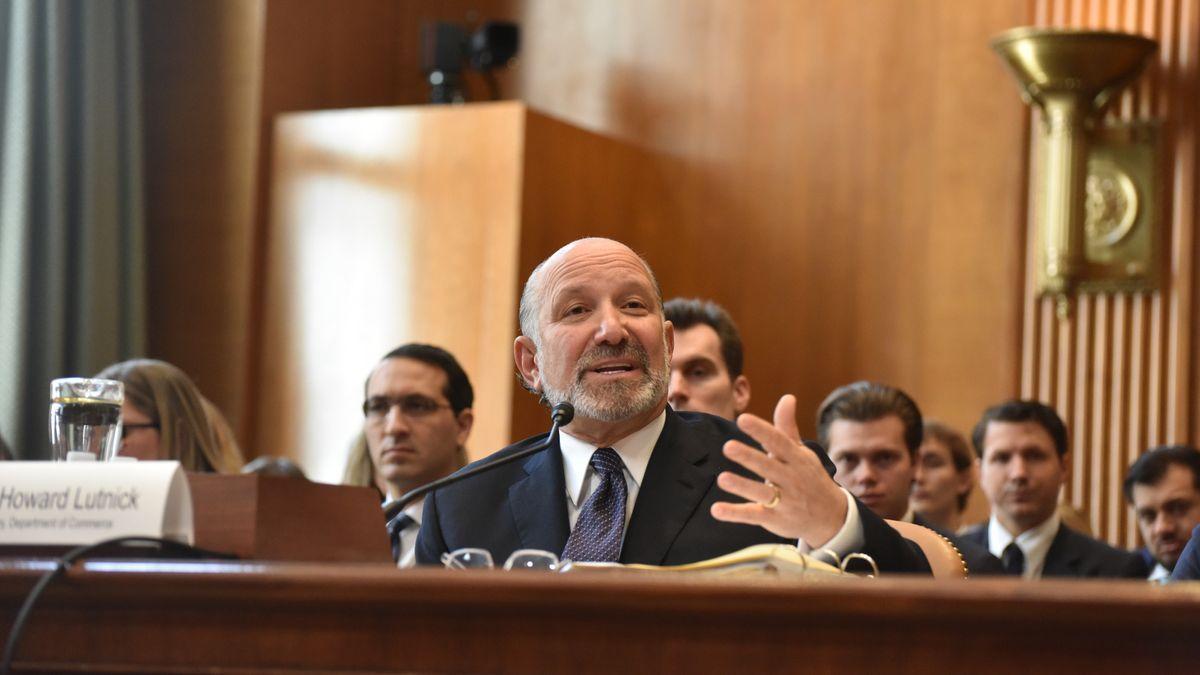
Source: Tom's Hardware
Focus on AI Chip Production and Global Competitiveness
During the hearing, Lutnick also addressed the effectiveness of U.S. bans on China's semiconductor industry. He highlighted China's limited capacity to produce advanced AI chips, estimating their output at around 200,000 units compared to the projected 2 million chips that Nvidia was expected to deliver last year
1
.The administration has expressed agreement with the goal of having more than 50% of global AI computing capacity in America. This stance comes in response to concerns about deals allowing other countries, such as the United Arab Emirates, to purchase advanced American AI chips
2
.
Source: Market Screener
Related Stories

CHIPS Act Background and Political Context
The CHIPS Act, initially a flagship project of the Biden administration, received bipartisan support for its potential to bring jobs to various states and congressional districts. However, President Trump has been critical of the Act, calling it "a horrible, horrible thing" and urging Congress to "get rid of the CHIPS Act"
1
.Despite this criticism, legislators appear hesitant to revoke the law due to its potential impact on U.S. chip market share. The current approach of renegotiating contracts seems to be a compromise, aiming to maximize benefits for American taxpayers while maintaining the Act's core objectives
1
2
.Impact on Semiconductor Companies
The renegotiation efforts affect major semiconductor companies that received grants under the CHIPS Act, including TSMC, Samsung, SK Hynix, Intel, and Micron. These companies had made significant commitments to expand their U.S. operations in exchange for government support
2
.As the renegotiation process unfolds, the semiconductor industry faces a period of uncertainty. Companies may need to reassess their investment plans and strategies to align with the new administration's expectations and ensure continued access to crucial government funding.
References
Summarized by

Navi
[1]
[2]
Related Stories
Trump Administration's Reversal on China Chip Ban Sparks Bipartisan Backlash
29 Jul 2025•Policy and Regulation

US Government Considers Equity Stakes in Chip Companies, Sparking Industry Debate
22 Aug 2025•Business and Economy

US Government Acquires 10% Stake in Intel: A Controversial Move Sparking Debate
23 Aug 2025•Business and Economy

Recent Highlights



Recent Highlights
Today's Top Stories



Don’t drown in AI news. We cut through the noise - filtering, ranking and summarizing the most important AI news, breakthroughs and research daily. Follow topics that matter to you and stay ahead.


