3 Sources
[1]
Trump posts AI video of Iran's Kharg in 'smithereens', no evidence of attack
1 second of 32 secondsVolume 0% Press shift question mark to access a list of keyboard shortcuts Keyboard ShortcutsEnabledDisabled Shortcuts Open/Close/ or ? Play/PauseSPACE Increase Volume↑ Decrease Volume↓ Seek Forward→ Seek Backward← Captions On/Offc Fullscreen/Exit Fullscreenf Mute/Unmutem Decrease Caption Size- Increase Caption Size+ or = Seek %0-9 Next Up Several people die after ferry capsizes off North Cyprus Subtitle Settings OffEnglish Font Color White Font Opacity 100% Font Size 100% Font Family knowledge-bold Character Edge None Edge Color Black Background Color Black Background Opacity 85 Window Color Black Window Opacity 0% Reset WhiteBlackRedGreenBlueYellowMagentaCyan 100%75%50%25% 200%175%150%125%100%75%50% ArialCourierGeorgiaImpactLucida ConsoleTahomaTimes New RomanTrebuchet MSVerdana NoneRaisedDepressedUniformDrop Shadow WhiteBlackRedGreenBlueYellowMagentaCyan WhiteBlackRedGreenBlueYellowMagentaCyan 100%75%50%25%0% WhiteBlackRedGreenBlueYellowMagentaCyan 100%75%50%25%0% Auto480p1080p720p576p540p480p360p288p180p 00:02 00:29 00:32 Iran releases purported footage of missile launches at US targets Aug 31 (Reuters) - U.S. President Donald Trump posted an AI-generated video clip that he said was Iran's oil hub Kharg Island being blown to smithereens, hours after the two countries traded attacks for the first time since July. It was not clear if Trump's post was a threat to Kharg Island or if an attack was taking place. Several hours after the post, there was no evidence Kharg had been attacked. The White House and the U.S. Defense Department did not immediately respond to Reuters requests for comment outside regular business hours. There was no immediate response to Trump's post on Iranian media. "Kharg Island being blown to smithereens!!! President DJT," Trump said on his Truth Social platform on Sunday, but gave no further details. Reuters confirmed that an accompanying video clip showing dramatic explosions was most likely synthetically-generated, using software that detects AI-manipulated imagery. Attacking Kharg, which handled 90% of Iran's oil exports before the war launched by U.S. and Israeli attacks on February 28, would severely disrupt its energy trade and put huge pressure on its economy. Iran was not seeking war but would respond decisively to any aggression, President Masoud Pezeshkian said. "We will never remain silent in the face of any aggression and will respond decisively to the aggressors," state media quoted him as saying on Monday ahead of a visit to Kyrgyzstan. It was not clear if he was speaking before or after Trump's post on Kharg Island. Iran responded to an earlier U.S. attack on rocket launchers on its island of Larak, about 660 km (410 miles) east of Kharg, with an assault on two U.S. bases in Jordan, Iranian media said, while the army said it struck the UAE's Al Minhad air base early on Monday. The Jordan strikes targeted U.S. bases used to launch and support the attack on Larak, the foreign ministry said in a statement. Iran's army said its drone attack on the United Arab Emirates' air base targeted sites where U.S. forces and helicopters were stationed, in response to the Larak casualties. The Revolutionary Guards used air defence missiles to shoot down a U.S. drone that crashed in Gulf waters, the Mehr news agency said on Monday, citing a statement from the elite force. A supertanker caught fire and was brought to a complete halt after being struck by two naval mines in the southern Strait of Hormuz, Iran state TV said, citing a Guards' statement. Sunday's return to hostilities followed weeks in which the Trump administration has stepped up efforts to punish Tehran and its business partners with costly economic sanctions, shifting away from military options. MORE SANCTIONS ON IRAN U.S. Treasury Secretary Scott Bessent told Reuters on Sunday new secondary sanctions were likely to be unveiled weekly in the effort to pressure Iran, with an initial focus on banks. "We're starting with the banks, and we're telling the banks it's not okay to have Iranian money and to aid the regime," Bessent said in an interview. After imposing penalties on the United Arab Emirates branches of Egypt's Banque Misr on Friday over alleged financial links to Iran, Bessent said the next step may be cutting off an institution entirely from the dollar-based financial system. "You're going to see a lot more of these every week," Bessent told Reuters, ahead of a meeting of Group of 20 finance leaders. In describing the first known U.S. military strikes since late July, a U.S. official said forces attacked the launchers on Larak, a small island in the Strait near the strategic port of Bandar Abbas overlooks shipping lanes at the mouth of the Gulf. "Islamic Revolutionary Guard Corps forces were observed preparing to launch rockets with sea mines into the Strait of Hormuz," the source added. In a statement, the U.S. Central Command said it took "limited, precise" action against minelaying forces of Iran's Revolutionary Guards that posed an "imminent threat" in the strait. It gave no details. Jordan's armed forces intercepted eight missiles that entered its airspace, state television said, while a Fox News reporter said on X nearly all incoming missiles had been intercepted. Amid threats to shipping, the number of visible commodity vessels transiting the Strait of Hormuz dropped to five a day over the weekend, shipping data showed. The actual number could be higher as some vessels have switched off automatic identification systems to evade attacks. The Guards said the supertanker on fire after being hit by mines had been attempting to pass through the waterway illegally, but gave no details of the vessel or crew, according to a statement cited by state television. It warned of the same fate for other ships infringing its mandatory regulations to transit the strait. Last week, Trump said all mines had been detonated or removed from the international waters of the strait and Iran had been warned that any vessel placing new mines would be destroyed. While Trump has repeatedly said the Strait of Hormuz is open, Iran's Revolutionary Guards' navy called those statements "an obvious lie", reiterating that it stayed closed to ships without Iranian permission. The waterway carried nearly a fifth of global crude oil and liquefied natural gas shipments before it was blockaded in the six-month-old Iran war. Iran is the third largest producer in the Organization of the Petroleum Exporting Countries. Reporting by David Lawder in Asheville, North Carolina, Phil Stewart and Kanishka Singh in Washington, Helen Coster in New York, and Yasmine Ghania and Hatem Maher in Cairo, Eman Abouhassira in Dubai; Writing by Clarence Fernandez; Editing by Paul Thomasch and Raju Gopalakrishnan Our Standards: The Thomson Reuters Trust Principles., opens new tab * Suggested Topics: * Middle East Phil Stewart Thomson Reuters Phil Stewart has reported from more than 60 countries, including Afghanistan, Ukraine, Syria, Iraq, Pakistan, Russia, Saudi Arabia, China and South Sudan. An award-winning Washington-based national security reporter, Phil has appeared on NPR, PBS NewsHour, Fox News and other programs and moderated national security events, including at the Reagan National Defense Forum and the German Marshall Fund. He is a recipient of the Edwin M. Hood Award for Diplomatic Correspondence and the Joe Galloway Award.
[2]
Trump Posts AI Video of Iran's Kharg in 'Smithereens', No Evidence of Attack
A vessel in the Strait of Hormuz visible near the beach of Bandar Abbas, Iran, August 27, 2026. Majid Asgaripour/WANA (West Asia News Agency) via REUTERS ATTENTION EDITORS - THIS PICTURE WAS PROVIDED BY A THIRD PARTY. ISRAEL OUT. NO COMMERCIAL OR EDITORIAL SALES IN ISRAEL. NO ACCESS FOR ISRAELI MEDIA. NO USE BBC PERSIAN. NO USE VOA PERSIAN. NO USE MANOTO. NO USE IRAN INTERNATIONAL. NO USE RADIO FARDA. DIGITAL: NO USE BBC PERSIAN. NO USE VOA PERSIAN. NO USE MANOTO. NO USE IRAN INTERNATIONAL. NO USE RADIO FARDA. By Phil Stewart and David Lawder Aug 31 (Reuters) - U.S. President Donald Trump posted an AI-generated video clip that he said was Iran's oil hub Kharg Island being blown to smithereens, hours after the two countries traded attacks for the first time since July. It was not clear if Trump's post was a threat to Kharg Island or if an attack was taking place. Several hours after the post, there was no evidence Kharg had been attacked. The White House and the U.S. Defense Department did not immediately respond to Reuters requests for comment outside regular business hours. There was no immediate response to Trump's post on Iranian media. "Kharg Island being blown to smithereens!!! President DJT," Trump said on his Truth Social platform on Sunday, but gave no further details. Reuters confirmed that an accompanying video clip showing dramatic explosions was most likely synthetically-generated, using software that detects AI-manipulated imagery. Attacking Kharg, which handled 90% of Iran's oil exports before the war launched by U.S. and Israeli attacks on February 28, would severely disrupt its energy trade and put huge pressure on its economy. Iran was not seeking war but would respond decisively to any aggression, President Masoud Pezeshkian said. "We will never remain silent in the face of any aggression and will respond decisively to the aggressors," state media quoted him as saying on Monday ahead of a visit to Kyrgyzstan. It was not clear if he was speaking before or after Trump's post on Kharg Island. Iran responded to an earlier U.S. attack on rocket launchers on its island of Larak, about 660 km (410 miles) east of Kharg, with an assault on two U.S. bases in Jordan, Iranian media said, while the army said it struck the UAE's Al Minhad air base early on Monday. The Jordan strikes targeted U.S. bases used to launch and support the attack on Larak, the foreign ministry said in a statement. Iran's army said its drone attack on the United Arab Emirates' air base targeted sites where U.S. forces and helicopters were stationed, in response to the Larak casualties. The Revolutionary Guards used air defence missiles to shoot down a U.S. drone that crashed in Gulf waters, the Mehr news agency said on Monday, citing a statement from the elite force. A supertanker caught fire and was brought to a complete halt after being struck by two naval mines in the southern Strait of Hormuz, Iran state TV said, citing a Guards' statement. Sunday's return to hostilities followed weeks in which the Trump administration has stepped up efforts to punish Tehran and its business partners with costly economic sanctions, shifting away from military options. MORE SANCTIONS ON IRAN U.S. Treasury Secretary Scott Bessent told Reuters on Sunday new secondary sanctions were likely to be unveiled weekly in the effort to pressure Iran, with an initial focus on banks. "We're starting with the banks, and we're telling the banks it's not okay to have Iranian money and to aid the regime," Bessent said in an interview. After imposing penalties on the United Arab Emirates branches of Egypt's Banque Misr on Friday over alleged financial links to Iran, Bessent said the next step may be cutting off an institution entirely from the dollar-based financial system. "You're going to see a lot more of these every week," Bessent told Reuters, ahead of a meeting of Group of 20 finance leaders. In describing the first known U.S. military strikes since late July, a U.S. official said forces attacked the launchers on Larak, a small island in the Strait near the strategic port of Bandar Abbas overlooks shipping lanes at the mouth of the Gulf. "Islamic Revolutionary Guard Corps forces were observed preparing to launch rockets with sea mines into the Strait of Hormuz," the source added. In a statement, the U.S. Central Command said it took "limited, precise" action against minelaying forces of Iran's Revolutionary Guards that posed an "imminent threat" in the strait. It gave no details. Jordan's armed forces intercepted eight missiles that entered its airspace, state television said, while a Fox News reporter said on X nearly all incoming missiles had been intercepted. Amid threats to shipping, the number of visible commodity vessels transiting the Strait of Hormuz dropped to five a day over the weekend, shipping data showed. The actual number could be higher as some vessels have switched off automatic identification systems to evade attacks. The Guards said the supertanker on fire after being hit by mines had been attempting to pass through the waterway illegally, but gave no details of the vessel or crew, according to a statement cited by state television. It warned of the same fate for other ships infringing its mandatory regulations to transit the strait. Last week, Trump said all mines had been detonated or removed from the international waters of the strait and Iran had been warned that any vessel placing new mines would be destroyed. While Trump has repeatedly said the Strait of Hormuz is open, Iran's Revolutionary Guards' navy called those statements "an obvious lie", reiterating that it stayed closed to ships without Iranian permission. The waterway carried nearly a fifth of global crude oil and liquefied natural gas shipments before it was blockaded in the six-month-old Iran war. Iran is the third largest producer in the Organization of the Petroleum Exporting Countries. (Reporting by David Lawder in Asheville, North Carolina, Phil Stewart and Kanishka Singh in Washington, Helen Coster in New York, and Yasmine Ghania and Hatem Maher in Cairo, Eman Abouhassira in Dubai; Writing by Clarence Fernandez; Editing by Paul Thomasch and Raju Gopalakrishnan)
[3]
Trump posts AI video of Iran's Kharg in 'smithereens', no evidence of attack
Aug 31 (Reuters) - U.S. President Donald Trump posted an AI-generated video clip that he said was Iran's oil hub Kharg Island being blown to smithereens, hours after the two countries traded attacks for the first time since July. It was not clear if Trump's post was a threat to Kharg Island or if an attack was taking place. Several hours after the post, there was no evidence Kharg had been attacked. The White House and the U.S. Defense Department did not immediately respond to Reuters requests for comment outside regular business hours. There was no immediate response to Trump's post on Iranian media. "Kharg Island being blown to smithereens!!! President DJT," Trump said on his Truth Social platform on Sunday, but gave no further details. Reuters confirmed that an accompanying video clip showing dramatic explosions was most likely synthetically-generated, using software that detects AI-manipulated imagery. Attacking Kharg, which handled 90% of Iran's oil exports before the war launched by U.S. and Israeli attacks on February 28, would severely disrupt its energy trade and put huge pressure on its economy. Iran was not seeking war but would respond decisively to any aggression, President Masoud Pezeshkian said. "We will never remain silent in the face of any aggression and will respond decisively to the aggressors," state media quoted him as saying on Monday ahead of a visit to Kyrgyzstan. It was not clear if he was speaking before or after Trump's post on Kharg Island. Iran responded to an earlier U.S. attack on rocket launchers on its island of Larak, about 660 km (410 miles) east of Kharg, with an assault on two U.S. bases in Jordan, Iranian media said, while the army said it struck the UAE's Al Minhad air base early on Monday. The Jordan strikes targeted U.S. bases used to launch and support the attack on Larak, the foreign ministry said in a statement. Iran's army said its drone attack on the United Arab Emirates' air base targeted sites where U.S. forces and helicopters were stationed, in response to the Larak casualties. The Revolutionary Guards used air defence missiles to shoot down a U.S. drone that crashed in Gulf waters, the Mehr news agency said on Monday, citing a statement from the elite force. A supertanker caught fire and was brought to a complete halt after being struck by two naval mines in the southern Strait of Hormuz, Iran state TV said, citing a Guards' statement. Sunday's return to hostilities followed weeks in which the Trump administration has stepped up efforts to punish Tehran and its business partners with costly economic sanctions, shifting away from military options. MORE SANCTIONS ON IRAN U.S. Treasury Secretary Scott Bessent told Reuters on Sunday new secondary sanctions were likely to be unveiled weekly in the effort to pressure Iran, with an initial focus on banks. "We're starting with the banks, and we're telling the banks it's not okay to have Iranian money and to aid the regime," Bessent said in an interview. After imposing penalties on the United Arab Emirates branches of Egypt's Banque Misr on Friday over alleged financial links to Iran, Bessent said the next step may be cutting off an institution entirely from the dollar-based financial system. "You're going to see a lot more of these every week," Bessent told Reuters, ahead of a meeting of Group of 20 finance leaders. In describing the first known U.S. military strikes since late July, a U.S. official said forces attacked the launchers on Larak, a small island in the Strait near the strategic port of Bandar Abbas overlooks shipping lanes at the mouth of the Gulf. "Islamic Revolutionary Guard Corps forces were observed preparing to launch rockets with sea mines into the Strait of Hormuz," the source added. In a statement, the U.S. Central Command said it took "limited, precise" action against minelaying forces of Iran's Revolutionary Guards that posed an "imminent threat" in the strait. It gave no details. Jordan's armed forces intercepted eight missiles that entered its airspace, state television said, while a Fox News reporter said on X nearly all incoming missiles had been intercepted. Amid threats to shipping, the number of visible commodity vessels transiting the Strait of Hormuz dropped to five a day over the weekend, shipping data showed. The actual number could be higher as some vessels have switched off automatic identification systems to evade attacks. The Guards said the supertanker on fire after being hit by mines had been attempting to pass through the waterway illegally, but gave no details of the vessel or crew, according to a statement cited by state television. It warned of the same fate for other ships infringing its mandatory regulations to transit the strait. Last week, Trump said all mines ?had been detonated or removed from the international waters of the strait and Iran had been warned that any vessel placing new mines would be destroyed. While Trump has repeatedly said the Strait of Hormuz is open, Iran's Revolutionary Guards' navy called those statements "an obvious lie", reiterating that it stayed closed to ships without Iranian permission. The waterway carried nearly a fifth of global crude oil and liquefied natural gas shipments before it was blockaded in the six-month-old Iran war. Iran is the third largest producer in the Organization of the Petroleum Exporting Countries. (Reporting by David Lawder in Asheville, North Carolina, Phil Stewart and Kanishka Singh in Washington, Helen Coster in New York, and Yasmine Ghania and Hatem Maher in Cairo, Eman Abouhassira in Dubai; Writing by Clarence Fernandez; Editing by Paul Thomasch and Raju Gopalakrishnan) By Phil Stewart and David Lawder
Share
Copy Link
President Donald Trump shared an AI-generated video on Truth Social claiming Iran's Kharg Island oil hub was blown to smithereens, but Reuters confirmed no attack occurred. The synthetically generated clip emerged amid escalating tensions between U.S. and Iran following military strikes on Larak Island and retaliatory attacks on U.S. bases.
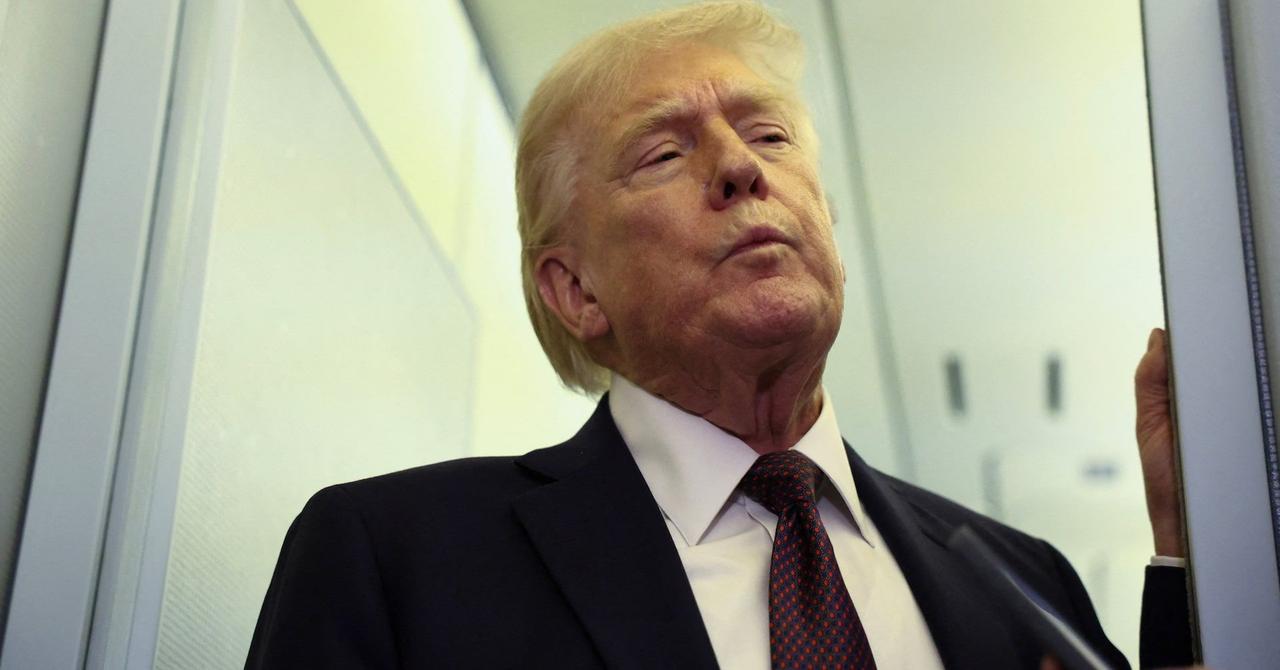
President Donald Trump posted an AI-generated video on his Truth Social platform on Sunday showing what he claimed was Iran's Kharg Island being blown to smithereens.
1
The dramatic clip depicted massive explosions at the strategic oil hub, but Reuters confirmed the video was synthetically generated using software that detects AI-manipulated imagery.2
Several hours after Trump's post, there was no evidence of attack on Kharg Island, raising questions about whether the AI video represented a threat or misinformation during a geopolitical crisis.The White House and U.S. Defense Department did not respond to Reuters requests for comment outside regular business hours, and Iranian media offered no immediate response to Trump's post.
3
Trump's message stated simply, "Kharg Island being blown to smithereens!!! President DJT," without providing further details about whether an actual military strike had occurred.1
The lack of verification highlights concerns about leaders using AI-generated video during escalating tensions between U.S. and Iran, particularly when Kharg Island handles 90% of Iran's oil exports and any attack would severely disrupt energy trade.2
The AI video emerged hours after the two countries traded attacks for the first time since July, marking a return to hostilities.
1
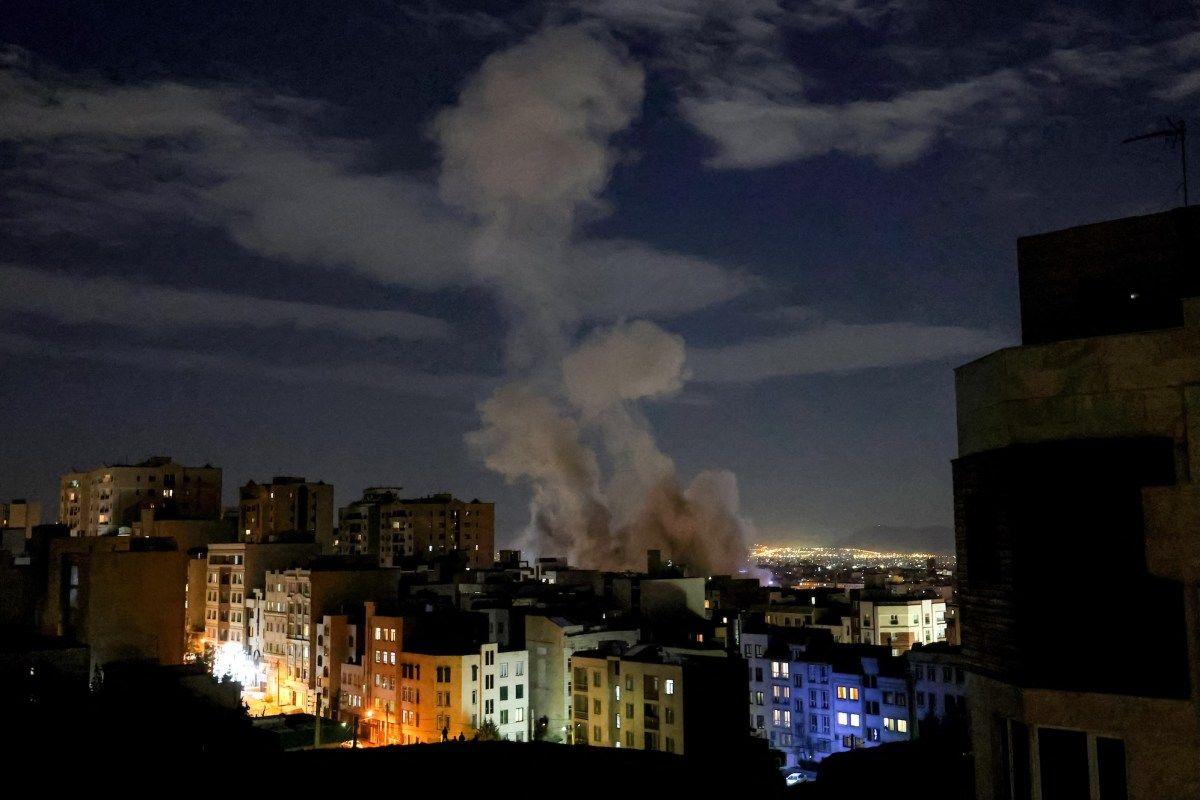
U.S. forces conducted military strikes on rocket launchers at Larak Island, approximately 660 km east of Kharg Island, after observing Islamic Revolutionary Guard Corps forces preparing to launch rockets with sea mines into the Strait of Hormuz.3
Iran responded with drone attacks on two U.S. bases in Jordan and the UAE's Al Minhad air base, targeting sites where U.S. forces and helicopters were stationed.2
Jordan's armed forces intercepted eight missiles that entered its airspace, according to state television.3
Related Stories

Iranian President Masoud Pezeshkian stated that Iran was not seeking war but would respond decisively to any aggression. "We will never remain silent in the face of any aggression and will respond decisively to the aggressors," state media quoted him as saying ahead of a visit to Kyrgyzstan.
1
Meanwhile, the Trump administration has shifted focus toward economic sanctions rather than military options. U.S. Treasury Secretary Scott Bessent told Reuters that new secondary sanctions would likely be unveiled weekly to pressure Iran, with initial focus on banks. "We're starting with the banks, and we're telling the banks it's not okay to have Iranian money and to aid the regime," Bessent said.2
After imposing penalties on United Arab Emirates branches of Egypt's Banque Misr on Friday, Bessent indicated the next step may involve cutting institutions entirely from the dollar-based financial system.3
The escalating conflict has severely impacted shipping through the Strait of Hormuz, a critical global energy chokepoint. The number of visible commodity vessels transiting the strait dropped to five a day over the weekend, though actual numbers could be higher as some vessels switched off automatic identification systems to evade attacks.
3
A supertanker caught fire and came to a complete halt after being struck by two naval mines in the southern Strait of Hormuz, according to Iran state TV citing a Revolutionary Guards statement.1
The Guards also claimed to have shot down a U.S. drone that crashed in Gulf waters using air defense missiles.2
These developments signal heightened risks for global energy markets and raise questions about how AI-generated content on the Truth Social platform might influence real-world military decisions and public perception during this volatile period.Summarized by
Navi
[3]
16 Mar 2026•Policy and Regulation

11 Mar 2026•Technology

01 Apr 2026•Technology

1
Policy and Regulation

2
Technology

3
Technology