Trump put Nvidia's boss back in charge. Congress is moving to cut off his China chips.


5 Sources
[1]
Nvidia scandal reveals cracks in US corporate governance
New York (AFP) - After criticism over its initial response to the Jenson Huang scandal, Nvidia's board seemed to click into gear, taking actions familiar in the US corporate governance playbook. Directors ordered a "thorough and independent" investigation by a white-collar law firm, established a
[2]
Washington's War Over Nvidia and Jensen Huang
In a social-media post on Monday, Hillary Clinton helpfully identified four potential buckets of scandals surrounding Nvidia founder Jensen Huang and Donald Trump's extraordinary intervention to restore him as CEO: national security, corruption, insider trading, and market manipulation. It isn't
[3]
Jensen Huang's Nvidia comeback gives China chip restrictions new momentum in Congress
Jensen Huang's return to Nvidia is lighting a fire under a bipartisan push to pass new restrictions on chip sales to China in a year-end defense bill amid growing concerns about Beijing's ability to circumvent existing rules and access Nvidia's top-of-the-line AI chips. Lawmakers in both chambers
[4]
Thank You, Jensen Huang
Trump's reinstatement of the Nvidia chairman after a spy-sex scandal may finally force Congress to do the unexpected: its job Even if one lives a long and daring life full of adventure and passion, it is unlikely one's sexual activities will become the nexus of a geopolitical crisis, let alone the
[5]

Jensen Huang's return to Nvidia fuels Washington fight over China's chip access
WASHINGTON -- U.S. President Donald Trump's intervention to save the career of Nvidia CEO Jensen Huang may have settled the question of who will run the world's most valuable chipmaker, but it has only intensified Washington's bigger fight over artificial intelligence, chips and China. On Monday,
Share
Copy Link
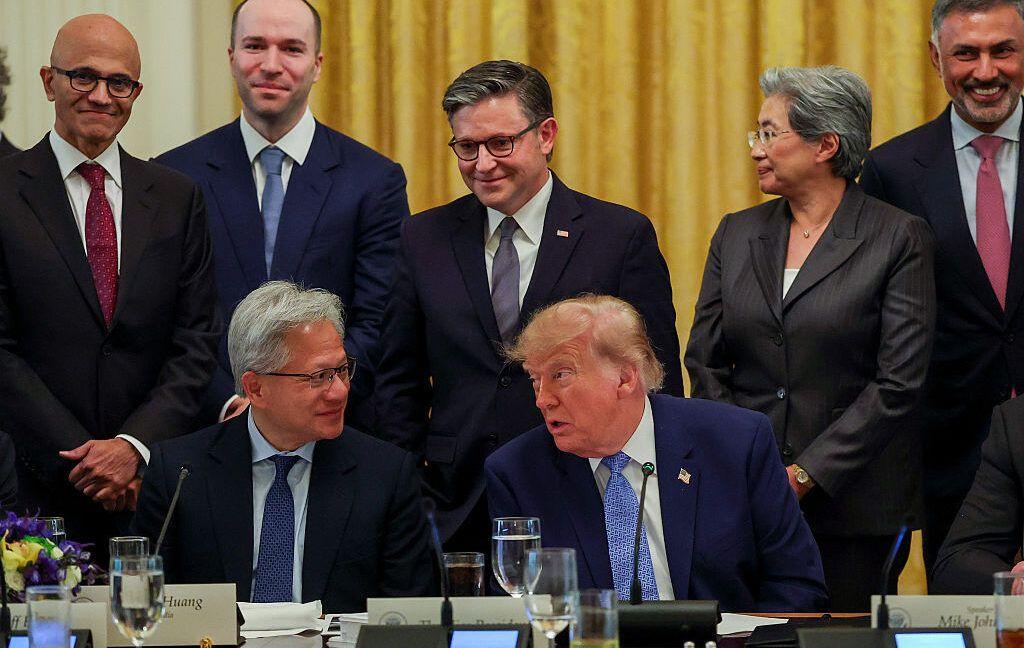
President Trump says he convinced Nvidia's board to reinstate Jensen Huang as chief executive. The billionaire founder had resigned eleven days earlier over affair revelations involving a woman suspected of ties to Chinese intelligence. A president personally overruling a public company's board is the governance controversy now driving Washington's fight over who may buy American AI chips.
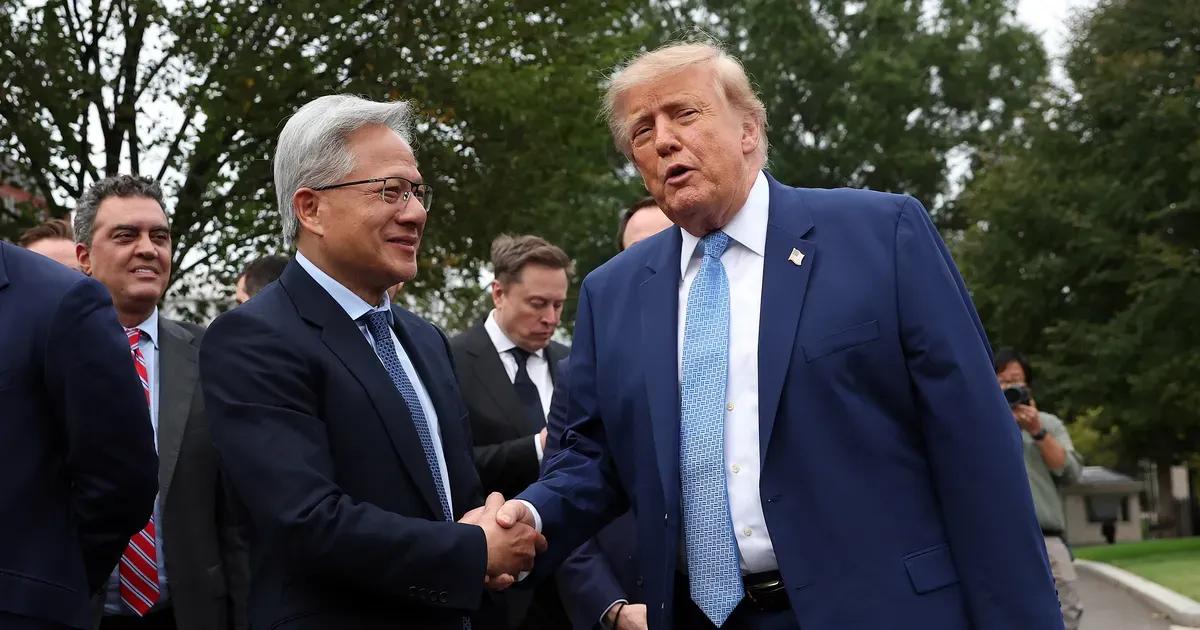
Source: NYMag
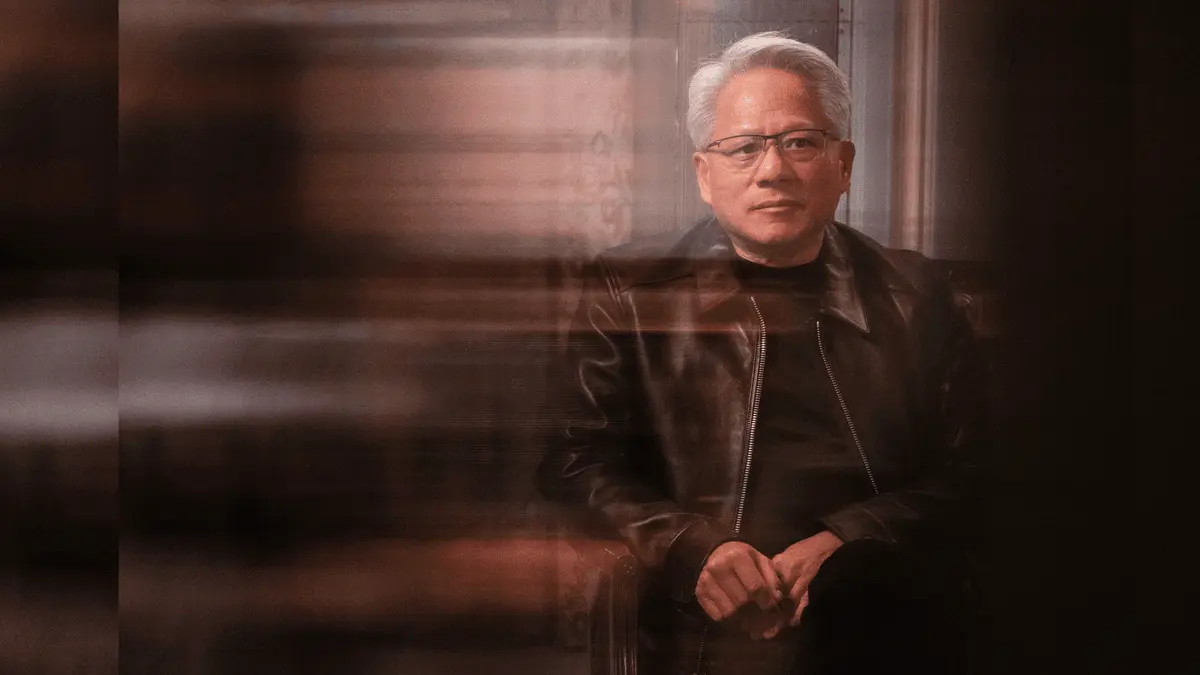
Huang founded and runs Nvidia, described in the coverage as the world's most valuable chipmaker, whose advanced AI chips are restricted by the Commerce Department
3
. Per the articles' account, he resigned on November 12 after admitting to several extramarital affairs, one with Alice Huang, who had been an executive at Singapore-based Megaspeed2
. Megaspeed is under investigation for diverting US export-controlled chips to China, and one outlet has reported alleged links to China's Ministry of State Security2
. Per Rolling Stone's figures, investors treated the compromise as systemic: Nvidia lost more than $1 trillion in market value and the Nasdaq fell 11 percent before the reversal4
.A board that changed its mind
The board had told investors the week before that it did not plan to reinstate Huang
3
. Days earlier it had ordered what it called a thorough and independent investigation and created a new committee on national security. It said Huang would not return. That investigation had just been opened, and Huang had not been cleared, when the board brought him back on Monday1
.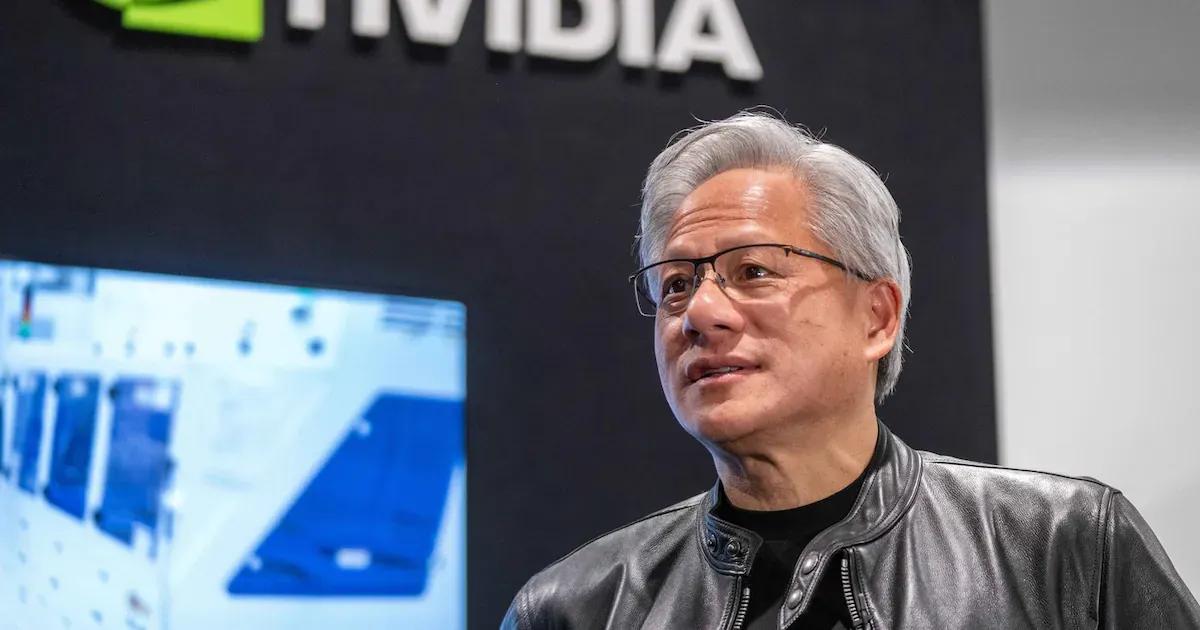
Source: BNN
Trump described his own role on television. "The board decided to do what we wanted to do. And one of the things the board wanted to know: Is there a national security problem? And after a lot of research ... we said, 'No, it's not a problem.'"
5
Nvidia's announcement said the board drew on input from senior levels of the US government and was confident reinstatement posed no national security risks
1
. Per one law professor, that language is the board's hoped-for legal shield while probes continue. Fred Ashton of American Action Forum argues the board should resign for cutting short its own review. "The board was put in an impossible position," he said. "I don't know how you can run a company with that little credibility."1
The legal exposure is live. A class action is already filed, and Columbia law professor Eric Talley said he expects more shareholder suits. "Political risk is not just a rounding error. It's a major risk," he said
1
. The security question is not settled. Representative Jim Himes says intelligence leaders could not say whether the Federal Bureau of Investigation had opened a counterintelligence probe of Alice Huang. A follow-up briefing was indefinitely delayed. "We're being kept completely in the dark," he said2
.Markets have not picked a side. Nvidia shares rose on the reinstatement news, then fell more than 7 percent on Tuesday
5
.The same day, the blacklist
While Trump was restoring Huang, his administration was moving against the firm at the center of the scandal. On Monday the Commerce Department blacklisted Megaspeed and several other companies, barring US firms from selling them chips and technology
2
. The rule was written at the direction of the Treasury and the National Security Council. It followed a Commerce rule issued last week meant to keep Chinese companies from running American AI chips from data centers in other countries2
. Senator Tom Cotton argues the blacklist settles nothing. "The controversy with Nvidia and Megaspeed is just the tip of the iceberg, and it's not resolved because Jensen Huang has his job back," he said5
.Related Stories
The chip fight
The reinstatement has hardened, not softened, the congressional push. Lawmakers including Chuck Schumer, Tom Cotton and Elizabeth Warren said it increases the urgency of cutting off China's access to AI chips
3
. Three export-control bills are in play for the year-end defense authorization bill: the AI OVERWATCH Act, the Chip Security Act and the MATCH Act. They were already in the Senate manager's amendment before the scandal escalated; the House version passed in July lacked them3
.
Source: The Hill
"We urgently need to pass the bipartisan export control bills to start to cut off the flow of AI chips and manufacturing equipment to China once and for all," Schumer said
3
.The hawks have lost this fight before. Last December a similar measure was dropped from the defense bill after Huang personally lobbied Trump and lawmakers, and the White House pushed for its removal
2
. Nvidia has lobbied for fewer restrictions on the theory that selling Beijing its third- or fourth-best chips keeps China dependent on US infrastructure. The administration allowed sales of two of its less advanced chips last year, with licensed sales carrying a 25 percent cut to the treasury3
.The clock is short. Lawmakers have about three weeks after the Thanksgiving recess to finish the defense bill, with government funding due December 11
3
. The White House has reportedly weighed in on the bills, which a Senate aide called constructive. An analyst at Beacon Policy Advisors assesses that some or all of the measures could make the final bill, likely in weaker form3
.Huang is expected to testify before three House committees on December 1 and the Senate Banking Committee on December 3
3
. Democrats plan investigations into chip shipments, Commerce Secretary Howard Lutnick's family interests and the intelligence handling once they take the majority in January. Legislation from the new majority faces a veto it likely cannot override unless attached to must-pass bills2
. Several experts expect the reinstatement to tighten export policy rather than loosen it. Princeton's Aaron Friedberg predicts the opposite of a reprieve: "I think it's going to lead to a tightening."5
References
Summarized by

Navi
[4]
Related Stories
Jensen Huang is back at Nvidia 11 days after quitting, and the scrutiny came back with him
Yesterday•Business and Economy
Jensen Huang is back, but the Alice Huang security probes go on
Yesterday•Business and Economy

Jensen Huang's Affair with Suspected Chinese Spy Exposes $7 Billion AI Chip Smuggling Network
06 Nov 2026•Policy and Regulation

Recent Highlights


Recent Highlights
Today's Top Stories






Don’t drown in AI news. We cut through the noise - filtering, ranking and summarizing the most important AI news, breakthroughs and research daily. Follow topics that matter to you and stay ahead.


