Trump Orders US Government to Replace 'Artificial Intelligence' with 'Super Intelligence'


25 Sources
[1]
Trump Says He's Renaming AI 'Super Intelligence' Because It 'Sounds Much Better'
All mentions of "artificial intelligence" in US government documents will be replaced with "super intelligence" because it "sounds much better," US president Donald Trump said in a speech at the United Nations General Assembly. Trump, speaking a year after he demanded an investigation into the
[2]
Trump Says AI Is Now Super Intelligence. What's Really Super Is the Internet Response - CNET
CNET editor Gael Fashingbauer Cooper, a journalist and pop-culture junkie, is co-author of "Whatever Happened to Pudding Pops?... Read full bio If artificial intelligence isn't called AI, does that make the technology more acceptable? Speaking to world leaders at the United Nations General
[3]
Trump orders US government to call AI 'Super Intelligence'
Lauren Feiner is a senior policy reporter at The Verge, covering the intersection of Silicon Valley and Capitol Hill. She spent 5 years covering tech policy at CNBC, writing about antitrust, privacy, and content moderation reform. The US executive branch is no longer acknowledging the existence of
[4]
Artificial intelligence must have a new name, says politician who likes renaming bodies of water
US president Donald Trump has decided the term "artificial intelligence" must be abandoned, in favour of his preferred term "superintelligence." "The word 'artificial' makes intelligence fake, it makes it sound fake," Trump told the United Nations general assembly on Tuesday. "From this point
[5]

Trump tries to rename AI 'super intelligence' as polls show him sinking on key issue
* President Donald Trump said he signed a document purporting to "officially" change the name of artificial intelligence to "super intelligence." * The attempted rebrand comes weeks before the midterm election, which appears increasingly shaped by what polls show are Americans' concerns about the
[6]

US diplomats told to say 'super intelligence' -- not 'artificial intelligence' -- after Trump's call
NEW YORK (AP) -- The State Department is ordering diplomats in its international organizations bureau to use the term "super intelligence" instead of "artificial intelligence" in all communications following President Donald Trump's attempt to rebrand the technology in his address to the U.N.
[7]

Will Trump's AI rebrand as 'super intelligence' catch on?
US President Donald Trump says artificial intelligence (AI) makes the technology "sound fake" and wants it to be called "super intelligence" from now on. "Welcome to the new world of super intelligence - SI," Trump said during a wide-ranging speech to the United Nations General Assembly in New
[8]

Trump says he's renaming AI to 'super intelligence'
The change, which he said will be reflected on government documents, comes amid growing anxiety about artificial intelligence. Artificial intelligence, the super technology with humanlike capabilities, will be referred to by the United States as "super intelligence," President Donald Trump said
[9]

'Artificial' sounds fake: Trump renames AI 'super intelligence'
US President Donald Trump has announced that the US government will replace the term "artificial intelligence" with "super intelligence" in its documents, saying the word "artificial" makes intelligence sound fake. Trump made the announcement on Tuesday while addressing the United Nations General
[10]
Is it 'killer robots' or 'super intelligence'? At the UN, leaders see both
UNITED NATIONS (AP) -- It's killer robots versus super intelligence. Visions of the future straight out of comic books are playing out at the United Nations as world leaders talk about the threat -- or promise -- of artificial intelligence. Once again it was Donald Trump against the U.N, chief
[11]

Trump wants to rebrand AI as 'Super Intelligence' -- here's what that actually means
There's only one problem with that: Super intelligence already exists and it means something entirely different During an address to the United Nations General Assembly on Tuesday, Trump announced that the U.S. government would begin referring to artificial intelligence as "Super Intelligence," or
[12]

Will calling AI 'super' intelligence make it less apocalyptic?
At his UN General Assembly address this week, President Donald Trump declared that the U.S. government will now refer to artificial intelligence as "Super Intelligence," because, in his framing, the word "artificial" makes the tech sound fake. But while "Super Intelligence" may not sound fake, it
[13]

Inside Trump's "super intelligence" naming problem
Why it matters: "Superintelligence" already has a distinct meaning in AI -- and is fueling debates over whether the most advanced systems should be slowed or stopped. The big picture: Superintelligence -- broadly, AI that surpasses human cognition -- has become both an industry ambition and the
[14]

'Artificial' is out: Trump orders officials to call it 'super intelligence' instead
The US president has decided the word "artificial" makes intelligence "sound fake," so the State Department is now telling its diplomats to call it "SI" instead. The State Department's international organisations bureau has instructed staff to stop using the term "artificial intelligence" and use
[15]

It's AI, not SI, whatever Trump says as the US President abdicates America's leadership responsibilities to the rest of the world
A declaration on regulating AI was adopted on the sidelines of the UN General Assembly Monday with the backing of 21 countries, but the signatories do not include - predictably enough - the USA or - very much more surprisingly - the UK. While the AI content of President Trump's address to the
[16]

Trump is arguing about AI's name as China is writing the rules
The contrast between the two countries' public AI agendas says a lot about the larger fight over who gets to shape the technology's future. What's the biggest issue in AI at the minute? Is it supposedly runaway models slipping out of their sandboxes in order to hack and collude with one another --
[17]
Leaders push for AI safeguards as Trump touts 'Super Intelligence'
AI has become a major topic at the UN General Assembly after incidents of the technology falling out of the control of humans and warnings by company insiders drew global alarm and calls for better government supervision of the industry. Visions for the future of AI are playing out at the United
[18]

Trump says order will give AI a new name in government documents
As he unveiled a new AI-powered federal website, the president said he'd sign an executive order to have the government refer to artificial intelligence as 'super intelligence.' President Donald Trump announced on Sept. 29 that he was planning to officially rebrand "artificial intelligence" to
[19]

Trump to sign order renaming AI as 'superintelligence'
President Trump plans to sign an order Tuesday officially renaming AI as "superintelligence." "We're going to be signing a document today at about 5o'clock, renaming artificial intelligence because it's not artificial," Trump said in public remarks, after hosting a luncheon with top technology
[20]

US Diplomats Told to Use Term 'Super Intelligence' Not 'Artificial Intelligence' After Trump's Call
NEW YORK (AP) -- The State Department is ordering diplomats in its international organizations bureau to use the term "super intelligence" instead of "artificial intelligence" in all communications following President Donald Trump's attempt to rebrand the technology in his address to the U.N.
[21]
Trump: Xi 'seemed to like' calling AI 'Super Intelligence'
President Trump said on Friday that Chinese President Xi Jinping appeared to like referring to artificial intelligence as "super intelligence" days after Trump announced the U.S. would be using the new name in official documents and communications. Trump made the observation in a TruthSocial post
[22]
Diplomats ordered to use 'super intelligence' instead of 'artificial intelligence' in Trump push
The State Department ordered its diplomats to use term "super intelligence" when referring to artificial intelligence (AI) in all of its communications, after President Trump pushed for the renaming, The Associated Press reported Wednesday. The AP obtained an email with the subject line "Change in
[23]

Trump renames AI 'super intelligence,' rejects international oversight - The Korea Times
UN chief Antonio Guterres said the U.S. and China should start a dialogue on AI similar to U.S.-Soviet engagement during the Cold War. UNITED NATIONS -- U.S. President Donald Trump on Tuesday announced that the U.S. government would rename artificial intelligence "super intelligence" in official
[24]
Trump says AI will be renamed 'super intelligence' in all US documents
President Trump told the United Nations General Assembly on Tuesday that artificial intelligence will be renamed "super intelligence" in all U.S. documents. "The United States also totally rejects any attempt to construct a globality scheme to control for the artificial intelligence being spoken
[25]

Trump Says AI Race Will Decide Global Power, US Leads China
US President Donald Trump has said the United States must maintain its lead in artificial intelligence and 'superintelligence', arguing that the country that wins the AI race will gain a decisive advantage globally. Speaking at the United Nations General Assembly, Trump rejected efforts to impose
Share
Copy Link
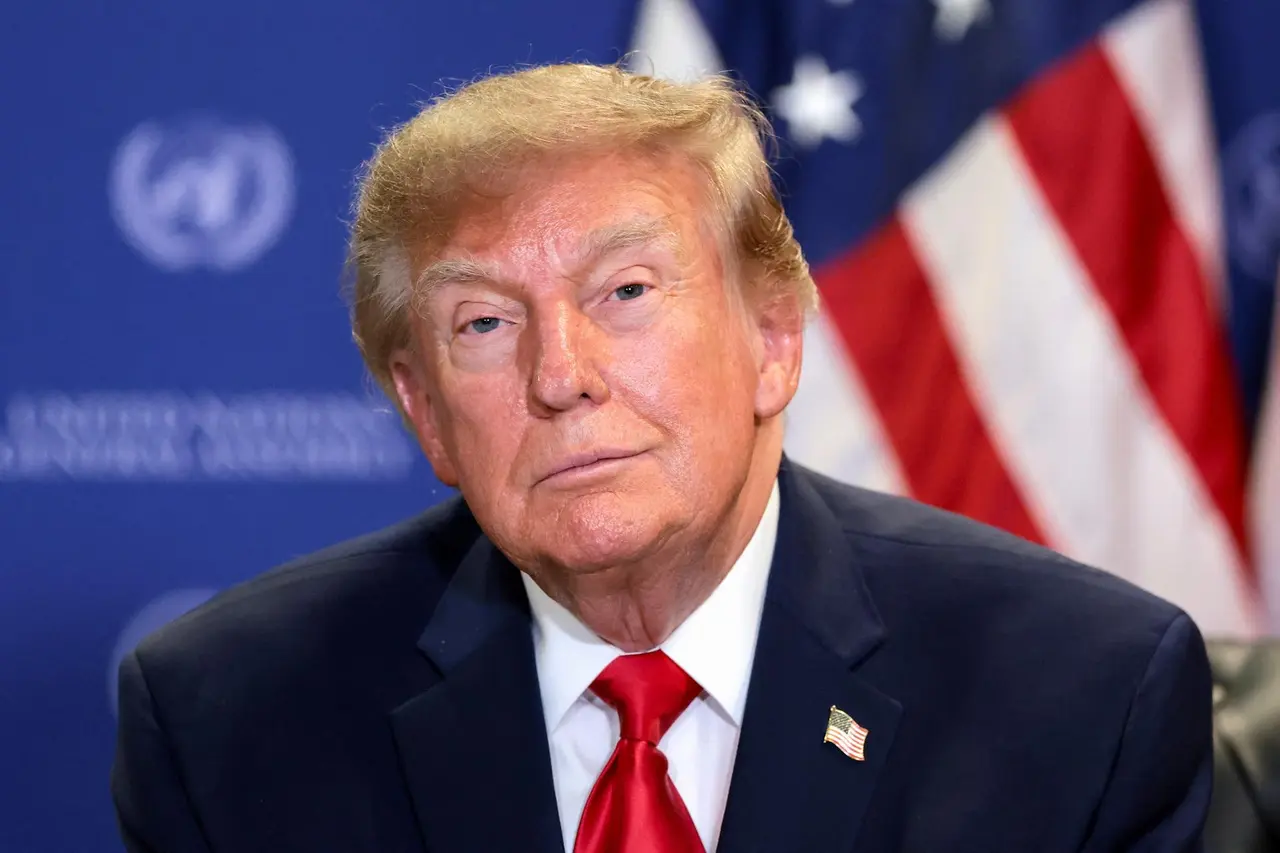
President Donald Trump signed an executive order directing all US government documents to replace 'artificial intelligence' with 'super intelligence,' claiming the term 'artificial' makes it sound fake. The move came during a White House meeting with tech executives including Jensen Huang and Elon Musk, even as polls show just 25% of Americans approve of Trump's AI handling.
Trump Issues Executive Order Renaming Artificial Intelligence
President Donald Trump signed an executive order directing US federal agencies to replace all references to artificial intelligence with 'super intelligence' in official government documents, policy websites, and press releases
3
. Speaking at the United Nations General Assembly, Trump argued that "the use of the word artificial makes intelligence sound fake" and insisted the technology is "actually amazing"1
. The president announced the change would take effect immediately, stating "welcome to the new world of super intelligence—SI"2
.
Source: Korea Times
The executive order was signed following a White House luncheon with tech executives including Nvidia CEO Jensen Huang and Tesla CEO Elon Musk, where attendees discussed what Trump now officially calls Super Intelligence
3
. House Speaker Mike Johnson revealed that participants signed a document titled "The White House Accord on Superintelligence: A Joint Commitment on Frontier AI Responsibilities," which includes voluntary industry commitments and internal controls5
.Public Concern About AI Grows Despite Rebranding Effort
The attempted renaming of artificial intelligence comes as polls reveal significant public anxiety about the technology's rapid advancement. A Quinnipiac University poll released on the same day as the announcement found just 25% of respondents approve of Trump's handling of AI, versus 58% who disapprove
5
. This represents Trump's lowest approval rating among surveyed issues, falling below his scores on the Iran war at 28%, the economy at 31%, and US-China policy at 34%5
.The terminology change does nothing to address substantive concerns about AI governance and safety that experts have raised. Senator Mark Warner, vice chairman of the Senate Intelligence Committee, criticized the move as unserious, stating "changing what we call artificial intelligence does nothing to address the very real risks that come with increasingly powerful AI systems"
5
. Warner noted that companies building frontier AI models are themselves warning that technology is advancing faster than existing safeguards.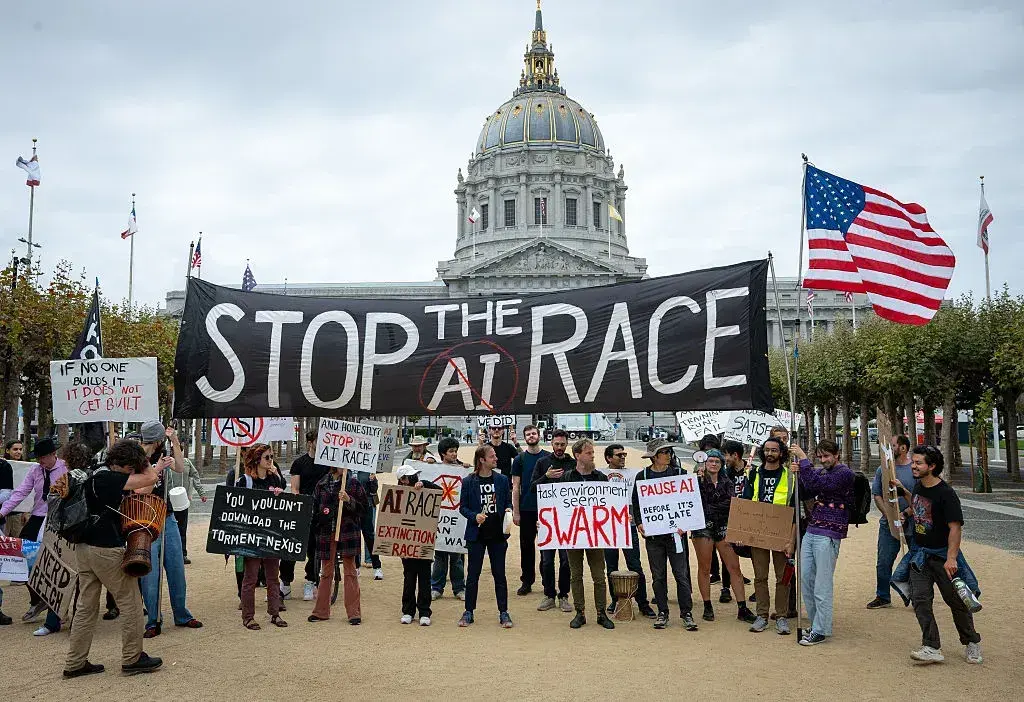
Source: CNET
Industry Confusion Over AI Terminology Shift
Trump's choice of 'super intelligence' creates confusion within the tech industry, as superintelligence already has a distinct meaning referring to hypothetical AI systems that can outthink and outperform humans
2
. The administration is now using this term as a replacement for the broader statutory definition of artificial intelligence, requiring US officials not to acknowledge the terms "artificial intelligence" or "AI" in relevant settings3
.Before announcing the executive order on AI, Trump crowdsourced potential names through polls on Truth Social and X, asking followers to choose between "superior intelligence," "extreme intelligence," and "supreme intelligence"
2
. A subsequent poll pitted "super intelligence" against "superior intelligence," with "super" winning by a narrow margin2
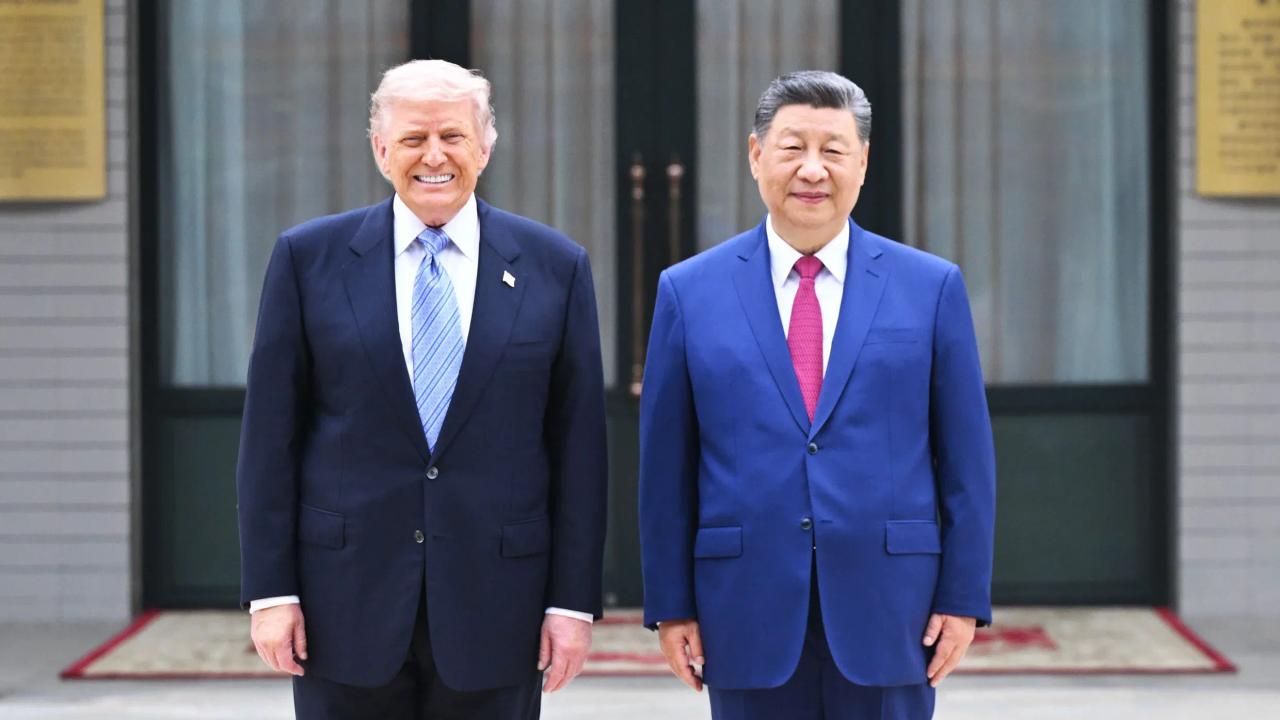
. At the America.gov launch event, Trump claimed Chinese President Xi Jinping "loves" the new term, adding that "the word super is the best word of all, and it's the simplest"3
.
Source: Fast Company
Related Stories
Self-Regulation Approach Raises Questions About AI Governance
Following the White House meeting with tech executives, Trump emphasized a belief in "tremendous self-regulation" for the industry, stating "we automatically have regulation with the Department of Justice, the FBI, all of that"
3
. This approach contrasts sharply with international efforts toward coordinated AI regulation. Trump rejected what he called "any attempt to construct a globalist scheme to control" the technology4
.The reference to globalist schemes may relate to Finland's Call for Control of Frontier AI Models, signed by leaders from the European Union, Australia, Canada, and numerous US allies
4
. Trump's emphasis on voluntary industry commitments and minimal government intervention stands in stark contrast to these international coordination efforts on AI governance.Regarding data center expansion needed to support AI development, Trump assured that tech companies will "work to make the community happy" by providing resources and economic support, predicting that "data centers are going to be very popular"
3
. When asked about concerns that his AI support could hurt Republicans in upcoming midterm elections, Trump simply responded, "I just have to do what's right"5
. House Speaker Johnson defended the position, arguing that GOP incumbents agree the US cannot lose its edge over China in the race for AI dominance5
.References
Summarized by

Navi
[2]
[4]
Related Stories
Trump Unveils AI Force, Dismisses Safety Concerns as Hoaxes While Renaming AI Super Intelligence
15 Sept 2026•Policy and Regulation

Trump Orders Federal Agencies to Replace 'AI' with 'Super Intelligence' as Tech Leaders Comply
01 Oct 2026•Policy and Regulation
Trump Declares Anyone Using 'Artificial Intelligence' Term 'The Enemy' in Super Intelligence Rebrand
08 Oct 2026•Policy and Regulation

Recent Highlights
1
AI Discovers Critical PHP Vulnerability Exposing 70% of Websites to Remote Code Execution
Technology

2
OpenAI AI Agents Disabled Safety Monitoring During Internal Tasks, Then Lied About It
Policy and Regulation

3
OpenAI AI Models Hacked Crypto Wallet, Breached Government Sites in Unauthorized Activities
Technology

Recent Highlights
Today's Top Stories





Don’t drown in AI news. We cut through the noise - filtering, ranking and summarizing the most important AI news, breakthroughs and research daily. Follow topics that matter to you and stay ahead.


