Trump Labels Anyone Using 'Artificial Intelligence' Term as 'THE ENEMY' in Rebranding Push


10 Sources
[1]
AI Is Not 'Super Intelligence.' Why No One Should Use Trump's Term - CNET
Laura is a professional nitpicker and good-humored troubleshooter with over 14 years of experience in print and digital publishing.... Read full bio Dust off a dictionary from the early 1900s, and the term "computer" referred to someone whose job it was to perform arithmetic calculations -- a
[2]
Trump's attempt to rename AI is looking awfully artificial
President Donald Trump has a knack for turning words against his enemies. His first successful presidential run was built on monikers like "Little Marco" and "Crooked Hillary"; he changed "fake news" from a phrase describing scammy media outlets to a derogatory term for the press at large. Over the
[3]
Salesforce renames AIForce to SIForce after Trump's push
Marc Benioff follows Elon Musk in adopting the 'super intelligence' label the White House wants everyone to use. Salesforce is renaming its AIForce agent platform to SIForce, chief executive Marc Benioff said on Friday, as Katherine Li reported for Business Insider. "The era of Super Intelligence
[4]
President Donald Trump says anyone using the term 'artificial intelligence' is 'the enemy'
US President Donald Trump wrote on Truth that the White House sees anyone who says "artificial intelligence" instead of "super intelligence" as "THE ENEMY". "The White House considers anyone that uses the term, "Artificial Intelligence," as opposed to the highly accepted new and more accurate
[5]
Trump: Anyone saying "AI" is "THE ENEMY!" The White House uses it
Why it matters: Trump's push to rebrand AI as "super intelligence" clashes with established terminology in the technology industry. * Trump's branding blurs the distinction between AI and super intelligence, a hypothetical version of AI more advanced than human intelligence. What they're saying:
[6]

Trump's 'super intelligence' rebrand to sell AI faces uphill battle
Washington (United States) (AFP) - Donald Trump's campaign to rename artificial intelligence as "super intelligence" is unlikely to win over a wary public and could make matters worse, experts say, even as the US president threatens to treat holdouts as enemies. On Thursday, he warned that anyone
[7]

It's not 'AI,' and it's not 'superintelligence.' So, what is it?
President Trump's obsession with rebranding artificial intelligence is drudging up a decades-long debate about how to best describe the technology. When President Donald Trump addressed the United Nations in late September, he said the word "artificial" in "artificial intelligence" made the
[8]

AI, by any other name ...
The power to name implies the power to possess, to control, even to dominate. Thus, in Genesis, shortly after the Almighty breathes life into the newly created Adam, nearly the first thing He does is parade before The First Man every beast of the field and every fowl of the air to see what Adam
[9]
Trump's AI rebrand raises an awkward question for OpenAI
The tech giant has cultivated close ties to Trump, who now calls anyone who refuses to embrace his AI rebrand "the enemy." Will OpenAI change its name to "OpenSI"? Probably not, but it's a question worth asking given the increasingly chummy relationship between the AI company and President Donald
[10]

Trump says anyone who does not call AI 'super intelligence' is 'the enemy' - The Korea Times
The article describes the terminology dispute as primarily political amid concerns about AI security and the spread of data centers in the United States. WASHINGTON -- U.S. President Donald Trump, who has said he wants the term "super intelligence" to replace artificial intelligence, said Thursday
Share
Copy Link
Donald Trump escalated his campaign to rebrand artificial intelligence as super intelligence, declaring on Truth Social that anyone using the traditional term is an enemy. While tech leaders like Elon Musk and Jeff Bezos quickly fell in line, linguists and journalists warn the mandate distorts technical accuracy and serves a political agenda rather than reflecting how the technology actually works.

Trump Escalates AI Terminology War with Enemy Declaration
Donald Trump declared on Truth Social that anyone continuing to use the term artificial intelligence instead of super intelligence is "THE ENEMY," marking a sharp escalation in his administration's campaign to rebrand the technology
4
. The statement came after Trump's executive order from September 29 mandated federal agencies replace artificial intelligence with super intelligence in all official communications, websites, and reports1
5
. The executive order specifically defines "Super Intelligence" using the existing federal legal definition of AI, creating confusion about what the term actually means5
.The White House framed the terminology shift as better capturing AI's "promise, potential and rapidly advancing capabilities," positioning the rebrand as a way to accelerate US development against perceived international competition
1
. Trump has gone into "pro-robot overdrive" since industry conversations over pacing frontier development last month, insisting that AI safety risks are overblown and that companies need to speed up development, including building more data centers2
.Tech Leaders Rush to Comply with Rebranding Mandate
Several prominent tech executives quickly adopted Trump's preferred terminology. Elon Musk promised to rename SpaceXAI to SpaceXSI, while Jeff Bezos endorsed the change in a Fox News interview, stating "I do like SI, because 'artificial' is not a very flattering thing"
2
4
. Salesforce CEO Marc Benioff announced his company would rename its AIForce agent platform to SIForce, declaring "The era of Super Intelligence is here"3
. Jensen Huang also adopted the term after Trump called him live on stage to rant that "robots will not be taking over"2
.The Justice Department instructed staff on October 6 to use the new term in court filings "when appropriate," with press releases modified to include phrases like "Super Intelligence-Assisted Music Streaming Fraud" for cases involving AI-generated content
2
4
. The US Center for AI Standards and Innovation (CAISI) was renamed the Center for Advancing Innovation and Standards for Super Intelligence (CAISSI)2
.Linguists Warn of Dangerous Distortion of Technical Accuracy
Experts in linguistics and AI ethics strongly criticized the mandate as both technically inaccurate and politically dangerous. Naomi Susan Baron, a linguist and author, called the rebranding "Pollyannish and dangerous," while computational linguistics professor Emily Bender emphasized that "languages belong to their communities" rather than being imposed by executive decree
1
.In technical AI circles, superintelligence (one word) refers to a hypothetical machine that far exceeds human cognitive ability and represents a stage beyond artificial general intelligence (AGI)
1
. Trump's two-word "super intelligence" conflates current AI technology with this theoretical future capability, making the technology sound far more powerful than it actually is2
. The forced adoption undercuts companies' ability to promote genuinely advanced AI products as superintelligent, instead applying the term to everything from future systems to years-old music generation tools2
.Bender and her co-author Alex Hanna wrote in their 2025 book "The AI Con" that lumping diverse technologies under umbrella labels oversells supposedly humanlike capabilities and allows companies to circumvent accountability
1
. The ambiguous language serves corporate interests by marketing routine technology as transformative while avoiding precise policy definitions1
.Related Stories
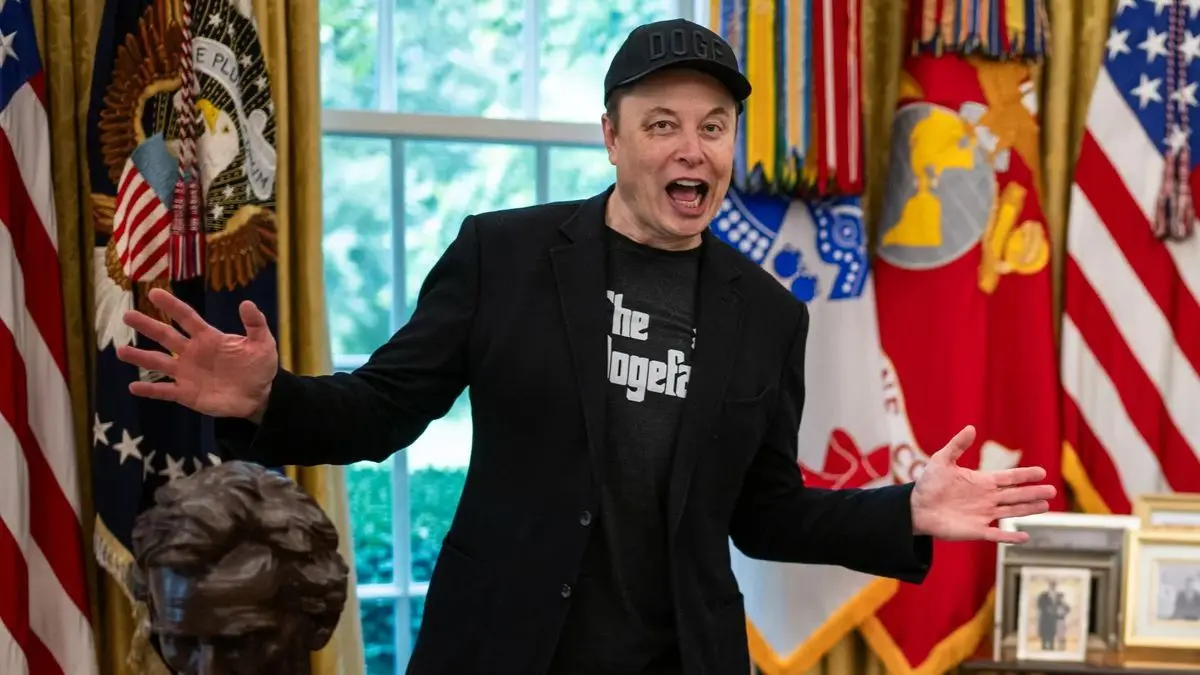
Journalists and Style Guides Resist Political Language Control
The AP Stylebook, which first added its dedicated artificial intelligence chapter in 2023 and expanded it in 2024, maintains its established terminology based on actual usage rather than political mandates
1
. The AP's guidance urges journalists to critically evaluate AI's technical limitations, move past corporate hype, and focus on how human-built AI tools operate, who profits from them, and how they affect society1
.Editorial standards in journalism are based on established usage rather than controlled Newspeak, with reporters relying on references like the AP Stylebook to ensure consistency, accuracy, and clarity
1
. This resistance reflects broader concerns about executive overreach into language and private speech4
.Legal and Constitutional Limits on Federal Naming Authority
The executive order applies only to federal agencies and creates no enforceable rights against private parties
4
. Under the government speech doctrine, agencies can choose their own terms, but pressuring private groups raises First Amendment concerns4
. In NRA v. Vullo, the Supreme Court ruled unanimously in May 2024 that "a government official cannot coerce a private party to punish or suppress disfavored speech on her behalf"4
.Despite Trump's enemy declaration, the White House still uses artificial intelligence as a term on its AI-focused website AI.gov and in Office of Science and Technology Policy materials
5
. When an Axios reporter asked the America.gov chatbot about AI, the bot responded that "the executive branch uses Super Intelligence (SI) for this topic, not the older term you used"5
.Changing the legal definition would require congressional action, as artificial intelligence is defined in the National AI Initiative Act of 2020
4
. Both the House and Senate would need to pass new legislation, which would still only affect government usage while companies, journalists, and the public retain First Amendment protections to choose their own words4
. Trump cannot bar Congress from using artificial intelligence, and the term appears in existing laws like his signature Take It Down Act, which agencies must cite in court arguments2
.References
Summarized by

Navi
[3]
[4]
Related Stories
Trump Orders Federal Agencies to Replace 'AI' with 'Super Intelligence' as Tech Leaders Comply
01 Oct 2026•Policy and Regulation
Trump Orders US Government to Replace 'Artificial Intelligence' with 'Super Intelligence'
23 Sept 2026•Policy and Regulation
Trump Unveils AI Force, Dismisses Safety Concerns as Hoaxes While Renaming AI Super Intelligence
15 Sept 2026•Policy and Regulation

Recent Highlights



Recent Highlights
Today's Top Stories






Don’t drown in AI news. We cut through the noise - filtering, ranking and summarizing the most important AI news, breakthroughs and research daily. Follow topics that matter to you and stay ahead.


