5 Sources
[1]
UiPath beats on revenue but its stock tanks after-hours
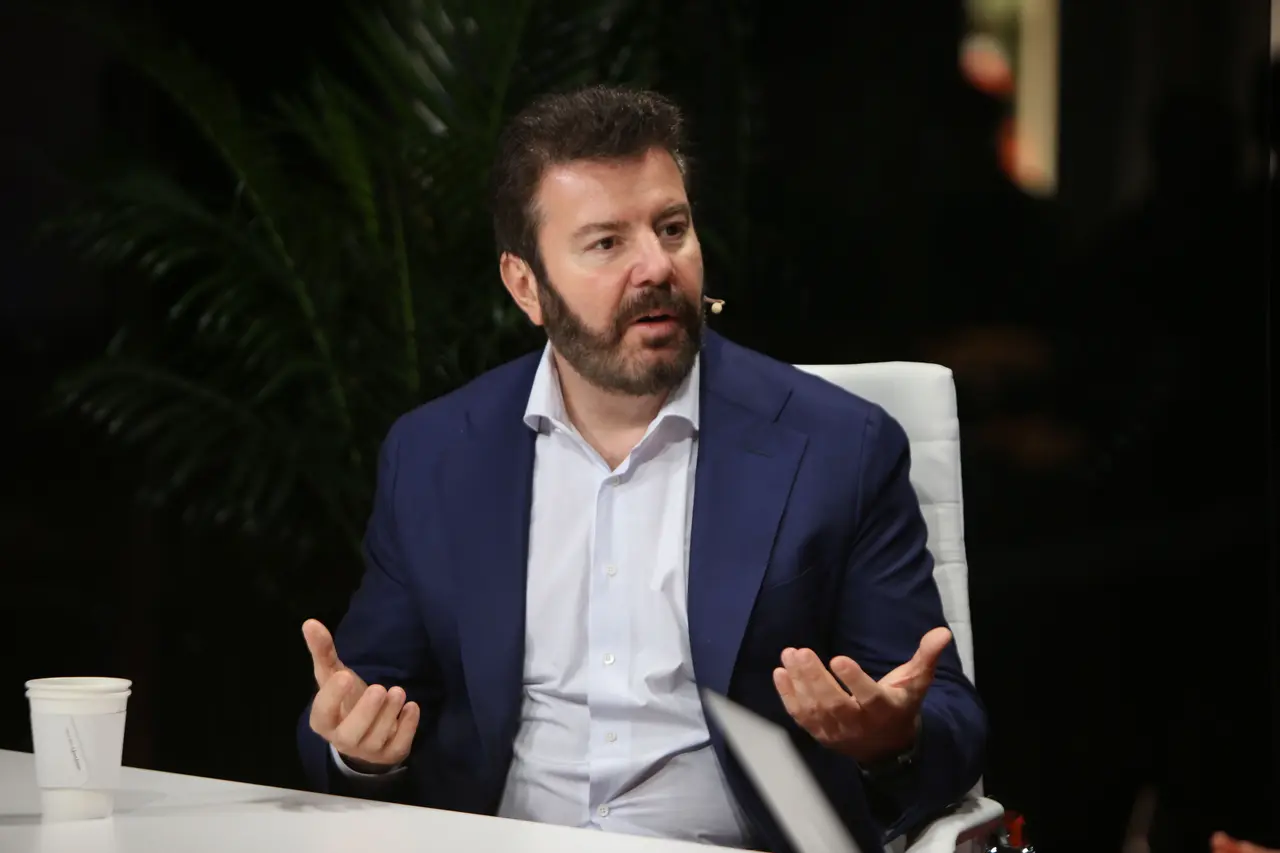
UiPath Inc.'s stock endured a wild swing after the company posted second-quarter revenue that beat analyst expectations. The stock initially popped more than 10% right after the company reported, only to reverse course later. At the time of writing, the shares were down more than 7%. The company reported earnings before certain costs such as stock compensation of 15 cents per share, matching Wall Street's target. Revenue for the period rose 13% to $410 million, well ahead of the $397.8 million analyst target. UiPath strengthened its bottom line, too. It reported net income of $36.1 million at the end of the quarter, up from a miniscule profit of just $1.6 million one year earlier. Investors were likely encouraged by the company's decision to raise its full-year outlook for fiscal 2027. It bumped up its revenue forecast from an earlier range of $1.776 billion to $1.781 billion to a new range of between $1.789 billion and $1.794 billion. UiPath's stock has gained more than 70% over the last year, but in recent months it has struggled to maintain such momentum. It's up just 12% in the year to date, due to concerns that artificial intelligence models may disrupt the company and eat away at its customer base. But UiPath contends that AI will actually increase demand for its robotic process automation technology, which follows rigid, predetermined rules to automate certain business tasks. The company has also upped its game by trying to develop more intelligent, agentic automations. It has released a series of AI agents that can reason, adapt and work autonomously, without needing to follow the same rigid rules and without human supervision. Its push into this area is meant to reassure investors that it can actually participate in the AI boom, and not just sit on the sidelines and slide into obscurity. Founder and Chief Executive Daniel Dines (pictured) said AI is expanding the possibilities for what enterprises can automate while also increasing the need for the orchestration, governance and exactness that the company's traditional deterministic automation provides. "Our ability to bring AI agents, robots, systems and people together to execute end-to-end business processes positions UiPath at the center of this opportunity," he said. "We have spent the past two years transforming our platform and strengthening our execution." There were a few signs that this effort is beginning to pay off. UiPath's annual recurring revenue reached $1.94 billion, up 12% from where it was one year ago, while its dollar-based net retention rate increased to 109%, which means that those customers are spending more on its tools. These metrics are important because they underpin the durability of the company's revenue base and reduce its reliance on getting new customers to keep growing. For the current quarter, UiPath said it's targeting revenue of between $440 million and $445 million. The midpoint of that range came in above the Street's guidance of $441.2 million. The company also announced a number of executive changes across its sales and delivery teams, including the promotion of its Chief Accounting Officer Hitesh Ramani, who is now Chief Financial Officer instead. Dines framed the changes as an attempt to sharpen the executive team's speed and accountability.
[2]
What's Going On With UiPath Stock Friday? - UiPath (NYSE:PATH)
UiPath Inc. (NYSE:PATH) stock fell in premarket trading Friday despite strong second-quarter sales and a higher fiscal 2027 revenue outlook. The pullback came after a sharp run-up into earnings. UiPath shares had gained 64.59% over the past six months, potentially leaving the stock vulnerable to profit-taking after the results. The company also promoted Hitesh Ramani to chief financial officer. Ramani has served as chief accounting officer since 2021 and as deputy CFO for the past two years. Adjusted earnings came in at 15 cents per share, in line with estimates. Revenue rose 13% year over year to $410.26 million, beating the $397.95 million consensus estimate. Remaining performance obligations rose 14% to $1.378 billion. Current RPO also increased 14% to $901 million. Trending Adjusted operating income climbed to $89 million, representing a 22% margin. That marked more than 400 basis points of year-over-year margin expansion. Adjusted free cash flow fell to $31 million from $45 million a year earlier, mainly due to the timing of tax payments. UiPath ended the quarter with $1.4 billion in cash, cash equivalents and marketable securities and no debt. The company also repurchased 2.4 million shares. UiPath ARR Growth Remains Strong Annual recurring revenue grew 12%, supported by $37 million in net new ARR. That compared with $31 million a year earlier. Cloud ARR, including hybrid and software-as-a-service offerings, reached about $1.3 billion, up more than 19%. UiPath ended the quarter with about 10,350 customers. Attrition remained concentrated among its smallest accounts. Customers generating more than $30,000 in ARR increased 6%. Customers with at least $100,000 in ARR rose 10% to 2,660, while those generating at least $1 million increased 21% to 387. Dollar-based gross retention held at 97%. Dollar-based net retention improved to 109%, up 2 percentage points year to date. On a foreign exchange-adjusted basis, net retention was 108%. AI Drives UiPath's Largest Deals AI products were included in 18 of UiPath's top 20 deals. Customers are increasingly moving from individual automation projects to broader, end-to-end processes that combine automation and AI. Key wins included a seven-figure expansion with a global insurer and the Department of War's Clean Audit initiative. UiPath also secured deals with several financial institutions consolidating their automation programs. The company said its forward-deployed engineers found that coding agents reduced development effort by nearly 60%. UiPath also introduced a developer workflow automation tool that supports Cloud Code, Codex, Cursor and GitHub Copilot. Meanwhile, a Fortune Global 500 manufacturer is using UiPath to automate about 700,000 invoices annually. The system has achieved 96% document-processing accuracy and cut invoice handling time and support needs by 50%. A major U.S. health system also selected UiPath to automate claims denials and appeals. The deployment could address millions of dollars in previously unreviewed claims. UiPath Raises Fiscal 2027 Revenue Outlook For the third quarter, UiPath expects revenue of $440 million to $445 million. The midpoint is roughly in line with the $442.2 million consensus estimate. The forecast includes a $10 million year-over-year foreign exchange headwind. The company expects ARR of $1.992 billion to $1.997 billion and adjusted operating income of about $100 million. UiPath raised its fiscal 2027 revenue outlook to $1.789 billion to $1.794 billion from $1.776 billion to $1.781 billion. The new range is above the $1.778 billion consensus estimate. The company expects fiscal-year ARR of $2.065 billion to $2.07 billion. PATH Price Action: UiPath shares were down 7.35% at $16.88 during premarket trading on Friday, according to Benzinga Pro data. Photo via Shutterstock Markets Stock Market Today: Dow Jones Futures Fall, S&P 500, Nasdaq 100 Rise Ahead of August's Jobs Report -- LULU, PATH, DOCU in Focus U.S. stock futures were mixed on Friday, as the Dow Jones index fell while the S&P 500 and Nasdaq 100 indices rose. 6 min read Read this article Market News and Data brought to you by Benzinga APIs To add Benzinga News as your preferred source on Google, click here.
[3]
Why is UiPath stock sliding today? By Investing.com
Investing.com -- UiPath stock dropped nearly 9.8% in pre-open trading to reach $16.43 after the company's Q2 FY2027 results -- released after the close on September 3, 2026 -- failed to satisfy investors looking for evidence that its AI strategy is meaningfully accelerating growth. Revenue of $410.3 million came in well above the $397.8 million Wall Street consensus and grew 13% year-over-year, and the company raised its full-year revenue guidance to between $1.789 billion and $1.794 billion. However, annualized recurring revenue of $1.938 billion grew just 12% year-over-year, and net new ARR of $37 million represented a sequential step down from the $49 million added in Q1 FY2027 -- a metric that investors closely watch as a leading indicator of future subscription momentum. The earnings call added to the uncertainty. Analysts pressed management on the timeline for meaningful AI revenue contribution, the impact of coding agents on customer economics, and whether the company's sales motion is genuinely evolving. CEO Daniel Dines noted that coding agents are reducing implementation effort by nearly 60% and that UiPath is shifting toward more use-case-based selling, but these responses were not enough to convince the market that a growth re-acceleration is imminent. Compounding the reaction, UiPath simultaneously announced the promotion of Hitesh Ramani to CFO -- effective the same day as the earnings release -- replacing Ashim Gupta, who transitions to COO, introducing a degree of leadership transition uncertainty at a pivotal moment for the business. The pre-market decline unfolded against a broadly neutral macro backdrop. The S&P 500 edged up just 0.1%, the Dow Jones was essentially flat, and the NASDAQ gained 0.5%, meaning the broader market offered no meaningful offset to UiPath's company-specific pressure. The stock had also surged roughly 40% in the month leading up to the earnings report, reaching close to its 52-week high of $19.84, which left it technically stretched and vulnerable to a sharp "sell the news" reversal once results failed to deliver a clear upside surprise on the metrics investors cared most about. Taken together, a revenue beat and raised guidance proved insufficient to sustain the stock's recent rally when the market's primary concern -- whether AI is genuinely accelerating UiPath's ARR growth -- remained unanswered. The combination of decelerating net new ARR, a leadership transition, and an elevated pre-earnings valuation created the conditions for today's outsized pre-market decline, even as the company's underlying profitability and operational execution continued to improve. This article was generated with the support of AI and reviewed by an editor. For more information see our T&C.
[4]
UiPath Q2 FY2027 slides: profitability rises, AI drives enterprise deals By Investing.com
UiPath Inc. (NYSE:PATH) presented its second-quarter fiscal 2027 earnings results on September 3, 2026, showcasing continued profitability improvements and accelerating AI adoption among enterprise customers. The automation software company reported revenue of $410.3 million, up 13% year-over-year, and posted its fourth consecutive quarter of GAAP profitability with operating income of $31.6 million. Despite beating Wall Street's revenue forecast by $12.49 million, shares fell 7.79% in after-hours trading to $16.80, down from the regular session close of $18.24. The market reaction suggests investors remain focused on the company's growth trajectory and the pace of AI monetization, even as operational metrics showed broad-based improvement. The following overview from the company's earnings presentation highlights the key financial metrics for the quarter ended July 31, 2026: Quarterly Performance Highlights UiPath's second-quarter results demonstrated meaningful progress on profitability while maintaining double-digit growth rates. Annual recurring revenue (ARR) reached $1.938 billion, representing 12% year-over-year growth, while non-GAAP operating margin expanded to 22% from 17% in the prior-year period. The company's ARR progression over the past two years illustrates consistent growth momentum, as shown in the following chart tracking quarterly performance: Net new ARR for the quarter totaled $37 million, up from $31 million in the first quarter of fiscal 2027. The company's dollar-based net retention rate stood at 109%, reflecting continued expansion within the existing customer base. Cloud ARR, which includes both hybrid and SaaS offerings, grew more than 19% year-over-year to approximately $1.3 billion. Customer momentum accelerated in the enterprise segment, with notable gains in both mid-market and high-value accounts. The following charts illustrate the company's success in scaling larger customer relationships: The number of customers generating at least $100,000 in ARR increased to 2,666 from 2,432 in the prior-year quarter, while customers with $1 million or more in ARR grew 21% to 387. Management noted that customer attrition remained concentrated among smaller accounts, while enterprise retention remained strong. Platform Evolution & AI Strategy UiPath positioned its platform as an integrated solution for business orchestration, combining traditional robotic process automation (RPA) with agentic AI capabilities. The company emphasized that 18 of its top 20 deals in the quarter included AI components, signaling growing enterprise demand for intelligent automation. The company's platform architecture demonstrates the breadth of its technology stack and integration capabilities: A key announcement during the quarter was the public preview of UiPath Maestro Flow, a developer-first automation platform designed to support agentic workflows. The product aims to enable developers to build, test, and deploy automations using both visual workflows and code-first approaches in the cloud. The following screenshot from the presentation shows the Maestro Flow interface in action, illustrating a customer escalation orchestration workflow: Management highlighted that UiPath's coding agents are dramatically reducing implementation timelines. The company presented a comparison showing how agentic pipelines can compress traditional multi-month automation lifecycles into hours or days: Chief Executive Daniel Dines emphasized the company's dual approach to automation, stating, "Use AI where intelligence creates value and deterministic automation where exactness matters," adding that this strategy delivers "better economics and better ROI at scale" for customers. Solutions Portfolio & Partner Ecosystem UiPath outlined its comprehensive solutions framework, organized around six core capabilities spanning agents, robots, people-in-the-loop processes, pre-orchestrated workflows, business applications, and governance controls: The company's extensive partner network spans both technology integrations and go-to-market relationships. The following overview demonstrates UiPath's ecosystem reach across major cloud providers, enterprise software vendors, and global consulting firms: Strategic partnerships with Microsoft, Google Cloud, AWS, SAP, ServiceNow, and other enterprise platforms provide UiPath with broad distribution channels and technical integration capabilities. The go-to-market partner roster includes major consulting firms such as Accenture, Deloitte, PwC, and the Big Four accounting firms, which help drive enterprise adoption. Detailed Financial Analysis UiPath's GAAP financial results for the quarter showed significant improvement in operating profitability, as detailed in the following table: GAAP gross margin stood at 80%, down slightly from 82% in the prior year, while operating expenses declined across all three categories. Sales and marketing expenses decreased to $164.6 million from $166.3 million, research and development fell to $83.4 million from $98.3 million, and general and administrative costs declined to $50.1 million from $52.9 million. The company's non-GAAP financial results, which exclude stock-based compensation and other items, showed even stronger operating leverage: Non-GAAP operating income reached $89 million, up from $62.3 million in the prior year, driving the 22% operating margin. However, adjusted free cash flow declined to $30.6 million from $44.5 million, reflecting timing of cash collections and increased capital expenditures. The reconciliation of GAAP to non-GAAP operating margin illustrates the impact of stock-based compensation, which totaled $45 million in the quarter, down from $78 million in the prior year: The reduction in stock-based compensation expense contributed significantly to the year-over-year improvement in both GAAP and non-GAAP profitability metrics. Restructuring costs of $5 million in the current quarter, compared to $1.4 million in the prior year, reflected ongoing organizational optimization efforts. Forward-Looking Statements UiPath provided guidance for the third quarter of fiscal 2027 and updated its full-year outlook, as shown in the following summary: For the third quarter ending October 31, 2026, the company expects revenue of $440 million to $445 million, ARR of $1.992 billion to $1.997 billion, and non-GAAP operating income of approximately $100 million. The full fiscal year guidance calls for revenue of $1.789 billion to $1.794 billion and ARR of $2.065 billion to $2.070 billion, positioning the company to cross the $2 billion ARR milestone during fiscal 2027. Full-year non-GAAP operating income is projected at approximately $445 million, implying a margin of roughly 25% at the midpoint. Management also forecast adjusted free cash flow of about $425 million for the full year and gross margin of approximately 84%. Chief Operating Officer Ashim Gupta noted that the company is seeing "better execution across the business" and described the net retention trajectory as "upward in a stable way." He added that customers are increasingly drawn to a broader platform approach that combines probabilistic AI with deterministic automation. Strategic Initiatives & Market Positioning UiPath is positioning itself at the intersection of enterprise automation and artificial intelligence, seeking to differentiate from pure-play RPA vendors and AI-native startups. The company's strategy emphasizes use-case-based selling and educating customers on when to deploy AI versus traditional automation. Management indicated that the company is experimenting with new pricing models for agentic offerings, including transaction-based and outcome-based pricing, suggesting the monetization framework for AI products remains in development. Dines noted that customers want workflows to remain under their control, with AI operating inside an enterprise governance framework. The company plans to hold an Investor Day on September 22, 2026, in Las Vegas, followed by its FUSION user conference from September 23-25. The conference, branded with the tagline "Where AI Meets ROI," is expected to showcase new product capabilities and customer success stories. Analyst Perspectives & Investor Concerns While UiPath's operational metrics showed consistent improvement, the sharp after-hours decline in the stock price reflected ongoing investor concerns about the pace of growth acceleration and AI monetization. The company's 12-13% growth rates, while solid, remain in the low-teens range that has characterized recent quarters. During the earnings call, analysts pressed management on several topics, including the impact of coding agents on customer economics, the timeline for AI revenue contribution, and whether the sales motion is changing. Questions also focused on federal business momentum, competitive dynamics, and the company's pricing strategy for new AI-powered products. Chief Financial Officer Hitesh Ramani emphasized that the company's platform story is resonating with customers and that guidance reflects management's prudent outlook based on current pipeline visibility. He stated the company is "guiding to what we see in front of us" rather than assuming accelerated growth from AI products still in early adoption. Key risks identified include slower-than-expected AI monetization, customer concentration in larger enterprise accounts that can create lumpier revenue patterns, foreign exchange headwinds particularly in the yen and rupee, continued attrition among smaller customers, and intense competition in the crowded automation and AI market. The stock's valuation multiples may also limit upside potential if growth rates do not accelerate from current levels. With a market capitalization of approximately $9.4 billion, price-to-earnings ratio of 30.3, and strong balance sheet metrics including a 2.31 current ratio and minimal debt-to-equity ratio of 0.04, UiPath maintains financial flexibility to invest in product development and market expansion. However, investors appear to be waiting for clearer evidence that the company's AI strategy can drive meaningful growth acceleration beyond the current trajectory. Full presentation: This article was generated with the support of AI and reviewed by an editor. For more information see our T&C.
[5]
Earnings call transcript: UiPath tops revenue forecast in Q2 2026, shares slide By Investing.com
UiPath reported second-quarter fiscal 2027 revenue of $410.26 million, above Wall Street's $397.77 million forecast, while adjusted earnings matched expectations at $0.15 a share. The automation software company said annual recurring revenue rose 12% from a year earlier to $1.938 billion, and it posted its fourth straight quarter of GAAP profitability. Still, the stock fell 9.77% in after-hours trading to $16.44, suggesting investors were looking beyond the revenue beat and focusing on the company's outlook and broader growth picture. Key Takeaways * Revenue rose 13% from a year earlier to $410 million, helped by steady demand and a smaller foreign-exchange drag. * Adjusted EPS came in at $0.15, exactly in line with forecasts. * UiPath said 18 of its top 20 deals included AI, showing how central AI has become to larger customer wins. * The company posted its fourth consecutive quarter of GAAP profitability, with operating income of $32 million. * Shares fell sharply after hours even after the revenue beat, pointing to investor caution on the path ahead. Company Performance UiPath said it delivered a strong quarter across key operating measures, with growth in annual recurring revenue, improving margins and continued expansion among larger customers. The company's ARR reached $1.938 billion, up 12% from a year earlier, while net new ARR rose to $37 million from $31 million in the prior quarter. Management said the business is benefiting from a mix of deterministic automation and newer AI-driven tools. The company has been repositioning itself as a platform for business orchestration, not just task automation. That strategy appears to be gaining traction with large enterprises, especially in financial services, healthcare, manufacturing and the public sector. UiPath also said its customer base is becoming more concentrated in larger accounts. Customers with at least $100,000 in ARR rose 10% to 2,666, while those with $1 million or more in ARR increased 21% to 387. The company said smaller customers accounted for most of the attrition. Financial Highlights * Revenue: $410.26 million, up 13% year over year; up about 3.14% versus forecast. * Adjusted EPS: $0.15, flat with expectations. * ARR: $1.938 billion, up 12% year over year. * Net new ARR: $37 million, compared with $31 million in Q1 fiscal 2027. * GAAP operating income: $32 million, versus a $20 million loss a year earlier. * Non-GAAP operating income: $89 million, with a 22% margin. * Gross margin: 82%, including 90% software gross margin. * Market capitalization: $9.42 billion. * Price-to-earnings ratio: 30.3. * Current ratio: 2.31, indicating strong liquidity. * Debt-to-equity ratio: 0.04, reflecting minimal leverage. * Cloud ARR: about $1.3 billion, up more than 19% year over year. * Dollar-based gross retention: 97%. * Dollar-based net retention: 109%, up 2 points year to date. Earnings vs. Forecast UiPath met analysts' expectations on earnings per share and beat on revenue. The company reported adjusted EPS of $0.15, matching the consensus estimate exactly. Revenue of $410.26 million exceeded the $397.77 million forecast by $12.49 million, or 3.14%. The revenue beat was solid, but not large enough to offset the market's focus on the stock's valuation and the company's forward guidance. The result also came after a period in which investors have been watching for proof that UiPath's AI strategy can accelerate growth beyond the low-teens range. In that sense, the quarter was encouraging, but not a clear breakout. Market Reaction UiPath shares closed the regular session at $18.24, up 1.39% from the previous close of $17.99. After the earnings release, the stock dropped to $16.44 in after-hours trading, a decline of $1.78, or 9.77%, from the close. The after-hours move pushed the stock back toward the middle of its 52-week range of $9.20 to $19.84. The sharp decline suggests investors were not fully satisfied with the combination of results and outlook, even though the company beat revenue estimates and remained profitable on a GAAP basis. According to InvestingPro analysis, the stock appears undervalued at current levels, with a Fair Value of $19.06 suggesting modest upside potential. The company's strong momentum is reflected in its 67% return over the past year, and InvestingPro identifies 12 additional key insights about UiPath's financial health and growth prospects. Outlook & Guidance For the third quarter of fiscal 2027, UiPath guided for revenue of $440 million to $445 million, with non-GAAP operating income of about $100 million. The company also projected ARR of $1.992 billion to $1.997 billion. For the full fiscal year, UiPath forecast revenue of $1.789 billion to $1.794 billion and non-GAAP operating income of about $445 million. It expects adjusted free cash flow of about $425 million and gross margin of about 84%. Management said the company expects to reach the $2 billion ARR milestone during fiscal 2027. Executives also pointed to continued demand for AI-enabled automation, customer consolidation onto the UiPath platform and stronger execution in go-to-market efforts. The company plans to hold an Investor Day in Las Vegas on Sept. 22, followed by its FUSION user conference from Sept. 23 to 25. Executive Commentary Chief Executive Daniel Dines said the company is focused on combining AI with deterministic automation to deliver business outcomes. "Use AI where intelligence creates value and deterministic automation where exactness matters," he said, adding that this approach gives customers "better economics and better ROI at scale." Dines also said AI is becoming central to larger deals. "18 of our top 20 deals this quarter included AI," he said, calling it evidence that AI is increasingly important in major customer engagements. Chief Operating Officer Ashim Gupta said the company is seeing better execution across the business. He said the trajectory in net retention is "upward in a stable way," and added that the company is seeing a pull toward a broader platform that combines probabilistic and deterministic automation. Chief Financial Officer Hitesh Ramani said the company's platform story is resonating with customers and that the guidance reflects that view. He said the company is "guiding to what we see in front of us" and maintaining a prudent outlook. Risks and Challenges * Slower-than-expected AI monetization: UiPath is investing heavily in AI, but investors want clearer proof that it will drive faster revenue growth. * Customer concentration in larger accounts: Growth is increasingly tied to enterprise deals, which can be lumpy and harder to forecast. * Foreign-exchange pressure: The company said currency movements, especially in the yen, leu and rupee, weighed on results. * Smaller-customer attrition: Management said attrition was concentrated among smaller customers, which could affect the long-term base. - Competitive pressure: UiPath is competing in a crowded automation and AI market, where customers have many options. * Valuation concerns: The stock trades at high EBIT and EBITDA valuation multiples, which may limit upside if growth doesn't accelerate. For investors seeking deeper analysis, UiPath is among the 1,400+ US equities covered by InvestingPro's comprehensive Pro Research Reports, which transform complex Wall Street data into clear, actionable intelligence through intuitive visuals and expert analysis. Analysts pressed management on several topics, including the impact of coding agents, AI monetization and the pace of net new ARR growth. Daniel Dines said coding agents are reducing implementation effort by nearly 60%, which could improve customer time to value and lower total cost of ownership. Questions also focused on whether AI is changing the sales motion. Dines said the company is shifting toward more use-case-based selling and educating customers on when to use AI and when to rely on deterministic automation. He said customers want workflows to remain under their control, with AI operating inside an enterprise framework. Analysts asked about federal business momentum, and management said the segment is performing well, with strong pipeline development. Another topic was pricing. Dines said UiPath is experimenting with transaction-based and outcome-based pricing for agentic offerings, suggesting the company is still refining how it will monetize new AI products. Megan, Conference Operator, UiPath: Good day everyone. My name is Megan and I will be your conference operator today. At this time, I would like to welcome you to UiPath's second quarter 2027 earnings conference call. All lines have been placed on mute to prevent any background noise. After the speaker's remarks, there will be a question and answer session. If you would like to ask a question during this time, and if you have joined via the webinar, please use the raise hand icon, which can be found at the bottom of your webinar application. If you have joined via the phone line, please dial star 5 to raise your hand. In the interest of time, please limit yourself to one question and one follow-up today. Please note that participants will be limited to that. At this time, I would like to turn the call over to Allise Furlani, Vice President of Investor Relations. Allise Furlani, Vice President of Investor Relations, UiPath: Good afternoon, and thank you for joining us today to review UiPath's second quarter fiscal 2027 financial results, which we announced in our earnings press release issued after the close of the market today. On the call with me are Daniel Dines, founder and Chief Executive Officer, Ashim Gupta, Chief Operating Officer, and Hitesh Ramani, Chief Financial Officer, to deliver our prepared comments and answer questions. Our earnings press release and financial supplemental materials are posted on the UiPath investor relations website. These materials include GAAP to non-GAAP reconciliations. We will be discussing non-GAAP measures on today's call. This afternoon's call includes forward-looking statements regarding our financial guidance for the third quarter and full fiscal year 2027 and our ability to drive and accelerate future growth and operational efficiency and grow our platform, product offerings, and market opportunity. Actual results may differ materially from these expressed in the forward-looking statements due to many factors, and therefore, investors should not place undue reliance on these statements. For a discussion of material risks and uncertainties that could affect our actual results, please refer to our annual report on Form 10-K for the year ended January 31, 2026 and our subsequent reports filed with the SEC. Forward-looking statements made on this call reflect our views as of today, and we undertake no obligation to update them. I would like to highlight that this webcast is being accompanied by slides. We will post the slides and a copy of our prepared remarks to our investor relations website immediately following the conclusion of this call. In addition, please note, all comparisons are year-over-year unless otherwise indicated. Now, I'd like to turn the call over to Daniel. Daniel Dines, Founder and Chief Executive Officer, UiPath: Thank you, Allise, and thank you for joining us. We delivered another strong quarter with continued execution. ARR grew 12%. Non-GAAP operating margin expanded to 22%, and we delivered our fourth consecutive quarter of GAAP profitability. Over the past two years, we've been transforming UiPath for the next phase of our growth. We've evolved our platform around business orchestration, agentic, and software testing, significantly improved our go-to-market execution and operating discipline, and re-accelerated the pace of innovation within the company. We're a stronger company today, and increasingly, customers are looking to UiPath not just to automate individual tasks, but to orchestrate complex, long-running, and exception-heavy business processes and be a critical partner in their AI transformation. We've talked a lot about how AI is changing software. The bigger question now is how enterprises turn AI into real business value. Customers aren't choosing between AI and deterministic automation. They are choosing the best way to achieve an outcome. AI is exceptional at reasoning, but it's probabilistic and can be expensive at scale. Many enterprise processes don't need reasoning at every step. They need exactness, the same result every time, securely, reliably, and at the lowest possible cost. That's why we give customers the choice of deterministic or tokenless automation alongside AI. Our approach is simple. Use AI where intelligence creates value and deterministic automation where exactness matters. That gives customers the benefits of AI without paying for AI reasoning at every step, and ultimately, better economics and better ROI at scale. That's where UiPath is differentiated. We deliver business outcomes by orchestrating end-to-end processes across agents, robots, API systems, and people, using the right technology for each step to deliver the best combination of intelligence, reliability, and cost. We are also model agnostic, giving customers the freedom to use the AI models and technologies that are best for the work rather than locking them into a single ecosystem. As AI expands what enterprises can automate, we believe that combination of choice, orchestration, and governance becomes even more valuable. So the opportunity now is to scale what we've built, expanding adoption across our customer base, extending our reach into the business, and continuing to translate our innovation into durable growth. As we scale, strong execution and connectivity across the company become even more important. That's why Ashim will now focus exclusively on his role as Chief Operating Officer. Ashim has been one of my closest partners and one of the leaders most responsible for the financial and operational discipline we've built over the past several years. As COO, he will focus exclusively on the day-to-day operations of the company, driving greater discipline and consistency across our go-to-market organization, strengthening execution across functions, and leading key strategic priorities across the business. With Ashim focusing fully on the operations of the company, we are making a planned leadership transition in finance, with Hitesh Ramani succeeding him as Chief Financial Officer. This is a logical next step and reflects the strength and depth of the leadership team we've built. Hitesh joined us in 2021 as Chief Accounting Officer and has served as Deputy CFO for the past two years, working closely alongside Ashim across the finance organization. He has been a critical partner through every major milestone, including our IPO, and has helped build the financial rigor and discipline we have today. Given Hitesh's existing responsibilities and deep knowledge of the business, we expect a very smooth transition and significant continuity across the finance organization. With Ashim remaining as COO, he and Hitesh will continue to work closely together in their respective roles. Together, these changes give us greater focus across operations and finance, with two proven leaders in critical roles as we scale. I am excited to continue working closely with Ashim and Hitesh, and I am confident in the leadership team we have in place and our ability to execute against the opportunity ahead. Now, turning to our quarterly results. We delivered a strong second quarter, once again beating guidance across the top and bottom line. ARR reached $1.938 billion, up 12% year over year, driven by $37 million of net new ARR and revenue of $410 million, up 13% year over year. We grew second quarter non-GAAP operating income to $89 million, a 22% margin, and up over 400 basis points year over year, driven by improved operational efficiency and disciplined execution across the business. Behind these results, we are seeing the strategy I just described play out with customers. 18 of our top 20 deals this quarter included AI, demonstrating how increasingly central AI has become to our largest customer engagements. Customers are expanding from individual automation use cases into broader end-to-end processes, adopting more of the UiPath platform, and in a number of cases, consolidating automation and AI workloads onto UiPath. We are seeing this result in larger expansions where AI is attached to the deal. A global insurance provider is a strong example. In a seven-figure expansion, they are modernizing beneficiary claims, expanding their use of UiPath IXP, Maestro agents, and robots. With UiPath FORWARD deployed engineers supporting implementation, Maestro connects document intake, beneficiary analysis, orchestration, exceptions, and human in the loop work into one governed end-to-end process. Because UiPath was already embedded in their ecosystem, they could move quickly on this use case and build on the same foundation as they modernize additional processes across the organization. In the public sector, the Department of Defense expanded its partnership with UiPath to support its clean audit initiative across the military services. Building on its deterministic foundation, the department is adding UiPath Autopilot, our IDP solutions, and test automation to automate critical audit and reconciliation work. We are also seeing governance and reliability become real competitive differentiators. A leading financial institution chose UiPath over other orchestration providers as its single platform for end-to-end processes. Maestro was the only solution able to orchestrate across their homegrown applications while meeting the governance and compliance requirements at scale. It is already in production on a critical revenue channel process, combining deterministic automation with human in the loop safeguards. These are not isolated examples. Across both new logos and expansions, we are seeing customers standardize on UiPath and consolidate point solutions onto our platform. A leading U.S. regional bank is consolidating its entire automation program onto UiPath using UiPath Test Cloud for conversion testing and agentic processes across fraud and compliance to help manage risk through a significant module. One of Canada's largest financial services companies is working with Ashling Partners to migrate its entire automation footprint to UiPath, and plans to use coding agents to power that migration with the goal of lowering maintenance costs and accelerating time to value. On the expansion side, a Fortune 200 financial services firm is moving all their automation needs onto UiPath in a multimillion-dollar CIO-driven initiative while expanding their use of UiPath Test Cloud to test the investment management software they deploy to customers. The common thread across these wins is consolidation. As customers think about automation and AI together, we are increasingly seeing them look for one platform that can build, orchestrate, test, and govern the entire process. I am excited about the results we are seeing from coding agents pilots and implementation. Our initial results from our forward-deployed engineers are that coding agents reduce effort by nearly 60%. As we build on this, it has transformational impacts on our customers' time to value and overall TCO. We are seeing the same potential with customers like a leading U.S. energy company. They are using Cursor with UiPath across the entire automation lifecycle, from architecture and development, from testing, code review, and production deployment. The coding agent directly creates UiPath workflows, while our platform keeps the development process governed and standardized. This isn't just about AI writing code faster, it's about making the entire automation lifecycle faster. That's an important part of why we believe AI expands the automation market. It doesn't just create new use cases, it lowers the cost and effort required to build them. Moreover, to speed up the implementation even further, we announced a new developer-friendly workflow automation tool in public preview. It lets developers use coding agents they already work with, like Raw Code, Codex, Cursor, and GitHub Copilot, to both orchestrate business processes and automate manual tasks via API and agents, combining the speed of AI-native development with the governance enterprises need. Our horizontal platform remains a core strength, giving customers one platform to automate and orchestrate processes across functions, systems, and technologies. Increasingly, we are pairing that horizontal strength with vertical and outcome-oriented solutions that bring us directly to line of businesses buyers around specific business outcomes, while creating a natural entry point for broader platform adoption. This quarter, we saw strong traction with customers, including a Fortune Global 500 manufacturer, where we are modernizing their accounts payable operations with our Office of the CFO invoice solution, automating roughly 700,000 invoices annually. What won them over is exactly what our approach is built to deliver: 96% document processing accuracy in the proof of concept, automated supplier communications, rich operational dashboards, an unexpected 50% reduction in both invoice handling time and support. In healthcare, a leading U.S. health system chose our denials resolution solution to automate medical claim denials with their revenue cycle management process. The solution will help automate appeal creation and submission across inpatient and outpatient operations, allowing them to pursue millions of USD in claims that previously fell below the threshold for manual review, and potentially recover meaningful additional revenue. WorkFusion extends that approach further into financial services. The integration is progressing in line with plan, and we are encouraged by the customer response and the pipeline that is building. Its purpose-built AI agents for financial crimes and compliance give customers a more complete outcome-oriented offering out of the box. Testing is another area where we continue to expand our reach, particularly through our partner ecosystem. We recently expanded our partnership with Cognizant, which will embed UiPath Test Cloud into its testing-as-a-service and many services offerings, helping customers move from manual script-based testing towards agentic testing. Cognizant will also help scale Test Cloud onboarding and adoption through its global delivery model. Before I close, I am also pleased to welcome Yazdi Bagli to our board of directors. Yazdi brings deep technology operations and enterprise transformation experience from Kaiser Permanente, Walmart, and Procter & Gamble, and I am excited for the perspective he will bring to UiPath. Finally, we are looking forward to seeing many of you in Las Vegas next month. We will kick off with our Investor Day on September 22, where we will share more on our long-term strategy and product roadmap, followed by FUSION, our annual user conference from September 23 through 25. We have a lot to share, and I hope to see many of you there. Please reach out to our investor relations team for more information on our Investor Day. With that, I will turn the call over to Ashim. Ashim Gupta, Chief Operating Officer, UiPath: Thank you, Daniel, and good afternoon, everyone. I am incredibly proud of what our finance team has accomplished, and I also want to congratulate Hitesh, who has been an incredible partner and leader in our organization. Hitesh and I have worked side by side for many years, and there is no one better prepared to lead our finance organization. As I fully focus on my role as Chief Operating Officer, I am excited to work closely across the company to drive consistent execution and help scale the business. A big part of that is continuing to strengthen our go-to-market execution. We are spending a lot of time with our sales leaders on account segmentation, making sure we have the right resources and strategy against the right opportunities while working across the leadership team to bring greater connectivity to how we take the breadth of our platform to market. The same focus extends to how we drive adoption and utilization across our customer base and how we work with our partners. These have been important priorities for us, and we are continuing to strengthen the connection across our field, partners, and customers to drive expansion and make it easier for customers to adopt more of the platform. We have a strong leadership team, tremendous innovation across the platform, and a significant market opportunity ahead of us. I am excited about what we can accomplish together. In a few minutes, Hitesh will take you through our guidance for the third quarter and the remainder of the year. First, I will walk through our results for the second quarter. Turning to the quarter, unless otherwise indicated, I will be discussing results on a non-GAAP basis, and all growth rates are year-over-year. I also want to note that since we price and sell in local currency, fluctuation in FX rates impacts results. As we go forward, we will provide the impact of FX for both the incremental impact since our prior guidance and the year-over-year impact. Second quarter revenue grew to $410 million, an increase of 13%. Normalizing for the year-over-year FX headwind of approximately $8 million, revenue grew 16%. This included an incremental $1 million FX headwind since the time of guidance and our first quarter earnings call. The year-over-year FX headwind was driven by the Japanese yen, the Romanian leu, and the Indian rupee. ARR totaled $1.938 billion, an increase of 12%. This included a $1 million year-over-year FX tailwind and no incremental impact since we guided our first quarter earnings call. Net new ARR was $37 million, up from $31 million in the prior quarter. The year-over-year FX tailwind was driven by the euro. We ended the quarter with approximately $1.3 billion in cloud ARR, which includes both hybrid and SaaS, and an increase of more than 19%. We ended the quarter with approximately 10,350 customers, with attrition continuing to be concentrated among our smallest customers. While customers with more than $30,000 in ARR increased 6% year-over-year. This quarter, we signed one of our largest new logos in company history, a top Canadian bank looking for a platform that could support their evolution to agentic workflows. We demonstrated that with an agentic proof of concept for their third-party demands process, bringing together agents, robots, people, and systems, all orchestrated by Maestro with the governance and compliance required at scale. This win reflects our customer strategy of adding new enterprise customers with significant expansion potential. This quarter, we also added logos including Flexsteel, Azul, and Purdue Federal Credit Union. Our strategy is increasingly focused on winning and expanding within the world's largest enterprises, and we're seeing that strategy work. Customers with $100,000 or more in ARR increased 10% to 2,666, while customers with $1 million or more in ARR increased 21% to 387. Our retention metrics also remained strong. Our dollar-based gross retention remained best in class at 97%, and our dollar-based net retention rate was 109%, a 2-point increase year to date, demonstrating stabilization across the business. Adjusting for FX, dollar-based net retention rate was 108%. Turning back to the quarter. Remaining performance obligations increased to $1.378 billion, up 14%. Normalizing for the FX headwind, which was approximately $19 million, RPO grew 16%. Current RPO increased to $901 million, up 14%. Turning to expenses. We delivered second quarter overall gross margin of 82%, and software gross margin was 90%. Second quarter operating expenses were $247 million. GAAP operating income was $32 million, our fourth consecutive quarter of GAAP profitability, up from the prior year GAAP operating loss of $20 million. GAAP operating income included $45 million of stock-based compensation expense, compared to $78 million in the prior year, a decrease of 42%. As a percentage of revenue, stock-based compensation was 11%, down over 1,000 basis points from the prior year. Second quarter non-GAAP operating income was $89 million, representing a 22% margin, up over 400 basis points year-over-year, and driven by our continued focus on operational efficiency. Second quarter non-GAAP adjusted free cash flow was $31 million, compared to $45 million in the prior year quarter, driven primarily by the timing of tax-related payments. We ended the quarter with a healthy balance sheet of $1.4 billion in cash equivalents, and marketable securities, and no debt. During the second quarter, we repurchased 2.4 million shares at an average price of $9.63. I would like to hand it over to Hitesh to go through guidance. Hitesh Ramani, Chief Financial Officer, UiPath: Thank you, Ashim, for your partnership and mentorship over the years. I am excited to step into this role and to build on the strong foundation you have put in place. Turning to guidance, our philosophy here is unchanged. We guide to what we see in front of us, and we maintain a prudent outlook. We are pleased with the team's execution in what continues to be a variable macroeconomic environment. Before I walk through the specifics of guidance, beginning this quarter, we will provide the impact of FX for both the incremental impact since our prior guidance and the year-over-year impact. As Ashim mentioned earlier, our results reflect movements across several currencies, including the EUR, JPY, INR, and RON. Turning to guidance. For the third fiscal quarter 2027, we expect revenue in the range of $440 million to $445 million. This includes no incremental FX impact since the time of our last guide, and a $10 million year-over-year FX headwind. ARR in the range of $1.992 billion to $1.997 billion. This includes a $1 million incremental FX headwind since the time of our last guide and a $4 million year-over-year FX headwind. Non-GAAP operating income of approximately $100 million. We expect third quarter basic share count to be approximately 523 million shares. For the fiscal full year 2027, we expect revenue in the range of $1.789 billion to $1.794 billion. This includes a $1 million incremental FX headwind since the time of our last guide and $20 million year-over-year FX headwind, inclusive of $2 million headwind that was realized in the first half of the year and an expected headwind of $18 million in the second half of the year. ARR in the range of $2.065 billion to $2.070 billion. This includes a $1 million incremental FX headwind since the time of our last guide and a $5 million year-over-year FX tailwind, inclusive of $10 million tailwind realized in the first half, partially offset by expected headwinds in the second half of the year. Non-GAAP operating income of approximately $445 million. Finally, we continue to expect fiscal full year 2027 non-GAAP adjusted free cash flow of approximately $425 million and a non-GAAP gross margin of approximately 84%. Thank you for joining us today, and we look forward to speaking with many of you during the quarter. With that, I will now turn the call over to the operator. Operator, please poll for questions. Megan, Conference Operator, UiPath: We will now move to our Q&A, question and answer session. If you have joined via the webinar, please use the raise hand icon, which can be found on the bottom of your webinar application. When you are called upon, please unmute your line and ask your question. If you have joined via the phone line, please dial star 5 to raise your hand. Please note that participants will be limited to one question and one follow-up. We will now pause briefly to assemble the queue. Our first question will come from Sanjit Singh with Morgan Stanley. Your line is open. Please go ahead. Sanjit Singh, Analyst, Morgan Stanley: Hi, can you hear me? Ashim Gupta, Chief Operating Officer, UiPath: Loud and clear, Sanjit. Allise Furlani, Vice President of Investor Relations, UiPath: Sanjit, we cannot hear you. Megan, Conference Operator, UiPath: Sanjit, are you there for your question? Sanjit seems to be having some technical difficulties. We will come back to him and go to our next question. Our next question is going to come from Michael Turrin with Wells Fargo. Your line is open. Please ask your question. Phil, Analyst, Wells Fargo: Hi, this is Phil on for Michael. I have a quick question on the FTEs. It sounds like with coding agents reducing the FDE implementations quite significantly, how much more deployment capacity are you guys getting for FDE, and does that change any of your hiring plans as customer demand scales? Daniel Dines, Founder and Chief Executive Officer, UiPath: Yeah. Hi, Phil. We are in a kind of proving stage at this point to understand how much incremental value we get from coding agents in conjunction with FDEs. Our initial results are very encouraging and if, I believe that we are seeing a positive trajectory. I think this is not so much about how many FDEs we plan to hire, but it is about how much our customers can accelerate their time to value. This is an equally important technology for our partners as well as many of our customers use the implementation services provided by our partners. We will keep you up to date. This is a very important focus for us going forward and a big focus of the entire Products and Engineering organization is to keep improving the performance of coding agents on our platform. Bryan Bergin, Analyst, TD Cowen: Thank you. Megan, Conference Operator, UiPath: Your next question will come from Bryan Bergin with TD Cowen. Your line is open. Please go ahead. Bryan Bergin, Analyst, TD Cowen: Hi, guys. Good afternoon. Thanks for the question. Hitesh, congrats to you on the CFO role. Ashim Gupta, Chief Operating Officer, UiPath: Thank you. Wanted to just get a sense, if you can give us an update on your approach in monetization here on agentic and AI solutions. How is that conversation evolving with clients? Can you also comment on how model costs and tokenomics are influencing the contracting appetite for the broader deals with agentic and deterministic? Daniel Dines, Founder and Chief Executive Officer, UiPath: Yeah. We continue to see an increased appetite from our customers to get a platform that combines, I would say, intelligence with exactness. Our platform, it's best in the world in process orchestration, in task automation, in document processing. We are quite agnostic in supporting the best agentic frameworks in the world, like LangChain, and Claude Agent SDK, and Codex harness, and some others. We are model agnostic. I think this combination, it's extremely appealing to our customers. We provide basically the rails for running the business while they can choose the flavor of intelligence that they have to deliver. Bryan Bergin, Analyst, TD Cowen: Okay. Thank you. My follow-up, just maybe can you speak to the improvement of net new ARR in 2Q? Obviously, trying to just distill how much is coming from AI-related products. Any way you can help try to break that down between contribution from penetration of new agentic AI offering deployments into your existing clients versus perhaps landing newer clients with the full suite here? Certainly encouraging to hear the stat on that top 20 largest deals you gave us. Sticking with net new ARR, just any caveats as we look to the implied second half that you've guided to? Ashim Gupta, Chief Operating Officer, UiPath: Yeah, I'll turn it over to Hitesh to answer on guidance. Look, we're right now reporting ARR product periodically as we talk about, Bryan, but the stats that you talk about, they're encouraging. I think there is more encouragement when we listen to our customer calls and our sales team, the executive touch points that we're having. The reality is they are making the deals have higher ROI, which leads to larger deal values. What is also encouraging is we're really attacking larger, more complex problems. I think as the world continues to change, that increases our stickiness, so it really has a twofold area, giving us more upfront, but making us more strategic within the customer. We're really pleased with the progress just across the platform and our ability to deliver that. Hitesh, if you want to talk about guidance for it. Hitesh Ramani, Chief Financial Officer, UiPath: Yeah, sure, Ashim. As I mentioned, our philosophy as it relates to guidance has remained unchanged. We guide to what we see in front of us. Also, we take a prudent approach. With regards to platform, as Ashim mentioned, the platform positioning is resonating extremely well with our customers. I myself met with three of our customers this past week, and every single conversation is resonating very well. As we also mentioned, 18 of our top 20 deals included AI this past quarter. We are making this equation into account as we think about our guidance for not only Q3, but also for Q4. Bryan Bergin, Analyst, TD Cowen: Thank you. Megan, Conference Operator, UiPath: Your next question will come from Scott Berg with Needham & Company. Your line is open. Please go ahead. Scott Berg, Analyst, Needham & Company: Hi, everyone. Nice quarter. Thanks for taking my questions. Daniel, I wanted to start on go-to-market and some of the sales successes you seem to be having. You have talked a lot the last couple of quarters about improved execution there, but it seems to be meeting an end market that is also seeing some improved demand. Where do you think you are in that cycle? Are you back now on a sales execution level that you want to be 100%, or do you still feel like you have a little ways to go to hit your stride properly? Daniel Dines, Founder and Chief Executive Officer, UiPath: I think we are working right now on both ends of the spectrum. I think on the product side, we are making the most innovative steps that I think we ever made in our product. We are ready to announce at our big FUSION event, basically our new doctrine about how we are seeing the adoption of AI and orchestration and automation across of an enterprise. On the sales side, I think, given the market dynamic, I think we have started to understand a bit more how our customers think about the AI adoption. I think in a way among our existing customers, we are seeing a reduced confusion, if I can say, about AI. They understood, I think it's a better understanding on when it's best to use AI, when it's best to use automation, and how they coexist with each other, which I cannot say so much about customers at large. Scott Berg, Analyst, Needham & Company: Yeah. Daniel Dines, Founder and Chief Executive Officer, UiPath: When we go after new logos, it might be a bit of a different conversation. Overall, we are also seeing an increased appetite in the market for outcome-based deals, which it's an interesting area for us. I think at this point, they are just scattered and really across the globe. But it might become a much bigger trend, but we are watching closely to understand how we play on these both ends. Scott Berg, Analyst, Needham & Company: Understood. Helpful there. Ashim, as I look at your net revenue retention metrics, they've been incredibly stable the last six quarters. Maybe you'll cover this in your Analyst Day coming up, but how do we think about net revenue retention over the interim period here? You have a lot more to sell. Sounds like the demand environment's certainly improving a little bit for you all. My guess is customer expansions start to come back versus maybe what we've seen a couple of years ago, but can that number be back above 110% for any extended period of time, or is this high 100% range, 108, 109 the right way to think about NRR for the near term? Ashim Gupta, Chief Operating Officer, UiPath: No, look, that's what we're planning for. I think the progress we've made has actually been really phenomenal. We ended last year at 106%, so we are up three points already, as we move to that goal. I would say the trajectory is upward in a stable way, which I think is really good versus kind of up and down. We feel very good about it. To your point, we have more products that we are scaling into our customers, as Daniel Dines mentioned. As I mentioned, I think the sales execution continues to improve. Frankly, our focus on consumption is also very critical in that discussion and the standing. We actually feel very good about that trajectory. We'll talk about it more. We obviously don't do long-term forecasting around these key metrics, but the trend is positive. I would also note, the movement upwards and stability is happening at higher and higher scales, which speaks to the expansion on a dollar basis expanding. That is the color that I would give there. Scott Berg, Analyst, Needham & Company: Understood. Thanks for taking my questions. Megan, Conference Operator, UiPath: Your next question will come from Sanjit Singh with Morgan Stanley. Your line is open. Please go ahead. Sanjit Singh, Analyst, Morgan Stanley: Yeah, thank you for taking the question. A two-parter, maybe one for Ashim. As we look to the federal business, in Q3, their fiscal year end is coming up at the end of September. Just thoughts on the federal pipeline opportunity, how that is shaping up. Then, a question for Daniel. I think you and I have been talking about what sort of playbooks and use cases are resonating right now. I think you have called out software testing as something that is particularly resonating. Has there been other sort of use cases, whether it is industry-specific or cross-industry specific use cases that have started to resonate in Q2? Ashim Gupta, Chief Operating Officer, UiPath: Yeah. So look, I think our federal business is doing a really exceptional job. Joe Perino is the leader there. I think him and the team has really impressed us and the entire team just with how close they are getting to the customers and the agencies, partnering with incredible partners that are doing transformative work, in the Department of Defense, in many of the agencies well beyond it. And applying and learning some of the areas that we have in our healthcare business to some of the healthcare processes within the government. All of those things are shaping up very nice with the pipeline. And the work that we have done in terms of getting close to understanding and influencing the environment there has been really phenomenal. So we are actually very pleased with the trajectory of the federal business. Daniel Dines, Founder and Chief Executive Officer, UiPath: Yeah, and on the use cases, we are very excited here about our use case sellings and our vertical solutions approaches. So besides tests, we are seeing increased demand around revenue cycle management and, of course, on financial crimes where we see good pipeline creation, but also office of the CFO is a place where we are traditionally extremely strong, and also we launched recently our solution in financial services for loan originating. So overall, this is becoming a big area of focus for us as we believe that the vertical selling, solution selling has the capability of pulling our entire platform. And traditionally, our business model was a lot on land and expand, and this really help us to continue that motion. Sanjit Singh, Analyst, Morgan Stanley: Appreciate the thoughts, Daniel. Thank you. Megan, Conference Operator, UiPath: Your next question will come from Jacob Zerbib with William Blair. Your line is open. Please go ahead. Jacob Zerbib, Analyst, William Blair: Hi, how are you? This is Jacob. I am for Pat McIlwee, and thank you for taking my question. You spoke a little bit about less confusion around AI in the market, which is great to see. Can you talk a little bit about how your sales team is adapting to this new environment, and particularly as it relates to large new customer lands? Daniel Dines, Founder and Chief Executive Officer, UiPath: I think we are doing a lot of education in the market of what is basically the seam between where AI is best and where exact execution is best. As I said in the previous answer, we are kind of changing our sales approach to be much more use case based selling. We have starting this trend in our U.S. business couple of years ago. We perfected it here, and we plan to roll it more across our entire GTM organization. Jacob Zerbib, Analyst, William Blair: Got it. Thank you. Megan, Conference Operator, UiPath: Your next question will come from Raimo Lenschow with Barclays. Your line is open. Please go ahead. Raimo Lenschow, Analyst, Barclays: Oh, perfect. Thank you. Ashim, all the best. First of all, and then two questions. Daniel, the one thing that is coming up here today, and that is probably why we have share reaction here after hour market is that it looks like there is a new AI model coming out from one of the big frontier guys that apparently is so much better in doing jobs or doing workflows. I do not want you to specifically answer that, but in your conversations with clients and with customers, how do you think about that? Obviously, AI is going to get better, but you guys are more in the deterministic world. How do you think about the workflows you guys are doing versus the workflows you kind of want to share or AI should be doing? I know it is a bit of a fundamental question again, but it is just coming up again, and it would be good to go through that again. Then I have one follow-up for Ashim. Daniel Dines, Founder and Chief Executive Officer, UiPath: Look, I had many discussions with our customers across the last few months. I think if you look at AI is getting more powerful with the day, obviously. But there is an interesting limitation of AI, which I want to point it to, which is the AI cannot learn on the job. When you hire an employee, you expect that you do not give them manual. This is how our business run. No company is able to have this manual. An employee learns by reading some documentation, but learning from other people, being in meetings, talking to customers. It is a continuous learning. So they get transformed by this experience. That is not true for AI. It is the same model you apply to all enterprises. In every question you ask AI, you basically have to provide the entire modus operandi of your enterprise. If you think of this limitation, it is becoming clearly that enterprises will have to create what I call a map of work, where you will have to describe in a very specific way how the enterprise work. You will have to also put as much effort as possible into building the framework that gives your rails in how the business operate. In my opinion, everything that can be done by automation and orchestration should be done by that, because it is exact, it is reliable, it is tokenless, it costs less. Then AI is basically surrounding into this enterprise framework. In a way, you can look at our platform like an enterprise harness that can control and give AI all the information required to run an enterprise. But all the customers I talk to, they want these workflows to sit on their property, not on the model's property. All this manual that I am talking is their property. It is not model's company's properties. To me, that is really the best combination into having the enterprise framework that provides orchestration, automation, and that is the harness around the model. That would provide the best optionality for an enterprise. Raimo Lenschow, Analyst, Barclays: Yep. Okay. Perfect. Yeah, makes sense. Ashim, if I think about ARR and revenue or the subscription revenue you were reporting, there is a relationship. Last couple of years, revenue growth ahead of what we have seen on ARR group. How do you think about that relationship, especially going forward, as we think about going from here? All the best. Thank you. Ashim Gupta, Chief Operating Officer, UiPath: Thanks, Raimo. I am still here, but I appreciate everything, and I am super excited to partner with Hitesh and Daniel. Raimo, remember, we have the ASC 606 accounting phenomenon that is there. As we sell more of our total platform upfront, it changes the mix of licenses and the cloud-based software is particularly in some of the bundling of our platform. We will get into more of that at Investor Day, so to speak. There is still a minor SaaS headwind that hits there, but depending on the mix of the deals and where we are selling more platform, that can result in a mix shift between the subscription service revenue and the license revenue. That is really what it is. When you look at overall ARR, as we point to net new ARR, we are actually pleased with the acceleration that we are now seeing there. Right? As I just want to emphasize that for everybody between 606 and beyond, last year, we were really going down year-over-year. First half of this year, first quarter, we were pretty well stable, and you can see the results there for second quarter in terms of the acceleration, and that really shows you what we feel is the better reflection of the business and its trajectory today. Megan, Conference Operator, UiPath: Your next question will come from Terry Tillman with Truist Securities. Your line is open. Please go ahead. Terry Tillman, Analyst, Truist Securities: Yeah. Can you all hear me okay? Hitesh Ramani, Chief Financial Officer, UiPath: Yes, Terry. Terry Tillman, Analyst, Truist Securities: Yeah. Hitesh, congrats to you on this expanded role as CFO. Two questions. The first question is just on the 18 of the top 20 deals, including some sort of AI product attached. I am curious, though, is it pretty similar in terms of that initial landing or impact, and was outcome-based monetization involved in any of those? Then I had a follow-up for Ashim. Hitesh Ramani, Chief Financial Officer, UiPath: Yeah. Again, the 18 of the top 20 deals which included AI is basically how we are seeing an excitement towards the platform from our customers. That is what we are seeing that, we are seeing whenever AI is part of, or the platform is part of the deal composition, the deal is naturally much larger than what we would have seen otherwise. That trajectory is there. Terry Tillman, Analyst, Truist Securities: Okay. All right. Thanks for that, Hitesh. Hitesh Ramani, Chief Financial Officer, UiPath: Yeah. Perfect. Terry Tillman, Analyst, Truist Securities: Yeah, absolutely I did. I have got the harder one for you, Ashim. I am kidding. Talking about strengthening execution and leading strategic priorities, I assume you have got a whole slew of things that are more low-hanging fruit, near-term things, and then maybe as you all end the year and you continue to evolve products, maybe there are some bigger things into next year. Anything at all you could share early on some excitement in areas you see where you could have a quick impact? Thank you. Ashim Gupta, Chief Operating Officer, UiPath: Yeah, I think we're already having quick impact. I think especially in terms of getting off to a fast start post-sale, I've seen a really remarkable execution and turnaround from our teams. Those turnaround times are now happening pre-deal closure, where our teams are moving faster on the delivery area. The second piece is just the coordination between our partners, our services team, and our FDE team as we go through complex implementations. I feel like those are areas where, while we can always improve, we're seeing some of the low-hanging fruit getting addressed there. I will tell you, I'm just super excited by the delivery and the connectivity that we see with the product team. Raghu Malpani, our CTO, is incredibly field-oriented, so that connection between product and delivery and go-to-market, I think is something that as it continues to strengthen, really gives us a right to win as we take on larger, more complex problems for our customer. Terry Tillman, Analyst, Truist Securities: Got it. Thank you. Megan, Conference Operator, UiPath: Your next question will come from Vinod with Evercore. Your line is open. Please go ahead. Vinod, Analyst, Evercore: Hi, everyone. Thank you for taking my question. You mentioned improved sales execution. Can you talk about some of the specific factors that are driving the improvement? Are there any changes to how you're compensating reps to incentivize them to try out more of your AI products? Thank you. Ashim Gupta, Chief Operating Officer, UiPath: Yeah. I think the first thing is it's really the team on the ground. We have incredible leaders across our, what I would say our market units, like U.S. financial services, U.S. healthcare, public sector, our manufacturing, and what we call summit, like our industrial and manufacturing enterprises, and really globally. Many of them have been in seat for a good period of time. I think it really starts upfront with their focus, right? It's less about Daniel, myself, and top-level leadership, but really the expertise that is being deployed on the field and just the message around customer first and trying to continue to cut the bureaucracy that we have over the last 2 years, and we still can do more, to be super clear on that. I think that's one. The second piece is I do think the cross-functional connectivity between product, sales, marketing, I think that is continuing to strengthen. It's very fast-paced, so how do we enable our sales teams faster and more thoroughly with better content? Those are areas of focus for us that are being driven really by a number of leaders across the company. In terms of compensation, we of course use sales comp as a tool to drive it. The reality is, in a lot of customers, there is a pull towards a broader platform. Frankly, combining probabilistic with deterministic automation really is a part of what we have. As we launch new products, we of course, try to do incentives, whether that's spiffs or uplifts on quota retirements. We do that selectively, and we're really pleased with the results. We have to continue to do that as the environment and our product portfolio moves. Jonathan, Analyst, BMO Capital Markets: Thank you. Megan, Conference Operator, UiPath: Your next question will come from Sonika Merchant with RBC Capital. Your line is open. Please go ahead. Sonika Merchant, Analyst, RBC Capital: Hey, guys. This is Sonika on for Matt Hedberg from RBC. Thanks so much for taking the question, and congrats on the quarter. You've talked about the positive traction you're seeing on your agentic offerings. Can you talk through how you're thinking about pricing for the company's agentic offerings over time, especially as customer adoption of these offerings starts to scale? Thanks. Daniel Dines, Founder and Chief Executive Officer, UiPath: Yeah. I think we are still experiencing with different pricing model on our agentic. We introduced recently a transaction-based pricing that it's all-inclusive in our process orchestration of all the necessary calls that one has to do to complete a transaction. I would say that probably we are going more towards outcome-based pricing that would be inclusive of the tokens required to complete a transaction. Sonika Merchant, Analyst, RBC Capital: Got it. Super helpful. Thank you. Just as a follow-up, you have talked about ARR acceleration and also talked about reaching the $2 billion ARR milestone. What would you say are the most important factors that could drive you to the higher end of your FY 2027 ARR expectations? Are there any puts or takes you would call out that we should keep in mind? Thanks. Hitesh Ramani, Chief Financial Officer, UiPath: Yeah. Again, as I mentioned earlier, we are seeing significant alignment with our customers, and the platform story is resonating extremely well with our customers, especially the combination of deterministic and agentic which is helping us expand the deal size. That is one of the key things which we are excited about, and that is something which is baked into our guidance, as we think about Q3 and Q4. Sonika Merchant, Analyst, RBC Capital: Thanks, guys. Congrats. Hitesh Ramani, Chief Financial Officer, UiPath: Thank you. Megan, Conference Operator, UiPath: Your next question will come from Keith Bachman with BMO Capital Markets. Your line is open. Please go ahead. Jonathan, Analyst, BMO Capital Markets: Hi. This is Jonathan on for Keith. Thanks for taking my question. Daniel, I wanted to direct this to you. You have talked a lot about governance and orchestration as customers are moving AI initiatives into production. I wanted to ask, as you are engaging with customers today, where are you seeing the greatest urgency? Do those discussions tend to start with governance and control requirements or with broader orchestration initiatives? Thanks. Daniel Dines, Founder and Chief Executive Officer, UiPath: I would say that there is an increased appetite of our customers to get the breadth of our platform. I think, in a way, our platform aligns very well with the Gartner Magic Quadrant that is called Business Orchestration and Automation Technologies. I do not think necessarily that it is customers are waking up or thinking, "I want to buy orchestration." But I think definitely our customers are waking up thinking, "What is the best platform that can help me get the outcomes, run the processes faster, with less human errors, and bringing the AI, but in a way that preserve my intellectual property?" I think this combination of factors is what drives the platform at this point. Jonathan, Analyst, BMO Capital Markets: Great. Thank you. Megan, Conference Operator, UiPath: This concludes our Q&A session. I would now like to turn the call back over to management for closing remarks. Daniel Dines, Founder and Chief Executive Officer, UiPath: Thank you so much for all the questions. We are looking forward to seeing as many of you during the next few months, and especially at our FUSION event in Vegas. Thank you. This article was generated with the support of AI and reviewed by an editor. For more information see our T&C.
Share
Copy Link
UiPath posted Q2 revenue of $410 million, surpassing Wall Street estimates by $12.5 million and raising its full-year revenue outlook. Despite fourth consecutive quarter of GAAP profitability and AI appearing in 18 of top 20 deals, shares plunged 9.8% in after-hours trading. Investors remain unconvinced that the company's AI strategy will meaningfully accelerate growth beyond low-teens range.
UiPath (NYSE:PATH) delivered second-quarter fiscal 2027 revenue of $410 million, representing 13% year-over-year growth and beating the Wall Street consensus of $397.8 million by $12.5 million
1
3
. Adjusted earnings came in at 15 cents per share, matching analyst expectations2
. The company also achieved its fourth consecutive quarter of GAAP profitability, posting net income of $36.1 million compared to just $1.6 million one year earlier1
.
Source: Benzinga
Despite these positive results, UiPath stock experienced a dramatic reversal. Shares initially jumped more than 10% immediately after the earnings release, only to plunge 9.8% in pre-market trading to $16.43
3
. The selloff erased gains from a 64.59% surge over the previous six months that had pushed the stock close to its 52-week high of $19.842
. The sharp decline reflects investor skepticism about whether the company's AI strategy can meaningfully accelerate growth beyond the low-teens range.While UiPath raised its full-year revenue outlook to between $1.789 billion and $1.794 billion from an earlier range of $1.776 billion to $1.781 billion
1
, investors focused on metrics signaling future momentum. Annual recurring revenue reached $1.938 billion, growing just 12% year-over-year4
. More concerning was net new ARR of $37 million, which represented a sequential step down from the $49 million added in Q1 fiscal 20273
.This deceleration in net new ARR—a leading indicator of future subscription momentum—raised questions about whether AI-driven automation is genuinely accelerating UiPath's growth trajectory
3
. The company's dollar-based net retention rate improved to 109%, up 2 percentage points year to date, indicating existing customers are spending more on its tools1
5
. However, this wasn't enough to offset concerns about new customer acquisition and overall growth acceleration.UiPath emphasized that AI appeared in 18 of its top 20 deals during the quarter, signaling growing enterprise adoption of intelligent automation
4
5
. The company's cloud ARR, including hybrid and software-as-a-service offerings, reached approximately $1.3 billion, up more than 19% year-over-year2
4
. This demonstrates accelerating demand for cloud-based automation solutions that integrate AI capabilities.
Source: SiliconANGLE
Founder and CEO Daniel Dines positioned the company's dual approach to automation as a competitive advantage: "Use AI where intelligence creates value and deterministic automation where exactness matters," he stated, adding that this strategy delivers "better economics and better ROI at scale" for customers
4
. UiPath's coding agents are reducing implementation effort by nearly 60%, compressing traditional multi-month automation lifecycles into hours or days3
4
.UiPath has shifted from traditional robotic process automation toward more intelligent, agentic automations that can reason, adapt and work autonomously without rigid rules or human supervision
1
. The company introduced UiPath Maestro Flow, a developer-first automation platform designed to support agentic workflows and enable developers to build, test and deploy automations using both visual workflows and code-first approaches4
. The platform integrates with Cloud Code, Codex, Cursor and GitHub Copilot2
.Dines emphasized that UiPath is positioning itself at the center of business orchestration: "Our ability to bring AI agents, robots, systems and people together to execute end-to-end automation positions UiPath at the center of this opportunity," he said
1
. The company has spent the past two years transforming its platform and strengthening execution to participate in the AI boom rather than slide into obscurity.UiPath demonstrated strong momentum in enterprise adoption, with customers generating at least $100,000 in ARR increasing 10% to 2,660
2
5
. Customers with at least $1 million in ARR grew 21% to 387, indicating successful expansion within larger accounts2
5
. The company ended the quarter with approximately 10,350 customers, with attrition concentrated among its smallest accounts2
.Key wins included a seven-figure expansion with a global insurer and the Department of War's Clean Audit initiative
2
. A Fortune Global 500 manufacturer is using UiPath to automate approximately 700,000 invoices annually, achieving 96% document-processing accuracy and cutting invoice handling time and support needs by 50%2
. A major U.S. health system selected UiPath to automate claims denials and appeals, potentially addressing millions of dollars in previously unreviewed claims2
.Related Stories
Compounding investor concerns, UiPath announced the promotion of Hitesh Ramani to Chief Financial Officer, effective the same day as the earnings release
2
3
. Ramani has served as chief accounting officer since 2021 and as deputy CFO for the past two years2
. This leadership transition introduced additional uncertainty at a pivotal moment when investors are scrutinizing whether the company's AI strategy can drive meaningful growth acceleration3
.Dines framed the executive changes across sales and delivery teams as an attempt to sharpen speed and accountability
1
. However, the timing of the CFO transition alongside earnings raised questions about management continuity during a critical phase for the business.UiPath delivered strong profitability metrics, with adjusted operating income climbing to $89 million, representing a 22% margin and more than 400 basis points of year-over-year margin expansion
2
4
. GAAP operating income reached $31.6 million compared to a $20 million loss one year earlier4
. The company ended the quarter with $1.4 billion in cash, cash equivalents and marketable securities and no debt2
.Despite these improvements, adjusted free cash flow fell to $31 million from $45 million a year earlier, mainly due to the timing of tax payments
2
. For the third quarter, UiPath guided for revenue of between $440 million and $445 million, with the midpoint roughly in line with the $442.2 million consensus estimate2
5
.The sharp selloff occurred despite a broadly neutral macro backdrop, with the S&P 500 up just 0.1% and the NASDAQ gaining 0.5%
3
. The stock had surged roughly 40% in the month leading up to earnings, reaching close to its 52-week high, which left it technically stretched and vulnerable to a "sell the news" reversal3
. UiPath stock has gained more than 70% over the past year but struggled to maintain momentum in recent months, up just 12% year to date1
.Analysts pressed management during the earnings call on the timeline for meaningful AI revenue contribution, the impact of coding agents on customer economics, and whether the company's use-case-based selling motion is genuinely evolving
3
. While Dines noted implementation effort reductions and shifting sales approaches, these responses failed to convince the market that a growth re-acceleration is imminent3
. The combination of decelerating net new ARR, leadership transition, and elevated pre-earnings valuation created conditions for the outsized decline, even as underlying operational execution continued to improve3
.Summarized by
Navi
[1]
[3]
[4]
13 Mar 2025•Business and Economy

06 Sept 2024

30 May 2025•Business and Economy

1
Technology

2
Policy and Regulation

3
Technology