2 Sources
[1]
Agentic AI success helps UiPath swing to a profit, but investors weren't impressed
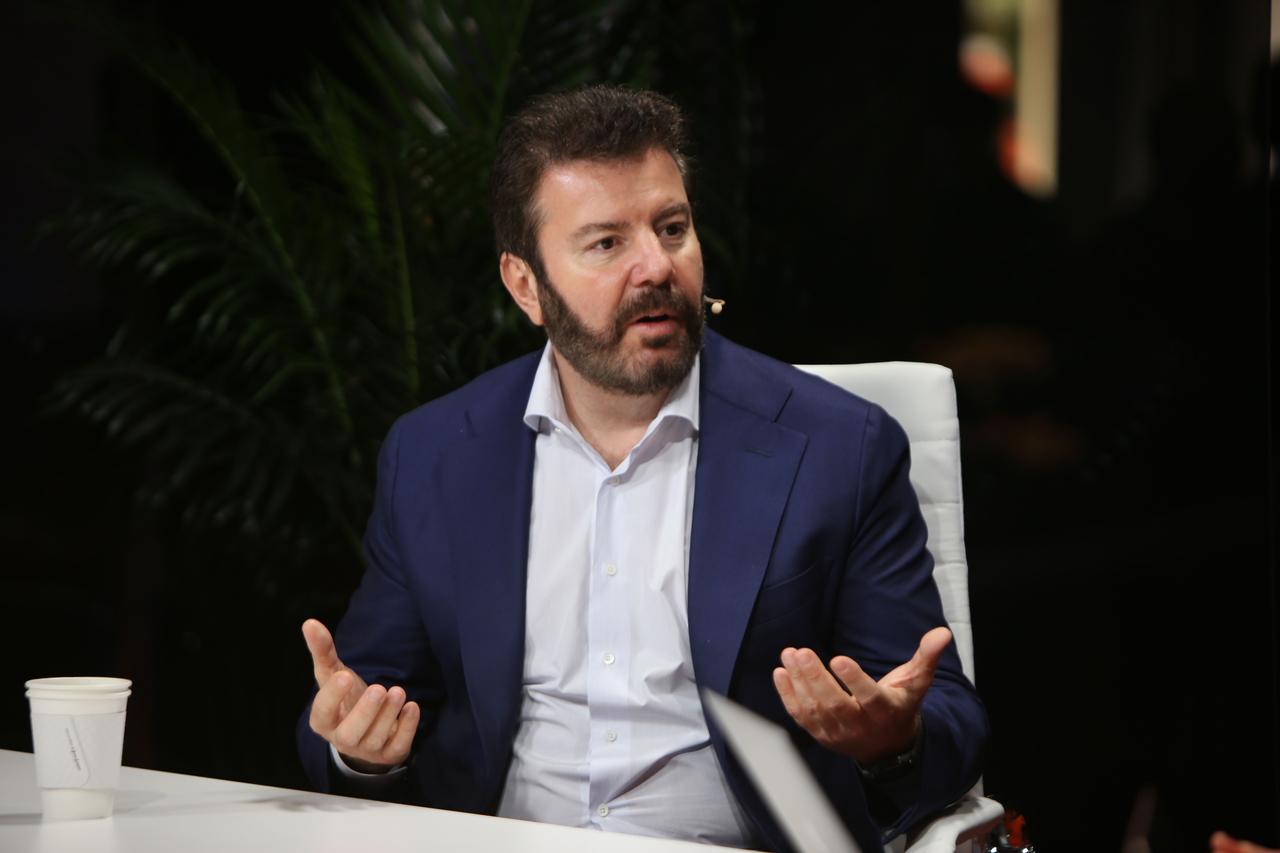
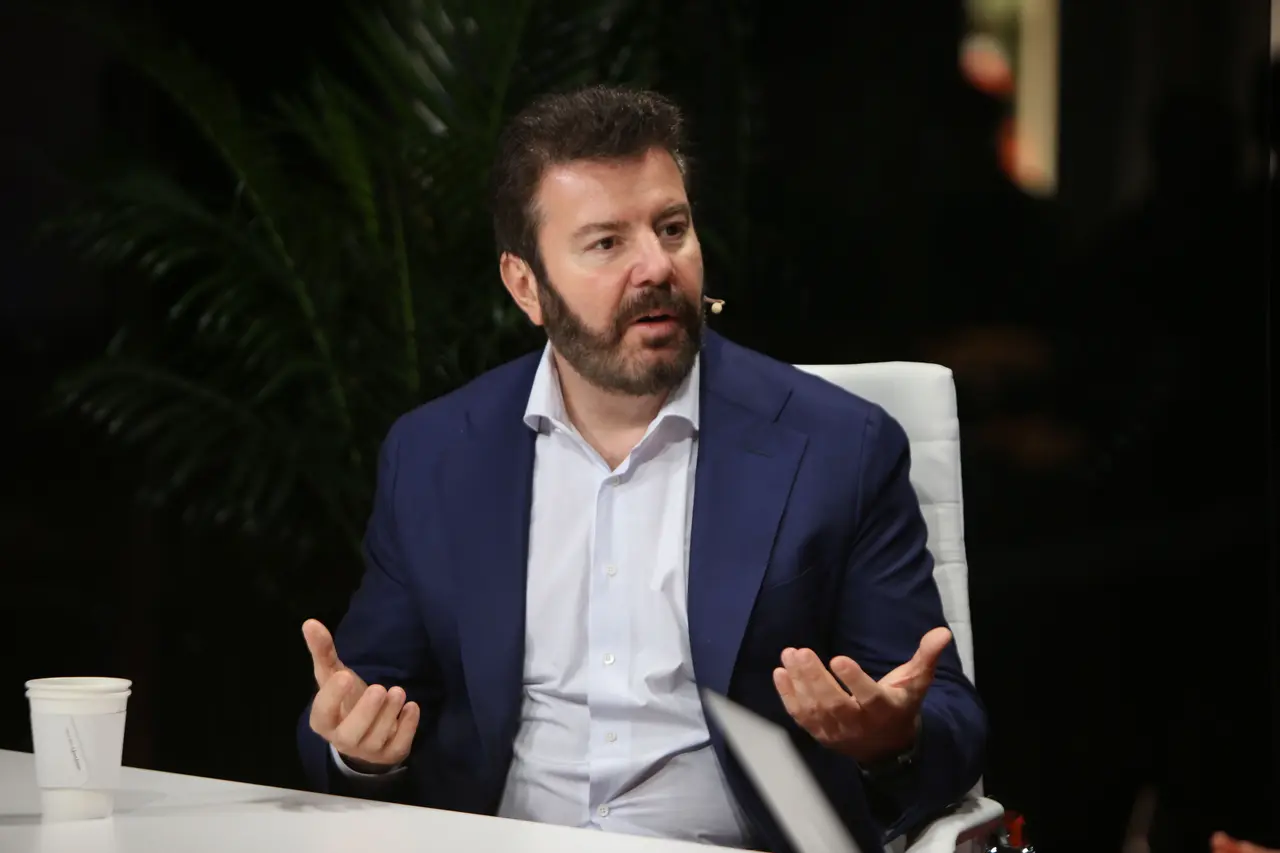
Agentic AI success helps UiPath swing to a profit, but investors weren't impressed Business automation software company UiPath Inc. delivered mixed results in its latest quarter, posting a solid revenue beat but falling short on earnings. However, it did at least manage to return to profitability. The company reported first quarter earnings before certain costs such as stock compensation of 15 cents per share, falling just shy of Wall Street's 16-cent-per-share target. On the other hand, its revenue climbed 17% from a year earlier to $418.4 million, easily beating the $397.5 million consensus estimate. With greater revenue, UiPath was able to engineer a swing back into the black. It reported net income for the quarter of $22.5 million, reversing from a loss of $22.6 million in the same period one year ago. Founder and Chief Executive Daniel Dines (pictured) told analysts he was pleased with the company's strong start to the new fiscal year, and was especially encouraged to see its annual recurring revenue grow at a 12% clip to reach $1.901 billion. "One year into general availability, our agentic products are moving from pilot to production with customers standardizing on UiPath as the orchestration and automation execution layer for their enterprise AI transformation," Dines said. "The launch of UiPath for Coding Agents marks the next step in that journey, accelerating time to value, and driving the deeper platform adoption that reinforces our position as the long-term business orchestration and automation platform for enterprise AI." Dines was referring to a new platform-wide integration that enables artificial intelligence coding agents to become "enterprise deployable." It combines third-party coding agents like Cursor and Claude Code with UiPath's visual agentic orchestration platform, enabling builders to create, test, deploy, operate and govern coding projects using the agent of their choice. On a conference call with analysts, Chief Financial Office Ashim Gupta said the company is seeing strong and rising demand for its AI agents and orchestration tools. Historically, UiPath has focused on robotic automation tools that follow rigid and predetermined rules, and this kind of workflow automation is still a key part of its business. However, the emergence of generative AI and autonomous AI agents has prompted UiPath to step up its game. It's now focused on more intelligent automations, and offers a selection of agents that can reason, adapt and work autonomously without human supervision. The company's push into these services is meant to reassure investors that it can benefit from the AI boom, rather than slide into obscurity. Gupta said many of the company's new deals involve the new agentic offerings. "Our fastest-growing area is agentic and AI-based automation," he said in response to an analyst's question. "Sixteen of our top 20 deals had AI and agentic as part of what they did." Despite making progress in agentic AI, UiPath's guidance didn't generate too much excitement. The company said it's targeting revenue of between $395 million and $400 million in the second quarter, which is more or less in-line with the Street's view of $397 million. For the full year, UiPath is targeting sales of $1.78 billion, just ahead of the $1.76 billion modeled by analysts. UiPath's stock fell more than 3% in late trading on today's report, erasing the 3% gain it had made during the regular trading session. So far this year, the stock is down 29%.
[2]
UiPath says deterministic automation can't be replaced by AI agents. Q1 FY2027 numbers support the case
UiPath achieves GAAP profitability in Q1 of fiscal year 2027 - its third successive profitability milestone, following a first GAAP-profitable Q3 and a first GAAP-profitable full fiscal year. Co-Founder and CEO Daniel Dines uses the earnings call to argue that the architectural distinction between deterministic automation and agentic AI is not transitional but the durable shape of how enterprise work will run. On the call, Dines quotes a line from a customer at DevCon, UiPath's developer conference in India: Models are easy, orchestration is not. Dines describes a shift in what customers are asking for: Customers are no longer asking us simply to deploy more agents or generate more code. They are asking us to transform how entire business functions operate through end-to-end workflows that span departments, connect systems, and deliver measurable operational outcomes. The numbers Annual Recurring Revenue (ARR) reaches $1.901 billion, up 12% year-over-year, with net new ARR of $49 million. Revenue is $418 million, growing 17% headline and 15% normalized for a $7 million foreign exchange (FX) tailwind. Non-GAAP operating income hits $92 million at a 22% margin, up over 250 basis points year-over-year. GAAP operating income is $28 million, a swing of $44 million from the prior year's $16 million GAAP loss. Dollar-based net retention rate moves up to 109%, or 108% normalized for FX. Chief Financial Officer Ashim Gupta describes this as the first quarter-over-quarter increase the company has seen in some time, and a signal that net new ARR is beginning to stabilize ahead of a possible re-acceleration. Customers generating $1 million or more in ARR grow 18% year-over-year to 374. UiPath repurchases 20 million shares at an average $11.47 in the quarter, and a further 2 million at $9.63 in the weeks after quarter-end. The balance sheet remains at $1.4 billion in cash and securities with no debt. For fiscal year 2027, UiPath now expects revenue of $1.776 billion to $1.781 billion, ARR of $2.058 billion to $2.063 billion, and non-GAAP operating income of approximately $430 million - the latter a raise on previous guidance despite an incremental FX headwind. Maestro Cases extends to unstructured work UiPath also recently launched Maestro Cases in public preview at DevCon. Maestro has, until now, handled structured workflows - invoice approvals, deployment pipelines, processes where the path is clearly defined. Maestro Cases extends that orchestration into work that is non-linear, dynamic, exception-driven and decision-led; work that does not fit a deterministic flowchart. Sonic Automotive is the named early example. Originally a UiPath customer for vehicle stocking and sales lead follow-up, Sonic now standardizes its agentic automation strategy on the platform under a C-suite initiative and expands into month-end close and employee onboarding workflows. The trigger, Dines explains, is the ability of Maestro Cases to coordinate complex multi-stage work across agents, automations and people simultaneously. Asked whether Maestro belongs in every AI deal, Dines says no. Maestro is for customers doing end-to-end orchestration; those happy to start with task-level work - Robotic Process Automation (RPA), application programming interface (API) automation, or agents applied to discrete tasks - do not need it. He continues: Maestro is naturally more for our more evolved customers. Maestro helps us landing bigger deals and makes our install base stickier, but I cannot say it can be deployed in every single deal. Dines's architectural argument Asked during the Q&A whether non-deterministic, probabilistic AI can replace deterministic automation, Dines replies: A probabilistic technology is not architecturally meant to follow a dozen of steps, and sometimes hundreds of steps in the same order, in the same sequence. Every step will have a probability. When you multiply these probabilities, you will end up with something that is not reliable. There are many regulated industries that cannot tolerate anything that is not 100% reliable; they will prefer an automation to fail as an exception rather than produce an unexpected result. He extends the point on economic grounds. Even where an agent can replicate deterministic steps, doing so consumes tokens at every step rather than running a script that "costs nothing in order to run". AI agents, he argues, should be used to create and maintain deterministic automations - and to handle exceptions when they break - rather than to perform the routine work itself. Dines names Claude Code and OpenAI Codex as examples of AI coding agents that are themselves built as a deterministic harness around a probabilistic model. The deterministic toolchain, he says, is what makes them reliable. Sixteen of the top 20 deals this quarter include AI, and expansion deals featuring AI are six times larger than those that do not, up from the near-three-times spend differential cited in Q4. Coding agents go live Coding agents, announced as a planned capability in Q4, are now live following their formal launch at DevCon. UiPath cites a four-week project compressed to three hours at a major consumer electronics company, and a two-month project compressed to a few days at a global chip manufacturer. Dines describes a fully agentic authoring surface - planning agents that interview subject matter experts to produce process documentation, solution architect agents that convert documentation into code, separate agents for user interface, Robotic Process Automation (RPA), application programming interface (API), and Maestro process orchestration code. Healing agents fix issues during runtime; diagnostic agents accelerate developer response when execution exceptions occur. The human role, Dines says, becomes one of goal-setting, validation and supervision rather than line-by-line authorship. He adds that accelerated authoring expands the surface area of work that needs to be orchestrated, monitored and governed. My take After Q3 I raised the question of whether Maestro's auditibility claims would hold up when agentic reasoning is involved rather than deterministic logic. After Q4 I marked Q1 FY2027 as the quarter to revisit, given that coding agents and the WorkFusion integration would be in play. The Q1 evidence does not settle that question, but it does provide a set of leading indicators worth tracking. The Q1 deal metrics - 16 of 20 top deals with AI, a six-times expansion deal premium, 18% growth in customers spending more than $1 million annually, dollar-based net retention rate moving up - will be the data points to watch over the next two quarters. If they hold, the architectural thesis is more than a strategic narrative. If they soften, the question reopens. UiPath also marked the loss of board member S. "Soma" Somasegar during the call. Dines's tribute was direct and personal. Boards are governance structures, but the people on them shape a company in ways that financial documents do not capture.
Share
Copy Link
UiPath returned to profitability in Q1 with $418.4 million in revenue, up 17% year-over-year, driven by strong demand for agentic AI and orchestration tools. CEO Daniel Dines argues that deterministic automation remains essential alongside AI agents, citing architectural and economic advantages. Despite the progress, investors reacted negatively to modest forward guidance, sending shares down 3%.
UiPath delivered mixed UiPath financial results for its first quarter of fiscal year 2027, posting revenue of $418.4 million—a 17% increase from the prior year that easily surpassed Wall Street's $397.5 million estimate
1
. The automation software company achieved GAAP profitability for the third consecutive quarter, reporting net income of $22.5 million compared to a loss of $22.6 million in the same period last year1
. Non-GAAP operating income reached $92 million at a 22% margin, while GAAP operating income hit $28 million, representing a $44 million swing from the prior year's $16 million loss2
. Annual recurring revenue climbed 12% to $1.901 billion, with net new ARR of $49 million2
. However, earnings of 15 cents per share fell just short of the 16-cent target, contributing to investor caution despite the solid performance.
Source: SiliconANGLE
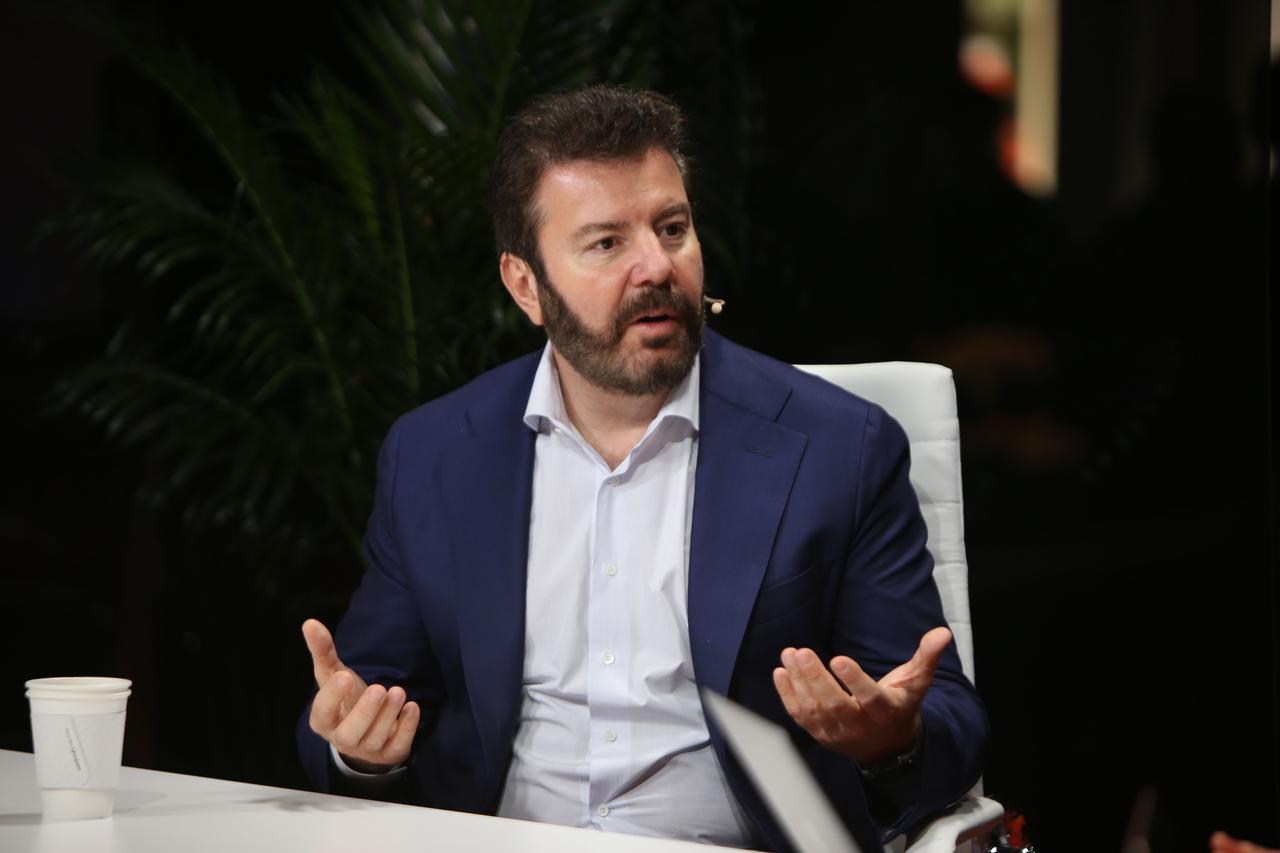
Founder and CEO Daniel Dines emphasized that agentic AI products are transitioning from pilot programs to full production deployments, with customers increasingly standardizing on UiPath as the orchestration layer for enterprise AI transformation
1
. The company's fastest-growing segment is AI-based automation, with sixteen of the top twenty deals this quarter including agentic AI components1
. CFO Ashim Gupta noted that expansion deals featuring AI are six times larger than those without, up from a near-three-times differential cited in the previous quarter2
. UiPath recently launched a platform-wide integration enabling generative and autonomous AI agents like Cursor and Claude Code to become enterprise-deployable, combining third-party coding agents with UiPath's visual agentic orchestration platform1
. This strategic shift addresses concerns about whether the company can capitalize on the AI boom rather than face obsolescence.Dines made a compelling case that deterministic automation cannot be replaced by probabilistic AI agents, arguing this architectural distinction represents the durable shape of how enterprise operations will function
2
. He explained that probabilistic technology is not architecturally suited to follow dozens or hundreds of steps in the same sequence reliably, as multiplying probabilities across steps reduces overall reliability2
. Regulated industries require 100% reliability and prefer automation to fail as an exception rather than produce unexpected results2
. Beyond reliability, Dines highlighted economic advantages: deterministic scripts cost virtually nothing to run, while AI agents consume tokens at every step2
. He noted that even AI coding agents like Claude Code and OpenAI Codex are built as deterministic harnesses around probabilistic models, demonstrating that the deterministic toolchain is what makes them reliable2
.Related Stories
UiPath unveiled Maestro Cases in public preview at its DevCon developer conference in India, extending end-to-end orchestration capabilities into non-linear, dynamic, exception-driven work that doesn't fit deterministic flowcharts
2
. While Maestro has traditionally handled structured workflows like invoice approvals and deployment pipelines, the Cases extension addresses unstructured workflows that require coordination across agents, automations, and people simultaneously. Sonic Automotive serves as an early example, expanding from vehicle stocking and sales lead follow-up to month-end close and employee onboarding workflows under a C-suite initiative. Dines clarified that Maestro is designed for more evolved customers pursuing end-to-end orchestration rather than task-level work, helping the company land bigger deals and making its install base stickier. Customers generating $1 million or more in ARR grew 18% year-over-year to 374, reflecting deepening platform adoption.Despite achieving GAAP profitability and strong revenue growth, UiPath's forward-looking investor guidance dampened market enthusiasm. The company projects second-quarter revenue between $395 million and $400 million, roughly in line with Street expectations of $397 million
1
. For fiscal year 2027, UiPath expects revenue of $1.776 billion to $1.781 billion and ARR of $2.058 billion to $2.063 billion, just ahead of analyst estimates of $1.76 billion1
. The company did raise its non-GAAP operating income guidance to approximately $430 million despite incremental foreign exchange headwinds2
. UiPath's stock fell more than 3% in after-hours trading, erasing the 3% gain from the regular session1
. The stock is down 29% year-to-date, reflecting broader market concerns about growth trajectory1
. UiPath executed share repurchases of 20 million shares at an average $11.47 during the quarter and an additional 2 million at $9.63 after quarter-end, while maintaining a balance sheet with $1.4 billion in cash and securities with no debt2
. The dollar-based net retention rate improved to 109%, marking the first quarter-over-quarter increase in some time and signaling potential stabilization ahead of possible re-acceleration2
.Summarized by
Navi
04 Dec 2025•Business and Economy

05 Sept 2025•Technology

30 May 2025•Business and Economy

1
Business and Economy

2
Technology

3
Policy and Regulation