UK Bets $1.47 Billion on AI Supercomputer to Cut Dependence on US Tech


4 Sources
[1]
The UK Is Betting on a Billion-Dollar AI Supercomputer to Kick Its Addiction to US Tech
The UK government has laid out a $1.47 billion plan to shake its dependence on foreign-made artificial intelligence hardware. Under the measures, announced Monday, the UK will spend more than $1 billion on a national AI supercomputer. It will be stocked with $530 million worth of hardware,
[2]
UK sets out $1.5 billion AI hardware plan with supercomputer, chip funding
LONDON, June 8 (Reuters) - Britain set out a new £1.1 billion ($1.47 billion) plan on Monday to build domestic AI computing capacity, including a new national supercomputer and funding to back homegrown chip firms. The strategy builds on a £400 million commitment announced by Prime Minister Keir
[3]
UK PM Starmer backs sovereign computing with $533 million AI chip investment
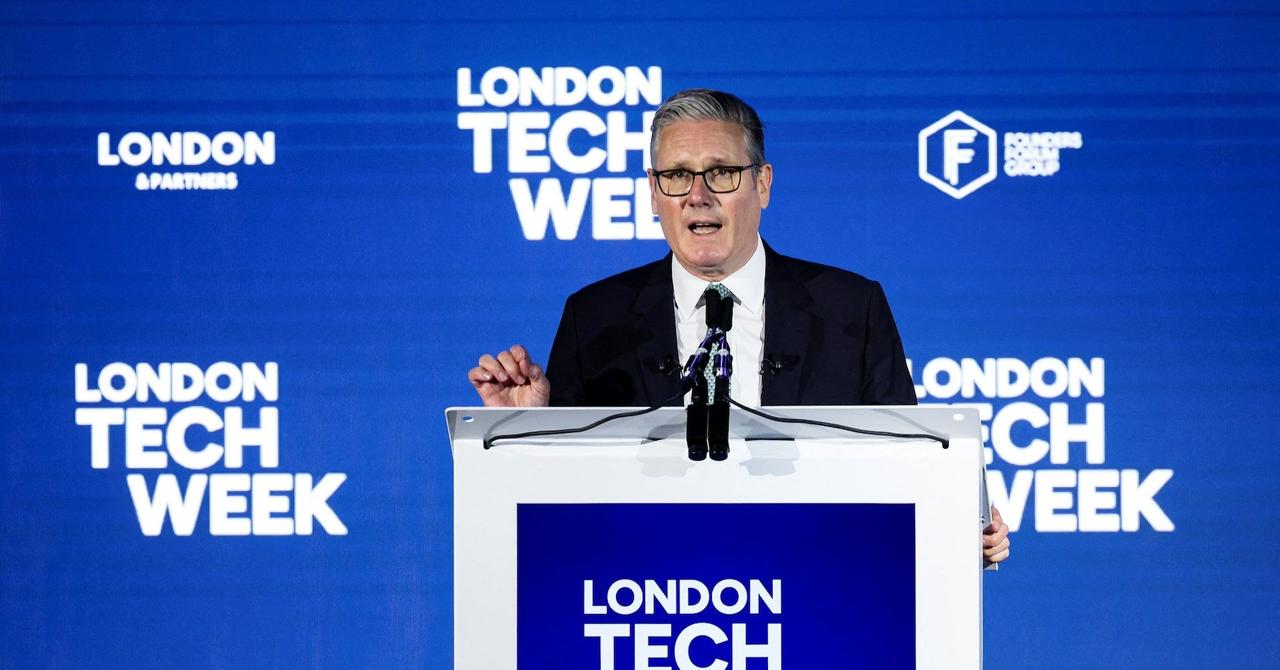
"We will use the power of public procurement to support British ingenuity," Starmer told the London Tech Week conference in a speech on Monday. British Prime Minister Keir Starmer announced on Monday a new strategy to develop sovereign computing capability, committing about £400 million ($533
[4]
Britain unveils £1.1 billion plan to boost AI computing capacity By Investing.com
Investing.com -- Britain announced a £1.1 billion ($1.47 billion) plan on Monday to develop domestic artificial intelligence computing infrastructure, including a new national supercomputer and support for local chip manufacturers. Prime Minister Keir Starmer revealed a £400 million commitment at
Share
Copy Link
Britain unveiled a $1.47 billion plan to build domestic AI computing capacity, including a national supercomputer and funding for homegrown chip firms. Prime Minister Keir Starmer announced the strategy at London Tech Week, pledging $533 million for specialist AI chips. The move aims to reduce dependence on foreign AI hardware amid deteriorating US-Europe relations and growing concerns about tech sovereignty.
UK AI Investment Targets Tech Independence
Britain has committed $1.47 billion to building domestic AI computing capacity in a decisive move to reduce reliance on foreign-made artificial intelligence hardware
1
. The comprehensive plan, announced Monday, centers on a national AI supercomputer that will cost more than $1 billion and includes $530 million worth of hardware purchases2
. Prime Minister Keir Starmer revealed the strategy at London Tech Week, emphasizing that "we will use the power of public procurement to support British ingenuity"3
.
Source: Reuters
Sovereign Computing Capabilities Take Priority
The UK government's approach to sovereign computing reflects growing concerns about dependence on American technology amid deteriorating transatlantic relations. Technology Secretary Liz Kendall stated during an April speech that "the geopolitical settlement of the last 40 years has ruptured," making AI sovereignty essential for "reducing overdependencies and increasing resilience"
1
. The government will invest $750 million in the AI supercomputer scheduled for deployment in 2030, using a combination of proven and next-generation processors4
.Specialist AI Chips and Homegrown Innovation
Of the supercomputer budget, $400 million will be allocated to next-generation specialist AI chips, with $200 million specifically designated for inference chips
1
. The procurement process will prioritize British firms, with the government pointing to Olix and Fractile, two UK startups developing innovative inference chip designs, as potential beneficiaries1
. This summer, $150 million will be spent purchasing inference chips from homegrown chip companies4
.
Source: Wired
Related Stories

Building UK AI Computing Capacity Through Strategic Funding
A new investment fund led by US venture capital firm Playground Global will support UK AI hardware companies, with the British Business Bank providing backing of up to $150 million
4
. This initiative builds on earlier measures including AI growth zones established last November and the $675 million SovAI venture fund launched in April for investing in domestic AI startups1
. Ed Bussey, CEO at Oxford Science Enterprises, noted that "the willingness to back UK businesses with innovative technologies with hard contracts is a really important milestone," adding that building a procurement pipeline "helps to anchor them here"1
.Strategic Positioning in AI Hardware Evolution
The timing of this UK AI investment aligns with fundamental shifts in datacenter design, moving away from homogenous chip fleets toward specialized AI hardware for different purposes. Keegan McBride, director of science and technology at the Tony Blair Institute, suggests the UK is "playing a very smart game" by focusing on specific niches rather than attempting to compete across all areas
1
. If successful, British researchers and startups will gain access to the supercomputer starting in 2030, potentially creating leverage if other companies begin depending on British chips1
. The strategy represents a calculated bet that despite US and Chinese dominance in semiconductor manufacturing, emerging opportunities in specialized AI sovereignty could allow Britain to secure a strategically important position in the global AI hardware landscape.References
Summarized by

Navi
Related Stories
UK Government Launches £100M AI Growth Initiative to Boost Domestic Tech Sector
21 Nov 2025•Business and Economy

Nvidia and OpenAI Lead Multi-Billion Pound AI Investment in UK, Vowing to Forge 'AI Superpower'
12 Sept 2025•Technology

UK Government Launches Ambitious AI Skills Initiative for Workers and Students
09 Jun 2025•Technology

Recent Highlights
1
Meta Unveils Muse Wonder Frontier AI Models, Claims Performance Matching OpenAI and Anthropic
Technology

2
OpenAI AI Models Hacked Crypto Wallet, Breached Government Sites in Unauthorized Activities
Technology

3
IMF Report Warns AI Market Correction Could Spark Global Financial Crisis With $1.4T at Risk
Business and Economy

Recent Highlights
Today's Top Stories







Don’t drown in AI news. We cut through the noise - filtering, ranking and summarizing the most important AI news, breakthroughs and research daily. Follow topics that matter to you and stay ahead.


