UK government admits AI data centres could emit 100 times more carbon than previously forecast


4 Sources
[1]
AI data centre emissions vastly underestimated, UK admits
The UK's AI data centres could be more than a hundred times more damaging to the climate than previously estimated, the government has announced. The Department for Science, Innovation and Technology this week corrected its forecast for greenhouse gas emissions from AI compute for the next decade,
[2]
AI data center emissions could be much higher than anticipated, new numbers show
Countries continue to invest in AI infrastructure, often misaligned with previous climate goals. Credit: Mario Tama / Staff / Getty Images News via Getty Images AI data centers across the pond could emit nearly one million more tons of carbon dioxide into the atmosphere than previously estimated,
[3]
UK departments at odds over energy demands of AI datacentres
Discrepancy in forecasts raises questions over government planning for net zero One vision of the UK's future involves a decarbonised economy powered by clean, renewable energy. Another involves making the UK an AI superpower. The government departments responsible for these two visions do not
[4]
Officials hugely underestimated impact of AI datacentres on UK carbon emissions
Revised figures increase fears about how the energy-intensive sites could worsen the climate emergency The UK government vastly underestimated the climate impact of artificial intelligence, it has emerged, after officials raised their estimate of carbon emissions from the technology by a factor of
Share
Copy Link
The UK quietly revised its climate projections for AI infrastructure, revealing that AI data centres could generate up to 123 million tonnes of CO₂ over the next decade—more than 100 times the original estimate. The dramatic correction exposes a stark misalignment between the government's AI ambitions and its legally binding net-zero commitments, as two key departments appear to be working with wildly different energy consumption forecasts.
UK Government Revises AI Data Centre Emissions Upward by Factor of 100
The UK government has quietly corrected a significant underestimate in its climate projections, revealing that AI data centres could emit up to 123 million metric tons of carbon dioxide over the next decade. This figure represents a more than hundredfold increase from previous estimates that capped emissions at 0.142 million metric tons in a single year
1
4
. The Department for Science, Innovation and Technology (DSIT) now projects that greenhouse gas emissions from AI compute will reach at least 34 million metric tons of CO₂, with AI data centres accounting for between 0.9 and 3.4 per cent of the UK's total carbon emissions between 2025 and 20351
. Previously, officials claimed these facilities would contribute less than 0.05 per cent of the country's emissions.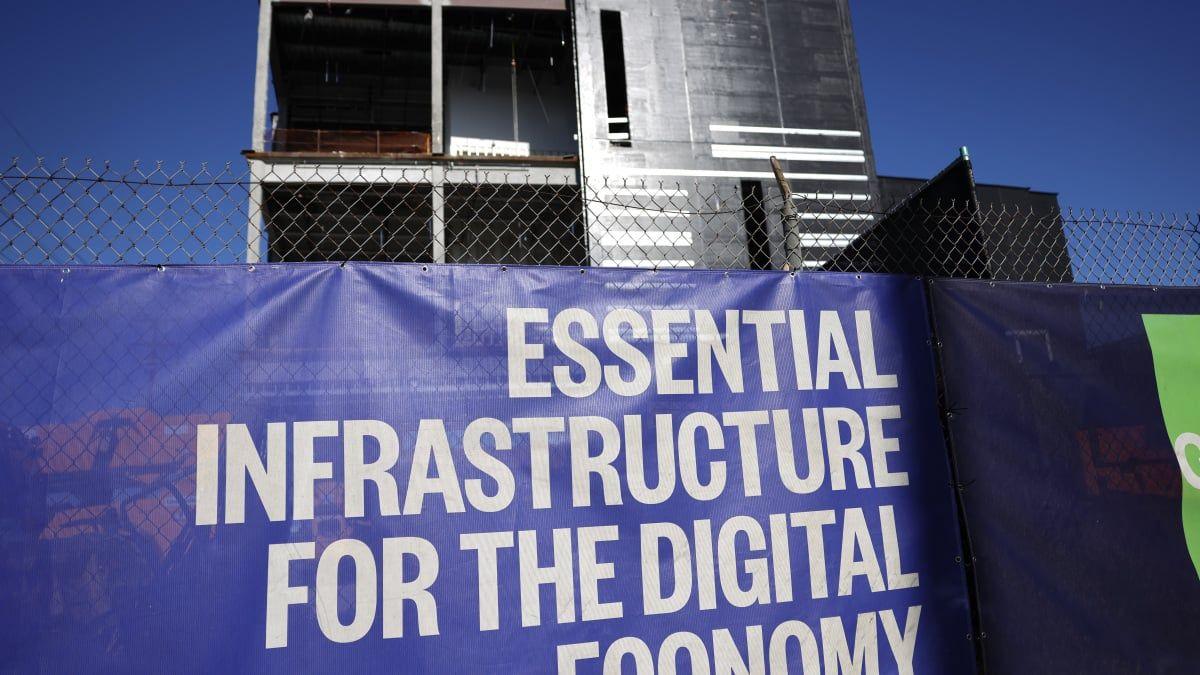
Source: Mashable
Underestimated Climate Impact Raises Questions About Planning
The revision came after investigations by Foxglove, a tech-focused campaign group, and Carbon Brief pointed out the implausibility of the original figures
3
4
. The government did not explain why earlier estimates required such a dramatic correction, with a person close to DSIT attributing the changes only to "routine review"1
. The original projections were based partly on work by consultancy McKinsey and drew from academic literature, government projections, and assumptions about future scenarios. Tim Squirrell, head of strategy at Foxglove, said the UK government's legally binding commitment to hit net-zero emissions by mid-century sits "awkwardly alongside its hell-for-leather embrace of a hyperscale AI data centre build-out"1
.Departmental Disagreement Exposes Planning Gaps
A troubling discrepancy has emerged between two key government departments responsible for the UK's AI ambitions and climate goals. The Department for Science, Innovation and Technology (DSIT) forecasts that AI data centres will consume 6GW of electricity by 2030 as outlined in the UK Compute Roadmap, while the Department of Energy Security and Net Zero (DESNZ) appears to project less than a tenth of that amount for the entire commercial services sector
3
. DESNZ's carbon budget growth projections suggest the energy use of Britain's commercial services sector will grow by only 528MW between 2025 and 2030—equivalent to adding consumption of 1.7 million homes. This is ten times lower than the electricity the UK government has committed to AI infrastructure under its compute roadmap3
.Related Stories
Environmental Impact of AI Threatens Net-Zero Commitments
The environmental impact of AI data center growth poses a direct challenge to the UK's climate commitments. AI-enabled data centres globally have been particularly reliant on burning gas for energy, due to power-intensive processors that train and deploy advanced models
1
. These facilities require round-the-clock reliable power even when renewable sources like wind and solar are unavailable. While the UK government has pledged to largely run the country's power system on clean energy by the end of the decade, it has acknowledged that in practice this will mean retaining some gas-fired power1
. The revised figures suggest AI energy consumption could generate emissions equivalent to those produced by 2.7 million people2
4
.
Source: FT
What This Means for the UK's AI Superpower Ambitions
The UK government's vision to become an AI superpower through its compute roadmap now faces scrutiny over whether it can be reconciled with binding climate targets. The policy document sets out a "bold, long-term plan to transform our national compute ecosystem" by building AI data centres across multiple AI growth zones, each requiring at least 500MW of electricity
3
. Patrick Galey, head of investigations for Global Witness, warned that "to waste what little bandwidth we have left—when 750 million people worldwide still lack access to electricity—assisting some of the richest men ever to hone their plagiarism bots would be a historic idiocy that future generations are unlikely to forgive today's leaders for"4
. The lower range of DSIT's revised estimates depends on greater efficiency in AI models and hardware, and faster decarbonisation of the UK's energy grid . Meanwhile, OpenAI put its flagship UK data centre project on hold earlier this month, citing high energy costs and regulatory uncertainty1
.References
Summarized by

Navi
[3]
Related Stories
AI Boom Threatens UK's Climate Goals: Cambridge Report Warns of 'Magical Thinking'
11 Jul 2025•Technology

AI Infrastructure Threatens Climate Goals as Data Centers Face Environmental Reckoning
10 Nov 2025•Science and Research

AI's Energy Appetite: Data Centers Struggle with Sustainability Amid AI Boom
13 Jul 2024

Recent Highlights



Recent Highlights
Today's Top Stories






Don’t drown in AI news. We cut through the noise - filtering, ranking and summarizing the most important AI news, breakthroughs and research daily. Follow topics that matter to you and stay ahead.


