11 Gas-Powered AI Data Centers Could Emit More Greenhouse Gases Than Morocco


2 Sources
[1]
The dark side of AI -- shocking report reveals 11 planned AI data centers connected to OpenAI, Meta and Microsoft could produce more greenhouse gases than Morocco
* New AI data centers in the US could produce more emissions than an entire nation * 11 sites have the potential to emit 129 million tons of greenhouse gases per year * The future sustainability of AI remains unclear A report has found new AI data centers in the US could have the ability to
[2]
Gas power projects for just 11 US data center 'campuses' could emit more greenhouse gases than entire countries, according to report
While nuclear energy is often presented as the potential 'clean' solution for powering the vast number of US data centers currently under construction, the reality is that other, less sustainable energy solutions are often used to plug the gap. Wired has been examining air permits for several new
Share
Copy Link
An investigation reveals that 11 gas-powered AI data centers in the US could generate 129 million tons of greenhouse gas emissions per year—more than Morocco's entire 2024 output. OpenAI, Meta, Microsoft, and xAI are all linked to these facilities, which bypass traditional power grids by building dedicated gas power stations to meet AI's growing energy demands.
Gas-Powered AI Data Centers Raise Climate Concerns
A Wired investigation has uncovered that 11 gas power projects connected to AI data centers across the United States could potentially emit 129 million tons of greenhouse gas emissions annually—surpassing the entire carbon footprint of Morocco in 2024
1
. The findings spotlight the environmental impact of AI as major technology companies race to expand infrastructure to support the AI boom environmental cost.The natural gas power projects are being developed to provide electricity solely for US data center campuses, effectively bypassing the traditional power grid
2
. Companies including OpenAI, Meta, Microsoft, and xAI have been linked to these facilities, which have either been announced or are already under construction. Each project has submitted air permits to state agencies, providing publicly viewable data that reveals the scale of potential emissions from data centers.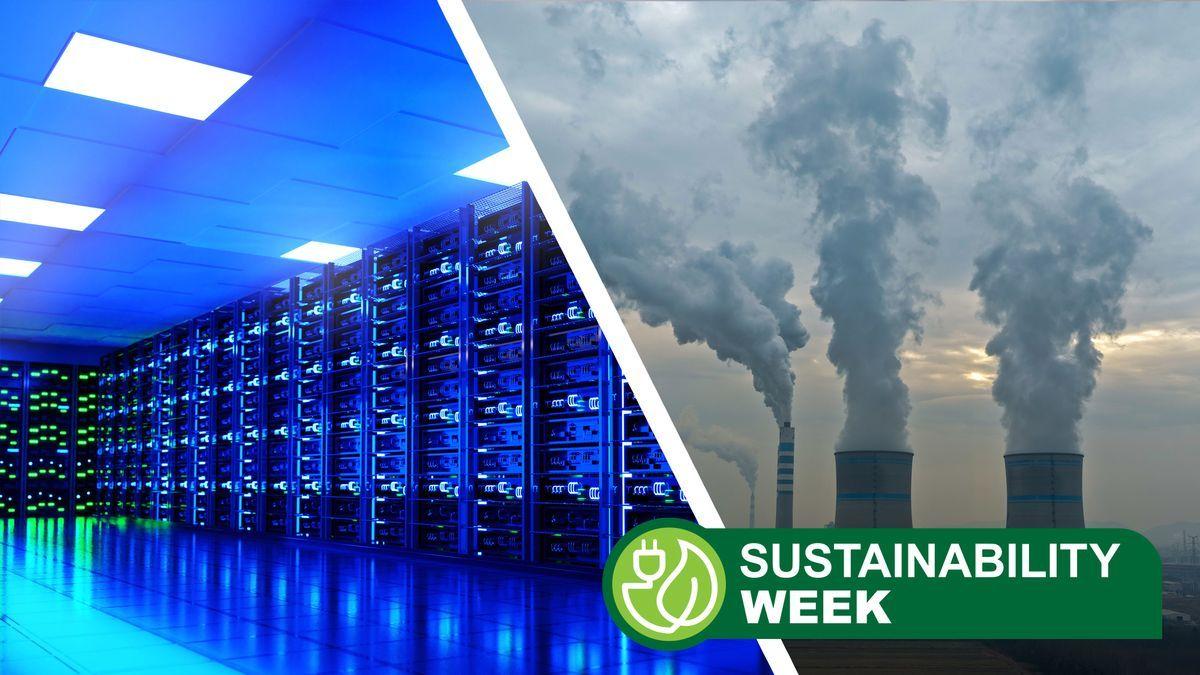
Source: TechRadar
Major Tech Players and Their Carbon Footprint
Microsoft is reportedly looking to purchase power from a Chevron-backed natural gas project in West Texas that could emit more than 11.5 million tons of greenhouse gases each year—exceeding Jamaica's annual emissions
1
. Meanwhile, xAI's gas turbines powering the Colossus campus in Memphis, Tennessee and Colossus 2 in Southaven, Mississippi could each generate more than 6.4 million tons of CO2 equivalents per year—equivalent to roughly 30 average-sized natural gas plants2
.The Stargate Project, an OpenAI-led multicompany venture creating multiple data center facilities across several US states, presents additional climate change concerns from AI. Permit documents for just three Stargate-affiliated natural gas power projects show a combined potential to emit more than 24 million tons of greenhouse gases annually—more than Costa Rica and slightly less than Croatia
2
.Understanding the Real Impact on Sustainability
While the emissions data derives from models assuming power plants run continuously at full capacity—an unlikely scenario for standard grid-connected facilities—the actual output could still be substantial. Alex Schott, director of communications for an oil and gas company building three power plants for Meta, suggested actual emissions could be "potentially two-thirds less than what's on the paper"
2
. Even at half the maximum figures shown on air permits, the combined gas-powered AI data centers infrastructure would still create more emissions in a single year than Norway did in 2024.However, energy researcher Jon Koomey noted that data center-specific gas plants may behave differently than traditional facilities. A November permit application states that unlike traditional power plants responding to constantly varying grid demands, "at the data center, the power requirements do not vary significantly"
2
. This could mean these facilities run longer and more consistently, potentially increasing AI's sustainability problems.Related Stories

What This Means for AI's Future
The development of these facilities raises questions about whether users want to support technology with such significant climate implications. As data center growth accelerates to meet AI processing demands, the gap between current infrastructure and clean energy solutions widens. Koomey also warned that with highly efficient gas turbines in short supply, some developers are already considering less efficient models, which will need to run longer and create more emissions from data centers
2
.While many companies describe these gas facilities as temporary solutions until clean power catches up, it remains unclear whether all would be retired once cleaner energy sources come online. President Donald Trump has signed an executive order to accelerate nuclear power plant construction, but the timeline for such alternatives remains uncertain. Some hope exists that global supply chain instability affecting AI infrastructure—from memory to power plant equipment—may slow data center growth enough for sustainable energy to catch up. As energy research firm Cleanview founder Michael Thomas warns: "It's almost like we thought we were on the downside of the industrial revolution, retiring coal and gas, and now we have a new hump where we're going to rise. That terrifies me in a lot of ways"
2
.
Source: PC Gamer
References
Summarized by

Navi
Related Stories
AI Data Centers' Carbon Emissions Surge, Rivaling Commercial Airlines
18 Dec 2024•Technology

Amazon's Texas AI Data Center Could Become America's Largest Single Source of CO₂ Pollution
08 Aug 2026•Business and Economy
AI boom drives US to triple natural gas power projects as data centers fuel global surge
29 Jan 2026•Business and Economy
Recent Highlights



Recent Highlights
Today's Top Stories






Don’t drown in AI news. We cut through the noise - filtering, ranking and summarizing the most important AI news, breakthroughs and research daily. Follow topics that matter to you and stay ahead.


