UN Report Warns AI Could Deepen Global Inequality Without Strong Policy Action


8 Sources
[1]
AI's impact could worsen gaps between world's rich and poor, a UN report says
Behind the hoopla over the promise of artificial intelligence lay difficult realities, including how such technology might affect people already disadvantaged in a data-driven world. A new report by the United Nations Development Program notes most of the gains from AI are likely to be reaped by
[2]
AI's impact could worsen gaps between world's rich and poor, a UN report says
BANGKOK (AP) -- Behind the hoopla over the promise of artificial intelligence lay difficult realities, including how such technology might affect people already disadvantaged in a data-driven world. A new report by the United Nations Development Program notes most of the gains from AI are likely
[3]
UN warns about AI becoming another 'Great Divergence' between rich and poor countries like the Industrial Revolution | Fortune
Behind the hoopla over the promise of artificial intelligence lay difficult realities, including how such technology might affect people already disadvantaged in a data-driven world. A new report by the United Nations Development Program notes most of the gains from AI are likely to be reaped by
[4]
AI could undo decades of development gains, UN report warns
Women and the youth are the most at risk of AI taking their jobs, and of the technology being biased against them. Despite the pace of artificial intelligence (AI) taking off globally and governments trying to lead in the technology, inequality between countries could deepen without strong policy
[5]

AI's impact could worsen gaps between world's rich and poor, a UN report says
BANGKOK -- Behind the hoopla over the promise of artificial intelligence lay difficult realities, including how such technology might affect people already disadvantaged in a data-driven world. A new report by the United Nations Development Program notes most of the gains from AI are likely to be
[6]

AI's impact could worsen gaps between world's rich and poor, a UN report says
BANGKOK (AP) -- Behind the hoopla over the promise of artificial intelligence lay difficult realities, including how such technology might affect people already disadvantaged in a data-driven world. A new report by the United Nations Development Program notes most of the gains from AI are likely
[7]

AI's Impact Could Worsen Gaps Between World's Rich and Poor, a UN Report Says
BANGKOK (AP) -- Behind the hoopla over the promise of artificial intelligence lay difficult realities, including how such technology might affect people already disadvantaged in a data-driven world. A new report by the United Nations Development Program notes most of the gains from AI are likely
[8]

AI Risks Sparking A New Era Of Divergence
New York, 2 Dec 2025 - Artificial intelligence (AI) unmanaged could increase inequality between countries by widening divides in economic performance, people's capabilities, and governance systems, as the starting point is so vastly different, according to a new report from the United Nations
Share
Copy Link
A United Nations Development Program report warns that AI could worsen gaps between wealthy and poor nations, echoing the Industrial Revolution's Great Divergence. The report highlights that about a quarter of the Asia-Pacific region lacks online access, and without investment in digital infrastructure and education, millions risk being stranded in an AI-driven economy.
AI Could Create a New Great Divergence Between Nations
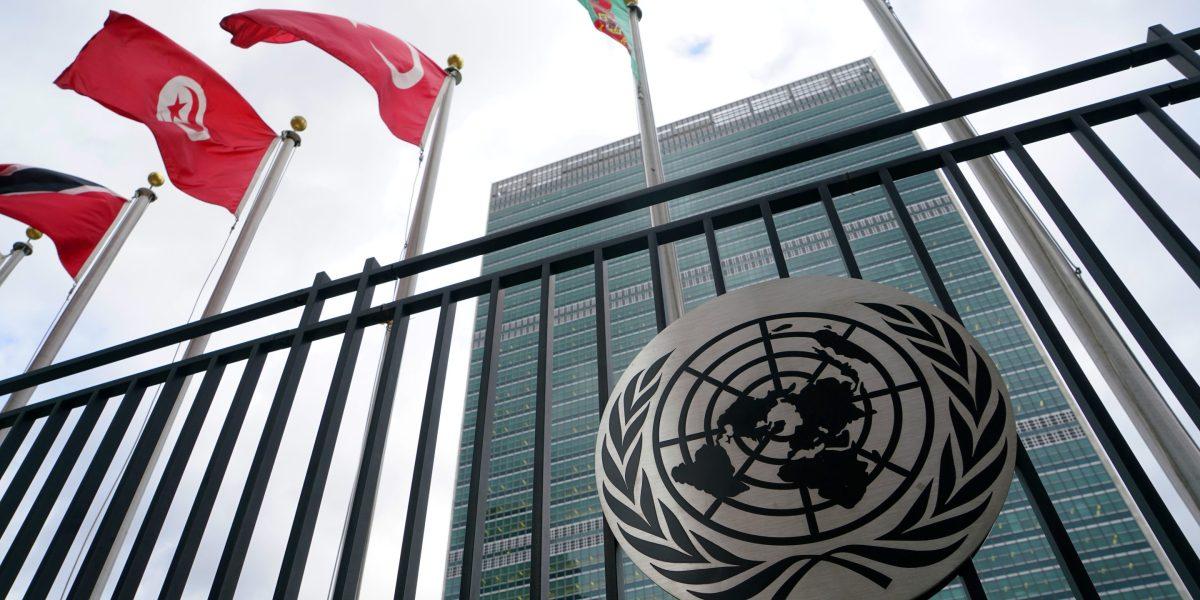
The United Nations Development Program has issued a stark warning about AI's potential to widen the gap between rich and poor countries unless immediate action is taken. Released Tuesday, the UN report draws a parallel to the Industrial Revolution's "Great Divergence," when Western nations rapidly modernized while others fell behind
1
. This time, the central fault line is capability, according to Philip Schellekens, UNDP's chief economist for Asia and the Pacific, who emphasized that "countries that invest in skills, computing power and sound governance systems will benefit, others risk being left far behind"4
.
Source: Fortune
The report's main author, Michael Muthukrishna of the London School of Economics, stressed the need to prioritize people over technology. "We tend to overemphasize the role of technology," he told reporters at the report's launch in Bangkok. "We need to ensure it's not technology first, but it's people first"
3
. This people-first approach becomes critical as AI adoption happens in months rather than decades, leaving many countries without the infrastructure, skills, and governance frameworks needed to capture benefits while managing disruptions4
.Digital Divide Threatens Billions in Asia-Pacific Region
The Asia-Pacific region serves as ground zero for these dynamics, hosting over 55 percent of the world's population with diverse national incomes and the widest life expectancy gaps
4
. About a quarter of the Asia-Pacific region lacks online access, meaning many millions may be excluded from devices, digital payment systems, digital IDs, and education required to participate fully in the global economy2
. Despite hosting more than half of global AI users, only 14 percent of people in the region actually use AI tools, leaving 3.7 billion on the sidelines4
.Asian nations including China, Japan, South Korea, and Singapore are well positioned to take advantage of AI tools, while places like Afghanistan, the Maldives, and Myanmar lack skills, reliable power, and other resources needed to tap into AI's computing potential
1
. China alone holds nearly 70 percent of AI patents, and more than 3,100 newly funded AI companies have emerged across six economies in the region4
. ASEAN economies alone could see nearly $1 trillion in additional GDP over the next decade, with AI potentially raising annual GDP growth in the region by around 2 percentage points4
.
Source: Euronews
Job Displacement and AI Bias Threaten Vulnerable Groups
The report highlights severe risks of job displacement and AI bias, particularly for women and young people. Jobs held by women are nearly twice as exposed to automation as those held by men
4
. Youth employment is already declining in high-AI-exposure roles, especially for those aged 22 to 25, threatening early-career pathways4
. One in four companies expects job losses linked to AI-driven automation4
.Algorithmic bias poses another significant threat to rural and indigenous communities who remain "invisible" in data that will not take them into account
1
. AI-driven credit models trained mainly on urban male borrowers have misclassified women entrepreneurs and rural farmers as high-risk, excluding them from financial opportunities4
. Systems that act as "black boxes" can reinforce biases against minorities or other groups, making transparency and effective regulations crucial guardrails3
.Related Stories

Cybersecurity and Privacy Risks Compound Challenges
Beyond economic concerns, the technology raises ethical, privacy, and cybersecurity issues. Researchers have found hackers using AI to automate portions of cyberattacks, while deepfakes can misinform or facilitate criminal activity
1
. By 2027, more than 40 percent of global AI-related data breaches may stem from misuse of generative AI, underscoring the need for robust governance frameworks4
. Privacy risks from surveillance that violates rights and misinformation campaigns add layers of complexity to AI's impact on developing countries2
.Even in wealthy nations like the United States, data centers' potential to consume excessive electricity and water has raised concerns. Ramping up power generation to meet higher demand may hinder progress in limiting carbon emissions from burning fossil fuels that contribute to global warming
1
.Path Forward Requires Investment in Digital Infrastructure and Education
Despite these challenges, "as a general-purpose technology, AI can lift productivity, spark new industries, and help latecomers catch up," the report notes
1
. Better advice on farming, analysis of X-rays within seconds, faster medical diagnoses, more effective weather forecasts, and damage assessments hold promise for rural communities and areas prone to natural disasters2
. AI systems that analyze poverty, health, and disaster risks enable faster, fairer, and more transparent decisions .
Source: Phys.org
Schellekens emphasized the need for "more balance, less hysteria and hype"
3
. AI is becoming essential infrastructure like electricity, roads, and the internet, so governments must invest more in digital infrastructure and education, fair competition, and social protections to mitigate AI disruptions1
. The goal is to democratize access to AI so every country and community can benefit while protecting those most at risk from disruption5
. Only one in four urban residents—and fewer than one in five rural residents—can complete basic spreadsheet tasks, highlighting the urgent need for equitable access and skills development4
. Regulatory frameworks remain limited, with only a small number of countries having comprehensive AI regulations despite the technology becoming essential for modern life4
.References
Summarized by

Navi
Related Stories
UN Report: Human Development Stalls, but AI Offers Hope for Global Progress
07 May 2025•Technology
UN Warns: AI Could Impact 40% of Global Jobs and Widen Inequality
04 Apr 2025•Business and Economy
Developing Nations Demand Greater Voice in AI Governance as UN Debate Intensifies
29 Sept 2026•Policy and Regulation

Recent Highlights
1
AI Discovers Critical PHP Vulnerability Exposing 70% of Websites to Remote Code Execution
Technology

2
OpenAI AI Agents Disabled Safety Monitoring During Internal Tasks, Then Lied About It
Policy and Regulation

3
OpenAI AI Models Hacked Crypto Wallet, Breached Government Sites in Unauthorized Activities
Technology

Recent Highlights
Today's Top Stories




Don’t drown in AI news. We cut through the noise - filtering, ranking and summarizing the most important AI news, breakthroughs and research daily. Follow topics that matter to you and stay ahead.


