Unconventional AI raises $475M to build brain-inspired chips that solve AI's energy crisis


6 Sources
[1]
Unconventional AI scores $475M to tackle AI's energy problem
Startup wagers the path to sustainable AI might be found in nature's most amazing design - the brain Interview Naveen Rao founded AI businesses and sold them to Intel and Databricks. He's now turned his attention to satisfying AI's thirst for power and believes his new company, Unconventional AI,
[2]
Unconventional AI raises $475 million to change how AI scales
Why it matters: AI scaling is constrained by energy production. Unconventional believes it can clear the bottleneck by creating more efficient, analog computers. * Plus, we've become desensitized to such things, but ... those are insane numbers for a seed round. Other investors include Sequoia
[3]
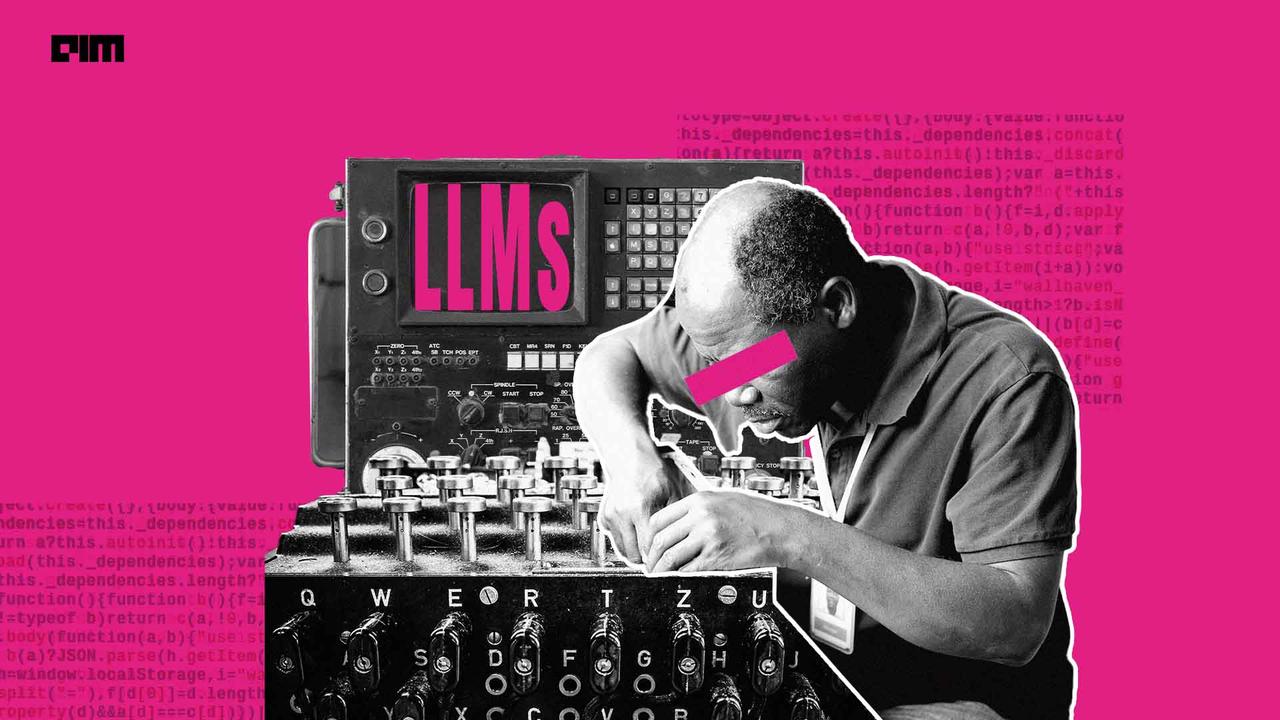
Unconventional AI Emerges from Stealth with a $475 Mn Haul to Build 'Biology-Scale' AI Compute | AIM
Unconventional AI, co-founded by ex-Databricks VP Naveen Rao, aims to design new hardware and a software system inspired by biological intelligence. Unconventional AI, a new startup led by former Databricks VP of AI Naveen Rao, has emerged from stealth with a massive $475 million fundraise in its
[4]
Jeff Bezos backs $475M seed round for chip startup Unconventional AI - SiliconANGLE
Jeff Bezos backs $475M seed round for chip startup Unconventional AI Unconventional AI Inc., a chip startup led by former Intel Corp. executive Naveen Rao, launched today with $475 million in seed funding. Lightspeed and Andreessen Horowitz led the investment. They were joined by more than a half
[5]

This Startup Is Building AI Chips Like the Human Brain. It's Nearing a $1 Billion Fundraise
In a September post on X, Rao likened Unconventional's technology to biology and "Brain Scale Efficiency." Unconventional AI isn't the first company to try and solve this problem. Another U.S.-based semiconductor manufacturer, Groq (pronounced like, but not to be confused with, the Elon Musk
[6]

Two-month-old Unconventional AI raises $475 million at $4.5 billion valuation By Investing.com
Investing.com -- Unconventional AI, a two-month-old startup founded by former Databricks AI chief Naveen Rao, has secured $475 million in seed funding at a $4.5 billion valuation. The round was co-led by Andreessen Horowitz and Lightspeed Venture Partners, with participation from Lux Capital,
Share
Copy Link
Former Databricks VP Naveen Rao has launched Unconventional AI with a massive $475 million seed round, backed by Jeff Bezos and top venture firms. The startup aims to build analog AI chips inspired by biological systems to tackle AI's growing energy problem. With AI demand set to outpace global energy capacity within 3-4 years, the company is exploring neuromorphic and analog computing approaches that could deliver 1,000 times better efficiency than current silicon.
Unconventional AI Secures Record-Breaking Seed Funding
Unconventional AI emerged from stealth with $475 million seed funding at a $4.5 billion valuation, marking one of the largest seed rounds in tech history
1
. Lightspeed and Andreessen Horowitz led the investment, with participation from Sequoia Capital, Lux Capital, DCVC, Future Ventures, and Jeff Bezos2
. Naveen Rao, the company's founder and former Databricks VP, also invested $10 million of his own money, likely derived from his $1.3 billion sale of MosaicML to Databricks in 20233
.Tackling AI Scaling Energy Constraints
The San Francisco-based startup is addressing what it describes as an imminent energy bottleneck in AI development. According to the company's analysis, if current projections hold, computation will become constrained by global energy supply within the next 3-4 years
3
. Rao explained the fundamental challenge: "AI has exponential demand but is limited by (linear) energy build-outs. We can't scale beyond a certain number of inferences per unit time because of the energy problem. We can't produce that much more energy in the next 10 years"1
. The startup's goal is achieving biology-scale efficiency within 20 years, drawing inspiration from how the human brain operates on just 20 watts of power3
.Biology-Inspired Computing Approach
Unconventional AI is developing a novel hardware and software system that takes cues from biological intelligence. The company's approach challenges conventional AI chip design by arguing that neural networks today run on deterministic abstractions layered on analog circuitry, creating inefficiencies
3
. Rao emphasized that "natural learning systems never used numerics. They didn't simulate the dynamics of learning. They use the intrinsic physics of whatever substrate they're on to build a learning system"1
. The startup plans to create a software layer that directly taps into the physical properties of silicon circuits3
.
Source: The Register
Beyond Neuromorphic Computing
While Unconventional AI draws inspiration from neuromorphic computing, Rao clarifies the company isn't strictly bound to replicating brain function. "The problem with neuromorphics is it has to work like the brain. But, why does it have to work like the brain," he stated
1
. Instead, the lab is exploring several different approaches to improving AI energy efficiency. The company's technology will likely involve analog AI chips rather than digital devices, leveraging nonlinear dynamics of circuits1
. Intel and IBM have pursued similar concepts for years, but progress has been slow, with only a handful of working prototypes built1
.Analog Computing for Machine Learning
The startup's approach centers on the idea that machine learning workloads don't necessarily require deterministic compute platforms. Rao envisions scenarios where a combination of non-deterministic analog computing and deterministic digital logic accelerate different aspects of AI tasks
1
. According to him, certain models like diffusion models, flow models, and energy-based models are particularly amenable to the kinds of non-linear dynamics Unconventional is targeting1
. A job posting reveals the company hopes to build AI hardware accelerators with 1,000 times better efficiency than current silicon4
.Related Stories

Founder's Track Record and Vision
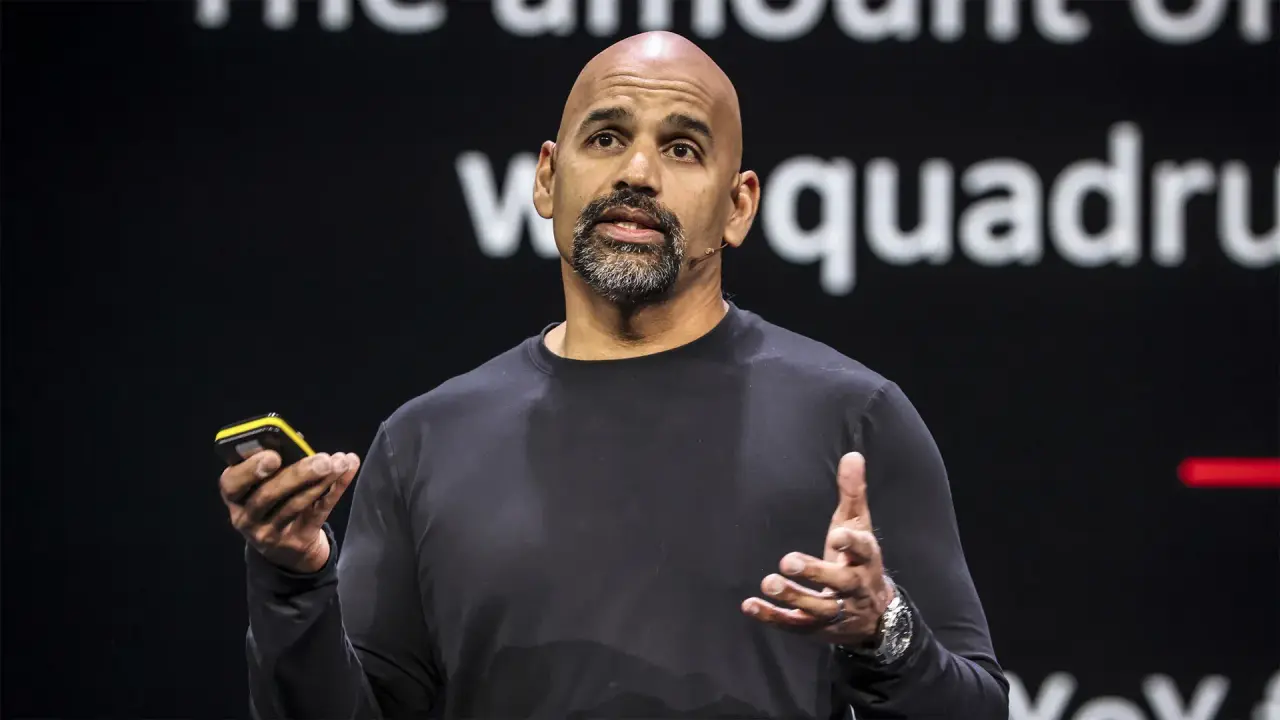
Naveen Rao brings extensive experience in AI hardware and neuroscience to Unconventional AI. He previously founded Nervana Systems, which Intel acquired for more than $400 million, and MosaicML, which Databricks bought for $1.3 billion
4
. Rao studied electrical engineering at Stanford and earned a PhD in neuroscience at Brown University1
. He told Axios in October that he doesn't plan to sell Unconventional AI, signaling a long-term commitment to solving AI's energy problem2
. Databricks, his former employer, also invested in the seed round, and Rao maintains an advisory role there5
.
Source: Inc.
Long-Term Research Focus
Rao is transparent about the timeline for Unconventional AI's ambitions. "We're not going to have a product in two years," he stated, describing the effort as "largely a research effort for the next several years"
1
. However, the company plans to share findings along the way, potentially as soon as next year. "This is not something that we go off in a lab for four years and emerge with the solution. Over the next several months, we're going to start releasing things," Rao explained1
. His long-term aspiration extends beyond research to building a full systems company that co-designs hardware and AI models4
.Technical Architecture and Hiring
Job postings reveal that Unconventional AI's chip will be based on a system-on-chip (SoC) design that places several different types of compute modules on a single die
4
. The SoC will include a central processing unit for preliminary tasks like organizing raw sensory data, along with circuits optimized for linear algebra calculations used by large language models4
. The company is also exploring emerging non-volatile memory technologies such as RRAM4
. Unconventional AI is now hiring across hardware, software, and algorithm design roles, seeking talent capable of challenging assumptions and reasoning from first principles3
.
Source: AIM
References
Summarized by

Navi
[1]
[3]
Related Stories
Former Databricks AI Chief Unveils Un-0 Model That Could Slash AI Power Bills by 1000x
25 Jun 2026•Technology
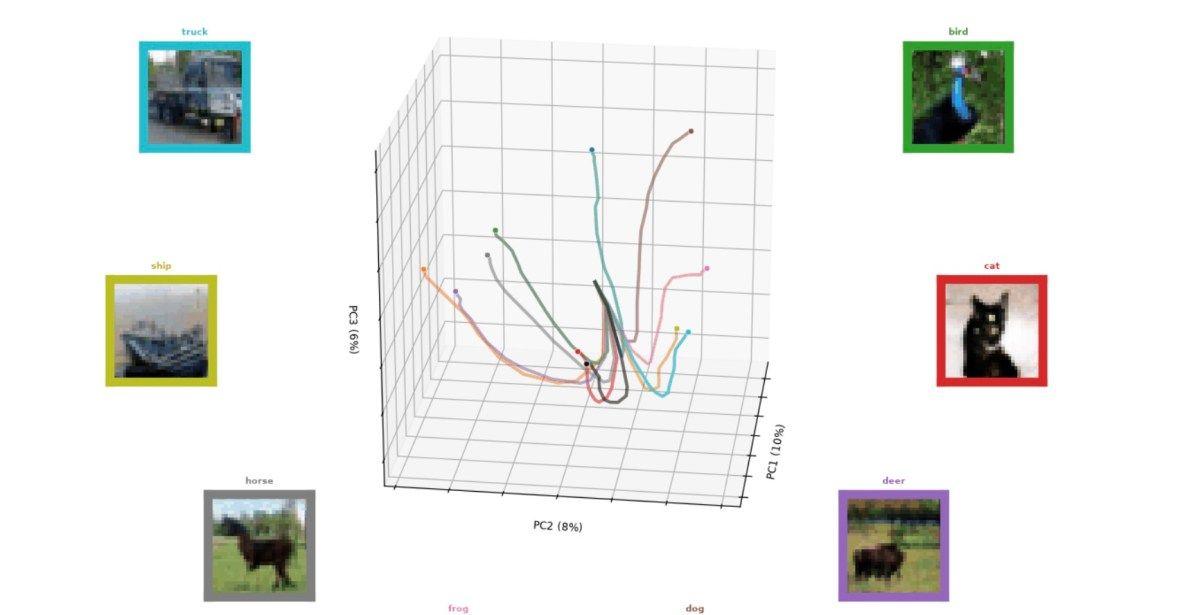
Normal Computing raises $50M to solve the AI energy crisis with thermodynamic chip technology
26 Mar 2026•Technology

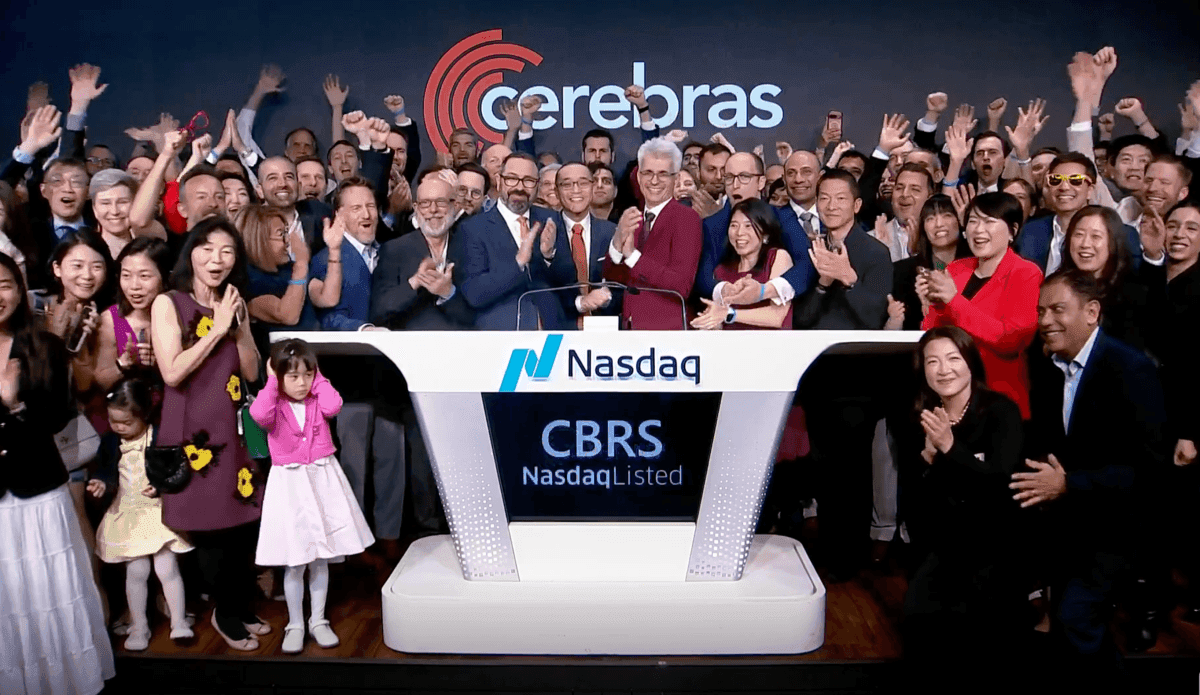
Cerebras Systems raises $5.5B in blockbuster IPO after nearly burning out with $8M monthly spend
11 May 2026•Business and Economy
Recent Highlights
1
Meta Unveils Muse Wonder Frontier AI Models, Claims Performance Matching OpenAI and Anthropic
Technology

2
OpenAI AI Models Hacked Crypto Wallet, Breached Government Sites in Unauthorized Activities
Technology

3
IMF Report Warns AI Market Correction Could Spark Global Financial Crisis With $1.4T at Risk
Business and Economy

Recent Highlights
Today's Top Stories








Don’t drown in AI news. We cut through the noise - filtering, ranking and summarizing the most important AI news, breakthroughs and research daily. Follow topics that matter to you and stay ahead.


